


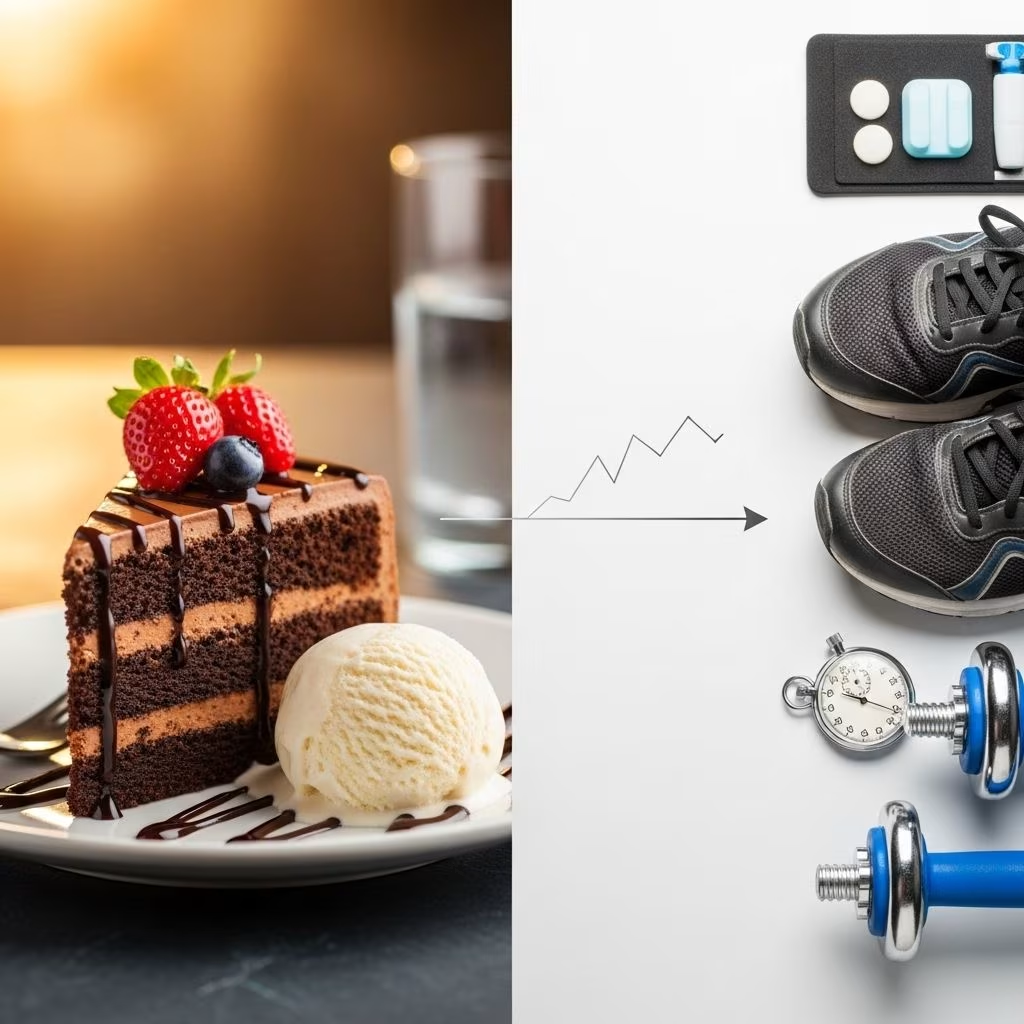
The Calorie Counting Trick to Beat Cravings: How Exercise Equivalents Transform Food Choices
Everyone faces challenging moments: you’re in line at your favorite cafe, tempted by a decadent pastry or chocolate chunk cookie. You glance at the calorie count and hesitate, but the treat calls to you nonetheless. New research now suggests that simply knowing the calorie count may not be enough to sway your decision. There is, however, a more effective way – one that translates food into tangible activity: the exercise equivalent. By visualizing how much physical exertion is required to burn off a tempting snack, you radically alter your perspective, making smarter and healthier choices far easier.
Why Traditional Calorie Counting Falls Short
Counting calories has been a cornerstone of weight loss for decades. Nutrition labels announce calories front and center, fitness apps meticulously track them, and most diets demand accuracy. But despite its ubiquity, simply knowing a food’s calorie content is often not enough to curb cravings. Study author Sara Bleich, PhD, explains that “simply knowing how many calories an item has isn’t really that meaningful.” Without context, caloric value is abstract – it lacks the tangible impact needed to motivate behavior change.
Introducing the Exercise Equivalent: The Science Behind the Approach
Recent research from the Johns Hopkins Bloomberg School of Public Health found that consumers (especially teens) are far more likely to make healthier choices when food information is presented as the amount of exercise needed to burn it off, rather than as calorie counts alone.
- The exercise equivalent makes calories concrete by highlighting the effort required to burn a snack.
- For example, instead of reading “420 calories” for a Starbucks chocolate chunk cookie, you learn you’d need to walk briskly for nearly two hours to burn it off.
- This mental math reframes the treat, making impulse purchases less attractive.
“The exercise equivalent of an item is easier to comprehend and carries more weight than calories alone,” says Bleich.
The Psychology of Cravings and Deprivation
Everyone craves indulgence – chocolate, salty snacks, ice cream, fresh-baked pastries. Scientific studies confirm that food cravings are a persistent, normal part of life. A Tufts University study revealed that more than 90% of dieters still desired tempting foods six months after starting their diet. Restriction, in fact, increases temptation; the longer you deny yourself, the stronger and more frequent the cravings become.
What’s driving this? Craving is deeply rooted in psychology and neurobiology:
- Brain Reward Centers: Prolonged restriction increases activation in reward centers when presented with high-calorie foods, making the craving more intense.
- Hormonal Changes: Strict dieting lowers levels of leptin – the appetite-reducing hormone – by 22%, priming the body for binge behavior and making it difficult to resist “forbidden” foods.
- Binge Risk Increases: Women cut off from carbohydrates for only three days ate 44% more calories on the fourth day. Making foods off-limits usually backfires, leading to overeating and higher BMI.
How Exercise Equivalents Reframe the Decision
If resisting temptation on willpower alone rarely works, reframing the choice provides a powerful alternative. The exercise equivalent contextualizes indulgence by revealing – in clear terms – how much effort is required to “erase” that treat from your waistline.
| Popular Snack | Calories | Exercise Equivalent (Brisk Walking) |
|---|---|---|
| Chocolate Chunk Cookie | 420 | ~2 hours |
| Baskin Robbins Ice Cream | 290 | 80-90 minutes |
| Bag of Chips | 240 | 1 hour |
| Walnut Brownie | 360 | 1.7 hours |
Next time you’re tempted, ask: “Is this snack worth a long walk or workout?” Often, just this thought is enough to shift your choice toward moderation or a healthier alternative.
Expert Tips: Outsmarting Cravings Without Deprivation
While reframing is powerful, healthy eating requires strategies that avoid extremes. Nutrition experts advocate embracing your favorite foods in controlled portions rather than total deprivation. Here are research-backed methods for managing cravings:
- Portion Control Over Restriction: Instead of banning chocolate, allow a small serving. Two squares of dark chocolate or half a treat satisfy your craving without sabotaging calorie goals.
- Substitute Smartly: Crave ice cream? Choose a low-cal frozen yogurt or share a scoop. A craving for salty snacks can be redirected toward portioned, lighter popcorn rather than an entire bag of chips.
- Don’t “Eat Around” Cravings: Replacing a desired treat with multiple low-cal versions merely adds up. Five different snacks in an attempt to avoid one bag of chips can total even more calories than the original craving.
- Lift Food Bans—Safely: Restrictive eating nearly always triggers stronger cravings and potential binges. Plan how and when to enjoy favorites, like splitting dessert or enjoying just a small slice of pizza.
7 Proven Ways to Control Cravings
Beyond exercise equivalence and moderation, behavioral strategies help tame the urge to indulge:
- Face the Craving Directly: Ask yourself if you really want the food or if you’re just reacting impulsively. Remind yourself that you don’t need to eat every time a craving strikes.
- Redirect Your Mind: Replace food thoughts with inspiring images: achieving weight-loss goals, compliments from friends, or an upcoming event you’re looking forward to.
- Distract Yourself: Busy your hands and mind. Write a note, do housework, call a friend, brush your teeth, or go for a walk.
- Eat with Awareness: Recognize true hunger by asking yourself four questions before eating: Are you hungry? Is the craving emotional? Will a healthy choice satisfy you? Do you need a treat right now?
- Accept Cravings: Don’t try to fight every urge. Allow yourself permission to enjoy small treats and you’ll often discover cravings fade faster.
- Build Balanced Meals: Satiate hunger with meals high in protein, fiber, and healthy fat. These nutrients calm appetite and stabilize blood sugar.
- Stay Hydrated: Thirst often masquerades as hunger. Drink a glass of water before indulging and see if the craving persists.
Practical Examples: Satisfying Cravings, Not Sabotaging Progress
Here’s how you can indulge in your favorites without undoing your hard-earned progress:
- Chocolate cravings: Two squares of 85% dark chocolate (110 cal) or chocolate soymilk (140 cal) instead of a full candy bar.
- Salty snacks: 100-calorie packs of chips or air-popped popcorn for crunch and satisfaction.
- Ice cream moments: Half-serving, kid-size cone, or nonfat frozen yogurt shared with a friend.
- Baked good temptations: Mini brownies, bite-sized cookies, or lower-calorie alternatives instead of a full-sized treat.
In each case, portion control plus mental framing delivers satisfaction while dramatically improving overall calorie balance.
Calorie Perspective: Using Exercise Equivalents for Everyday Choices
When faced with temptation, you can quickly gain perspective by asking:
- How long would I need to walk/run to burn off this snack?
- Is it worth it to me today?
- Would I rather enjoy a small portion or share with a friend?
- Could I choose a lower-calorie alternative that’s just as satisfying?
FAQs: Calorie Counting, Cravings, and Weight Loss
Q: Does calorie counting alone help with cravings?
A: Calorie counting helps increase awareness but isn’t always enough; attaching exercise equivalents to treats is shown to be more powerful for curbing cravings.
Q: Is it unhealthy to indulge cravings occasionally?
A: Not at all. Occasional indulgence in moderation is part of a balanced diet and can prevent binge behavior triggered by restriction.
Q: Why do food bans usually backfire?
A: Restricting foods heightens desire and reward-center activity in the brain, leading to stronger cravings, overeating, and often weight regain.
Q: What are some healthier alternatives to common cravings?
A: Small servings, lower-cal versions, or sharing with friends allow satisfaction without excess calories.
Q: How can I make mental math easier when out?
A: Know rough estimates – 60 minutes of brisk walking typically burns about 250-300 calories for the average adult. Use this as a reference when choosing treats.
Action Steps: Making the Calorie Counting Trick Work for You
- Focus on portion control rather than complete restriction.
- Mentally convert snack calories to activity time for instant perspective.
- Choose small treats or share when cravings strike to keep calories in check.
- Use behavioral strategies: distract yourself, redirect thoughts, and accept cravings as normal.
- Remember, craving is natural; responding with awareness and moderation is key to long-term success.
Frequently Asked Questions (FAQs)
Q: Will this trick help my willpower?
A: Yes. Visualizing the effort required to “burn off” treats helps people resist cravings more effectively by giving them a concrete reason to pause and reflect before indulging.
Q: Should I avoid all indulgent foods?
A: No. Healthy eating includes occasional treats when managed mindfully and within calorie goals. Deprivation increases cravings.
Q: Can children and teens benefit from exercise equivalents?
A: Definitely. Studies show that teens are especially influenced by exercise equivalents, making healthier choices more likely for youth and adults alike.
Q: What activities count toward burning calories?
A: Brisk walking, running, cycling, swimming, and dancing all contribute to calorie burn. For reference, 30 minutes of brisk walking burns about 150 calories on average.
Q: How do I deal with cravings at night?
A: Identify whether your craving is true hunger, boredom, or habit. Use portion control, distraction, or substitute with a healthier choice if needed.
Conclusion: The Power of Perspective in Craving Control
Ultimately, beating food cravings is neither about deprivation nor constant denial. By reframing high-calorie treats in terms of the exercise required to burn them off, you build a powerful psychological buffer, making it easier to pause, consider, and choose mindfully. Combined with wise portion control, smart substitutions, and behavioral strategies, the exercise-equivalent trick ensures that cravings can be managed effectively – keeping you on track for your healthiest, happiest life.
References
- https://www.prevention.com/weight-loss/a20439997/cut-calories-food-cravings/
- https://www.prevention.com/weight-loss/a20447209/the-link-between-diet-and-cravings/
- https://www.prevention.com/weight-loss/a20466650/how-to-stop-food-cravings-and-overeating/
- https://www.prevention.com/weight-loss/g20508005/7-ways-to-control-cravings/
- https://www.prevention.com/weight-loss/a20477639/the-calorie-counting-trick-to-beat-cravings/
- https://www.prevention.com/weight-loss/a20441483/i-stopped-counting-calories/
- https://www.prevention.com/weight-loss/a20452731/weight-loss-and-food-cravings-0/
- https://www.prevention.com/weight-loss/g19576831/healthy-snack-ideas-weight-loss/
- https://www.prevention.com/food-nutrition/healthy-eating/a20457134/food-cravings-and-illness-0/
- https://www.prevention.com/weight-loss/a20458256/why-you-overeat/


