


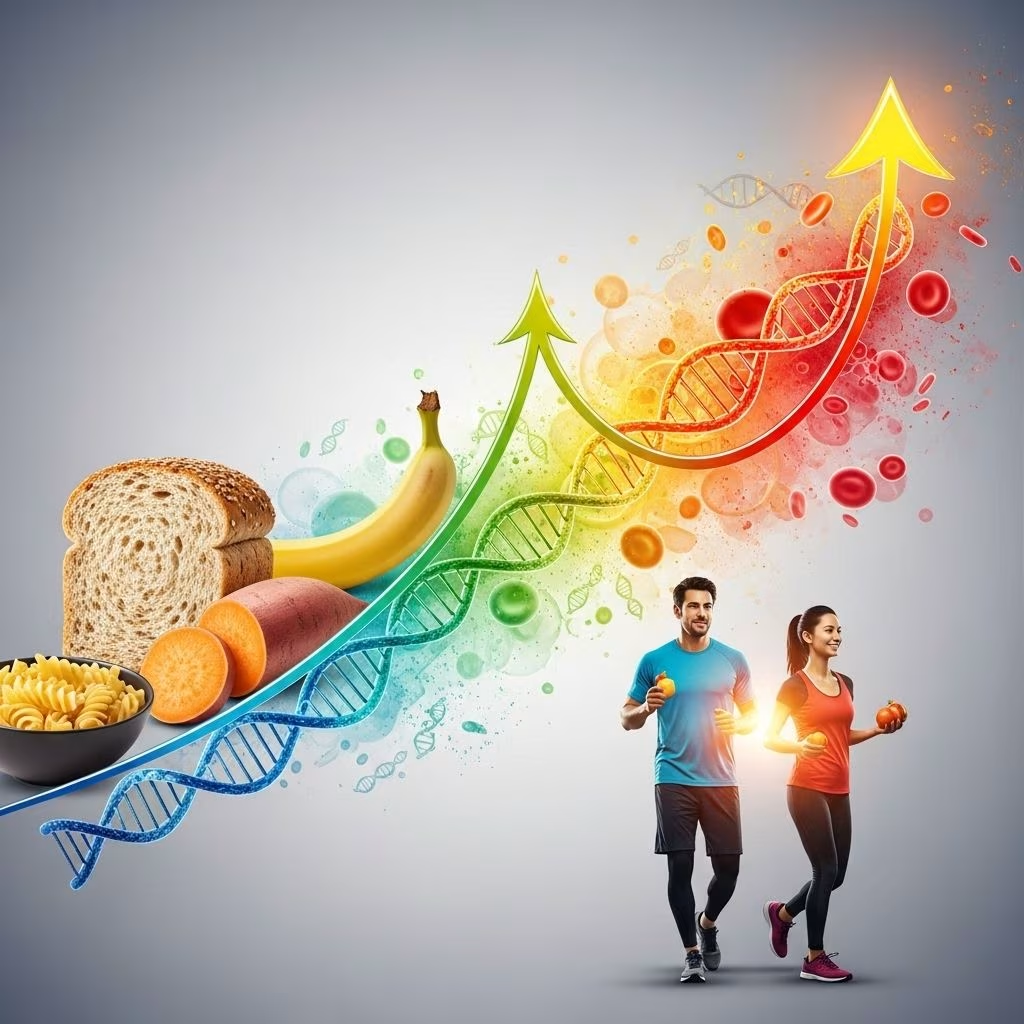
Understanding the Glycemic Index
The glycemic index (GI) is a scientific tool that measures how carbohydrate-containing foods affect your blood sugar levels after you eat them. Foods are scored on a scale from 0 to 100, offering a simple way to gauge how quickly those foods raise glucose in your bloodstream. By understanding and applying GI, you can make informed choices to manage weight, support energy levels, and reduce your risk of chronic diseases.
- High-GI foods (70 and above) trigger quick spikes in blood sugar.
- Medium-GI foods (56–69) cause moderate increases.
- Low-GI foods (55 and below) induce slower, smaller rises in glucose.
What Is the Glycemic Index?
Originally developed in the early 1980s, the glycemic index ranks foods containing carbohydrates according to how rapidly and how much they raise blood glucose levels within two hours of consumption. The scale is anchored with pure glucose assigned a value of 100, serving as the comparison standard for other foods.
Not all carbohydrates are equal when it comes to their effect on blood sugar. Factors such as nutrient composition, food processing, fiber content, and cooking methods influence a food’s GI value. For example, highly processed or refined carbohydrate foods, like white bread or sugary cereals, generally have higher GIs; foods rich in fiber, protein, or fat tend to slow digestion and absorption, resulting in lower GIs.
How the Glycemic Index Works
Here is how the glycemic index system classifies foods:
- GI 55 or less: Low
- GI 56–69: Medium
- GI 70 or above: High
Examples for each category include:
| Food | GI Value | Category |
|---|---|---|
| Lentils | 32 | Low |
| Apple | 36 | Low |
| Brown Rice | 55 | Low |
| Whole Wheat Bread | 69 | Medium |
| Couscous | 65 | Medium |
| White Bread | 75 | High |
| Glucose | 100 | High |
Why Does the Glycemic Index Matter?
The GI is not just a theoretical scale—it has real-world health implications, especially for individuals aiming to manage blood sugar, maintain a healthy weight, or reduce their risk of chronic disease. Choosing lower-GI foods can help:
- Sustain energy levels throughout the day
- Reduce hunger and help prevent overeating
- Improve insulin sensitivity, reducing the risk of type 2 diabetes
- Manage or lower cholesterol
- Support weight loss and healthy body weight maintenance
A diet high in high-GI foods can cause rapid spikes and then sharp drops in blood glucose, often leaving you tired, irritable, and wanting to eat more—commonly referred to as the “blood sugar roller coaster.” In the long term, eating mostly high-GI foods is linked with increased risk of obesity, cardiovascular disease, and type 2 diabetes.
Glycemic Index vs. Glycemic Load
While the glycemic index measures how quickly carbs in food elevate blood sugar, it does not account for the amount of carbohydrates eaten in a typical serving. This is where glycemic load (GL) comes in, providing a more complete picture.
- Glycemic Index (GI): Measures the quality of carbohydrates, scoring foods based on the blood sugar response to 50 grams of available carbohydrate.
- Glycemic Load (GL): Considers both the quality (GI) and the quantity (grams of carbs per serving) to estimate the food’s actual blood sugar impact.
For example, watermelon has a high glycemic index, but because a serving has few digestible carbohydrates, its glycemic load is low. GL is calculated as:
GL = (GI x grams of available carbohydrate per serving) / 100
Experts recommend considering both GI and GL when planning meals for stable blood sugar.
Factors That Influence Glycemic Index
A food’s GI value can vary significantly based on multiple factors:
- Ripeness: Riper fruits usually have higher GIs.
- Cooking method: More cooking/processing often increases a food’s GI, as in overcooked pasta or mashed potatoes.
- Physical form: Whole, intact grains have lower GIs than ground or instant varieties.
- Type of starch: Foods with more resistant starch (like legumes) tend to have lower GI.
- Presence of fiber, fat, or protein: These nutrients slow digestion and lower the GI.
- Acidity: Foods with vinegar or lemon may have slightly lower GIs.
Glycemic Index and Weight Loss
Many people turn to low-GI diets for weight management. Here’s why:
- Low-GI foods are absorbed more slowly, providing steadier energy and promoting satiety, so you are less likely to overeat.
- Low-GI diets may decrease levels of insulin—a hormone involved in fat storage—which could favor weight loss.
- Including more whole grains, legumes, non-starchy vegetables, and fruits (all typically lower GI), automatically crowds out processed, more calorie-dense foods.
The Glycemic Index and Diabetes
The GI was originally created as a tool for people with diabetes, but its relevance extends far beyond blood sugar. Still, for people with prediabetes or diabetes, paying attention to the GI can:
- Help manage post-meal blood sugar spikes
- Support long-term glucose regulation
- Reduce the risk of diabetes-related complications, such as heart disease and vision loss
Note that you don’t need to avoid carbohydrates entirely if you have diabetes—focus on portion size, overall quality, and how foods are combined during meals.
High and Low Glycemic Index Foods
Low-GI Foods (55 or below)
- Non-starchy vegetables (broccoli, spinach, tomatoes)
- Most whole fruits (apples, pears, cherries)
- Legumes (lentils, chickpeas, kidney beans)
- Whole intact grains (barley, quinoa)
- Most dairy (milk, yogurt)
Medium-GI Foods (56–69)
- Whole wheat bread
- Brown rice
- Sweet corn
- Pineapple
- Rolled or instant oats
High-GI Foods (70 or above)
- White bread, bagels
- Instant rice
- Rice cakes
- Most processed breakfast cereals
- Potatoes (especially mashed or baked)
- Watermelon
Foods lacking carbohydrates (meats, fish, eggs, oils, nuts, seeds) are not assigned a GI because they have trivial impact on blood sugar.
How to Use the Glycemic Index for Healthier Eating
Practical, sustainable eating is not about eliminating high-GI foods altogether but about emphasizing those with lower values. Consider the following practical tips:
- Include plenty of vegetables, legumes, and whole fruits in your daily meals.
- Choose intact whole grains over refined grains.
- Pair high-GI staples (like white rice) with low-GI foods such as beans and leafy greens.
- Limit added sugars and minimize intake of heavily processed foods.
- Check your typical portion sizes—larger portions of even low-GI foods can cause blood sugar issues.
- Enjoy variety—the healthiest diets include foods from all GI groups, balanced for overall quality and nutrition.
Common Myths About the Glycemic Index
- Myth: All sugar is high-GI.
Fact: Not all forms of sugar have the same GI; for example, fructose has a lower GI than glucose. - Myth: Eating only low-GI foods is healthy.
Fact: Nutrition is about overall balance; some high-GI foods provide important nutrients and can be enjoyed in moderation and in combination with other foods. - Myth: The lowest GI is always the best choice.
Fact: Many factors matter, such as fiber, vitamins, minerals, and healthy fats. - Myth: GI values stay the same for similar foods.
Fact: GI can vary based on ripeness, processing, and preparation.
Frequently Asked Questions (FAQs)
Q: What is the difference between glycemic index and glycemic load?
A: Glycemic index measures how quickly carbs in food raise blood sugar, while glycemic load takes into account both how quickly and how much a typical serving raises blood sugar.
Q: Should I avoid all high-GI foods?
A: No. It’s about balance. Enjoy high-GI foods in moderation, especially when paired with low-GI foods, protein, or fat to slow absorption.
Q: Can using the GI help me lose weight?
A: Studies suggest eating more low-GI foods can help with appetite control and support healthy weight loss, but total calorie intake and food quality are still crucial.
Q: Is the GI relevant if I don’t have diabetes?
A: Yes! While especially important for diabetes, the GI can help everyone stabilize energy levels, manage weight, and reduce chronic disease risk.
Q: Where can I find GI values for foods?
A: There are many published tables and online resources that provide GI values for common foods. For most people, a simple rule is to favor less processed, high-fiber, whole foods when possible.
Quick Tips to Lower GI in Your Diet
- Cook pasta and grains al dente to keep GI lower.
- Choose stone-ground or sprouted bread varieties over highly processed white breads.
- Snack on raw vegetables, nuts, and seeds.
- Add lemon juice or vinegar to meals to slightly reduce GI.
- Mix higher-GI foods with lower-GI options for balanced meals.
Final Thoughts
The glycemic index is a valuable guide for making food choices that support stable blood sugar, appetite control, weight management, and long-term health. While you don’t need to obsessively track every food’s GI, prioritizing minimally processed, high-fiber foods will naturally bring your dietary GI lower. Combine knowledge of the GI with your body’s preferences and lifestyle needs for a sustainable, healthy approach to eating.
References
- https://pmc.ncbi.nlm.nih.gov/articles/PMC4692165/
- https://www.healthline.com/nutrition/glycemic-index
- https://www.medicalnewstoday.com/articles/325660
- https://www.health.harvard.edu/diseases-and-conditions/the-lowdown-on-glycemic-index-and-glycemic-load
- https://medlineplus.gov/ency/patientinstructions/000941.htm
- https://pmc.ncbi.nlm.nih.gov/articles/PMC10746079/
- https://www.mayoclinic.org/healthy-lifestyle/nutrition-and-healthy-eating/in-depth/low-glycemic-index-diet/art-20048478
- https://www.betterhealth.vic.gov.au/health/healthyliving/carbohydrates-and-the-glycaemic-index


