


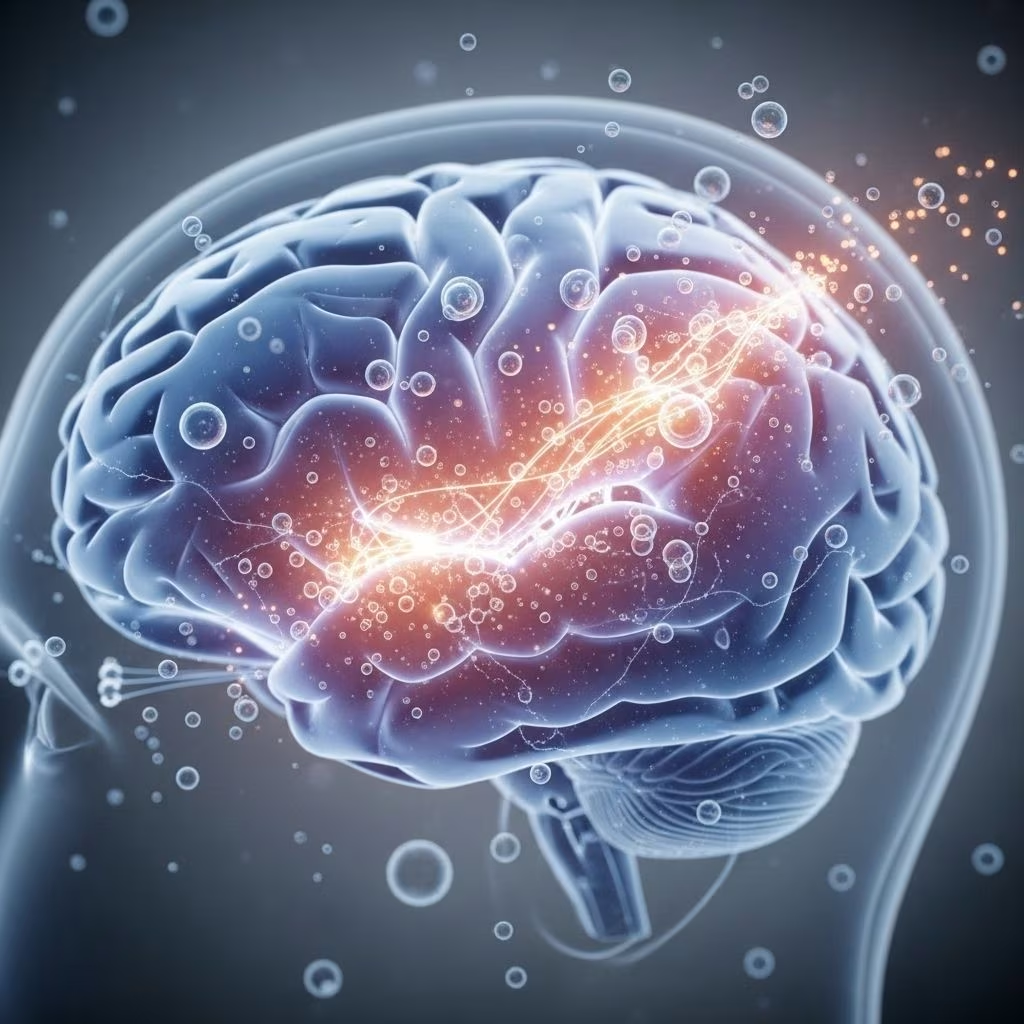
For decades, carbonated beverages have been a staple worldwide, prized for their effervescence and satisfying fizz. But as we savor sparkling waters, sodas, and other fizzy drinks, an important question lingers: What is carbonation actually doing to our brains?
This in-depth exploration examines the latest science on how carbonation affects our brains—both in the moment and over the long term. We’ll uncover how fizzy drinks stimulate reward centers, shape cravings, alter brain chemistry, and potentially influence our health.
How Carbonation Signals the Brain
When you take a sip of a carbonated drink, the distinctive tingling sensation on your tongue is not just a taste—it’s a cascade of neural signaling. Let’s break down the science:
- Carbon dioxide (CO2) dissolved in these beverages turns into carbonic acid upon contact with saliva.
- This acid stimulates special pain-sensing nerve endings known as nociceptors found on your tongue, especially via a pathway involving the trigeminal nerve and the brainstem’s trigeminal nuclei.
- The resulting signals create the signature sharp, tingling fizz, which the brain interprets as pleasurable and distinctive from other sensations.
Remarkably, this isn’t technically a taste—it’s more akin to the sting of spiciness, which is detected through touch and pain pathways.
Cravings and the Reward Pathway
One of the most fascinating aspects of carbonation is its ability to light up the brain’s reward circuitry—the same areas involved in pleasure, motivation, and, in some cases, addiction.
- Imaging studies show drinking carbonated water increases blood flow to the frontal region of the brain, especially the orbitofrontal cortex, a key area for processing reward and motivation.
- The orbitofrontal cortex is activated by pleasurable stimuli, which helps explain why fizzy drinks can feel uniquely satisfying.
This region resides at the end of the brain’s mesocortical dopamine pathway—a central pathway for experiencing pleasure and reinforcement. Activation here is linked to heightened feelings of enjoyment and, critically, reinforcement of drinking behavior.
| Brain Region | Role in Carbonation Sensation |
|---|---|
| Trigeminal nuclei (brainstem) | Initial signal from nociceptors, creates sensation of fizz |
| Orbitofrontal cortex | Processes reward, pleasure, and motivation for repeated use |
| Mesocortical dopamine pathway | Linked to reinforcement and potential compulsive consumption |
The Science of the Tickle: Why Carbonation Feels Good
The effervescence of carbonated drinks isn’t just a chemical reaction—it’s a multisensory experience:
- CO2 gas escapes as bubbles, mechanically stimulating oral tissues.
- The conversion to carbonic acid triggers a mild irritation or “bite,” activating nerve endings distinct from those used for sweet, salty, or sour sensations.
- This tickle engages the same biological system that detects pain, but at a low, pleasurable level.
- Additionally, the sound of fizzing and the visual appeal of bubbles both add to the overall enjoying sensation.
Fascinatingly, researchers have shown that inhibiting carbonic anhydrase (the enzyme that helps convert CO2 to carbonic acid) reduces the sensation, proving this process is central to our fizzy experience.
Long-Term Effects: What Happens with Regular Consumption?
It’s natural to wonder if these pleasurable, rewarding responses translate to long-term consequences for the brain and health, especially with regular or high intake.
- Animal studies reveal that chronic soft drink consumption induces changes in brain chemistry, including decreased levels of certain brain enzymes such as monoamine oxidase (MAO) and acetylcholinesterase (AChE), which are critical for neurotransmitter breakdown.
- Changes in antioxidant enzymes in the brain (glutathione reductase, glutathione peroxidase, catalase) have also been documented, indicating a stress response at the cellular level.
Interestingly, despite these measurable biochemical shifts, no significant changes in brain tissue structure (histopathology) have been observed in animal studies with regular (non-diet) sodas. This suggests the primary effects are molecular, not gross anatomical damage—which may still influence brain function over time.
Oxidative Stress and Cognitive Impact
Oxidative stress describes an imbalance between the production of damaging molecules called reactive oxygen species (ROS) and the body’s ability to counteract their effects with antioxidants.
- Regular intake of carbonated drinks (especially those with added sugars or artificial ingredients) increases markers of oxidative stress in animal brains.
- This leads to reductions in natural antioxidants, potentially raising the risk for cell and tissue injury.
- Although these molecular changes have not resulted in visible brain damage in short-term studies, oxidative stress is a known contributor to aging and neurodegenerative diseases.
Therefore, while a can of soda is unlikely to harm your brain outright, consistent overconsumption may carry hidden risks through subtle biochemical imbalances.
Is Carbonation Addictive?
The question of addiction is complex, but there are clear signs that the reward pathway activation from carbonation plays a major role in creating cravings:
- Psychological experiments demonstrate that not only sugar, but also the sensation of fizz can drive people to seek out carbonated drinks repeatedly.
- This effect is especially pronounced in drinks that combine carbonation with sweetness and flavorings.
- Even artificially sweetened or calorie-free carbonated drinks can maintain or trigger these cravings, through rewarding sensations delivered to the orbitofrontal cortex.
While most people are not physically dependent, the positive reinforcement of carbonation means these beverages can easily become a daily habit.
Frequently Asked Questions (FAQs)
Q: Does carbonation harm your brain tissue?
A: Current animal studies show no significant structural damage to brain tissues from regular carbonated drink consumption, but changes do occur at the molecular and antioxidant levels.
Q: Why do carbonated drinks make us feel good?
A: The unique tickling sensation from carbonation stimulates both pain and reward circuits in our brain, particularly the orbitofrontal cortex, making the experience feel pleasurable and reinforcing desire for more.
Q: Can sparkling water trigger the same cravings as soda?
A: Yes, the fizzy sensation alone can stimulate reward and pleasure centers in the brain, though most people find the combination of carbonation and sweetness most compelling.
Q: Is there a difference between diet and regular sodas in brain effects?
A: Animal research suggests that while both can affect the brain, diet sodas may have stronger impacts on certain parts of the brain (like the cerebellum), but more research is needed to clarify these differences.
Q: Are the effects of carbonation on mood or alertness significant?
A: There is some evidence that carbonation may transiently boost alertness or provide a mild mood lift due to increased blood flow to reward areas, but effects are generally modest and short-lived.
Key Takeaways
- Carbonated drinks stimulate nerve pathways connected to pleasure and reward, driving cravings and repeated consumption.
- Regular intake can cause subtle biochemical changes in the brain, including oxidative stress, but no gross structural damage has been observed in short studies.
- The pleasurable tingle from carbonation is due to carbonic acid activating nociceptors and reward centers in the brainstem and frontal cortex.
- While not physically addictive, the reward response to carbonation can reinforce drinking habits for many people.
- Overconsumption should be approached with caution, particularly for those sensitive to habit-forming stimuli or concerned about brain health.
References
- https://www.spandidos-publications.com/10.3892/mmr.2016.4903
- https://www.frontiersin.org/journals/behavioral-neuroscience/articles/10.3389/fnbeh.2024.1409123/full
- https://pmc.ncbi.nlm.nih.gov/articles/PMC6782458/
- https://www.alzinfo.org/articles/prevention/drinking-sodas-tied-to-poor-brain-health-and-alzheimers-risk/
- https://www.psychologytoday.com/us/blog/the-modern-brain/202311/the-number-one-worst-food-for-your-brain
- https://www.prevention.com/weight-loss/a20460405/what-carbonation-does-to-your-brain/


