


By Prevention Editors
Feeling stuck on your weight loss journey? While most people focus on calorie counting, cutting carbs, or avoiding fat, one of the most overlooked yet powerful allies for sustainable weight loss is fiber. Studies consistently show that increasing dietary fiber intake is linked to lower body weight, improved appetite control, and better long-term health. This in-depth guide will explain how fiber works, the mechanisms behind its weight loss benefits, and practical steps you can take to make fiber part of your daily routine.
What Is Fiber and Why Does It Matter?
Dietary fiber refers to the parts of plant foods—fruits, vegetables, grains, legumes, and nuts—that the body can’t digest or absorb. Unlike fats, proteins, or carbohydrates that your body breaks down and digests, fiber passes relatively intact through the stomach, small intestine, and colon.
- Fiber is found exclusively in plant foods.
- There are two main types: soluble (dissolves in water) and insoluble fiber (does not dissolve in water).
- Most plant foods contain both types in varying proportions.
Fiber is crucial not just for digestive health, but plays a significant role in weight management, cholesterol control, and even blood sugar regulation.
How Fiber Helps With Weight Loss
The relationship between fiber intake and body weight has been widely documented in both clinical trials and population studies. People who eat more fiber tend to weigh less and gain less weight over time than those who skimp on fiber. Here’s how fiber makes this possible:
1. Fiber Increases Satiety and Reduces Appetite
- When you eat high-fiber foods, they add bulk to your meals without corresponding calories.
- Fiber slows down the emptying of your stomach, making you feel full for longer and reducing the urge to snack between meals.
- Studies show that even small increases in daily fiber intake can reduce total calorie consumption and lead to gradual weight loss.
Soluble fiber (found in oats, beans, apples) is especially effective at boosting satiety by absorbing water and forming a gel, which slows down digestion and the absorption of nutrients.
2. Lower Energy Density Means Fewer Calories
- High-fiber foods are often low in energy density, meaning they provide fewer calories per gram of food.
- You can eat larger portions and still consume fewer calories, which helps to maintain a calorie deficit for weight loss without feeling deprived.
This is one reason why fruits, vegetables, and whole grains—foods naturally high in fiber—satisfy hunger so effectively, yet are staples in most successful weight loss diets.
3. Fiber Improves Blood Sugar Stability
- Dietary fiber slows digestion and the absorption of sugars, which can prevent sharp swings in blood sugar and insulin.
- This helps control cravings, energy crashes, and overeating driven by low blood sugar.
4. Fiber Alters Hormones That Influence Appetite
- Certain fibers can stimulate the release of hormones like peptide YY and GLP-1, which signal fullness to your brain.
- This hormonal effect offers an additional, physiologically-driven appetite suppressant that supports calorie reduction naturally.
The Science: What Studies Say About Fiber and Weight Loss
Key research findings highlight fiber’s pivotal role:
- A major study in the American Journal of Clinical Nutrition found that participants consuming more fiber experienced greater weight loss and better adherence to their dietary plans versus those with low fiber intake—independent of their total calories or macronutrient breakdown.
- The “Full Plate Living” program, which encouraged people to boost high-fiber foods, showed that those who increased fiber the most lost the most weight—more than 3 kg (about 7 lbs) on average in 16 weeks.
- Epidemiological studies reveal that women who eat more dietary fiber are significantly less likely to be overweight or obese than women who skimp on fiber.
Consuming a variety of fiber-rich foods from fruit, vegetables, legumes, whole grains, and nuts provides the best benefits, as each offers unique fibers and additional vital nutrients.
Types of Fiber and Which Are Best For Weight Loss
Both major types of dietary fiber offer distinct advantages:
| Type | Description | Best Sources | Weight Loss Benefits |
|---|---|---|---|
| Soluble Fiber | Dissolves in water to form a gel; slows digestion | Oats, beans, lentils, apples, citrus, barley, psyllium | Enhances fullness, stabilizes blood sugar, lowers cholesterol |
| Insoluble Fiber | Does not dissolve in water; adds bulk to stool | Whole wheat, brown rice, carrots, nuts, seeds, leafy greens | Promotes digestion, prevents constipation, adds bulk to meals |
Among the various forms, viscous fibers—the ones that thicken when mixed with water—are most closely linked to decreased appetite and reduced calorie intake. Soluble, viscous fibers are found in foods like oats, beans, psyllium, flaxseeds, and some fruits and vegetables.
How Much Fiber Do You Need?
The recommended daily intake (RDI) for fiber is:
- Women: 25 grams per day
- Men: 38 grams per day
However, the average American consumes just 15–17 grams daily—far below the target. Gradually increasing your fiber intake is the best approach to avoid digestive discomfort as your system adjusts.
Easy Ways to Add More Fiber to Your Diet
You don’t have to make radical changes to benefit from fiber. Try these simple strategies:
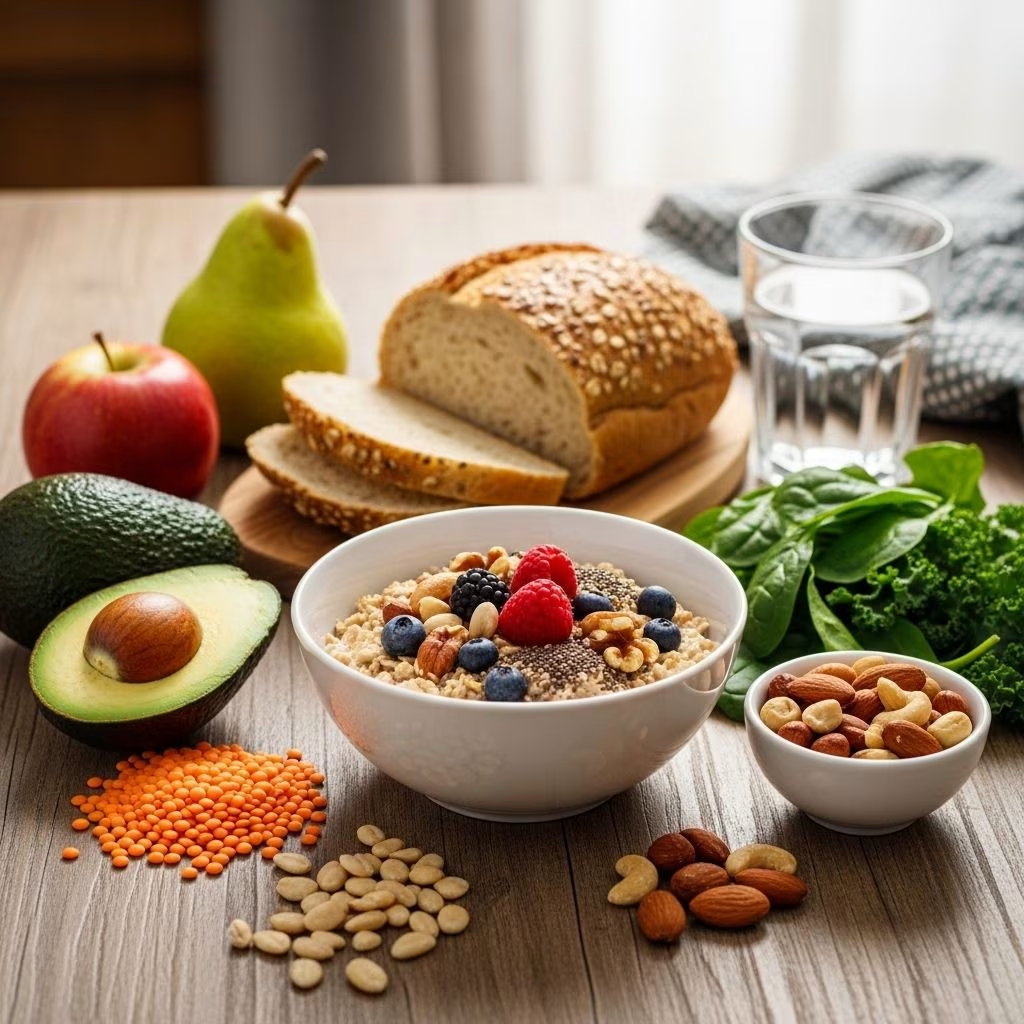
- Start your day with whole grains like oatmeal or high-fiber cereal.
- Add beans or lentils to salads, soups, or even pasta dishes.
- Snack on fiber-rich produce (apples, pears, carrots, or berries) instead of chips or cookies.
- Switch to whole grain versions of bread, rice, and pasta.
- Toss nuts and seeds (like chia or flaxseed) into smoothies, yogurt, or on top of toast.
- Eat the edible peels on fruits and vegetables whenever possible.
- Drink plenty of water to help fiber work effectively.
Remember, fiber-rich foods are also packed with essential vitamins, minerals, and antioxidants, providing even more nutritional value per bite.
Gut Health: The Bonus Benefit of Fiber
Increasing fiber isn’t just about weight control—it also nurtures a healthier gut microbiome. Gut bacteria ferment certain fibers (prebiotics), producing short-chain fatty acids that help reduce inflammation, improve immunity, and may boost your metabolism as well.
Potential Pitfalls: What to Watch Out For
- Increase fiber gradually over several days to allow your digestive system to adjust.
- Drink more water to aid digestion and prevent constipation as fiber intake rises.
- Some people may initially experience bloating or gas, but this usually resolves as gut microbes adapt.
Those with specific digestive diseases should consult their healthcare provider before drastically boosting fiber intake.
Frequently Asked Questions (FAQs) About Fiber and Weight Loss
Q: Can eating more fiber really help me lose weight if I don’t change anything else?
A: Research shows that increasing your daily fiber intake—even without major changes to calorie intake—can help reduce appetite, lower calorie consumption, and promote gradual weight loss. However, pairing fiber-rich foods with an overall healthy eating pattern yields the best results for sustainable weight management.
Q: What are some quick fiber sources I can add today?
A: Easy, portable options include fresh fruit (apples, pears, raspberries), raw veggies (carrots, bell pepper strips), a handful of nuts or seeds, or a can of beans added to soup or salad. Aim for “whole” foods, not refined or processed options labeled as “fiber-fortified.”
Q: Is fiber equally beneficial for everyone, regardless of age or gender?
A: Fiber benefits people of all ages, but most studies find the weight loss association is stronger in women than in men—possibly because women tend to eat more fiber-rich foods, or because men, on average, consume less. For best results, everyone should aim for their recommended daily fiber intake.
Q: Can too much fiber be harmful?
A: While it’s rare to eat “too much” fiber from whole foods, very rapid increases can lead to discomfort (bloating, gas, constipation). Boost your intake gradually and stay hydrated. If you have digestive issues, talk to your doctor or a dietitian before making big changes.
Top High-Fiber Foods to Include in Your Diet
- Oats and oat bran
- Barley
- Brown rice
- Beans (black, kidney, navy, chickpeas, lentils)
- Apples
- Carrots
- Berries (raspberries, blackberries, strawberries)
- Pears
- Broccoli
- Spinach and other leafy greens
- Whole grain breads and cereals
- Nuts and seeds (chia, flax, almonds)
Key Takeaways: Fiber and Weight Loss
- Boosting dietary fiber can be a simple, effective way to eat less, feel fuller, and lose weight naturally.
- High-fiber diets are linked to healthier body weight and better long-term weight management.
- Fiber works by increasing fullness, slowing digestion, stabilizing blood sugar, and supporting gut health.
- Both soluble and insoluble fibers are beneficial—variety is key.
- Gradually increase your fiber intake and drink plenty of water.
With these tips and insights, you can make fiber your secret weapon for losing weight and improving overall health—no fad diets, pills, or deprivation required.
References
- https://pmc.ncbi.nlm.nih.gov/articles/PMC6768815/
- https://pmc.ncbi.nlm.nih.gov/articles/PMC10150096/
- https://www.prevention.com/weight-loss/a20450432/weight-loss-and-dietary-fiber/
- https://www.prevention.com/weight-loss/a33382312/fiber-for-weight-loss/
- https://www.prevention.com/weight-loss/g20482528/this-is-your-perfect-day-for-weight-loss/
- https://www.prevention.com/weight-loss/diets/a60578947/how-to-lose-weight-fast-safely/
- https://www.prevention.com/weight-loss/g24805401/fat-burning-foods/
- https://www.prevention.com/weight-loss/a20434639/vegan-diet-and-weight-loss/
- https://www.prevention.com/weight-loss/diets/a63174975/best-diets-for-weight-loss-2025/
- https://www.aicr.org/news/can-a-certain-type-of-fiber-help-with-weight-loss/


