


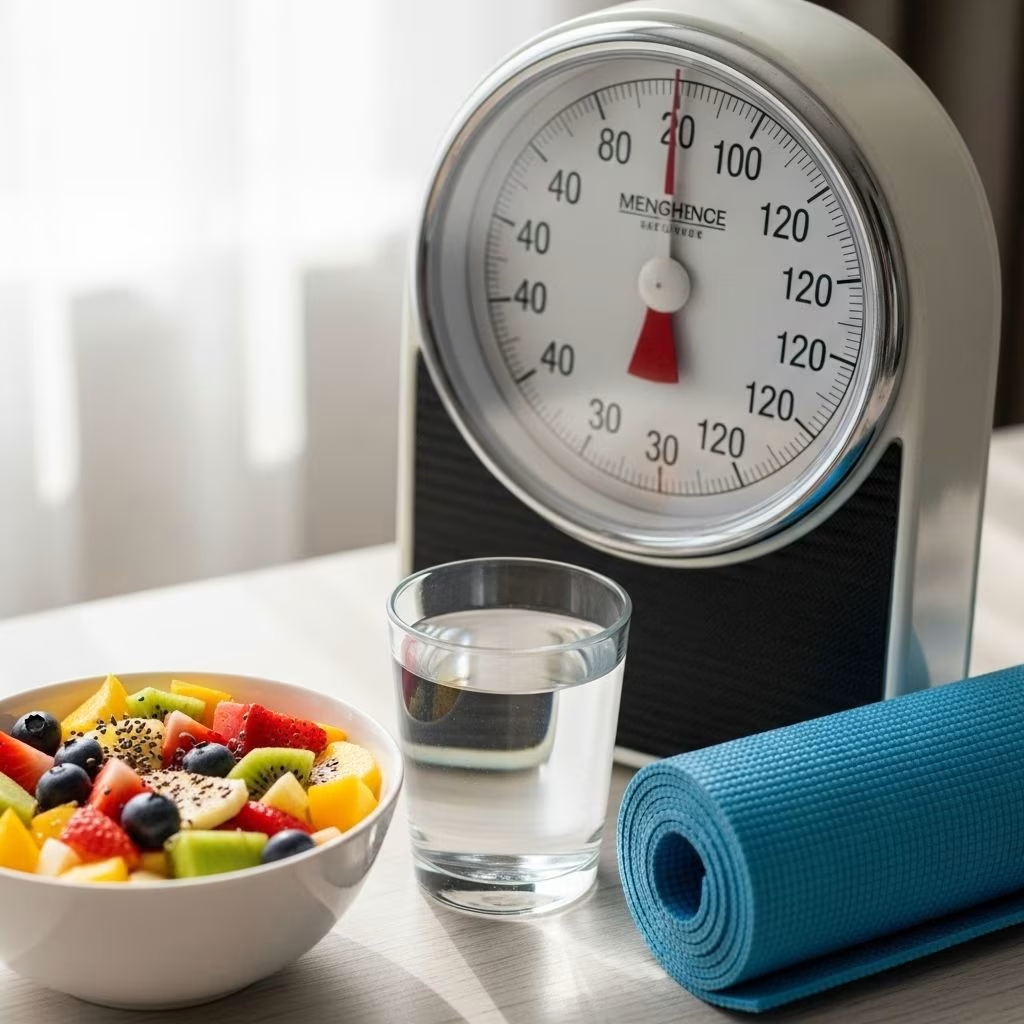
How Ignoring the Scale Can Help You Lose Weight
Bathroom scales have long been seen as essential for anyone trying to lose weight. The thinking is straightforward: Regularly seeing the number drop is proof of progress, and seeing numbers stall is motivation to try harder. Yet, a growing body of research and expert opinion points out that becoming fixated on the scale can undermine health, happiness, and even weight loss efforts. Instead, focusing on habits, cues from your body, and non-scale victories may offer more sustainable results—and a healthier relationship with yourself.
Why the Scale Isn’t the Whole Story
Many people feel compelled to weigh themselves daily or weekly, believing that weight is the ultimate health metric. However, studies—including a 2016 UCLA review—show that your weight doesn’t truly reflect your overall health. Factors like muscle mass, water retention, and even the food you ate yesterday can skew the number you see, often leading to confusion or disappointment.
- Muscle weighs more than fat, so as you gain lean muscle, the scale might not move—or even go up—despite improved physical composition.
- Temporary fluctuations: Salt intake, hormones, stress, digestion, and hydration can all lead to daily weight changes that don’t reflect actual fat loss.
- Emotional impact: Seeing an ‘undesirable’ number can trigger a cycle of shame, emotional eating, and giving up on healthy habits.
The Mental Toll of Scale Obsession
For many, the scale becomes a tyrant. Its verdict—up or down a pound—can set the tone for the entire day. This emotional roller coaster often erodes motivation and undermines self-worth. Nutritionists and weight loss experts warn that the focus on a single number can result in:
- Anxiety before weighing in and guilt if the numbers don’t align with expectations.
- Disordered eating patterns, where emotional responses to the scale drive unhealthy food behaviors—binging when the scale is up, or excessive restriction when it’s down.
- Lost perspective: Reducing your health to a number distracts from habits and skills that support real well-being.
Katherine Zeratsky, registered dietitian nutritionist at Mayo Clinic, notes, “You might find it takes the pressure off, and it’s a kind of relief—you can focus on the good things you’re doing, and forget about that number.”
Why Letting Go of the Scale Actually Supports Weight Loss
Stepping away from the scale may sound counterintuitive to someone striving to lose weight. But researchers, clinicians, and everyday people report transformative benefits when they stop letting a number dictate their day.
- Shifts perspective: Without the constant feedback from the scale, people begin noticing internal cues—like energy levels, hunger, and musculoskeletal comfort—to guide their eating and movement choices.
- Improved body image: Many find they actually like their body more, and develop a sense of self-worth that isn’t dependent on weight alone.
- Greater self-acceptance: Letting go of the scale can be the first step in practicing kindness toward yourself, a cornerstone for lasting change.
- Positive behavior focus: Success becomes measured in habits and healthy choices, rather than endlessly chasing the right number.
What Happens When You Stop Weighing Yourself?
The transition away from regular weigh-ins is marked by several psychological and behavioral shifts. According to Marsha Hudnall, president and co-owner of Green Mountain at Fox Run, breaking the scale habit reorients the way people see themselves, defining their health and bodies beyond a single metric.
- Increased mindfulness: People begin to pay attention to cues from hunger, fullness, energy, and comfort, leading to more internally driven choices.
- Relief from shame spirals: If the scale is up a couple of pounds, the sequence of guilt and emotional eating can be interrupted by simply stepping away from the scale.
- Motivation is rooted in well-being: Choices around food and fitness are less about punishment and more about feeling good.
- Long-term consistency: Many people maintain relatively stable weight over the years by focusing more on habits than numbers.
Daily Weighing vs Letting Go: What Does Research Say?
| Approach | Potential Benefits | Potential Drawbacks |
|---|---|---|
| Daily Weighing |
|
|
| No Scale Approach |
|
|
Ultimately, while some studies suggest daily weigh-ins contribute to better weight maintenance—especially for men—the principle benefit might be that those already succeeding like seeing positive feedback rather than the scale causing the success itself.
Other Ways to Track Your Progress Without the Scale
Since the scale rarely tells the full story, experts recommend alternate strategies for monitoring your health and progress on a weight loss journey:
- Body measurements—Track your waist, hips, thighs, or biceps with a tape measure. Muscle gain may shrink these measurements even if weight stays the same.
- Clothing fit—Notice how your clothes feel. Jeans getting looser can be a more motivating indicator than minor weight changes.
- Energy levels and mood—Journal about your energy, sleep quality, and overall emotional state.
- Fitness milestones—Can you walk farther, run faster, or lift heavier than before?
- Before-and-after photos—Visual documentation on social media or for yourself can reveal changes the scale never does.
- Medical markers—Track cholesterol, blood pressure, and blood sugar for deeper health insights.
Cassandra Forsythe, PhD, RD, suggests, “Measuring your body parts can give you a more accurate picture of your body composition, and reward you for putting on muscle, rather than make you stare at the scale in disbelief.”
Redefining Success Beyond the Scale
Weight can fluctuate for reasons that have little to do with fat gain or loss. Experts urge a broader approach to success:
- How are your joints? Less pain or stiffness signals improvement.
- Are you sleeping better? Improved rest is a key health marker.
- Are your lab numbers better? Check cholesterol, glucose, and blood pressure for long-term health changes.
- Do you enjoy exercise? Finding joy in movement is more powerful than hitting a weight target.
Weight loss advisor Kelly Brownell, PhD, points out, “This may just prove that people who are doing well like the feedback, so naturally they weigh themselves more often than those who are struggling.”
How to Let Go of the Scale — Steps for Success
- Notice your habits: Focus on improving what you do—not just aiming for a target number.
- Choose empowering measures: Track improvements in strength, endurance, and other physical markers.
- Be compassionate: Remember, you can’t hate yourself into healthy behaviors. Practice kindness in your journey.
- Log your progress: Keep a journal for non-scale victories—great workouts, good meals, improved moods.
- Seek support: Share updates with friends or professionals who prioritize holistic health rather than just weight.
When You Might Want to Use the Scale
For some, periodic weighing can provide useful feedback—if it doesn’t create stress or trigger unhealthy patterns. It can help you catch small gains before they grow, or spot trends that may need course correction. If you choose to weigh yourself:
- Log results in a journal rather than reacting emotionally to each reading.
- Avoid daily weigh-ins if you have a history of eating disorders or anxiety about weight.
- Remember: The scale is just one tool.
Frequently Asked Questions
Q: Will I really lose weight if I stop weighing myself?
A: Many people find that releasing scale obsession helps them adopt healthier, more sustainable habits, promoting steady weight loss and maintenance. Studies show focusing on internal cues and behaviors is often more effective than tracking weight alone.
Q: Is daily weighing ever recommended?
A: Some research indicates daily weighing can help certain individuals maintain weight loss, particularly men. However, it can also trigger anxiety, discouragement, or eating issues—especially for women or those with a history of disordered eating.
Q: What are the healthiest ways to measure progress?
A: Body measurements, fitness milestones, clothing fit, medical markers, and daily mood and energy levels provide broader and more meaningful feedback than weight alone.
Q: Why does my weight fluctuate so much?
A: Daily weight changes are often due to fluid shifts, digestion, hormones, or muscle gain—not just fat loss or gain. This normal variation is why experts urge not to obsess over the scale.
Q: How can I build self-acceptance during weight loss?
A: Focus on what your body can do, celebrate non-scale victories, and practice compassion toward yourself. Many people find their body image improves when they distance themselves from the scale.
Key Takeaways
- The scale is not the ultimate judge of health. It’s a tool, not an arbiter.
- Healthy behaviors and habits drive real, sustainable change.
- Internal cues and self-trust often lead to better outcomes and a stronger sense of well-being.
- Broader measures of progress help you stay motivated and positive.
References
- https://www.prevention.com/weight-loss/a20433244/daily-weighing-and-weight-loss/
- https://www.prevention.com/weight-loss/a20492165/what-happens-when-you-stop-weighing-yourself/
- https://www.prevention.com/weight-loss/a20504464/track-your-weight-loss-without-a-scale/
- https://www.prevention.com/weight-loss/a43905863/lose-weight-safely/
- https://www.prevention.com/weight-loss/a36065492/rethinking-body-weight/
- https://www.prevention.com/weight-loss/a20449977/why-your-scale-might-be-stuck/
- https://www.prevention.com/weight-loss/diets/a60578947/how-to-lose-weight-fast-safely/
- https://www.prevention.com/weight-loss/a20481618/right-weight-for-your-body/


