


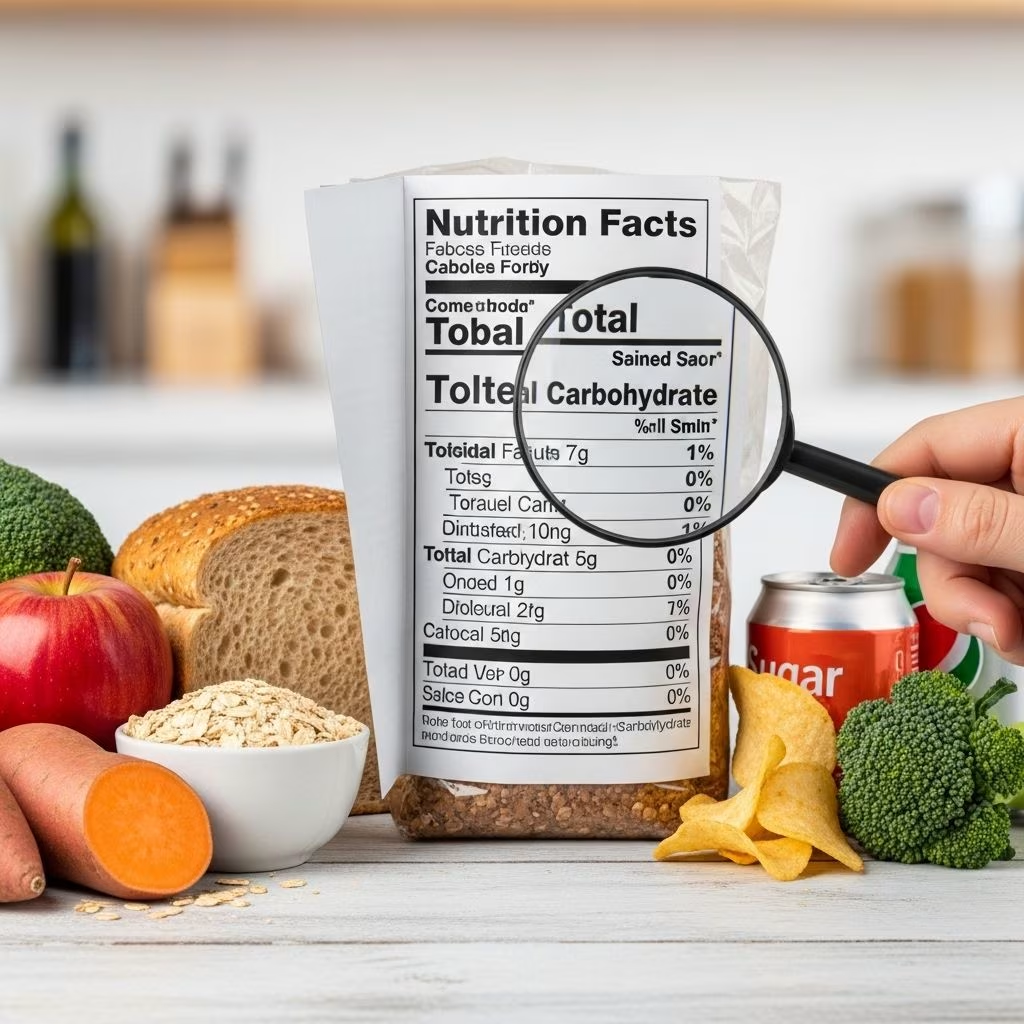
Decoding Food Labels: Understanding Carbohydrates for Healthier Choices
For anyone striving toward healthier eating—especially those interested in losing weight, managing blood sugar, or simply making informed dietary choices—understanding how to read food labels is crucial. Among the many nutrients and numbers on every food package, carbohydrates often spark confusion and debate. This article serves as an in-depth guide to demystifying carbs on food labels, helping you distinguish fact from marketing, and empowering you to make choices that fit your health goals.
Why Are Carbohydrates a Source of Confusion?
Carbohydrates are one of the three macronutrients, alongside protein and fat, and play a vital role in providing energy for your body. However, not all carbs are created equal. Modern diets, media, and fluctuating dietary trends have led to a stigma around certain types of carbs, often blurring the lines between beneficial whole foods and less healthy processed versions. Label claims such as “net carbs,” “impact carbs,” or references to the “glycemic index” can turn a simple shopping trip into an exercise in nutritional detective work.
How to Read Carbohydrates on Nutrition Labels
Every packaged food in the United States must display a Nutrition Facts panel that lists information per serving. But what do these numbers truly mean? Let’s break down the essentials:
- Total Carbohydrate: This number quantifies all carbs in a serving, including dietary fiber, sugars, and starches.
- Dietary Fiber: An indigestible part of plant foods, fiber is subtracted from the total carbohydrates for those counting “net carbs.” High fiber intake is linked to numerous health benefits, including improved digestion and better blood sugar control.
- Total Sugars: Shows all naturally occurring and added sugars.
- Added Sugars: Identifies sugars and syrups introduced during processing, now required on U.S. food labels.
To get the most accurate picture of what you’re about to eat, it’s important to start your label-reading with the serving size. All information, including carbohydrate content, is based on this serving—not necessarily the amount you may actually consume.
Serving Size: The Foundation of Label Reading
Before assessing carbohydrate content, examine the listed serving size and consider how it compares to your typical portion. The serving size appears at the top of the Nutrition Facts panel and reflects the amount commonly consumed in one sitting. Consuming more or less than this amount means you need to proportionally adjust the carbs and other nutrients you record.
- If one serving lists 30 grams of carbohydrates and you eat two servings, you’ve consumed 60 grams.
- Packages often contain more than a single serving, so check the “servings per container” line.
Total Carbohydrate: What’s Included?
The total carbohydrate number captures everything: dietary fiber, naturally occurring sugars, added sugars, and starches. The breakdown may appear below the main carbohydrate number on the label, showing how many grams of fiber and sugar are present in each serving.
Example:
| Nutrition Component | Amount per Serving |
|---|---|
| Total Carbohydrate | 28g |
| Dietary Fiber | 4g |
| Total Sugars | 7g |
| Added Sugars | 2g |
Starches are rarely listed separately on U.S. labels but are included within the total carbohydrate count.
What Are Net Carbs and Are They Useful?
The term “net carbs” is widely used in low-carb and ketogenic diet circles. Net carbs are generally calculated by subtracting dietary fiber (and sometimes certain sugar alcohols) from the total carbohydrate value, based on the premise that fiber does not significantly impact blood glucose. However, the FDA does not regulate “net carbs,” and this term is not officially defined.
- For example: If a food has 22g total carbs, 5g fiber, and 2g sugar alcohols:
Net Carbs = Total Carbs – Fiber – Sugar Alcohols = 22 – 5 – 2 = 15g - Some manufacturers further manipulate net carb calculations by excluding all sugar alcohols, which may not be accurate for everyone.
Health professionals caution against relying solely on “net carb” marketing: always refer to total carbohydrates first, especially if you manage blood glucose or other health concerns.
Added Sugars: A Crucial Factor
Since 2020, food labels in the United States must list added sugars—a key tool in helping consumers distinguish naturally occurring sugars (in fruits and dairy) from manufactured additions. Limiting added sugars can help reduce the risk of chronic diseases, support better energy levels, and promote weight management.
- “Added sugars” include syrups, honey, concentrates used as sweeteners, and sugars used in baking or processing.
- Dietary guidelines recommend keeping added sugars to less than 10% of your total daily calories.
Types of Carbohydrates—Breaking Down the Basics
Understanding carbs starts with knowing the difference between their forms:
- Simple Carbohydrates: Sugars that are quickly digested; found in sweets, many processed foods, milk, and some fruits.
- Complex Carbohydrates: Starches and fibers; found in whole grains, legumes, vegetables, and some fruits. These digest more slowly and provide sustained energy.
Decoding Common Marketing Claims on Food Packages
Claims on front-of-packaging can be misleading or, at the very least, confusing. Here’s how to interpret the most popular carbohydrate-related phrases.
- No Added Sugar: Means no sugars were added during processing, but the product can still contain natural sugars, like those found in fruit.
- Sugar-Free: Must contain less than 0.5g sugars per serving, but may include sugar alcohols or artificial sweeteners.
- Reduced Sugar: At least 25% less sugar than the original version, but still may be relatively high in sugar overall.
- Low Glycemic/Glycemic Index (GI): Refers to the impact a food has on blood sugar, but the GI is not a part of official FDA labeling. GI scores can vary greatly due to multitude of factors, including food combinations and preparation methods.
- Net Carbs: Not regulated; always look at total carbohydrates first.
Fiber: The Unsung Carb Champion
Dietary fiber is a carbohydrate your body can’t digest. Instead of boosting blood sugar, it passes through the digestive system, providing several key health benefits, including reduced cholesterol, improved bowel health, and a lower risk for certain chronic ailments.
- Look for foods with at least 3g of fiber per serving to boost your intake.
- Whole grains, legumes, fruits, and vegetables are top sources.
- High-fiber content often means a food is less processed and provides longer-lasting energy.
Glycemic Index and Glycemic Response: Should You Care?
Glycemic Index (GI) measures how quickly a carbohydrate-containing food raises blood glucose levels. While some products tout “low GI” rankings, these claims are not part of standard food labeling regulations in the U.S., and various factors (ripeness, processing, food combinations) can dramatically affect a food’s GI. People with diabetes may benefit from monitoring GI, but for most consumers, focusing on fiber-rich, minimally processed carbs is more practical and beneficial.
International Perspectives: Food Labeling Across Borders
Food labeling regulations for carbohydrates, fiber, and quality indicators may vary internationally. Some countries, like Australia and New Zealand, offer detailed labeling on fiber and GI that surpasses what’s available in the U.S. European Union regulations also focus on accurate nutrient declarations and restrict misleading claims. Regardless of the region, all systems aim to help shoppers identify nutrient-rich, minimally processed carbohydrate sources for better health.
Getting the Most From Food Labels—Quick Tips
- Always start with serving size—all nutrition information relates to this.
- Use total carbohydrate as your primary reference, not just sugars.
- Seek higher fiber foods (3g or more per serving) for satiety and long-term health.
- Be skeptical of “net carbs” or “impact carbs” claims; check the facts.
- Limit added sugars as much as possible.
- Choose whole grains in ingredient lists to maximize nutrient content.
- Don’t assume “sugar-free” means healthy; check for sugar substitutes or excess starches.
Common Myths and Facts About Carbs on Labels
| Myth | Fact |
|---|---|
| Low-carb means healthier | Quality matters more than the total amount; whole-food carbs fuel your body and brain. |
| Sugar substitutes don’t count | Sugar alcohols may impact blood sugar and digestion—read the ingredient list. |
| Fruit sugars are harmful | Natural sugars in fruits are packaged with fiber, vitamins, and minerals; they’re very different from added sugars. |
| All starches are bad | Whole-food starches provide energy, fiber, and nutrients. Refined starches (white bread, some cereals) offer less nutrition. |
Frequently Asked Questions About Carbohydrates and Food Labels
How do I find hidden sugars in products?
Check the ingredient list for words like cane juice, corn syrup, brown rice syrup, fructose, or any word ending in “-ose.” These indicate added sugars, even if they’re not listed separately in the Total Sugars section.
What’s the difference between total carbohydrates and net carbs?
Total carbohydrates include all carbs in a food—fiber, starches, and sugars. Net carbs subtract fiber (and sometimes sugar alcohols) since they have less effect on blood sugar, but the FDA does not officially endorse this term.
Are carbohydrates always bad for weight loss?
No. Nutrient-dense carbohydrates like fruits, vegetables, and whole grains are high in fiber and help you feel fuller longer. It’s the quality and quantity of carbs that matters, not just the total number.
How many carbs should I eat per day?
Carbohydrate needs vary by age, activity, and health status. Most guidelines suggest carbs make up 45–65% of daily calories, preferably from whole food sources. Consult a registered dietitian for personalized advice.
Does “gluten-free” mean low in carbs?
No. Many gluten-free products are just as high (or higher) in carbohydrates as their wheat-based counterparts. Always check the label for total carbohydrate content.
Takeaway: Making Informed Carb Choices
The key to eating well isn’t about fearing carbs—it’s about making strategic choices based on accurate label reading. Focus on portion sizes, opt for higher fiber and whole grain offerings, and steer clear of misleading marketing terms. Whether you’re aiming for weight loss, blood sugar control, or simply better energy, understanding food labels is your gateway to healthier, more satisfying meals.
References
- https://pmc.ncbi.nlm.nih.gov/articles/PMC7353004/
- https://diabetes.org/food-nutrition/reading-food-labels/making-sense-food-labels
- https://pmc.ncbi.nlm.nih.gov/articles/PMC6340779/
- https://www.prevention.com/food-nutrition/a64904808/quality-carbohydrates-healthy-aging-longevity-study/
- https://www.prevention.com
- https://www.fda.gov/food/nutrition-food-labeling-and-critical-foods/use-healthy-claim-food-labeling
- https://www.heart.org/en/healthy-living/healthy-eating/eat-smart/nutrition-basics/understanding-food-nutrition-labels
- https://www.fda.gov/files/food/published/Food-Labeling-Guide-(PDF).pdf


