


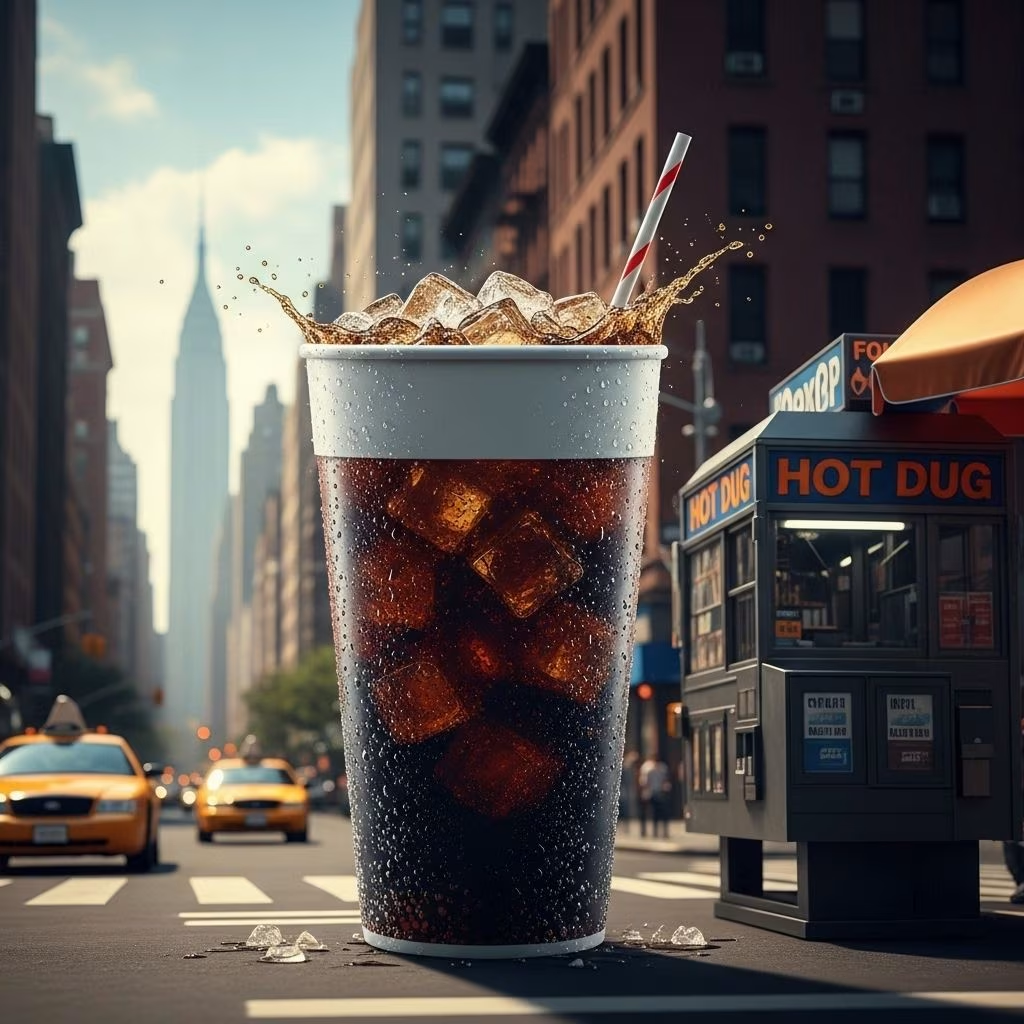
NYC’s Big Soda Ban: The Debate Over Super-Sized Sugary Drinks
In a landmark move aimed at curbing the rising tide of obesity and related health issues, New York City launched a proposal to restrict the sale of large sugary beverages. Spearheaded by Mayor Michael Bloomberg, this initiative set off fierce debates not just among citizens and businesses, but also throughout the national public health community. This article takes an in-depth look at the proposal, its underlying health motivation, the arguments for and against, the wider context of dietary regulations, and answers pressing questions the public has raised.
The Proposal: What Did NYC Seek to Ban?
The core objective of the NYC soda ban was straightforward: to limit the sale of sugary drinks in excessive portions. The regulation targeted beverages sweetened with sugar or another caloric sweetener—such as regular sodas, sweetened teas, energy drinks, and fruit drinks—if they contained more than 25 calories per eight ounces and had less than 51% milk or milk substitute by volume as an ingredient.
- Size Limit: Establishments would be prohibited from selling sugary beverages in containers larger than 16 fluid ounces.
- Where Applied: The rule would apply to restaurants, movie theaters, fast food outlets, sports venues, street carts, and delis—but not to grocery or convenience stores that did not sell prepared food.
- Exemptions: The ban would not affect diet sodas, drinks with at least half milk or milk substitute, 100% juice, or alcoholic beverages.
- Enforcement: The ban was slated to be enforced through city restaurant inspections, with violators facing fines after a grace period.
- Timeline: Upon final approval, the policy would roll out six months later, giving businesses time to adjust.
Motivations: The Health Crisis Driving the Ban
Obesity rates have been climbing steadily in New York City and across the United States. Public health advocates have highlighted sugary drinks as significant contributors to excess calorie consumption, weight gain, and chronic conditions such as type 2 diabetes and tooth decay. Mayor Bloomberg’s administration had made prior efforts to address such issues, including banning trans fats in restaurants, requiring calorie counts on menus, and prohibiting smoking in public places.
Bloomberg and city officials pointed to research showing a clear link between frequent consumption of sugary drinks and the rise in obesity rates. The American Diabetes Association (ADA) publicly applauded the effort, noting that targeting soda was “shining a spotlight on the issue of frequent and excessive consumption of soda and other sugary beverages, which raises the risk of adverse health conditions such as obesity, diabetes, and tooth decay”.
Arguments in Favor of the Ban
- Public Health Advocacy: Health experts and several medical organizations asserted that reducing portion sizes would help lower overall sugar intake and thus improve population health.
- Raising Awareness: Supporters believed the ban generated much-needed attention for the dangers of excessive soft drink consumption and would spark discussions about dietary choices.
- Historical Precedent: The administration cited previous public health measures, such as tobacco regulation and calorie labeling, arguing these interventions successfully contributed to reductions in smoking rates and increased nutritional awareness.
- Policy Innovation: The ban was framed as a bold, innovative approach for other cities and states to consider, potentially setting a national example for tackling the obesity epidemic.
Arguments Against the Ban
- Personal Freedom and Choice: Opponents decried the proposal as an overreach of government authority—a “nanny state” move that invaded personal choices. The New York City Beverage Association argued the policy was “zealous” and misplaced.
- Business Burden: Industry groups, such as the National Restaurant Association, labeled the proposal “hyper-regulation,” expressing concern that it would hurt small businesses and restaurant revenue—especially after economic downturns.
- Selective Enforcement: Critics highlighted inconsistencies, since the ban did not apply in all retail contexts (notably exempting convenience and grocery stores).
- Lack of Comprehensive Approach: Representatives from fast food chains argued that obesity was a complex issue that could not be solved by targeting one food or beverage alone.
- Public Support in Question: Industry spokespersons asserted that many New Yorkers were not in favor of such top-down measures, and that voluntary education and encouraging healthy choices were preferable to outright bans.
Public Reaction: Divided Opinions and Media Frenzy
Almost immediately, the proposal sparked both passionate support and vehement opposition from city residents, business owners, health experts, and pundits. Media outlets picked up the story nationally, framing it as a test of the limits of municipal authority to regulate public diet and lifestyle. The ban’s supporters were energized, while its critics—both business and political—mounted campaigns to reverse or soften the measure.
Impacts on Industry and Consumers
| Stakeholder | Expected Impact |
|---|---|
| Restaurants, Movie Theaters, Delis | Required to remove or repackage large drink offerings, potentially affecting sales of high-margin sodas |
| Consumers | Would have to buy multiple smaller drinks to obtain the same volume, or switch to exempt drinks (diet, milk-based, etc.) |
| Soft Drink Manufacturers | Faced significant pushback; increased campaigning against regulatory efforts |
| Public Health Agencies | Applauded the move as a necessary experiment in environmental and behavioral change |
While some vendors predicted devastating impacts on revenue, others said the ban’s actual sales effect might be minimal, since most soda purchases were already in moderate sizes. However, the ban’s potential to create “unintended consequences”—such as encouraging consumers to buy two bottles instead of one—remained an issue of concern.
Previous and Related Health Policies in NYC
- Trans Fat Ban: Outlawed trans fats in all NYC restaurant foods.
- Calorie Labeling: Mandated calorie counts on menus and boards in chain restaurants.
- Smoking Restrictions: Instituted some of the nation’s earliest bans on indoor smoking, and extended regulations to include city parks and beaches.
- Sodium Campaigns: Promoted reduction in restaurant salt usage, including through menu warnings.
- Nutritional Grading: Required restaurants to publicly post health inspection grades.
These policies, while controversial at rollout, have often been cited by the Bloomberg administration as contributing to New Yorkers’ increased life expectancy and reduced rates of some chronic diseases.
The Larger Debate: Can Bans Change Eating Habits?
Central to the soda ban debate was the question of whether regulation (“a stick”) is more effective than education (“a carrot”) in changing dietary habits. While some health advocates support strong interventions, others argue that motivation and sustainable habits require public buy-in and engagement.
Data from other health campaigns (notably tobacco control) suggests that a combination of regulation and public education delivers the strongest outcomes. However, the soda ban’s critics maintain that obesity requires a much more comprehensive response—including improved physical activity opportunities, food access equity, and broader shifts in cultural attitudes towards consumption.
The National and Global Context
New York City’s action came amid growing national debate over sugar taxes, beverage marketing, and food deserts. Other governments have considered similar measures, including taxes on sugary beverages and restrictions on advertising or product placement. Major cities and states have since observed NYC’s approach as a test case for public health policy around sugary drinks, with varying levels of support or imitation.
- Sugar Taxes: Some states and local entities have imposed taxes on sugary drinks to deter consumption and fund health initiatives.
- SNAP Restrictions: There have been proposals to limit soda purchases using Supplemental Nutrition Assistance Program (SNAP) benefits, but these have faced policy and legal hurdles.
Current Status and Legacy
The soda ban, though ultimately blocked in court before full implementation, set a precedent for how cities can aggressively pursue public health goals. It catalyzed new research, advocacy, and policy proposals across the country.
Mayor Bloomberg, though criticized by opponents as enacting a “nanny state,” has continued to defend the strategy, citing the urgency of combatting obesity and associated health costs.
Frequently Asked Questions (FAQs)
Q: Which beverages did the NYC soda ban include and exclude?
A: The ban targeted sweetened drinks with more than 25 calories per 8 ounces and less than 51% milk by volume, such as regular sodas and energy drinks. It did not include diet sodas, 100% juices, drinks made at least half with milk, or alcoholic beverages.
Q: Where did the regulation apply?
A: The rule applied to foodservice venues like restaurants, fast food outlets, delis, movie theaters, sports venues, and street vendors—but not to grocery stores or convenience stores selling only packaged goods.
Q: What was the size limit for drinks under the ban?
A: Sugary beverages could not be sold in containers larger than 16 fluid ounces in covered establishments.
Q: How did the restaurant industry respond?
A: The restaurant industry vocally opposed the ban, arguing that it placed unnecessary burdens on businesses and would not meaningfully affect public health. Some operators also feared negative impacts on sales of high-margin fountain drinks.
Q: Has the NYC soda ban influenced other policies?
A: Yes, the policy’s publicity spurred new legislative efforts, such as sugary drink taxes and marketing restrictions in other cities and states. While some policies drew inspiration from NYC’s actions, others faced resistance or legal challenges.
Q: Why was the policy considered symbolic by some experts?
A: Even supporters noted that the ban’s greatest impact may have been in raising awareness of dietary risks rather than reducing sugar intake on its own, inspiring broader conversations about nutrition and public health.
Key Takeaways
- NYC’s soda ban targeted super-sized sugary drinks in foodservice establishments as part of a larger strategy to fight obesity.
- The ban was highly controversial, sparking debate about the roles of government, industry, and personal choice in health behavior.
- Similar public health policies, such as bans on trans fats and menu labeling, have precedent in NYC and nationwide.
- Though the soda ban was eventually blocked, it elevated national discussion around sugar consumption, obesity, and creative public health approaches.
Further Reading and Resources
- CDC: Rethink Your Drink nutrition guides
- New York City Health: Data and reports on obesity rates and prevention programs
- Research articles on sugar consumption and health outcomes from peer-reviewed medical journals
References
- https://www.drbicuspid.com/dental-hygiene/nutrition/sugar/article/15365649/nyc-bans-large-sugary-drinks
- https://cspdailynews.com/beverages/nyc-mulling-large-soda-ban
- https://www.nrn.com/casual-dining/restaurant-industry-leaders-oppose-proposed-new-york-soda-ban
- https://www.fns.usda.gov/snap/waivers/foodrestriction
- https://www.nysenate.gov/legislation/bills/2025/A3490
- https://www.texaschildrens.org/content/wellness/soda-ban-or-not-ban-that-question


