


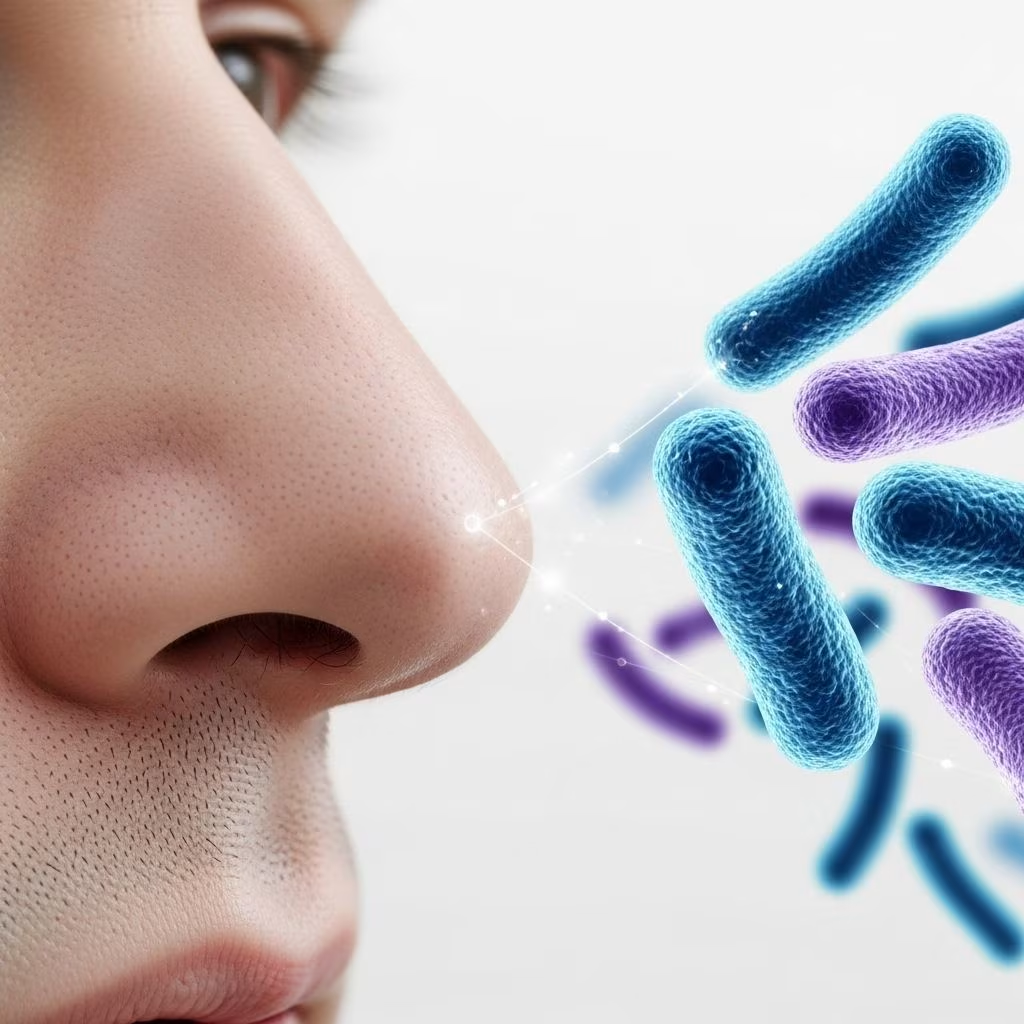
The Surprising Link Between Men’s Body Weight and Nose Bacteria
Recent research has uncovered a fascinating and unexpected connection: men’s body weight appears to influence the types and abundance of bacteria living in their noses, with slim, traditionally attractive men harboring fewer potentially harmful strains compared to their heavier peers. This discovery sheds new light on how physical traits and underlying health could be more interconnected than previously thought.
Why Focus on Nasal Bacteria?
When most people think of bacteria affecting health, the gut microbiome comes to mind. However, scientists have increasingly noted that the nose has its own dynamic microbiome — populations of microbes that live, flourish, and sometimes protect or endanger us right inside our nostrils. These tiny organisms can influence factors ranging from susceptibility to respiratory infections to overall immune resilience.
- Potentially pathogenic bacteria such as Staphylococcus aureus, Streptococcus pyogenes, and those responsible for flu can reside in the nasal cavity.
- A healthy nasal microbiome may protect against chronic illnesses like rhinosinusitis, while disruptions can increase disease risk.
The Study: Linking BMI, Attractiveness, and Nasal Bacteria
Researchers from the University of Wroclaw in Poland conducted a study involving 90 healthy men ages 18 to 34, measuring height, weight, and taking nasal swabs to analyze the bacterial composition of each participant’s nose.
- BMI Calculated: Heights and weights were recorded to compute Body Mass Index (BMI).
- Bacteria Sampled: Nasal and throat swabs were collected to identify potentially harmful bacterial colonization.
- Physical Traits Examined: Researchers also explored anthropometric features such as waist, hip circumference, and overall attractiveness from an evolutionary perspective.
The core question: Does body weight or physical build correlate to the types of bacteria found in men’s nasal passages?
Key Findings
| Feature | Slim Men | Heavier Men |
|---|---|---|
| Bacterial Colonization | Fewer potentially harmful strains | More disease-causing bacteria |
| Attractiveness (Evolutionary) | Considered higher, signals good health | Lower attractiveness, possible immune weakness |
| Immunity Signal | May possess “better genes” for immunization | Increased vulnerability to infections |
Researchers found that men with higher BMIs are significantly more likely to host potentially pathogenic, disease-causing bacteria in their noses than their slimmer counterparts. In contrast, lean men tended to have nasal passages relatively free of these dangerous bugs.
The Good Gene Hypothesis
This pattern supports the “good gene hypothesis” in evolutionary biology: traits like leanness and physical attractiveness may truthfully signal underlying biological quality, including a healthier, more robust immune system.
- Men with lower BMI may possess genes that confer greater immunological strength.
- Higher resistance to bacterial colonization can be perceived as a valuable evolutionary advantage.
- Physical attractiveness, including leanness, may thus indicate a lower risk for transmissible diseases.
What These Results Mean for Health
It’s widely recognized that excess body fat carries risks like heart disease, hypertension, diabetes, and elevated cholesterol. This new evidence suggests another dimension: overweight men may also have weaker defenses against opportunistic bacterial infections, as indicated by their nasal colonization patterns.
- A weakened immune system allows opportunistic bacteria to flourish and potentially cause serious illnesses.
- Maintaining a healthy body weight may help curb not just metabolic diseases, but also infection risk from respiratory bacteria.
- Immune fitness could be reflected externally by traits such as BMI and possibly attractiveness.
Nose vs. Gut Microbiome: A New Frontier?
Just as the gut microbiome has been shown to dramatically influence digestion, immunity, and disease risk, new research suggests that the nasal microbiome could play a similarly important role.
- Healthy people tend to have higher levels of beneficial bacteria like lactobacilli in their noses.
- Experimentation with nasal probiotics shows promise, though it’s in very early stages and not yet recommended for general use.
- Future therapies could remodel the nose’s microbiome to reduce risk for disorders like chronic rhinosinusitis or frequent respiratory infections.
Is This True for Women as Well?
The researchers observed a distinctive gender difference: while heavier men had more nasal colonization by harmful bacteria, the effect was not seen in women. The reason for this sex-based difference remains unclear, although some speculate that hormonal factors or differing immune profiles between men and women might play a role.
Why Do Men Have Bigger Noses?
Interesting related research shows that, on average, men’s noses are about 10% larger than women’s, attributed to higher lean muscle mass and increased oxygen needs. While nose size itself wasn’t directly linked to bacterial colonization in the core study, these anatomical differences remind us that respiratory health and nasal ecology can intersect with broader physiological traits.
- Bigger noses in men help meet oxygen demands for larger muscle mass.
- Anatomy may influence how and where bacteria colonize nasal passages.
Implications: Immune Strength, Health, and Evolution
Understanding the connection between body composition and microbial resistance in the nose may change how we interpret physical traits as signals of health. Evolutionary theories suggest that being lean and attractive from a biological perspective could indicate an edge in immunity — a trait desirable for reproduction and survival.
- Physical traits can provide clues about immune system strength and disease resistance.
- From an evolutionary standpoint, these signals may affect mate selection and reproductive success.
What Can You Do?
- Maintain healthy weight: Practice balanced nutrition and regular exercise to lower BMI and possibly encourage a healthier nasal microbiome.
- Support immune function: Good sleep, stress management, and healthy habits boost immunity and may minimize risk of pathogenic colonization.
- Avoid unnecessary antibiotics: Overuse can disrupt natural microbial balance, both in the gut and the nose.
- Consider future therapies: While not yet widely available, nasal probiotics might eventually serve as treatments for certain nasal or respiratory illnesses.
Nasal Health Quick Facts
- The nose is a primary gateway for air and airborne pathogens.
- Imbalances in nasal bacteria can increase risk for infections like staph and strep.
- Nose microbiome, like the gut’s, plays a critical role in immune function.
Frequently Asked Questions
Q: Does losing weight really improve nasal bacterial health?
A: According to research, slimmer men tend to have lower levels of harmful nasal bacteria, indicating a possible effect of BMI on microbial colonization. However, further study is needed to clarify causation versus correlation.
Q: Should everyone consider nasal probiotics?
A: Nasal probiotics are an experimental therapy. While small-scale studies suggest possible benefits, they aren’t yet recommended for widespread use due to insufficient evidence and lack of large, controlled trials.
Q: Why isn’t this link seen in women?
A: The study found no significant association between BMI and nasal bacteria in women. Possible reasons include differences in immune system physiology, hormones, or other unstudied factors.
Q: Can changing my diet or exercise impact my nose bacteria?
A: Healthy lifestyle habits that promote weight management and immune strength may indirectly support a beneficial nasal microbiome, although direct evidence is limited.
Q: Are physical traits really signals of inner health?
A: Evolutionary biology suggests that traits like leanness and attractiveness may honestly reflect underlying health and immunity, signaled by microbial patterns among other factors.
Conclusion: Why Nasal Bacteria Matter in Health and Evolution
This growing body of research spotlights how the nose, often overlooked in discussions about overall health, can provide critical clues to a person’s immune system and vulnerability to disease. Men’s body composition may be more closely linked to nasal bacterial patterns than previously imagined, adding new wrinkles to the ongoing story of health, beauty, and evolution. As future research further clarifies these links, maintaining a healthy weight and strong immunity remains a wise strategy — for nose health, and far beyond.
Further Reading
- Beauty and Bacteria: Slim, Attractive Men Have Less Nasal Bacteria – American Journal of Human Biology (summary links findings with BMI and nasal bacteria)
- Your Nose Has Its Own Microbiome – ScienceAlert (explains emerging research on nasal probiotics and health implications)
- The Big Male Nose: Why Men’s Noses Are Bigger Than Women’s – University of Iowa (explores physiological and evolutionary reasons for differences in nose size)
References
- https://www.medindia.net/news/gorgeous-men-have-less-nasal-bacteria-reveals-research-132070-1.htm
- https://www.prevention.com/weight-loss/a20467961/the-odd-link-between-skinny-guys-and-nose-bacteria/
- https://www.sciencealert.com/your-nose-bacteria-might-play-a-role-in-good-health-just-like-the-gut-microbiome
- https://www.infectioncontroltoday.com/view/study-finds-slim-attractive-men-have-less-nasal-bacteria-heavy-men
- https://www.sciencedaily.com/releases/2014/02/140218100715.htm
- https://www.sciencedaily.com/releases/2013/11/131118160045.htm
- https://telegrafi.com/en/thin-and-attractive-men-have-less-nasal-bacteria/
- https://pmc.ncbi.nlm.nih.gov/articles/PMC7998121/


