


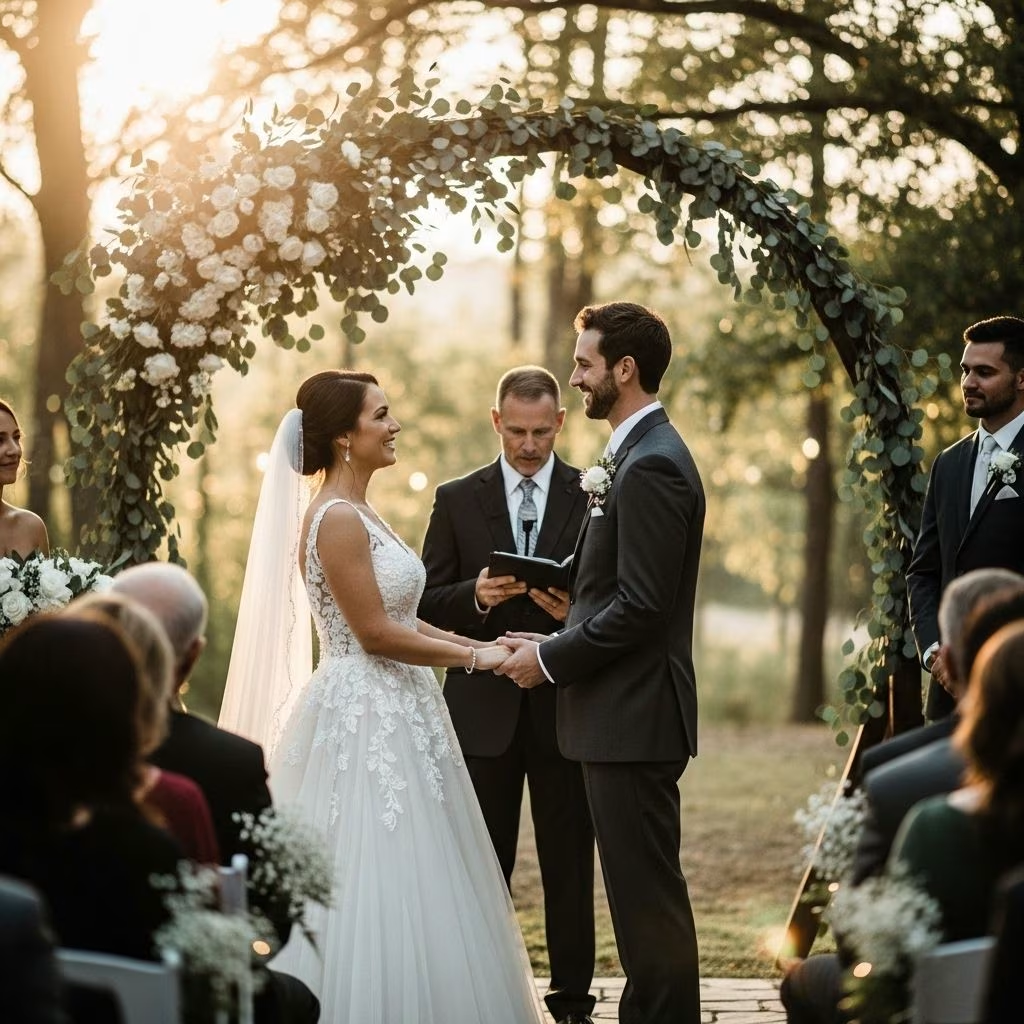
In a television landscape saturated with conventional love stories and predictable romantic arcs, You’re the Worst consistently defied expectations throughout its five-season run. The FX/FXX comedy series, which centered on the tumultuous relationship between self-destructive narcissist Jimmy Shive-Overly and clinically depressed PR rep Gretchen Cutler, built its reputation on subverting romantic tropes and presenting love in its messiest, most authentic form. When it came time to address their wedding, the show remained true to its characters in the most perfectly imperfect way possible.
The relationship between Jimmy and Gretchen began at a wedding, making their own wedding date carry special significance. They met at the wedding of Vernon and Becca Barbara, where Jimmy attended specifically to ruin his ex-girlfriend Becca’s special day, while Gretchen showed up as the plus-one of her best friend Lindsay, Becca’s sister. Their first encounter involved Jimmy being thrown out of the reception after whispering something offensive to the bride, while Gretchen made off with a stolen wedding gift. This inauspicious beginning set the tone for everything that followed in their relationship.
A Foundation Built on Chaos and Honesty
From their very first hookup, Jimmy and Gretchen established an unconventional dynamic that would define their entire relationship. Both claimed to have no interest in traditional relationships, preferring to just “hang out and have fun” without obligation or expectations. This anti-romantic stance wasn’t mere posturing; both characters carried deep emotional wounds and defense mechanisms that made vulnerability nearly impossible. Jimmy, a British novelist who had written one moderately successful book during a post-breakup depression, lived a comfortable but emotionally stunted existence in upscale Silver Lake. Gretchen, meanwhile, publicist for a rap trio, embraced a chaotic lifestyle of sex, drugs, and rock and roll that masked her deeper struggles with clinical depression.
What made their relationship remarkable wasn’t that they eventually fell in love despite their protestations, but that they did so while maintaining brutal honesty about their flaws, failures, and fears. The show never softened its characters or their relationship dynamics to make them more palatable. Instead, it leaned into the discomfort, exploring how two fundamentally broken people could build something meaningful together without fixing themselves first.
The Rocky Road to Commitment
Jimmy and Gretchen’s path to their wedding was marked by catastrophic mistakes, cruel behavior, and moments of genuine emotional terrorism directed at each other. Their relationship timeline reads like a catalog of terrible decisions and painful betrayals, each one threatening to end things permanently.
In the early days of their relationship, they engaged in petty score-keeping that would seem juvenile if it weren’t so revealing of their deeper insecurities. When Gretchen noted they weren’t officially a couple, Jimmy slept with Hollywood actress Megan Thomas, prompting Gretchen to retaliate by sleeping with an ex-hookup. The tit-for-tat escalated absurdly, with Gretchen sleeping with a stranger in an alley to gain the upper hand, followed by Jimmy lying about sleeping with an ex to even the score. This childish behavior masked their actual desire to be exclusive with each other, a vulnerability neither could admit.
More devastating incidents followed as their relationship deepened. When Jimmy tried to “fix” Gretchen’s clinical depression with a spooky Sunday Funday, he ended up flirting with and eventually hooking up with Nina, a bartender, though he ultimately couldn’t go through with leaving with her for the weekend. Following his father’s death, Jimmy made a pros and cons list about his life that included Gretchen, leading her to create her own list in retaliation. When they agreed to share one item from their lists, Jimmy confessed he couldn’t see having kids with Gretchen, while she admitted she feared he would never be successful. These brutally honest exchanges cut to the core of their deepest insecurities.
The Proposal and Abandonment
Perhaps the most defining moment of their pre-wedding relationship came when Jimmy finally proposed to Gretchen in what seemed like a perfect moment. The proposal itself was absolutely perfect, capturing everything they meant to each other. But when an ecstatic Gretchen responded by saying “we’re a family now,” Jimmy panicked. In what the show itself acknowledged as potentially the worst thing anyone had done throughout the series, Jimmy immediately got in his car and drove away without explanation, abandoning Gretchen for three months without a word.
This disappearance represented Jimmy’s deepest fear of commitment and family, triggered by a single word that represented everything he thought he didn’t want. When he finally reached out to Gretchen three months later, he did so with a casual “Hey…” text, demonstrating a spectacular lack of awareness about the gravity of his actions. His eventual apology was undermined when he added “but you did say family,” essentially blaming Gretchen for his cowardice and proving he still didn’t fully understand what he had done.
These weren’t cute misunderstandings or sitcom-level conflicts that could be resolved in twenty-two minutes. They were genuine betrayals and emotional damage that required real work to overcome. The show never minimized these actions or suggested they were acceptable because the characters loved each other. Instead, it forced Jimmy and Gretchen to confront the reality that love doesn’t erase harm, and commitment means choosing to stay even when staying is difficult.
Confronting the Reality of Marriage
One of the most crucial episodes in Jimmy and Gretchen’s journey toward marriage came in the second season episode titled “LCD Soundsystem.” This installment featured Gretchen meeting what appeared to be her ideal family: Rob and Lexi, a seemingly perfect couple with a beautiful home, a treehouse, and all the trappings of suburban bliss. Gretchen found herself genuinely envious of what they had built, forcing her to confront her own deeply ingrained beliefs about relationships and her sense of being fundamentally unlovable.
However, the episode took a dark turn when Rob, slightly drunk, began confessing to Gretchen about everything he resented in his life. He complained about his wife’s car, their mortgage, the loss of freedom that came with their daughter, and even admitted he had thought about divorcing Lexi. This revelation shattered the illusion of perfect marriage and reinforced Gretchen’s cynicism, while also presenting a more honest picture of what commitment actually entails: choosing to stay despite doubts, resentments, and the knowledge that things might not work out.
This episode laid bare Gretchen’s skewed ideas about marriage and how they would undercut her relationship with Jimmy at every turn. Similarly, Jimmy’s own pessimism and failure to recognize Gretchen’s emotional needs created ongoing disasters. Both characters carried trauma and defense mechanisms that made traditional relationship milestones fraught with danger.
The Perfect Anti-Wedding
Given everything Jimmy and Gretchen had been through, their actual wedding needed to reflect who they truly were rather than conforming to what weddings are “supposed” to be. The series spent its final season building toward their wedding, creating expectations about how this unconventional couple would finally tie the knot. Would they have a traditional ceremony? Would they elope? Would one of them run away again?
The answer the show provided was perfectly in character: Jimmy and Gretchen skipped their own wedding entirely. In the series finale, rather than going through with a ceremony that would have felt false to who they were, they chose to spend the time that should have been their wedding sharing a plate of pancakes together. This wasn’t an act of cowardice or another abandonment; it was a conscious choice to commit to each other on their own terms, rejecting the societal expectations and traditional structures that had never fit them anyway.
The final scene found them discussing the very real possibility that their union could end in catastrophe. They weren’t making vows based on naive optimism or the belief that love conquers all. Instead, they were acknowledging that relationships are difficult, that they would continue to hurt each other, and that there were no guarantees about the future. Yet despite knowing all of this, they chose to commit anyway. As the show’s perspective maintained throughout: love is for suckers, but sometimes it’s okay to be a sucker.
Why the Wedding Date Mattered
The choice to skip their wedding wasn’t about the specific date on the calendar, but rather about what that date represented. By choosing not to show up to their own wedding, Jimmy and Gretchen were making a statement about the nature of their commitment. They weren’t interested in performing their relationship for others or meeting external expectations about what their love should look like. Their relationship had always been about finding someone who saw them at their worst and chose to stay anyway.
Throughout the series, both characters had demonstrated a pattern of self-sabotage when faced with traditional relationship milestones. Jimmy’s abandonment after proposing was only the most dramatic example. By skipping their wedding, they were finally breaking that pattern not by running away from commitment, but by redefining it entirely. Their commitment to each other didn’t require a ceremony, witnesses, or vows spoken in front of family and friends. It only required them showing up for each other in the small, daily ways that actually matter.
The series finale also revealed that despite their years of protestation, Jimmy and Gretchen had started a family together. This callback to the word that had sent Jimmy fleeing years earlier showed genuine growth and change. They had confronted their fears and insecurities not by overcoming them entirely, but by choosing to move forward despite them. The family they created together would undoubtedly be as messy and unconventional as their relationship, but it would be authentically theirs.
Subverting Romantic Comedy Tropes
You’re the Worst consistently positioned itself as an anti-romantic comedy, deconstructing the genre’s tropes while still delivering genuine emotional moments. The wedding episode represented the culmination of this approach. Traditional romantic comedies treat weddings as the ultimate happy ending, the moment when all conflicts are resolved and true love triumphs. The genre typically presents marriage as the goal, with the entire narrative building toward that climactic moment.
By having Jimmy and Gretchen skip their wedding, the show rejected this narrative structure entirely. It suggested that the wedding itself was never the point; the work of building a relationship was the point. All the terrible things they had done to each other, all the ways they had failed and hurt one another, weren’t obstacles to be overcome before reaching the happy ending. They were the actual substance of the relationship, the evidence that they had chosen each other repeatedly despite having every reason to walk away.
This approach felt revolutionary in its honesty. Most romantic narratives ask us to believe that once two people overcome their obstacles and commit to each other, everything will be fine. You’re the Worst acknowledged that commitment is just the beginning of the work, not the end. Jimmy and Gretchen’s relationship would continue to be difficult. They would continue to make mistakes, hurt each other, and struggle with their own demons. But they would do it together, and that was enough.
The Significance of Starting at a Wedding
The fact that Jimmy and Gretchen met at a wedding added layers of meaning to their decision to skip their own. Their relationship began in the chaos of someone else’s celebration, with both of them acting as agents of disruption rather than respectful guests. They came together through theft and spite, connecting over their shared cynicism about love and commitment. That wedding represented everything they claimed to reject about traditional relationships.
By the end of the series, they had completed a circle of sorts. They had gone from two people who mocked the institution of marriage while secretly longing for connection, to two people who understood that marriage didn’t have to look the way society insisted it should. The wedding date they chose to ignore wasn’t a rejection of their commitment but an affirmation of it. They were finally secure enough in their relationship to not need the external validation that a wedding provides.
This journey from wedding crashers to wedding skippers represented genuine character growth without betraying who they fundamentally were. Jimmy and Gretchen didn’t become different people; they became people who accepted themselves and each other more fully. They didn’t need to perform normalcy or pretend to be the kind of people who have traditional weddings, because they had found someone who loved them despite, and perhaps because of, their inability to be normal.
A Tribute to Imperfect Love
Ultimately, Jimmy and Gretchen’s wedding date served as the perfect tribute to their relationship because it honored everything they had been through together. It acknowledged the pain they had caused each other, the growth they had achieved, and the work that still lay ahead. It celebrated their love without romanticizing it, and it committed to their future without making false promises about what that future would hold.
The series finale’s approach to their wedding represented a kind of radical honesty that television rarely allows romantic relationships. Most shows would have given them either a traditional happy ending with a beautiful ceremony or a dramatic crisis that threatened to tear them apart one final time. You’re the Worst did neither, instead giving them a quiet moment of connection that meant more than any ceremony could have.
When Jimmy and Gretchen sat down to share pancakes instead of attending their wedding, they were choosing authenticity over performance, private connection over public declaration. They were saying that their relationship existed in the small moments, the daily choices to stay and try, rather than in grand gestures or traditional milestones. This was the relationship they had built together: messy, difficult, sometimes painful, but ultimately real in a way that more conventional relationships often aren’t.
Frequently Asked Questions
Q: Did Jimmy and Gretchen actually get married in You’re the Worst?
A: Yes, Jimmy and Gretchen committed to each other and started a family together, but they chose to skip their actual wedding ceremony. Instead of attending their wedding, they spent the time sharing pancakes and honestly discussing their relationship, which was far more authentic to their characters than a traditional ceremony would have been.
Q: Why did the wedding date matter for their relationship?
A: The wedding date represented their choice to commit on their own terms rather than conforming to societal expectations. By choosing not to attend their wedding, they demonstrated that their commitment to each other didn’t require external validation or traditional structures. It was a tribute to the unconventional nature of their entire relationship.
Q: What was the worst thing Jimmy did to Gretchen?
A: The worst thing Jimmy did was abandoning Gretchen immediately after proposing when she said “we’re a family now.” He drove away without explanation and disappeared for three months, leaving her heartbroken and confused. When he finally reached out, he initially failed to understand the severity of his actions.
Q: How did You’re the Worst portray depression in relationships?
A: The show depicted Gretchen’s clinical depression realistically, showing how it affected her relationship with Jimmy and exploring his attempts to help her, which sometimes made things worse. The series never suggested that love could cure mental illness, instead showing how partners navigate these challenges together while maintaining honest communication about limitations and needs.
Q: What made Jimmy and Gretchen’s relationship different from typical TV romances?
A: Their relationship was built on brutal honesty about their flaws and the acknowledgment that love doesn’t erase harm or make everything perfect. The show never softened their worst behaviors or suggested that commitment would magically fix their problems. Instead, it presented love as a choice to stay despite knowing all the ways things could go wrong, making their relationship feel more authentic than most television romances.
References
- https://www.tvguide.com/news/youre-the-worst-jimmy-gretchen/
- https://en.wikipedia.org/wiki/You’re_the_Worst
- https://filmschoolrejects.com/youre-the-worst-lcd-soundsystem/
- https://youretheworst.fandom.com/wiki/Jimmy_Shive-Overly
- https://www.youtube.com/watch?v=3ZfHmXrfyj8
- https://www.refinery29.com/en-us/2019/04/228820/youre-the-worst-series-finale-recap-gretchen-jimmy-wedding


