The Great Dane stands as one of the most imposing, recognizable, and dignified breeds in canine history. Nicknamed the ‘Apollo of the Dogs,’ this giant breed has roots steeped not in Denmark, as one might guess, but primarily in Germany. Across centuries, the Great Dane has transformed from a formidable boar hunter to an adored household companion. This article thoroughly explores the breed’s history, the evolution of its name, its deep connection to German nobility, breed standards, and the unique qualities that characterize the Great Dane today.
Ancient Beginnings: Origins of the Great Dane
The bloodline of the Great Dane can be traced back to the mastiff-type dogs that roamed ancient civilizations. Artistic depictions from Babylonian temples (circa 2000 BCE) and Egyptian artifacts appear to show giant, long-legged dogs—their resemblance to the modern Great Dane is striking. There is some debate among canine historians about the origin of these ancient hulks, with some proposing that all mastiff-type dogs originate from Asia, pointing to ancient Chinese records. However, most authorities agree that the roots of the modern Great Dane are anchored in Europe, specifically Germany, with influence from Irish Wolfhounds, English Mastiffs, and possibly Greyhounds for added agility and size.
- Babylonian and Egyptian Artifacts: Ancient wall reliefs and paintings depict Dane-like dogs as guardians or hunters.
- Greek and Roman Influence: Classical literature and mosaic art show dogs with physical traits similar to the Great Dane, suggesting their spread across Eurasian civilizations.
- Asian Mastiff Theory: Some argue for an Asian origin due to records in ancient Chinese literature of massive dogs resembling early Danes.
Development in Europe: From Boar Hunter to Noble Companion
In medieval Europe, packs of large, courageous dogs aided nobility on boar hunting expeditions. The European boar was a powerful, vicious foe, weighing up to 100 kilograms. The ancestors of the Great Dane had to be fierce, strong, and agile enough to bring these formidable animals to bay. Their physical and mental fortitude set the stage for the breed’s subsequent evolution. Over time, these hunting dogs were selectively bred to accentuate traits prized by royal courts—size, power, endurance, and, eventually, a more tempered disposition for life beside aristocracy.
- Medieval Utility: Used extensively as boar hounds in European forests, primarily by nobility.
- Cross-Breeding: English courtiers imported powerful mastiffs to continental Europe, where they were mixed with swift hounds like the Irish Wolfhound and possibly Greyhounds to improve speed and build.
- Chamber Dogs: Select favorites, called Kammerhunde, enjoyed privileged lives inside noble households, often outfitted with ornate collars and trusted to protect aristocrats while they slept.
The 16th and 17th Centuries: Transformation at the Royal Courts
The 16th and 17th centuries marked a turning point in the breed’s history. As hunting techniques evolved, especially with the rise of firearms, the use of dogs in hunting changed. The old, combative boar hound’s role faded and more docile, companionable traits came into focus. During this period:
- Royal Breeding Programs: Monarchs such as King Frederick II of Denmark imported the greatest mastiffs from England to strengthen local dog stocks, laying groundwork for the modern Great Dane.
- Foundation of Modern Breed: Selective breeding resulted in a dog both massive and elegant—an animal as suitable for the salon as for the forest.
Name and Identity: From Englische Dogge to Great Dane
The Great Dane’s journey from royal hunting dog to ‘Apollo of the Dogs’ is reflected in its complex naming history. In Germany, these dogs were called Englische Dogge (“English Mastiff”) or Englischer Hund (“English Dog”)—a nod to their English origins. But the 19th century saw a push for a distinctly German identity. In 1878, a Berlin committee officially adopted the name Deutsche Dogge (“German Mastiff”), which is still used in much of continental Europe.
- Deutsche Dogge: Official name in Germany, emphasizing national pride.
- Great Dane (Grand Danois): In France and subsequently English-speaking countries, the breed became known as “Great Dane,” a literal translation of the French Grand Danois. This misattributed name had little connection to Denmark.
- Other Names: At various times called the “German Boarhound” and, briefly, the “Reichshund” (Empire dog) in reference to Chancellor Otto von Bismarck’s fondness for the breed.
The Emergence of the Modern Great Dane
The mid- to late-19th century brought structure and predictability to the breed. As dog exhibitions grew popular, breed standards emerged. The German Deutsche Doggen-Club was founded in 1888 to refine and promote the breed. These standards were quickly adopted in the United States, with a breed club established a mere eight years after Germany’s—testament to the breed’s rapid rise in prominence.
- Breed Standards: The 1881 German standard, soon followed by similar initiatives in America and elsewhere, ensured uniformity in appearance and temperament.
- Show Success: The Great Dane’s impressive stature and balanced proportions made it a standout at the earliest dog shows.
Refining the Breed: Physical and Temperamental Traits
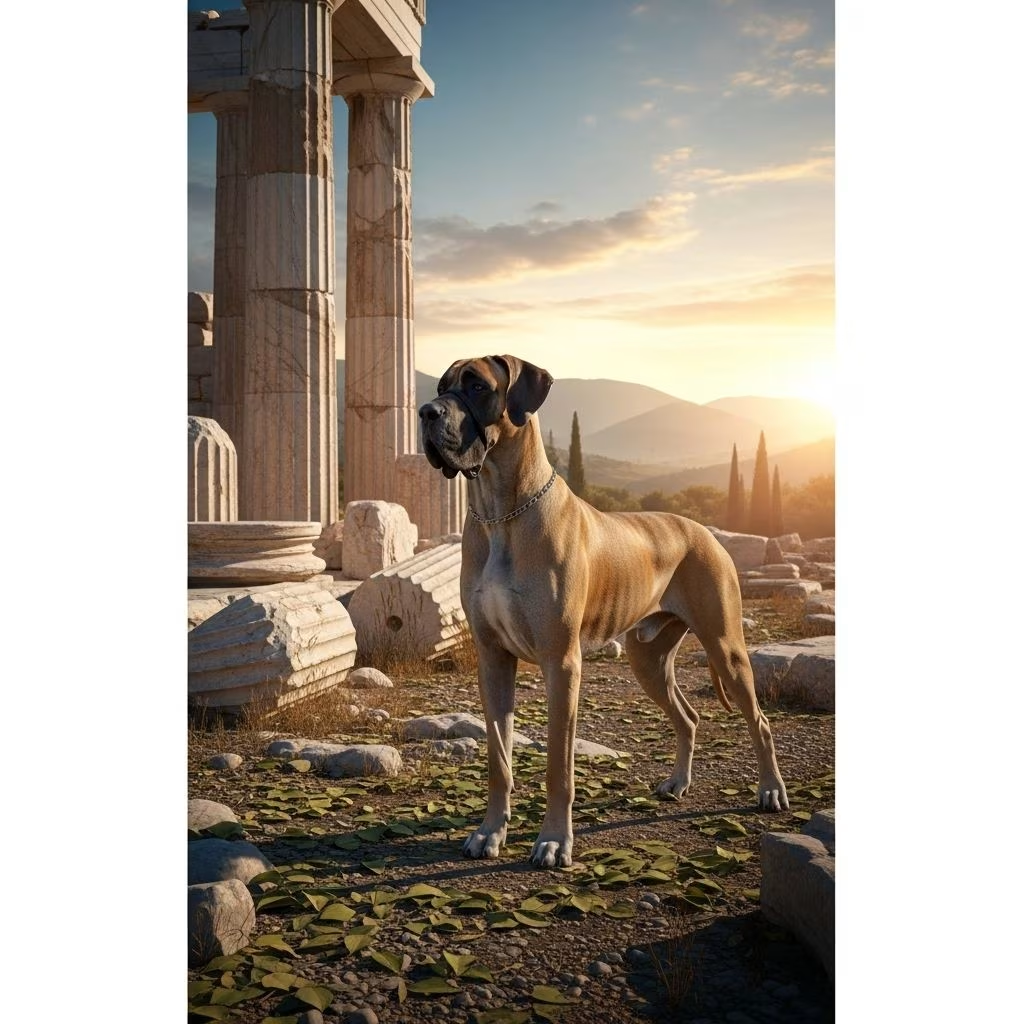
The Great Dane strikes a unique balance—neither as massive and heavy as a Mastiff, nor as light and agile as a Greyhound. The breed is defined by harmonious proportions, strength, elegance, and a bearing described by enthusiasts as almost statuesque.
- Head: Long, narrow, and expressive, with a pronounced stop and flat skull. The muzzle should be full and square.
- Body: Strong bones support a muscular frame. Elegance and power must be in equilibrium.
- Sexual Dimorphism: Males exude masculinity, while females are distinctly more refined and delicate.
- Expression: Not just correct anatomy, but the ‘right’ expression is highly valued by breeders: alert, noble, and keen.
The Great Dane’s Temperament: Gentle Giant
From its fierce, boar-hunting ancestry, today’s Great Dane is marveled for its gentle temperament. Owners praise the breed for loyalty, affection, and an innate ability to form deep bonds with family members, earning it a reputation as a ‘gentle giant.’ Modern Great Danes are:
- Affectionate and Loyal: Typically attach strongly to household members.
- Patient and Tolerant: Known for being good with children and suitable for family living, provided they are properly socialized.
- Protective but Not Aggressive: Instincts from their “chamber dog” days endure, making them reliable watchdogs who seldom display unprovoked aggression.
- Dignified: Their calm, deliberate movements and serene demeanor set them apart from more excitable breeds.
Recognition and Rise in Popularity
The Great Dane made its way to America in the late 19th century, quickly capturing the hearts of dog lovers. The American Kennel Club (AKC) recognized the breed in its earliest years, and today the Great Dane consistently ranks among the top 20 most popular breeds in the United States. Their grandeur and sweetness ensure their place in family homes and the show ring alike.
- AKC Recognition: The Great Dane Club of America is one of the oldest U.S. breed organizations, formed in the late 1800s.
- International Appeal: Despite the name confusion, the breed’s popularity spans continents, with enthusiasts in Germany, the U.S., and beyond.
Physical Characteristics at a Glance
| Feature | Description |
|---|---|
| Size | Usually 28–32 inches (71–81 cm) at the shoulder; some males exceed this |
| Weight | Typically 110–175 pounds (50–80 kg), but some can be heavier |
| Coat | Short, smooth. Common colors: fawn, brindle, blue, black, harlequin, mantle |
| Lifespan | On average, 7–10 years |
| Temperament | Gentle, loyal, dignified, dependable |
Enduring Legacy: The Apollo of the Dogs
The Great Dane stands as a symbol of canine elegance and strength. Known as the Apollo among all dogs, it epitomizes balance in both form and temperament—neither overly stout nor excessively slim, always noble and respectable. This breed’s history encompasses the primal thrill of the hunt, the refined company of nobility, and the enduring love of families today.
- Versatility: From forest hunter to symbol of nobility, the breed has adapted to varied roles without losing its distinctive character.
- Breed Clubs: Over a century of coordinated, responsible breeding has preserved the Great Dane’s hallmark qualities.
- Cultural Impact: The breed’s image adorns art, literature, and one of pop culture’s most famous dogs, Scooby-Doo.
Frequently Asked Questions (FAQs)
Q: Is the Great Dane really from Denmark?
A: No, despite its name, the Great Dane was developed primarily in Germany. The misnomer is due to historical translation and adoption of the French name “Grand Danois.”
Q: What were Great Danes originally used for?
A: Great Danes were initially bred for hunting wild boar and as guardians for nobility. Their courage, power, and stamina were highly prized during these hunts.
Q: Are Great Danes good family dogs?
A: Yes. Modern Great Danes are known for their gentle, affectionate nature. They are excellent with children and other pets when socialized early, but their size requires supervision around smaller kids.
Q: How big do Great Danes get?
A: Great Danes typically stand between 28 and 32 inches tall at the shoulder, with some males even taller. Weight ranges from 110 to 175 pounds, though some may exceed these norms.
Q: How long do Great Danes live?
A: The breed has a shorter lifespan than many others, averaging 7–10 years, with some individuals living longer given proper care and genetics.
Conclusion
The Great Dane’s remarkable journey from ancient guardian and relentless hunter to a beloved household giant is a testament to both careful breed stewardship and the enduring allure of canine nobility. The breed’s blend of strength, grace, and gentle heart cements its status as the Apollo among dogs, a living work of art cherished by families and fanciers worldwide.
References
- https://en.wikipedia.org/wiki/Great_Dane
- https://www.akc.org/expert-advice/dog-breeds/great-dane-history-the-apollo-of-the-dogs/
- https://www.pawlicy.com/blog/great-dane-breed-guide/
- http://www.creeddanes.ch/en/the-breed/
- https://www.britannica.com/animal/Great-Dane
- https://www.betterpet.com/learn/history-of-great-danes
- https://www.youtube.com/watch?v=nUU9xYJPPSs