


Best Home Remedies for Lice and Nits
Head lice infestations are a common concern, especially among children and families with school-age kids. Chemical treatments for lice exist, but concerns about resistance, harsh ingredients, and sensitive skin often lead people to seek natural and home-based remedies. This guide examines the most effective home treatment methods, clarifies what works and what doesn’t, addresses persistent myths, and provides actionable tips for keeping lice at bay.
Understanding Lice and Nits
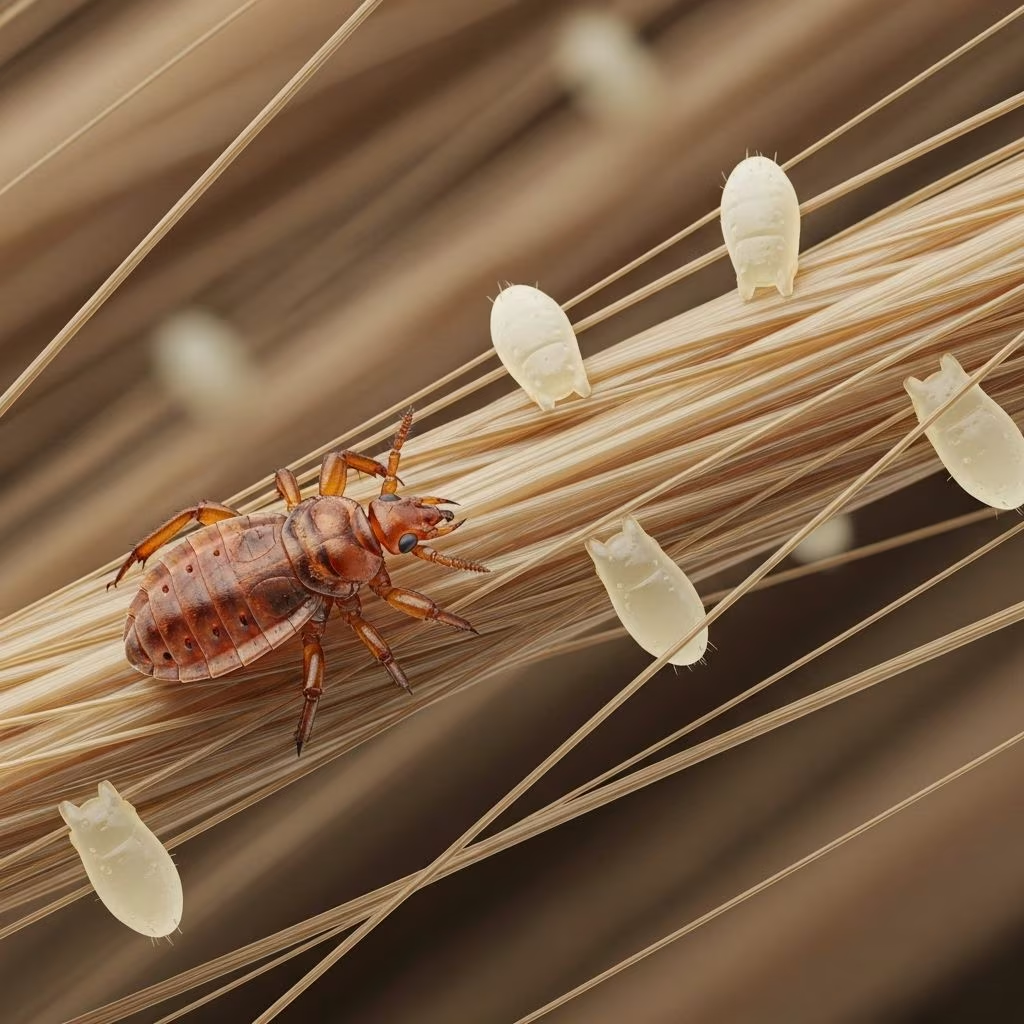
Head lice are tiny parasitic insects that live on the scalp and feed on human blood. Their eggs, called nits, are even smaller and attach firmly to hair shafts with a glue-like substance. Effective lice control always targets both live lice and their eggs.
- Lice move quickly and are notoriously difficult to spot.
- Nits are oval, yellowish or white, and are often mistaken for dandruff—but they are attached firmly to hair near the scalp.
While lice are unpleasant, they do not spread disease and aren’t a sign of poor hygiene or cleanliness.
How to Identify Lice and Nits
- Itchy scalp and neck
- Visible crawling insects on the scalp or hair
- Nits firmly attached to hair, especially near the nape or around the ears
Use a bright light and a fine-toothed lice comb to inspect hair thoroughly. Conditioned or wet combing can make this process easier and more accurate.
Best Home Remedies for Lice and Nits
1. Wet Combing with a Lice Comb
Wet combing is a highly effective, chemical-free method for eliminating lice and nits from hair. This technique is backed by research and recommended by major health organizations.
- How to do it: Wash hair and apply a generous amount of conditioner to dampen and detangle.
- Use a fine-toothed metal lice comb (not plastic, which is less effective).
- Section hair and comb from scalp to ends, wiping the comb on a tissue after each pass.
Frequency: Repeat every 3–4 days for at least 2 weeks or until no lice or nits remain.
2. Smothering Agents: Do They Work?
Several household products—mayonnaise, coconut oil, olive oil, petroleum jelly—are widely used to ‘smother’ lice, making them easier to remove.
- Apply a thick layer of the product to the scalp and hair.
- Cover with a shower cap and leave overnight (at least 8–12 hours).
- Wash thoroughly and use a lice comb to remove dead lice and nits.
Limitations: Scientific studies show that lice can close their breathing spiracles for hours, making total suffocation unreliable. Smothering agents may help slow down lice and ease combing, but they do not reliably kill nits and should always be combined with thorough combing.
3. Essential Oils for Lice Treatment
Certain essential oils, when properly diluted, have shown potential in eliminating lice—though data on their effectiveness remains mixed.
- Commonly used oils: Tea tree, lavender, neem, aniseed, clove, eucalyptus, peppermint, cinnamon leaf, nutmeg, and red thyme oil.
- How to use: Mix 2 oz. of olive oil with 15–20 drops of essential oil. Apply thoroughly to the scalp, cover with a cap, and leave overnight. Comb and shampoo out in the morning.
- Alternatively, dilute essential oils in rubbing alcohol (15–20 drops per 4 oz. of alcohol), spray into hair, and leave on for 12 hours before washing.
Important safety notes:
- Always perform a patch test to rule out allergic reactions. Avoid essential oils in young children and those with sensitivities.
- Never use undiluted essential oils on the skin or scalp.
Remember, combing to remove lice and eggs is essential for success with any oil or remedy.
4. Neem and Garlic Home Remedies
Both neem and garlic have been traditionally used to help with lice infestations, especially in natural health communities.
- Neem rinse: Boil neem leaves in water, cool, and use as a hair rinse to repel and help eliminate lice. Neem possesses anti-parasitic properties.
- Garlic pack: Crush several garlic cloves, mix with lime juice, apply the paste to the scalp for 30 minutes, then rinse thoroughly. Garlic has natural insecticidal qualities.
Neem and garlic may offer some relief, but their efficacy is anecdotal and should be paired with combing.
5. Dehydration Techniques (Professional Method)
Some professional lice removal centers use devices that apply controlled hot air to dehydrate and kill lice and their eggs. This process, called dehydration (or desiccation), requires special equipment and is not suitable for home use.
- Do NOT use a home hair dryer for lice treatment—this is unsafe and can scatter lice.
What Not to Do: Remedies to Avoid
- Do not use harsh chemicals such as kerosene, gasoline, or insecticides not meant for humans. These are highly toxic.
- Avoid home hair dryers for lice removal—they can spread lice and are not effective.
- Beware of unproven internet remedies, such as vinegar or bleach, which can irritate skin and scalp.
Why Do Some Home Remedies Fail?
Several common reasons why home lice treatments don’t succeed:
- Skipping the combing: Removing eggs (nits) is essential—if you leave just a few, lice will return.
- Inconsistent treatment: Not repeating the regimen every few days allows newly-hatched lice to survive and reproduce.
- Resistant lice: Both chemical and some natural treatments may be less effective against lice populations that are evolving resistance to common interventions.
Proven Prevention Tips
After a thorough treatment, the following steps help avoid reinfestation:
- Wash clothing, hats, pillowcases, and bedding in hot water (at least 130°F/54°C) and dry on high heat.
- Soak combs, brushes, and hair accessories in hot water for 10+ minutes.
- Vacuum car headrests, carpets, and furniture where infested person rested heads.
- Items that can’t be washed (stuffed toys, headphones, etc.) can be sealed in a plastic bag for 2 weeks.
- Discourage sharing of hats, scarves, hair devices, or bedding between children.
No need to use sprays, fumigators, or excessive cleaning—lice do not survive long off the scalp.
Common Myths About Lice and Home Remedies
- “Lice are a sign of poor hygiene.” Not true! Lice infest anyone, regardless of cleanliness.
- “You must shave the head to get rid of lice.” False. With diligent combing and treatment, lice can be eliminated without shaving.
- “Smothering always kills lice and nits.” Lice may survive suffocation, and nits cannot be smothered—manual removal is crucial.
- “Once treated, lice can’t return.” Reinfection is possible if even a few live eggs remain or through new contact.
Comparison Table: Home Remedy Effectiveness
| Remedy | Effective Against Lice? | Effective Against Nits? | Safety Notes | Best If Combined With… |
|---|---|---|---|---|
| Wet Combing | Yes | Yes (if repeated) | Very safe | Conditioner |
| Mayonnaise/Oils | Possibly slows lice | No | Avoid if allergic | Wet Combing |
| Essential Oils | Some evidence | No | Patch test; avoid on infants | Wet Combing |
| Neem/Garlic | Anecdotal | No | Avoid skin irritation | Wet Combing |
| Professional Dehydration | Yes | Yes | Professional only | None |
Step-by-Step Home Lice Treatment Plan
- Start by washing hair and applying conditioner.
- Use a fine-toothed lice comb to section and thoroughly comb through the hair, from scalp to tips.
- Wipe the comb after each stroke and dispose of lice/nits on a tissue.
- After combing, rinse the hair and check for remaining lice/nits.
- Repeat the entire process every 3–4 days until no lice or nits are seen for at least 2 weeks.
- Treat personal items and environment as indicated in ‘Prevention Tips.’
- If using smothering agents or essential oils, apply as directed overnight and always follow with mechanical lice removal.
Frequently Asked Questions (FAQs)
Q: Can home remedies completely get rid of lice and nits?
A: Yes, especially when wet combing is performed thoroughly and consistently. Most home remedies are not reliable on their own but effectively support combing efforts.
Q: Are lice resistant to home remedies?
A: Lice have developed resistance to many chemical treatments, but physical removal (combing) works regardless of resistance.
Q: Is it necessary to treat the whole family?
A: Only treat those with confirmed infestations, but check all household members frequently during an outbreak.
Q: Can pets get or transmit head lice?
A: No. Head lice are a human-specific parasite and cannot live on pets.
Q: Do I need to disinfect my home after finding lice?
A: Extreme cleaning isn’t necessary. Focus on washing bedding, hats, and personal items in hot water. Lice die quickly without a host.
Final Thoughts
While various home remedies circulate online, the most reliable natural method to get rid of lice and nits is frequent, methodical wet combing with a fine-toothed lice comb, supported by conditioners or safe oil preparations as desired. Always check for allergies, avoid harsh chemicals, and remember: patience and persistence are the true keys to eradicating lice safely at home.
References
- https://www.healthline.com/health/lice-home-remedies
- https://www.mayoclinic.org/diseases-conditions/head-lice/diagnosis-treatment/drc-20356186
- https://www.nhs.uk/conditions/head-lice-and-nits/
- https://www.baystatehealth.org/articles/treatment-for-drug-resistant-head-lice
- https://pubmed.ncbi.nlm.nih.gov/15637580/
- https://www.cdc.gov/lice/treatment/index.html
- https://www.drugtopics.com/view/head-lice-otc-treatment-options-and-home-remedies-pharmacists-should-be-aware-of
- https://www.youtube.com/watch?v=1xYJzqfv73c


