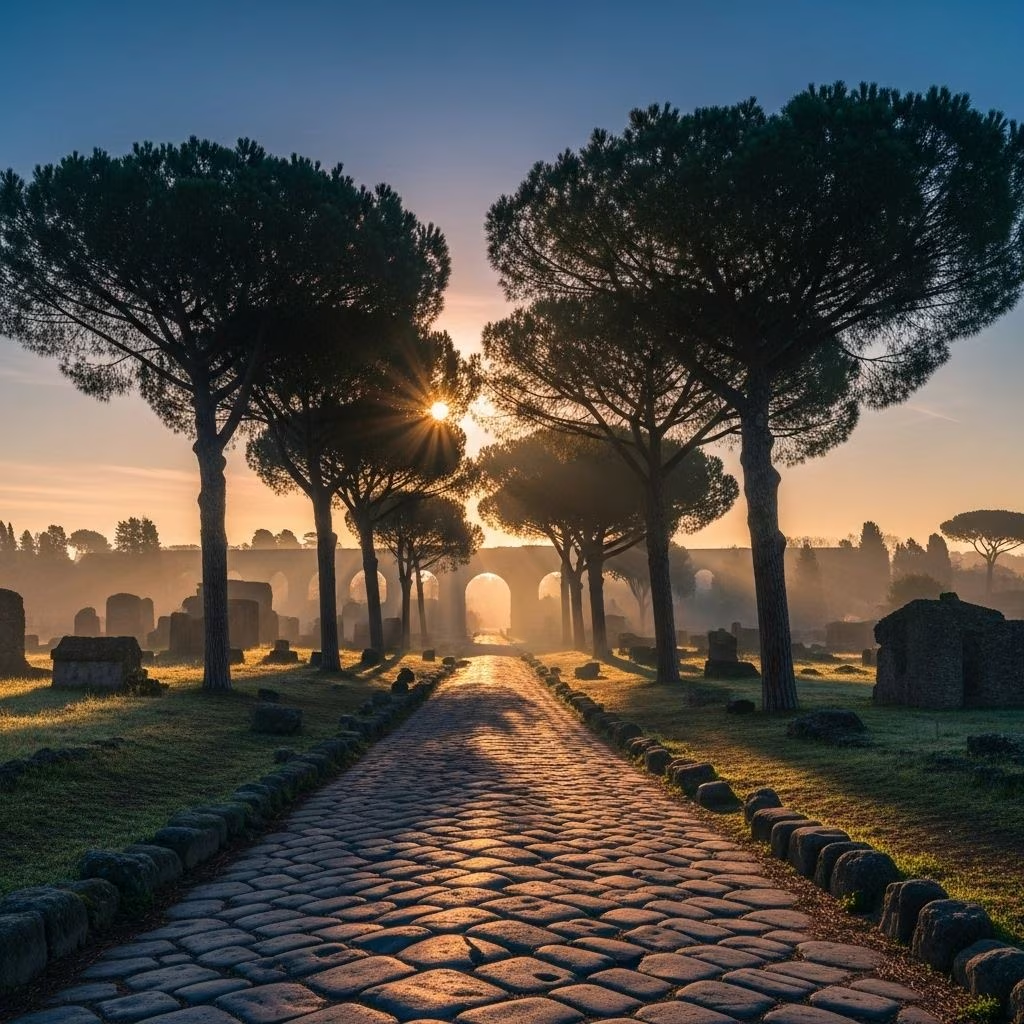
Time Travel Along Rome’s Ancient Appian Way
History lives beneath the surface of Rome’s bustling streets, but nowhere is the city’s layered past more tangible than the Appian Way. Once the empire’s true “Queen of Roads,” the Appian Way led the ancient world from the heart of Rome toward distant Capua and beyond, unraveling tales of emperors, martyrs, and rebels beneath its massive basalt stones. Today, this ancient highway stands as both a historic marvel and a tranquil escape—a place where visitors can tread the same stones as legions, saints, and gladiators, immersing themselves in more than two millennia of drama and achievement.
Rome’s Groundbreaking Roadway: A Marvel of Ancient Engineering
It’s fitting that the expansionist Romans, keen on control and connectivity, engineered Europe’s first “super highway”—the legendary Appian Way, known as Via Appia Antica. Its construction began in 312 BCE under Appius Claudius Caecus and set the gold standard for the roadways that would bind the Roman Empire.
- Originally, the Appian Way directly linked Rome to Capua (near Naples), following a strikingly straight alignment, disregarding natural landscape contours to maximize efficiency.
- Eventually, its reach extended to Brindisi on the Adriatic Sea, forming a crucial 430-mile route to southern Italy, gateway to the broader Mediterranean and the East.
- Twenty-nine total highways radiated outward from Rome—yet the Appian Way, the first and best preserved, would forever be called the “Queen of Roads.”
In antiquity, this thoroughfare was a marvel. Huge basalt paving blocks, hand-fitted and enduring, formed its sturdy roadbed. The middle provided a lane for animal-drawn vehicles; raised sidewalks protected foot travelers from the dust and traffic. Even today, you can trace the grooves of ancient cart wheels in the well-worn flagstones, a visceral reminder of the countless journeys that once rumbled through here.
The Appian Way Today: A Living Archaeological Museum
While modern roads fall into disrepair mere years after completion, the Appian Way endures—a living connection to Rome’s imperial might. Fortunately, the first 10 miles of the road outside the city center have been preserved as the Parco Regionale dell’Appia Antica (Appian Way Regional Park)—an extraordinary open-air museum dotted with ruins, statuesque pine trees, and evocative silence.
- Parco dell’Appia Antica is accessible from Rome by taxi, Metro, or public bus, making it a convenient excursion for visitors seeking an escape from the modern city’s crowds and commotion.
- The park becomes a pedestrian paradise on Sundays and holidays, when car traffic is prohibited and locals, families, and visitors alike can stroll and cycle freely among the ancient sights.
- Bicycle rentals and a wealth of visitor information are available at the Appia Antica Service Center. Be warned: the original paving stones create quite a bumpy ride for cyclists, and comfortable shoes are a must for walkers.
Stepping out onto this ancient highway, you stand among umbrella pines, wildflowers, and the remains of tombs and monuments—relics of families and histories now long vanished. It is one of the rare sites in Rome where the crowds often thin and the spirit of the past feels uncannily close.
Major Monuments and Sights Along the Appian Way
The first stretch of the Appian Way is a corridor of history and spirituality, offering a tapestry of ancient ruins, Christian landmarks, and intriguing mysteries. Key highlights include:
- Tomb of Cecilia Metella:
- An imposing circular mausoleum dating back to the first century BCE, this monument was built for the daughter-in-law of Marcus Crassus, Julius Caesar’s political ally. Its massive drum-shaped design combines military fortress elements with funerary grandeur.
- Roman Villas and Ruins:
- The route is lined with remnants of patrician villas, sepulchers, and ancient milestones, offering a window into the lifestyles and memorial practices of Rome’s elite.
- Christian Catacombs:
- Two major early Christian necropolises flank the Appian Way, both inviting visitors on unforgettable journeys underground (see more below).
- Domine Quo Vadis Church:
- This humble yet moving church marks a legendary vision of the apostle Peter and preserves a stone said to bear Christ’s footprints.
- Ancient Aqueducts:
- As you wander further, you’ll spot stretches of Rome’s once-extensive aqueduct system, which nourished the city for centuries.
Exploring the Early Christian Catacombs
The Catacombs are among the most captivating and mysterious sites on the Appian Way, offering a compelling intersection of religious devotion, persecution, and hope. These extensive networks of subterranean tunnels were excavated from the soft volcanic tufa stone, serving as burial grounds and sacred refuges for Rome’s early Christian community.
| Catacomb | Highlights | Visitor Info |
|---|---|---|
| San Sebastiano |
|
|
| San Callisto |
|
|
Visitors can join guided half-hour tours in these catacombs to explore the maze-like corridors, wall niches (loculi), and painted chambers where the stories of martyrs, saints, and anonymous Christians are etched into stone and legend. Some tours share the symbolism of resurrected Christ, the fish, and other coded messages used to signal faith during times of persecution.
Legend and Faith: The Domine Quo Vadis Church
One of the route’s most revered landmarks is the Domine Quo Vadis Church. According to tradition, as the apostle Peter fled Rome to escape Emperor Nero’s persecution, he reached this point and saw a vision of Christ, who inspired him to return and face martyrdom. The tiny church, rebuilt in the 17th century, enshrines a marble stone bearing what is said to be the very footprints of Jesus.
- Inside the church’s nave, you’ll find frescoes of Peter (holding the symbolic keys to heaven) and of Christ, as well as a bust honoring Henryk Sienkiewicz, the Nobel Prize-winning Polish author whose novel “Quo Vadis” inspired a celebrated 1951 film.
- The church’s name, meaning “Lord, where are you going?” commemorates this profound moment of faith and decision.
The Drama of Spartacus and the Servile Wars
The Appian Way isn’t only a monument to Roman power and Christian faith—it is also marked by one of the most tragic and dramatic moments in the history of resistance. Here in 71 BCE, the infamous rebel-slave Spartacus and his followers met their fate after years of revolt against Roman oppression.
- Around 6,000 survivors of Spartacus’ rebellion were crucified along the Appian Way between Rome and Capua, sending a grim message of imperial might and the mortal price of insurrection.
Today, while no physical trace of this massacre remains, the story of Spartacus endures—joining the many myths and legends that haunt the stones and shadows of the ancient road.
Tips for Visiting the Appian Way Today
Despite Rome’s reputation for crowds and chaos, the Appian Way remains refreshingly serene much of the time—especially beyond the city fringes. To make the most of your walk through history, consider the following tips:
- Timing: Visit on Sundays or public holidays, when the park is closed to traffic and the street becomes a peaceful haven for walkers and cyclists.
- Access: The most convenient entry points are reachable by taxi, Metro, or public buses from downtown Rome. A reasonably priced taxi ride (around €15) can drop you at the park entrance or in the heart of the preserved section.
- Bicycle Rentals: Available at the Appia Antica Service Center, but prepare for a rugged ride as centuries-old stones make the path uneven.
- Footwear: Wear comfortable, sturdy shoes—original paving stones are beautiful but challenging to walk on for long distances.
- Stay Safe: Avoid the modern, high-traffic stretch between San Sebastiano and San Callisto catacombs, as this section lacks sidewalks and strong tourist interest. Focus on the preserved park for the richest and safest experience.
Family Travel and Exploring with Kids
The Appian Way offers a hands-on history lesson for curious children and families. Walking, cycling, and even picnicking among ruins introduce young travelers to ancient engineering, dramatic legends, and artful storytelling. The open spaces and opportunities for exploration make it a memorable destination for all ages.
- Bring snacks and water, as food options inside the park are limited.
- For a deeper experience, consider a guided walking or biking tour, which can engage younger participants with stories and interactive learning.
Frequently Asked Questions (FAQs) About the Appian Way
Q: How do I get to the Appian Way from central Rome?
A: Reach the Appian Way Regional Park using public transit (Metro or bus), or via taxi (approx. €15 from city center). Ask for drop-off near the Appia Antica Service Center for easy access to main sights.
Q: When is the best time to visit the Appian Way?
A: Sundays and public holidays are ideal, as the area is closed to car traffic, creating the largest pedestrian zone in Rome.
Q: Are the catacombs suitable for children or those who are claustrophobic?
A: The main catacombs (San Sebastiano and San Callisto) offer guided, safe, and well-lit tours, sometimes including uneven ground. Some small spaces could be intimidating for those with claustrophobia, but guides pace visits accordingly.
Q: How much walking is required, and is the terrain difficult?
A: The first 10-mile preserved segment offers multiple route lengths and is well-suited for walkers of moderate fitness. The original basalt slabs can be irregular and bumpy—choose sturdy shoes. Many visitors explore just the most scenic portions rather than the entire length.
Q: Are there any food or refreshment options along the Appian Way?
A: Options are scarce within the park, so bring water and snacks—especially important for families and longer walks.
Q: What makes the Appian Way different from other Roman ruins?
A: Unlike most city-center monuments, the Appian Way immerses you in a vast archaeological landscape where ruins, wildlife, and silence blend. You experience history not behind barriers, but beneath your feet and all around you.
Walk in the Footsteps of Rome
Few travel experiences rival the sense of connection that comes with walking the Appian Way. Each basalt stone, ancient ruin, and solemn shadow whispers tales of conquest, faith, tragedy, and renewal.
- Tread the “Queen of Roads” as Julius Caesar, St. Peter, persecuted Christians, and outlaws once did.
- Discover a road that shaped history—not just for Romans, but for all who came after.
Let the Appian Way inspire your own journey through time—awakening the past underfoot as only Rome can.
References
- https://www.explore.com/1596238/rick-steves-says-avoid-dangerous-crowded-stretch-rome-italy-catacombs/
- https://www.islands.com/1590638/destination-italy-rome-appian-way-never-crowded-according-rick-steves/
- https://www.ricksteves.com/watch-read-listen/read/articles/time-travel-on-romes-ancient-appian-way
- https://www.ricksteves.com/watch-read-listen/video/tv-show/rome-ancient-glory
- https://www.sfgate.com/travel/ricksteves/article/Time-Travel-on-Rome-s-Ancient-Appian-Way-3702516.php
- https://community.ricksteves.com/travel-forum/italy/walking-the-appian-way