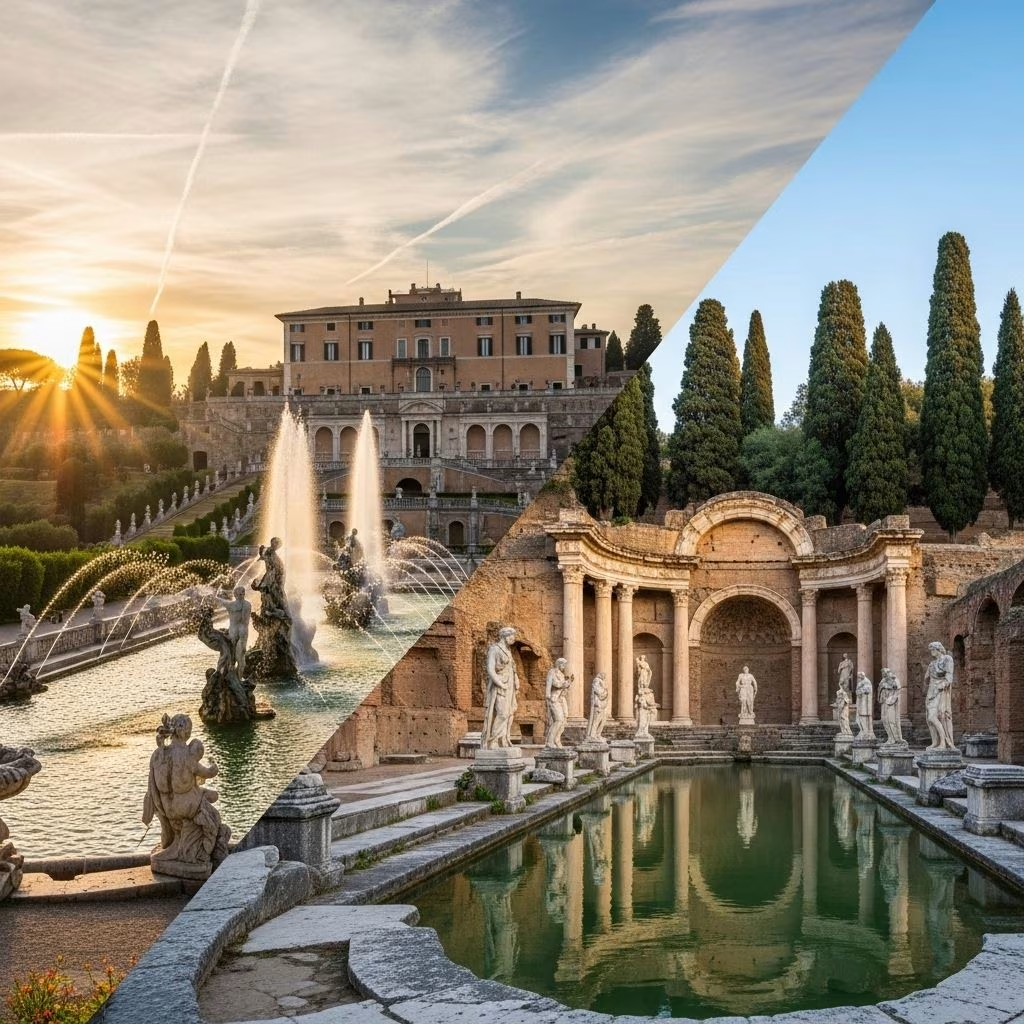
Tivoli, Italy: Rome’s Historic Escape
For those captivated by the whirlwind of la dolce vita in Rome but yearning for a serene retreat, Tivoli beckons from the Sabine Hills just 18 miles east. Loved by emperors, popes, and travelers alike, Tivoli has endured for millennia as the ultimate Roman getaway—seamlessly balancing lush scenery, ancient architecture, and Renaissance artistry. Its two main attractions, Hadrian’s Villa (Villa Adriana) and Villa d’Este, are UNESCO World Heritage sites epitomizing this town’s layered past and aesthetic prowess.
A Town Made for Escapes
Tivoli’s identity as a retreat is woven into its history. Roman elites, weary of the capital’s chaos, found solace among these hills. The legacy is preserved today in two dazzling villas:
- Hadrian’s Villa, an imperial dreamscape where a world-ruling emperor sought tranquility and inspiration.
- Villa d’Este, a masterpiece of Renaissance engineering famed for cascading gardens and playful fountains.
Beyond these villas, Tivoli’s medieval core, imposing Rocca Pia, and panoramic views over the Roman Campagna make it a rewarding destination for day-trippers and seasoned explorers.
Hadrian’s Villa (Villa Adriana): An Emperor’s Dreamscape
Hadrian (AD 117–138), Rome’s visionary emperor, was more than a ruler—he was an architect, traveler, and passionate Hellenophile. Disenchanted with bustling Rome, Hadrian designed Villa Adriana as both private retreat and microcosm of his far-flung empire.
- Scale and Vision: The villa covered more than 300 acres, rivaling Versailles in ambition. Hadrian re-created iconic monuments he encountered during his travels, resulting in a landscape of temples, colonnades, pools, and theaters.
- Architectural Highlights: Visitors wander through the remnants of structures like the Canopus (echoing the Nile’s canal), the Maritime Theatre (a circular island retreat), and libraries that once housed treasures from the ancient world.
- Legacy: Though plundered over centuries, the villa’s atmospheric ruins—dotted with statues, reflecting pools, and marble fragments—offer insights into imperial extravagance and ambition.
Today, Villa Adriana invites exploration and imagination. Strolling its cypress-lined avenues, one senses not only the grandeur of Rome but a personal world of memories and meaning etched by an emperor’s hand.
What to See at Hadrian’s Villa
- Maritime Theatre: A unique circular island villa, surrounded by a moat, where Hadrian could retreat in total privacy.
- Canopus: A grand pool flanked by columns and statues, inspired by the Nile’s Canopus Canal and serving as a luxurious setting for dinners and performances.
- Baths and Libraries: Echoes of Roman bathing culture and intellectual life, with extensive ruins hinting at past sophistication.
- Gardens and Views: Sweeping vistas, undulating lawns, and surviving groves create an atmosphere of contemplative grandeur.
Villa d’Este: Renaissance Splendor and Watery Wonders
While Hadrian’s Villa exudes ancient power, Villa d’Este dazzles with Renaissance spectacle. Commissioned in the 16th century by Cardinal Ippolito II d’Este—a man who craved the finer things—the villa was both statement and sanctuary. When spurned in his quest for papacy, Ippolito poured resources into crafting what would become a European standard for garden design.
The Cardinal’s Palace
Step inside and you’ll find room after room adorned with intricate frescoes, mythological themes, and visual tributes to the cardinal’s power and taste. Yet the true marvel lies outside.
The Gardens: Masterpiece of Water, Stone, and Imagination
The gardens of Villa d’Este are a symphony of water and geometry. Designed to exploit the rugged hillside and Tiburtine streams, these gardens tumble down terraces, fusing natural splendor with human mastery. Their influence spread across Europe, inspiring landscape architects for centuries.
- Cascading Fountains: Over 500 fountains, waterfalls, and pools—still powered by gravity-fed hydraulics—dazzle at every turn.
- Boxwood Mazes and Cypress Walks: Manicured greenery and shaded paths guide visitors toward stunning viewpoints over the valley.
- Ingenious Hydraulics: The 16th-century water system, still functioning today, was a marvel of its era—requiring bold excavation, cutting-edge engineering, and artistic vision.
Highlights Not to Miss:
- Hundred Fountains Walk (Cento Fontane): A magical promenade lined with gushing jets and shimmering pools.
- Oval Fountain: A theatrical centerpiece with exuberant jets and mythic sculpture.
- Organ Fountain: Blends music and water, as a unique hydraulic mechanism plays tunes on the hour—an engineering feat still captivating in the 21st century.
Inside the Palace
- State Apartments: Ornate with frescoes, stucco work, and tapestries—each room narrates religious, classical, and nature themes celebrating the Este family’s legacy.
- Panoramic Terraces: Step outside for sweeping views of the gardens and the countryside beyond.
Other Notable Sites in Tivoli
- Rocca Pia: A fairy-tale fortress dating to the 15th century, with imposing towers and a drawbridge. Although the interior is closed, its splendid exterior remains a focal point of the town and a testament to centuries of military history.
- Medieval Town Center: Wander Tivoli’s cobblestone alleys, lined with trattorias, artisans’ studios, and churches echoing its layered past.
- Roman Temples: Scenic ruins like the Temple of Vesta and Temple of Sibyl crown a dramatic gorge just outside town, providing romantic vistas and a sense of ancient reverence.
- Aniene River Views: The river tumbles through the valley, offering bridges and viewpoints perfect for photographs or sunset strolls.
Planning Your Visit
Tivoli is ideal as a day trip from Rome—the train or bus ride lasts under an hour, but its tranquility and grandeur can fill an entire day or even warrant an overnight stay. Here are essential tips for making the most of your journey:
- Getting There: Regular trains and buses connect Rome’s Tiburtina station with Tivoli; consider a taxi or guided tour to maximize time if visiting both villas.
- When to Go: Spring and early fall offer mild weather and lush gardens—summer brings crowds but is ideal for garden fountains in full flow.
- How to Prioritize: History buffs may start at Hadrian’s Villa for Roman splendor, then stroll through Tivoli town towards Villa d’Este’s dazzling gardens.
- Food and Rest: Enjoy rustic trattorias in the old center, many with terraces overlooking the countryside.
| Attraction | Era | Highlights | Notable Features |
|---|---|---|---|
| Hadrian’s Villa | Roman Imperial (2nd century AD) | Ancient ruins, pools, temples | 300+ acres, microcosm of empire |
| Villa d’Este | Renaissance (16th century) | Gardens, fountains, palace rooms | 500+ fountains, hydraulic organ |
| Rocca Pia | Medieval (15th century) | Castle exterior, towers | Drawbridge, panoramic location |
| Temple of Vesta | Ancient Roman | Hilltop ruins | Overlooks gorge, iconic columns |
Why Tivoli Remains Rome’s Great Escape
With its blend of imperial ambition and Renaissance creativity, Tivoli continues to offer respite from city life—just as it did for emperors, cardinals, and artists. Its gardens and ruins don’t just showcase Italy’s past; they echo the enduring human longing for beauty and tranquility.
- Hadrian’s Villa provides a journey into Rome’s golden era, with atmospheric paths among shattered marble and timeless pools.
- Villa d’Este’s gardens remain among the most enchanting in Europe, a parade of fountains and green quietude under the Italian sun.
- The town’s vantage points, castles, and charming lanes all fuel an escape that is poetic and real, ancient and ever-new.
Frequently Asked Questions (FAQs)
Q: Can both Hadrian’s Villa and Villa d’Este be visited in a day?
A: Yes, most visitors explore both UNESCO sites in one day, often starting with Hadrian’s Villa’s vast complex before touring Villa d’Este’s compact, but intricate gardens and palace. However, those keen on deeply exploring each site may wish to linger longer.
Q: Is Tivoli suitable for families and children?
A: Absolutely. The gardens and open ruins invite exploration, though sturdy shoes and some supervision are advisable, particularly with younger children at Hadrian’s Villa due to uneven terrain.
Q: When is the best time to visit Tivoli?
A: Spring and early fall offer the most pleasant weather and vibrant gardens, while summer provides the fullest display of fountains. Weekdays typically see fewer crowds than weekends.
Q: How far is Tivoli from Rome and how can I get there?
A: Tivoli is roughly 30 kilometers (18 miles) east of Rome. Regional trains from Stazione Tiburtina reach Tivoli in under an hour; buses and guided tours are convenient alternatives.
Q: Are guided tours recommended?
A: Yes. Local guides offer invaluable context, especially at Hadrian’s Villa and Villa d’Este, illuminating historical and engineering feats that might otherwise go unnoticed.
References
- https://www.ricksteves.com/tours/tour-news/south-italy-slideshow
- https://www.explore.com/1636922/escape-rome-urban-intensity-crowds-hidden-gem-hill-town-tivoli-italy-rick-steves-recommend/
- https://www.ricksteves.com/watch-read-listen/read/articles/tivoli-italy
- https://community.ricksteves.com/travel-forum/italy/day-trip-to-tivoli-from-rome
- https://www.ricksteves.com/syndicated-content
- https://www.ricksteves.com/europe/italy
- https://www.ricksteves.com/watch-read-listen/video/tv-show/ancient-rome-art