Greece’s Top Ten Destinations: History, Islands, and Timeless Wonders
Few countries combine ancient history, vibrant culture, and natural beauty like Greece. In just two weeks, travelers can discover architectural marvels, sun-drenched beaches, and island escapes where the pace slows and tradition lives on. This guide highlights Greece’s top ten stops—each one unique and collectively offering the quintessential Mediterranean adventure.
1. Athens: Ancient Marvels and Modern Life
Athens, the heart of Greece, seamlessly blends remnants of its golden age with the pulse of a thriving metropolis. Atop its ancient rock, the Acropolis stands as testament to centuries of civilization and creativity. The Parthenon—dedicated to Athena—dominates the skyline, while the Acropolis Museum displays many of its original treasures. Down below, the Ancient Agora reveals where Socrates discoursed, surrounded by columns and olive trees.
- Don’t miss:
- Walking through the Plaka—Athens’ oldest neighborhood
- Sampling local flavors in Monastiraki market
- Exploring the National Archaeological Museum, home to masterpieces like the Mask of Agamemnon
Today’s Athens is as much about bustling cafes, late-night street music, and lively street art as marble columns and history textbooks. Stay up to watch the city light up its icons by night—a reminder that Athens’ magic endures across millennia.
2. The Peloponnese Peninsula: Legends and Landscapes
The Peloponnese is where Greek myth rises from olive groves and limestone hills. Connected to the mainland by a slender isthmus, this peninsula is packed with sites both ancient and medieval.
- Nafplio—A romantic seaside town, known for its elegant neoclassical architecture, beautiful promenade, and lively squares. Climb to Palamidi Fortress for expansive sea views.
- Mycenae—Once the seat of Agamemnon, it boasts the Lion Gate and mysterious tholos tombs. A trip here feels like stepping back to the world of Homeric legend.
- Epidavros—Home to the best-preserved ancient theater in Greece, famed for its unreal acoustics and still hosting performances under the stars.
Peloponnese’s rolling vineyards, picturesque villages, and fortress-crowned cliffs offer a slower, authentic side of Greece where history and daily life are intimately entwined.
3. Hydra: Island Tranquility Without Cars
Just a short ferry ride from Athens, Hydra is a timeless island retreat. With no cars or scooters—only donkeys, handcarts, and your own feet—Hydra’s whitewashed port and narrow, winding streets evoke an era before mass tourism.
- Stroll along coastal trails between swimming coves.
- Visit stone mansions once owned by wealthy merchant captains.
- Sip coffee on the harbor under the gaze of classic fishing boats and sun-faded shutters.
Art galleries, lively cafés, and the gentle lap of the Saronic sea create an irresistibly relaxed mood, making Hydra a favorite escape for both Greeks and travelers.
4. Olympia: Where the Olympic Flame Was Born
In a serene river valley lies Olympia, birthplace of the Olympic Games that still unite humanity every four years. Walking among these evocative ruins, you stand where athletes once competed for glory nearly 3,000 years ago.
- Explore the temple of Zeus, once home to a wonder of the ancient world.
- Straddle the original marble starting line in the athletics stadium.
- Visit the intimate Archaeological Museum, housing the elegant bronze statue of Hermes.
Modern Olympia is a welcoming small town, perfect for sampling regional wines and olive oils after soaking up the ancient spirit that still inspires athletes globally.
5. Delphi: Oracle of the Ancient World
Delphi captivated ancient Greeks as the mystical navel of the earth—the sacred home of Apollo’s oracle. Set high on the slopes of Mount Parnassus, its terraced ruins overlook a dramatic valley brimming with olive groves.
- Follow the Sacred Way past treasuries to the Temple of Apollo, where priestesses would divine the will of the gods.
- Climb to the theater and stadium for stunning vistas and a sense of ancient pageantry.
- Browse the museum’s marble statues and gold treasures unearthed from on-site temples.
Delphi’s mountain air, spiritual atmosphere, and mythic setting make it a highlight for seekers of both beauty and ancient wisdom.
6. Meteora: Monasteries in the Sky
A surreal sight awaits at Meteora, where centuries-old monasteries perch atop towering rock columns high above the Thessalian plain. Built by monks seeking isolation—and protection from invaders—the six remaining monasteries seem to float between earth and sky.
- Visit Great Meteoron, the largest monastery, with frescoed chapels and incredible panoramas.
- Trek between monasteries—each clinging impossibly to its own rocky spire—by footpath or car.
- Absorb the serenity and the feats of faith and engineering amid these otherworldly landscapes.
Meteora’s blend of geology, adventure, and spiritual devotion leaves a lifelong impression and countless photo opportunities, particularly at sunset.
7. Thessaloniki: Greece’s Northern Gateway
Thessaloniki is Greece’s second city, a vibrant harbor metropolis mixing Roman, Byzantine, and Ottoman influences. Its position at the crossroads of empires produced a wealth of sights and a cosmopolitan culture.
- Stroll the seaside promenade to spot locals enjoying coffee and conversation with views of the White Tower.
- Sample Byzantine churches, such as Agios Dimitrios and Agia Sophia, adorned with dazzling mosaics.
- Explore the lively Ladadika district for food, music, and nightlife that pulses late into the night.
- Step inside the Rotunda—a Roman-era curiosity that later served as a church and mosque.
With thriving markets and famous bougatsa pastries, Thessaloniki rewards visitors with a dynamic urban energy famously distinct from Athens.
8. Mykonos: Whitewashed Chic and Timeless Charm
Renowned for its iconic whitewashed houses, azure-hued doors, and irresistible nightlife, Mykonos is the classic Greek party island. However, there’s more than beaches and clubs.
- Wander through twisting lanes of Chora, pausing at the landmark windmills and the vibrant Little Venice seafront.
- Savor fresh seafood and meze at waterfront tavernas.
- Take a boat to Delos, a sacred archaeological site and mythical birthplace of Apollo, boasting some of the Mediterranean’s best ruins.
- Enjoy an afternoon on one of Mykonos’s many beaches—from cosmopolitan Paradise to quiet Agios Sostis.
Mykonos pulses with energy by night yet offers beauty and art for every traveler by day.
9. Santorini: Volcanic Drama and Iconic Sunsets
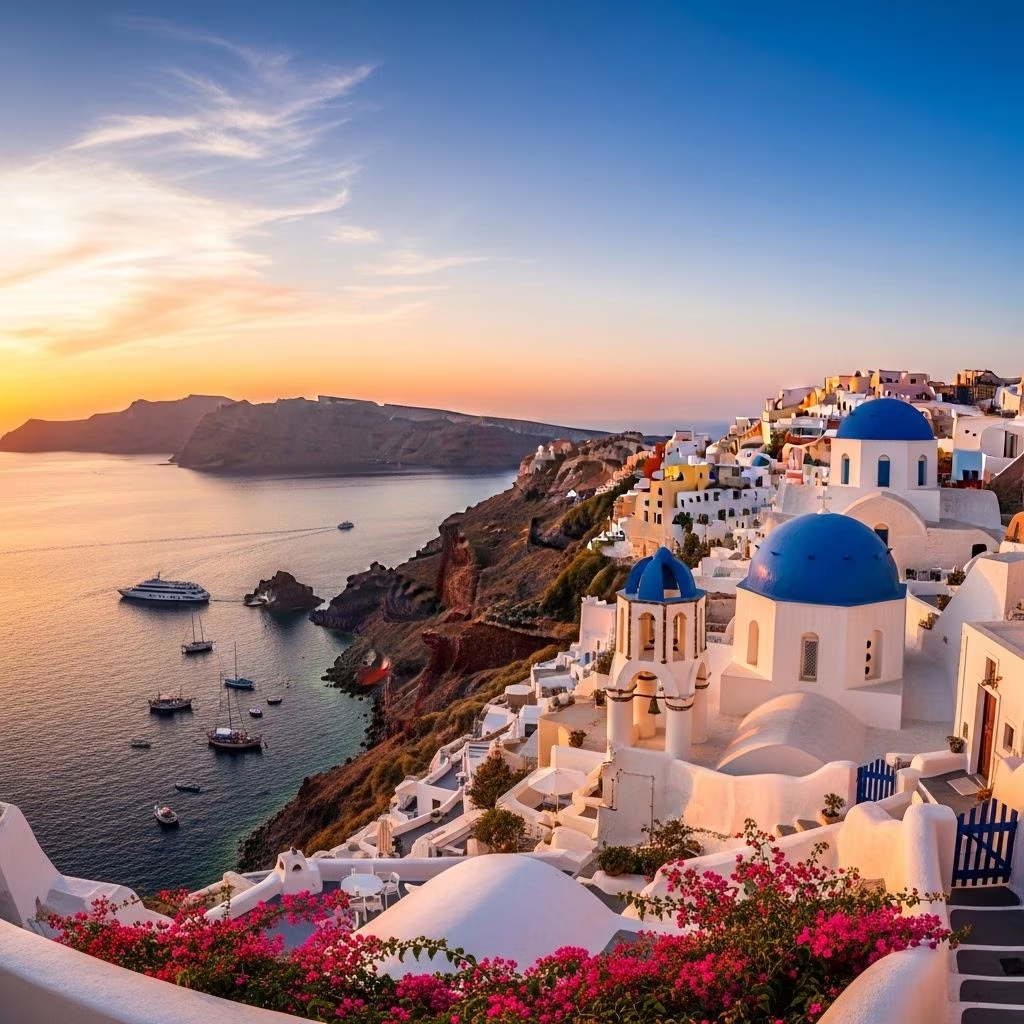
Santorini is perhaps Greece’s most photographed island, its cubist villages wedged along the rim of a flooded volcanic caldera. From Oia’s iconic blue-domed churches to black-sand beaches and luxurious cliffside resorts, this destination defines romance and drama.
- Walk the path between Fira and Oia for world-class caldera views.
- Descend to Amoudi Bay for fresh seafood at the water’s edge.
- Tour the archaeological site of Akrotiri, a Bronze Age metropolis preserved in volcanic ash.
- Savor a vineyard tour—Santorini’s wines thrive in ashy volcanic soils.
- Time your visit for an Oia sunset, when the sky blazes over whitewashed balustrades and the Aegean below.
Santorini’s romance, stark beauty, and extraordinary geography captivate honeymooners and seasoned travelers alike.
10. Rhodes: Where Crusader Castles Meet Mediterranean Shores
At the crossroads of Europe and the East lies Rhodes, an island where crusader knights, ancient Greeks, and Ottomans each left their mark. The fortified Old Town of Rhodes is among the best-preserved medieval towns in Europe, its maze of cobbled streets brimming with history.
- Lose yourself in the Street of the Knights, lined with elegant inns and armorial facades.
- Explore the Palace of the Grand Master, an imposing fortress whose mosaics and treasures tell the tale of centuries.
- Stroll beneath the city walls to discover lively squares, Ottoman mosques, and Italianate arches.
- Venture south to Lindos, where an ancient acropolis rises above brilliant turquoise bays.
Rhodes offers a thrilling blend of history, culinary tradition, and some of the sunniest weather in Greece.
Honorable Mentions: Even More Greek Wonders
- Monemvasia: A dramatic rock island fortress town on the Peloponnese, carved into a massive stone promontory and filled with medieval lanes.
- Mani Peninsula: Remote and rugged, dotted with stone villages, ancient tower houses, and dramatic coastal views—perfect for adventurers with a car.
- Crete: Greece’s largest island—home to the Minoan palace of Knossos, beautiful beaches, mountain villages, and incredible cuisine.
Recommended Itinerary for the Best of Greece
| Day | Destination | Highlights |
|---|---|---|
| 1–3 | Athens | Acropolis, Ancient Agora, Plaka, Museums |
| 4–5 | Peloponnese | Nafplio, Mycenae, Epidavros |
| 6 | Hydra | Harbor strolls, seaview cafes, hiking |
| 7–8 | Olympia | Ancient ruins, Olympic history |
| 9 | Delphi | Temple of Apollo, mountainside ruins |
| 10–11 | Meteora | Monasteries, hiking, photography |
| 12 | Thessaloniki (optional) | Byzantine and Ottoman landmarks |
| 13–14 | Island Hop (Mykonos, Santorini, or Rhodes) | Beaches, village life, sunsets |
Frequently Asked Questions (FAQs)
Q: When is the best time to visit Greece for this itinerary?
A: The most pleasant months are late April to early June or September to mid-October. You’ll avoid the largest crowds and extreme summer heat, yet enjoy open attractions and beautiful weather.
Q: Is it possible to do these ten stops without a car?
A: Yes, with some planning. Greece’s bus and ferry networks are extensive, connecting major sites and islands. However, a car offers added flexibility, especially in the Peloponnese and remote regions.
Q: How many islands should I try to visit in two weeks?
A: For a balanced experience, prioritize 1–2 islands. Santorini and Mykonos offer distinct contrasts; Rhodes presents a blend of medieval history and beaches. Adding more islands is possible but may feel rushed.
Q: Can I explore archaeological sites without guided tours?
A: Most major sites are well signed in English, making self-guided visits easy. However, guided tours reveal deeper stories and context, adding immensely to the experience.
Q: What should I pack for a trip combining cities, ruins, and islands?
A: Comfortable walking shoes, sun protection, swimwear, light clothing for summer, and perhaps a light jacket for evenings. In monasteries and churches, modest dress (shoulders and knees covered) is required.
Travel Tips for a Perfect Greek Escape
- Travel light—cobblestones abound and frequent moving between destinations is common.
- Reserve accommodation early during high season (July–August).
- Try local specialties: souvlaki, moussaka, fresh seafood, and regional wines.
- Engage with locals—Greeks are renowned for warmth and hospitality.
- Be flexible; enjoying island time means embracing a slower, more relaxed pace.
Greece rewards both first-time and returning travelers. Whether you seek ancient grandeur, bustling cities, or the tranquil magic of its islands, these ten stops promise the experience of a lifetime.
References
- https://www.youtube.com/watch?v=lrvD3NS-tA8
- https://www.ricksteves.com/watch-read-listen/video/tv-show/greek-islands
- https://www.ricksteves.com/europe/greece
- https://www.ricksteves.com/watch-read-listen/read/articles/greeces-top-ten-stops
- https://community.ricksteves.com/travel-forum/greece/any-easy-11-day-itinerary-to-greece-i-m-overwhelmed
- https://www.ricksteves.com/europe/greece/guidebook-updates
- https://www.tripadvisor.com/ShowTopic-g189433-i245-k13961624-o40-What_Rick_Steves_and_Santorini_Dave_Did_not_Tell_You-Santorini_Cyclades_South_Aegean.html
- https://www.ricksteves.com/europe/greece/best-time-to-go-to-greece