Night Sky for September 2025: Your Guide to This Month’s Celestial Events
September 2025 brings a sky full of transitions and treasures. As summer fades to autumn in the northern hemisphere, and winter gives way to spring in the south, the night sky offers a dynamic tableau of meteor showers, eclipses, planetary alignments, and deep-sky objects. This detailed guide breaks down what to see, when to look up, and how to make the most of your stargazing this month.
At a Glance: September’s Celestial Highlights
- Meteor Showers: Aurigids, ε-Perseids
- Eclipses: Total Lunar Eclipse, Partial Solar Eclipse
- Planetary Events: Saturn and Neptune at opposition, Venus and Jupiter morning show
- Special Occultations: Lunar occultations of the Pleiades and Venus
- Equinox: September Equinox heralds the changing seasons
The Sky at a Transition: What Makes September Unique?
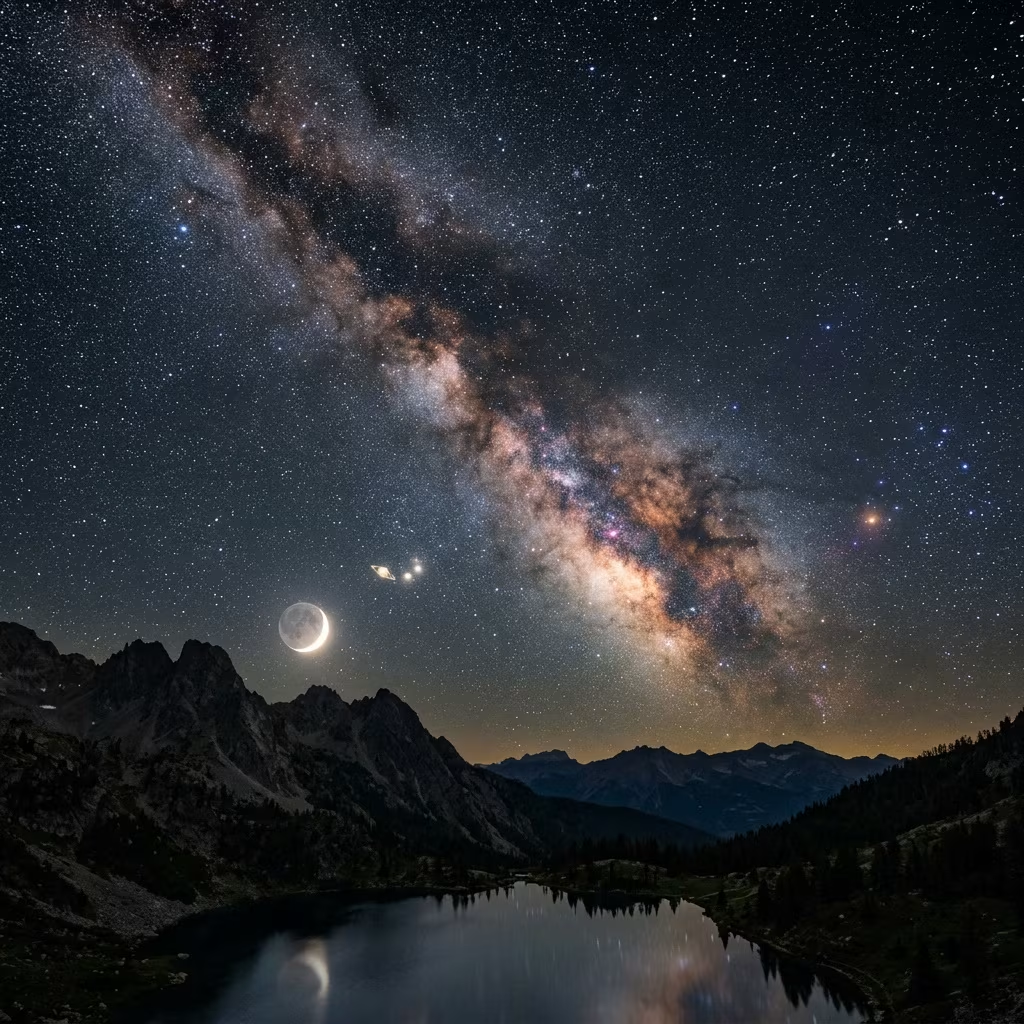
September marks a turning point in the night sky. While the Milky Way still stretches overhead, summer’s brightest constellations begin drifting west, allowing the first stars of the winter sky to peek above the horizon. Cassiopeia dominates the north with nebulae and dark clouds, while in the south, galaxy season starts with the Sculptor group and the Magellanic Clouds making an appearance. Whether you’re in the northern or southern hemisphere, September’s skies are a blend of deep-sky richness and the promise of upcoming seasonal changes.
Tip: At midnight around the new moon, deep-sky objects are well placed along the meridian—visible all night and perfect for observation or imaging.
Meteor Showers: Cosmic Fireworks
Key Meteor Showers This Month
- September 1: Aurigid Meteor Shower – Up to 10 meteors per hour. Look northeast in the early morning hours.
- September 9: ε-Perseid Meteor Shower – Steady, modest activity with meteors radiating from Perseus near the horizon post-midnight.
Both showers are best viewed from dark locations away from city lights. Meteor rates are moderate compared to August’s Perseids, but under optimal conditions, several bright trails can be seen each hour .
Eclipses: September’s Twin Spectacles
September 7: Total Lunar Eclipse
The month opens with a dramatic total lunar eclipse. On September 7, the Moon passes through Earth’s shadow and turns a striking shade of red. The event is visible from much of the Americas, Europe, Africa, and part of Asia.
Best Viewing Tips:
- Find a location with an unobstructed view of the Moon as it rises or sets.
- Bring binoculars or a small telescope to reveal subtle color differences.
- Expect the eclipse to last roughly three hours from partial to partial phases.
September 21: Partial Solar Eclipse
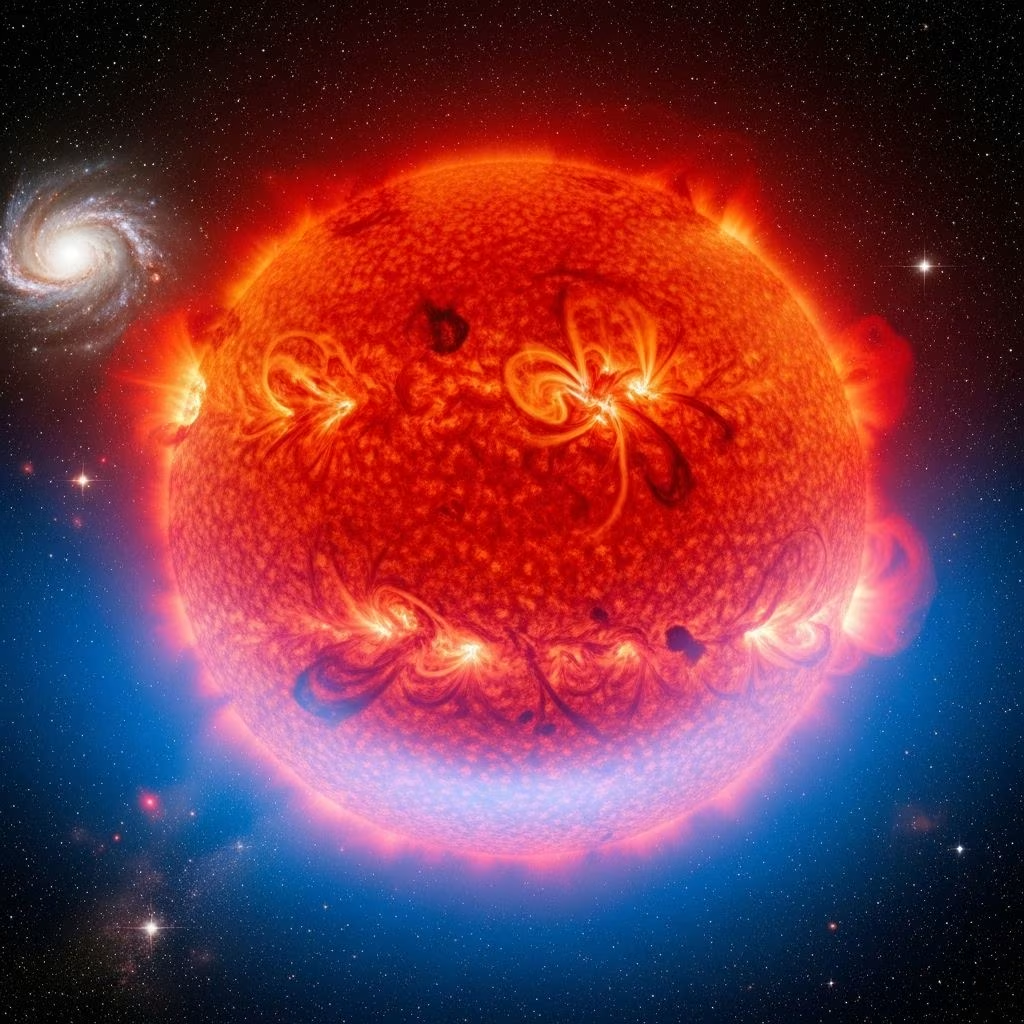
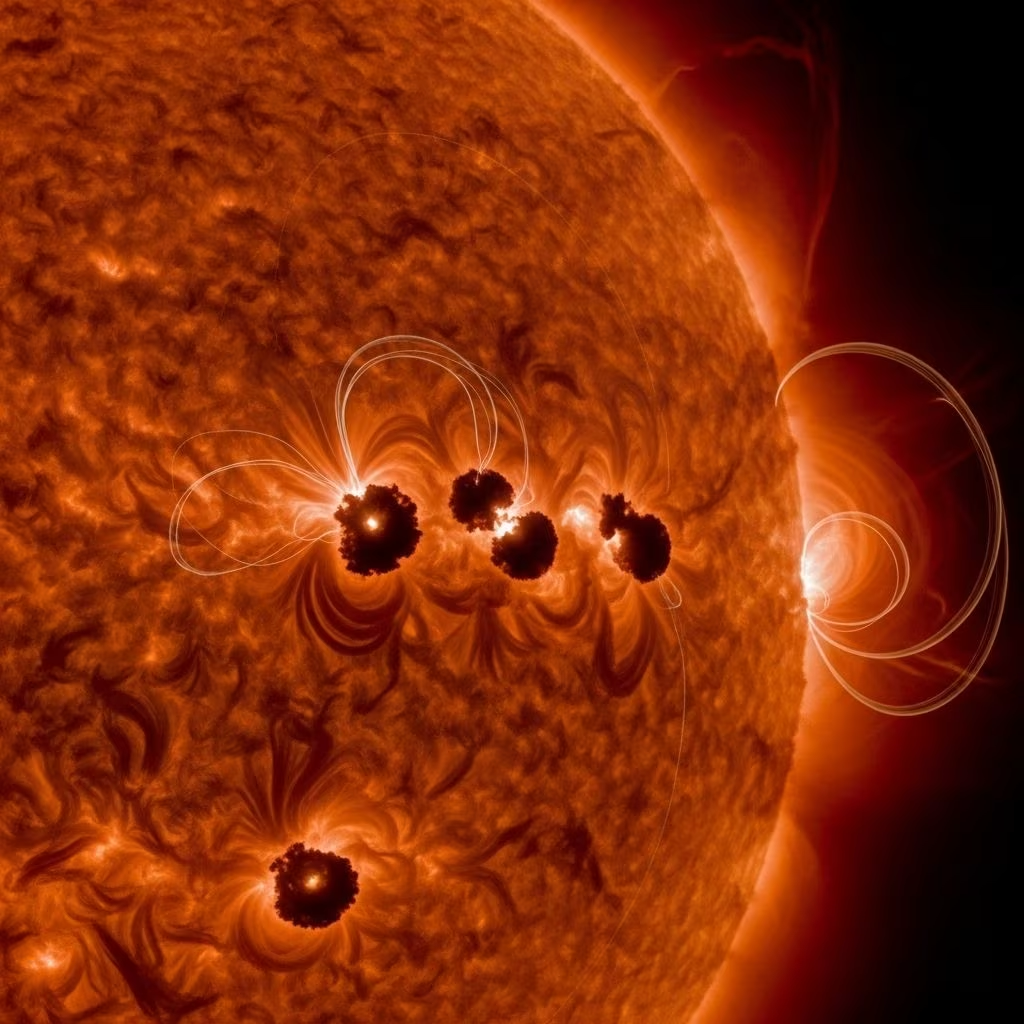
A partial solar eclipse occurs on September 21, with up to 85.5% of the Sun being covered in some regions. The deepest part of the eclipse sweeps through the southern hemisphere, offering a memorable sight.
Safety Reminder: Always use approved solar glasses or eclipse viewers. Never look directly at the Sun with the naked eye .
Planetary Highlights: Opposition, Conjunctions, and More
This is an extraordinary month for planet watchers, with several bright planets at their most prominent.
| Date | Event | Description |
|---|---|---|
| Sept 1-2 | Venus near Beehive Cluster | Dawn: Venus shines just south of the Beehive star cluster—a striking binocular view . |
| Sept 6 | Uranus Stationary | Uranus begins its retrograde motion. Look near the Pleiades in binoculars. |
| Sept 19 | Lunar Occultation of Venus | Watch the Moon occult the morning star Venus—a rare and beautiful event . |
| Sept 21 | Saturn at Opposition | Saturn reaches its closest and brightest for the year; visible all night long with rings on full display. |
| Sept 23 | Neptune at Opposition | Neptune, the distant blue planet, is brightest and best viewed with optical aid. |
- Jupiter rises in the east before sunrise, outshining most stars.
- Mars sinks into the southwestern twilight after sunset, best viewed early in the month.
Special Lunar Occultations: Pleiades and Venus
- September 12: The Moon passes directly in front of the Pleiades star cluster, a truly remarkable telescopic sight.
- September 19: Watch the Moon occult Venus at dawn—visible from parts of North America, Europe, and Africa, weather permitting.
Such occultations are rare and showcase the constant motion of celestial bodies. For best results, use binoculars or a small telescope .
The September Equinox: Seasons in Transition
September 22 marks the September Equinox—when day and night are nearly equal in length across the globe. In the northern hemisphere, this event signals the start of autumn, while in the south, spring begins.
Fun Fact: The Sun rises due east and sets due west for just a day or two around the equinox. Shadows at local noon are also at their annual minimum or maximum, depending on your hemisphere .
Constellations and Deep-Sky Wonders
Northern Hemisphere Highlights
- Cassiopeia stands high in the north, home to the Bubble and Wizard Nebulae—prime targets for imagers.
- Cepheus features the elusive Dark Shark Nebula, best seen under dark skies.
- The Summer Triangle—Vega, Deneb, and Altair—still dominates, but slowly drifts westward each night.
Southern Hemisphere Highlights
- Sculptor Group galaxies (NGC 55, NGC 7793) are well positioned as the Milky Way tips west.
- 47 Tucanae (a brilliant globular cluster) and the Magellanic Clouds remain steadfast in the southern sky.
- Large and Small Magellanic Clouds offer dense regions of star clusters and nebulae—top imaging choices .
Top Deep-Sky Targets for September
- Bubble Nebula (NGC 7635): Found in Cassiopeia, this emission nebula looks like a cosmic soap bubble in astrophotographs.
- Wizard Nebula (NGC 7380): Another Cassiopeia gem, featuring dense star-forming regions.
- NGC 55 and NGC 7793: Two galaxies in Sculptor, easily seen from southern latitudes.
- 47 Tucanae (NGC 104): Among the brightest globular clusters, worth seeing in binoculars or telescopes.
- Magellanic Clouds: Satellite galaxies with a wealth of deep-sky objects, visible from southern skies .
Skywatching Tips for September 2025
- Plan around the new moon (September 18): Avoid bright moonlight for the best deep-sky and meteor observing.
- Use sky maps or astronomy apps to locate planets and deep-sky targets.
- Let your eyes adapt to the dark for 20-30 minutes before searching for faint stars or nebulae.
- Binoculars or a small telescope will enhance your view of lunar features, planets, and star clusters.
- Always use solar filters or eclipse glasses during any solar observations.
Frequently Asked Questions (FAQs)
Q: What is the best night to observe planets in September 2025?
A: Saturn is brightest at opposition on September 21, while Neptune is also at opposition on September 23. Venus and Jupiter shine just before sunrise all month.
Q: When and where can I see the lunar eclipse?
A: The total lunar eclipse is on September 7, visible over most of the Americas, Europe, Africa, and parts of Asia. Check local time tables for moonrise or moonset during the eclipse phases.
Q: What equipment do I need for meteor showers?
A: No special equipment is needed. Find a dark spot, bring a reclining chair or blanket, and look up. Binoculars or telescopes are not necessary for meteors but are useful for star clusters and planets.
Q: Is it safe to watch the solar eclipse with sunglasses?
A: Ordinary sunglasses are NOT safe for solar viewing. Use certified eclipse glasses or solar filters to protect your eyes.
Q: What’s the most spectacular event this month?
A: The total lunar eclipse on September 7 and the partial solar eclipse on September 21 are the most dramatic. Planetary oppositions and the lunar occultation of Venus are also rare and beautiful events this month.
Final Thoughts: September’s Sky—A New Chapter Begins
This month is a celestial crossroads, with the last golden hues of summer mingling with the promise of autumn’s crisp constellations. Whether you’re new to astronomy or a seasoned observer, September 2025 offers both grand spectacles and quiet moments of wonder. Mark your calendar, gather your gear, and don’t miss the opportunity to witness our ever-changing universe from your own backyard.
References
- https://science.nasa.gov/skywatching/
- https://science.nasa.gov/solar-system/whats-up-september-2025-skywatching-tips-from-nasa/
- https://www.astronomy.com/observing/sky-this-month-september-2025/
- https://www.bresser.com/recommendations/sky-guide/sky-guide-september-2025/
- https://www.cosmiccaptures.com/september2025guide
- https://www.youtube.com/watch?v=rG-pmdrayaQ
- https://www.space.com/9044-star-gazers-september-brings-night-sky.html
- https://www.youtube.com/watch?v=QUMAGsjjTKg
- https://cosmicpursuits.com/night-sky-this-month/
- https://www.cosmiccaptures.com/september2025guide-1
- https://starwalk.space/en/news/night-sky-tonight-september
- https://www.timeanddate.com/news/astronomy/night-sky-september-2025
- https://www.planetary.org/night-sky/night-sky-what-to-see-this-month
- https://www.voyageurs.org/news/september-night-sky
- https://hobbyspace.com/Blog/?p=27590
- https://starwalk.space/en/news/deep-sky-objects-in-september
- https://www.skyatnightmagazine.com/advice/stargazing-tonight-what-see-night-sky
- https://www.space.com/stargazing/venus-mars-and-more-how-to-see-planets-in-the-night-sky-in-2025&rut=6e5db59a19d9c44dd7a96a543a3a27cceaee34b62f8de07b45fe95314173ab4a