How to Track the International Space Station
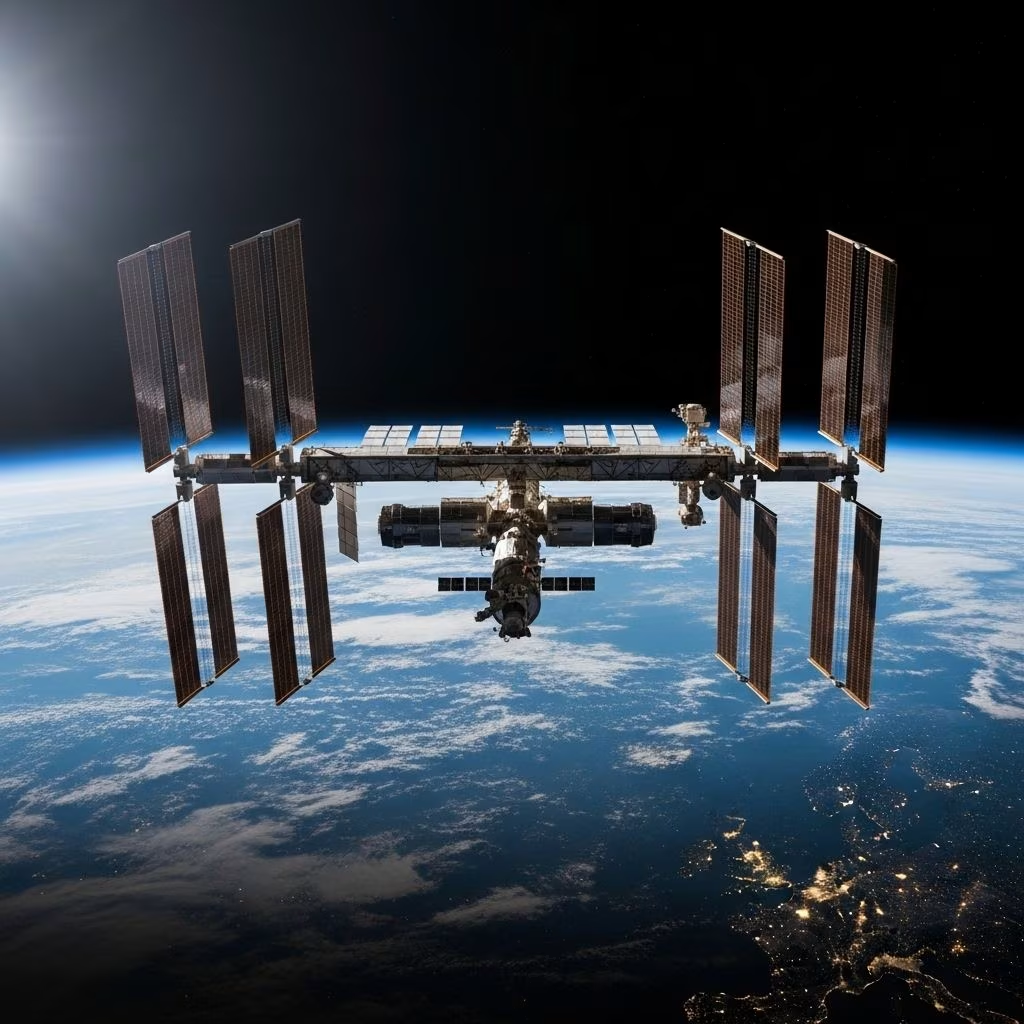
The International Space Station (ISS) orbits over 250 miles above our heads, traveling at a breathtaking 17,500 miles per hour. It is one of the brightest objects in the night sky and, with a little know-how, you can see it gleaming against the stars from almost anywhere on Earth. This guide covers everything you need to successfully spot and track the ISS, including recommended tools, best viewing strategies, and answers to the most common questions about observing this modern marvel.
Contents
- Why Track the International Space Station?
- Where Is the Space Station?
- When Can I See the ISS?
- Top Tools and Apps to Track the ISS
- Tips to Observe the ISS Successfully
- Frequently Asked Questions
Why Track the International Space Station?
The ISS is a truly international achievement: a research platform and living space circling Earth every 90 minutes. Several reasons make ISS tracking a rewarding pursuit for skywatchers, students, and space enthusiasts:
- Amazing Visibility: The ISS can outshine most stars and even planets like Jupiter and Venus, making it one of the night sky’s brightest moving objects.
- Educational Value: Watching the ISS pass overhead can spark curiosity about science, engineering, and international collaboration.
- Connection to Space Exploration: Observing the ISS brings you closer to ongoing missions, real-time astronaut activities, and humanity’s presence beyond our planet.
Where Is the Space Station?
The International Space Station follows a low Earth orbit inclined about 52 degrees to the equator. This steep inclination allows it to pass over most of Earth’s populated regions. On each trip around the planet, it covers different areas, and its path changes slightly each time.
Key Data on ISS Orbit:
- Altitude: About 250 miles (400 kilometers) above Earth’s surface.
- Inclination: 52°, enabling coverage of almost all inhabited areas.
- Speed: 17,500 mph (28,000 kph).
- Orbits Per Day: Roughly 16 complete trips around Earth every 24 hours.
The ISS’s exact location changes throughout the day as it zips around Earth. Professional flight controllers at NASA’s Mission Control keep continuous tabs on its position, publish trajectory data, and manage orbital adjustments or collision avoidance maneuvers as necessary.
How the ISS Orbit Looks from Earth
From the ground, the ISS appears as a steady, bright point of light slowly cruising across the sky. It does not blink or flash like an airplane. Because it reflects sunlight, it is only visible at dawn or dusk—when the sky is dark, but the station is still sunlit.
| Object | Typical Brightness | Appearance |
|---|---|---|
| ISS | -4 mag (very bright) | Steady, fast-moving point |
| Venus | -4.9 mag (very bright) | Steady, no motion |
| Jupiter | -2.9 mag | Steady, no motion |
| Airplane | Varies | Blinking lights, changing path |
When Can I See the ISS?
Although the ISS completes about 16 orbits every day, it is only visible from a given location during specific times when it is lit by the sun and the sky is dark enough for you to see it. These “flyover” or “pass” opportunities don’t happen every night for every viewer.
Best Viewing Times:
- Just after sunset
- Just before sunrise
In the middle of the night, even though the ISS is overhead, Earth’s shadow often hides it from view. When the ISS is visible, its passes usually last between one and six minutes as it moves from one horizon to the other.
Flyover Information Components
- Local Time: When the flyover happens in your time zone.
- Duration: How long the ISS is visible above the horizon (1–6 minutes).
- Maximum Elevation: The highest point it will reach in the sky—90° means directly overhead.
- Direction: Which part of the sky to look toward for the ISS to appear (e.g., NW, SSE).
How to Find ISS Pass Times for Your Location
Because the ISS doesn’t follow a fixed schedule for every place, it’s important to use a tracker or app that generates custom flyover predictions based on your address or GPS location. See the recommended tracking tools below.
Top Tools and Apps to Track the ISS
A variety of tools and apps make ISS tracking accessible—no telescope is required. The table below compares the most popular methods, all of which calculate flyover times, issue alerts, and can even show you the ISS in real time on a map.
| Tool / App | Platform | Main Features |
|---|---|---|
| NASA Spot the Station | Web, iOS, Android |
|
| Sky & Telescope Satellite Tracker | Web |
|
| ISS Detector Satellite Tracker | Android |
|
Many of these tools allow you to enter your zip code, city, or use GPS to get precise sighting predictions. They typically display a schedule of upcoming passes, including direction, duration, and brightness.
Official NASA Spot the Station App
NASA’s own “Spot the Station” app provides up-to-date flyover info for almost every inhabited location on Earth. Features include:
- Personalized alerts based on your location
- Easy access to pass schedules and trajectory information
- Multilingual support and education videos
- Open-source code for further customization (for advanced users)
Tips to Observe the ISS Successfully
Catching sight of the ISS can be simple, but maximizing your chances and enjoyment requires some preparation. Here’s how to make the most of your skywatching session:
- Pick the Right Time: Use your preferred tracker to find out when the ISS will next be visible in your area. Plan to be outside a few minutes early.
- Choose a Dark Location: Light pollution can make faint satellites harder to spot. Try to get away from city lights for the best view.
- Let Your Eyes Adjust: Give your eyes several minutes to adapt to the dark before scanning the sky.
- Face the Correct Direction: Find out which part of the horizon the ISS will appear in and face that way.
- No Optics Needed: The ISS is easy to see with the naked eye. Binoculars can show its shape, but telescopes are not required.
- Look for a Steady, Unblinking Light: Airplanes blink; satellites like the ISS do not. The ISS looks like a bright, fast-moving star that does not flash.
- Bring a Star Chart (Optional): This helps newcomers get oriented in the night sky.
- Check the Weather: Clouds will obscure the ISS, so pick a clear night.
- Invite Friends or Family: The ISS’s bright streak is fun to watch and makes a great shared experience.
Pictured: What Does the ISS Look Like From the Ground?
The ISS resembles a bright dot, much like a moving star or planet. It does not sparkle and moves smoothly from west to east in most cases, completing its arc in just a few minutes before fading as it enters Earth’s shadow or drops below the horizon.
Frequently Asked Questions (FAQs)
Q: Do I need a telescope to see the ISS?
A: Not at all! The ISS is easily visible to the naked eye. While binoculars might reveal more details or hints of its solar panels, a telescope is not necessary for the basic experience.
Q: Why isn’t the ISS visible every night?
A: Visibility depends on the station’s orbit and whether it is illuminated by sunlight while your location is dark. There are times when all passes occur during daylight or when the ISS is shadowed by Earth and can’t be seen.
Q: How do I know which direction to look for the ISS?
A: Tracking apps and websites will tell you both the direction (compass point) of initial appearance and disappearance. For example, “Appears: WSW, Disappears: ENE.”
Q: Can I see the ISS during the day?
A: The ISS is sometimes above you in daylight, but the sky is too bright for it to be visible. Rarely, with the right conditions, expert observers may spot it in full daylight just after dawn or before dusk, but it’s much easier to see when the sky is dark.
Q: Can I track other satellites the same way?
A: Yes! Most ISS trackers can also find passes for other satellites, including Hubble and large communications satellites.
Q: Is the ISS’s path ever the same?
A: The ISS’s orbit gradually shifts, so you won’t see it on the same path every time. The angle and direction of passes change throughout the year due to its orbital mechanics and adjustments made by controllers.
Q: Is it possible to photograph the ISS?
A: Yes. You can capture time-lapse photos or even try to resolve details through a powerful telescope with a camera attached. Use a tripod and set your exposure to a few seconds to catch its movement as a bright streak.
Further Resources
- NASA Spot the Station: Official app and online tool for accurate ISS flyover predictions
- Sky & Telescope Satellite Tracker: Interactive tool with maps and custom predictions
- ISS Detector App (Android): Quick notifications and alerts for mobile tracking
For those keen to dive deeper, NASA provides detailed trajectory and state vector data online for advanced analysis and integration with commercial spaceflight software. Earth’s largest orbital laboratory is always moving—don’t miss your next chance to spot it!
References
- https://www.nasa.gov/spot-the-station/
- https://www.nasa.gov/international-space-station/
- https://play.google.com/store/apps/details?id=com.runar.issdetector&hl=en_US
- https://skyandtelescope.org/observing/interactive-sky-watching-tools/satellite-tracker-iss-hubble-tiangong/
- https://www.instructables.com/International-Space-Station-Tracker/
- https://www.issdetector.com
- https://apps.apple.com/us/app/spot-the-station/id6449235044
- https://play.google.com/store/apps/details?hl=en_US&id=com.runar.issdetector
- https://www.youtube.com/watch?v=nbEe-BCNutg
- https://www.geeksforgeeks.org/python/how-to-track-iss-international-space-station-using-python/
- https://www.youtube.com/watch?v=xRPjKQtRXR8
- https://www.space.com/nasa-spot-the-station-iss-mobile-tracking-app
- https://www.n2yo.com
- https://www.instructables.com/DIY-International-Space-Station-Tracker/
- https://vitotechnology.com/apps/satellite-tracker
- https://keeptrack.space/deep-dive/iss/
- https://www.n2yo.com/?s=25544