Celestial Spectacle: The Moon, Venus, and Pleiades Triangle on June 22
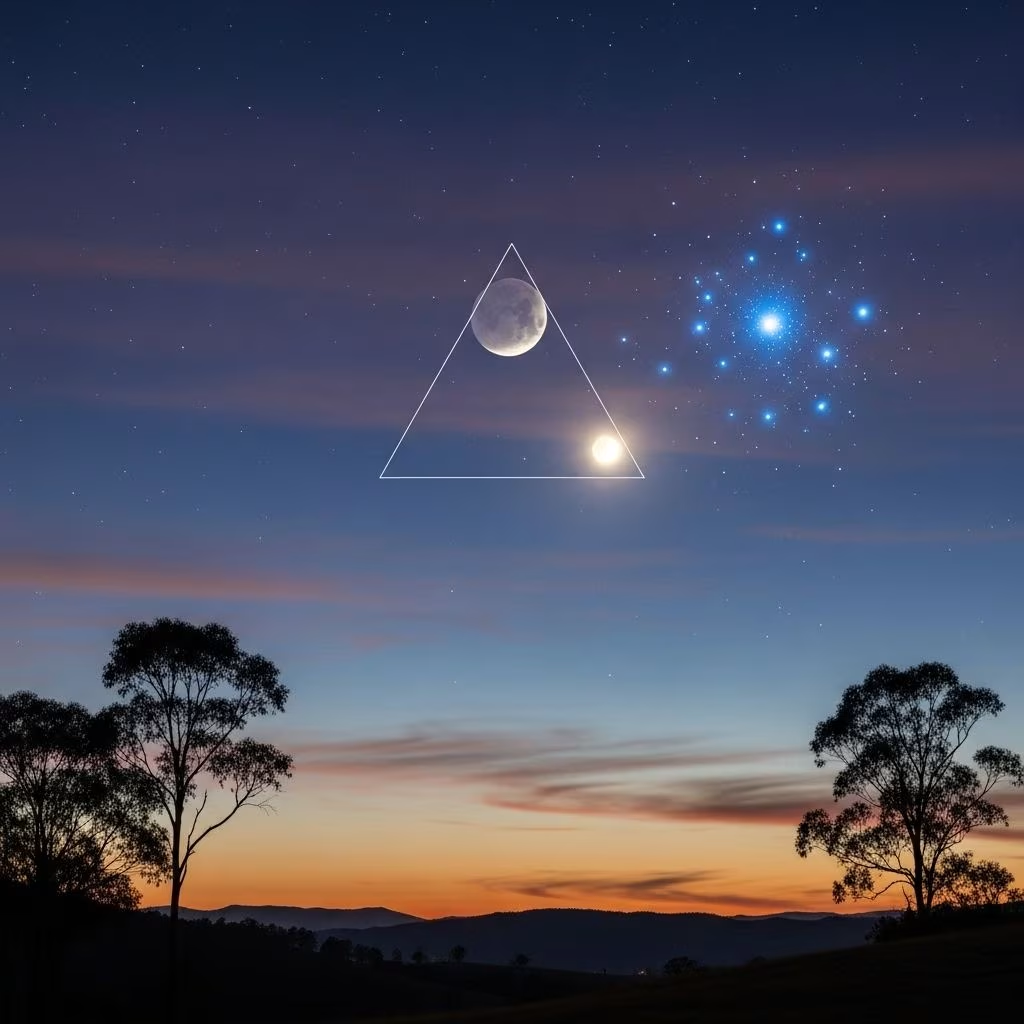
On the morning of June 22, 2025, skywatchers will have a rare and beautiful opportunity to observe a visually impressive celestial triangle formed by the Moon, the brilliant planet Venus, and the famous Pleiades star cluster in the predawn sky. This astronomical event is best observed in the hour before sunrise, when these dazzling objects can be seen above the eastern horizon.
Why This Alignment Is Special
- Triangular formation: The moon, Venus, and the Pleiades will appear close together, forming a distinctive triangle against the twilight backdrop.
- Waning crescent moon: At only about 13% illumination, the slender lunar crescent will add delicate beauty and contrast to the scene.
- Venus at high magnitude: Venus will shine at a brilliant magnitude of -4.2, easily outshining other stars in the area.
- Pleiades visibility: The Pleiades, or “Seven Sisters,” will sparkle nearby as one of the closest open star clusters to Earth.
When and Where to Look
To experience this cosmic show, you need to plan ahead and rise early. The alignment occurs in the predawn hours of Sunday, June 22. The objects will be visible for just over an hour before sunrise—timing is crucial.
| Object | Location in the Sky | Visibility Time (ET) | Description |
|---|---|---|---|
| Moon (Crescent) | Above eastern horizon, sickle-shaped | from ~3:00 a.m. until sunrise | 13% illuminated waning crescent, soft earthshine effect |
| Venus | To lower right of Moon | Visible about an hour before sunrise | Breathtakingly bright ‘morning star’, mag -4.2 |
| Pleiades | To lower left of Moon (less than 10° away) | From ~3:15 a.m. (ET) for over an hour | ‘Seven Sisters’ cluster, faint but striking in early dawn |
Best viewing advice: The ideal time to observe is between 3:00 and 4:15 a.m. ET (local times will vary by location). Face east and locate the sickle-shaped crescent moon. Venus will gleam to its lower right, with the Pleiades forming the third point of the triangle to the lower left of the moon, less than a fist’s width apart at arm’s length.
The Objects: An In-depth Look
The Waning Crescent Moon
The moon is in its waning crescent phase, with only around 13% of the lunar disk visible. This offers an ethereal sight, as the moon’s unlit portion is softly illuminated by earthshine—sunlight reflected from the Earth’s surface. This glow can sometimes make the whole lunar disk faintly visible, adding nuance to your observations.
- Earthshine is most prominent during crescent phases.
- Photographing the effect requires a steady camera and long exposure.
Venus: The Dazzling Morning Star
Venus, often called the morning star when it appears before sunrise, will be especially luminous this morning, shining near its peak brightness. In late June, Venus is gradually dimming compared to its earlier maximum but remains the brightest celestial body after the moon.
- Venus is about 6.8° to the lower right of the moon on June 22.
- This conjunction offers a unique chance for astrophotography and naked-eye observation.
The Pleiades Star Cluster
The Pleiades, also known as the Seven Sisters, is an open star cluster in the constellation Taurus. These stars are roughly 444 light-years away from Earth, making them one of the closest clusters to our Solar System. Typically a winter sky highlight, the Pleiades return to the dawn sky in late June.
- Best seen with binoculars or a small telescope, though visible to the naked eye under dark conditions.
- The cluster will only be visible for a short period before sunlight washes it out—look for it less than an hour before sunrise.
Safety Tips for Morning Skywatchers
While this alignment promises striking views, safety is critical when observing near sunrise. Direct sunlight can severely damage eyesight, especially through binoculars or telescopes:
- Never point telescopic equipment toward the rising sun.
- Pack up well before sunrise as the sun approaches the horizon.
- Use a smartphone or tripod-mounted camera for safe wide-field photos.
Essential Gear for Viewing and Photographing
- Naked eye: The trio is easy to spot without equipment in clear skies.
- Binoculars: Improves the visibility of Pleiades and reveals the moon’s earthshine detail.
- Telescopes: Consider beginner-friendly models like the Celestron NexStar 4SE for reliable views. Photography through telescopes can capture detailed images of both the moon’s surface and Venus.
- Tripod-mounted cameras: Use longer exposures to reveal earthshine and the faint glow of Pleiades.
Tips for Making the Most of the Experience
- Plan ahead: Set up all gear and get into position 15–30 minutes before the expected rise times.
- Check the weather: Clear, low-humidity conditions provide the best visibility.
- Find a dark location: City lights can wash out the faint Pleiades cluster; seek open areas with low light pollution.
- Bring friends and family: Such events are perfect for sharing the wonders of astronomy.
What If You Miss It?
This precise triangular alignment is rare, but Venus and the moon frequently appear together throughout the year. The Pleiades cluster joins periodically as their motions in the sky coincide. The next wide Venus–Pleiades conjunction will occur on July 5, but the moon will not be nearby at that time.
Understanding the Triangle: Cosmic Distances and Perspective
While the moon, Venus, and the Pleiades appear neatly grouped in our sky, they are in fact separated by enormous distances:
- The Moon is just 384,400 km (238,855 miles) away.
- Venus shines from approximately 100 million km (62 million miles) away, depending on its orbit.
- The Pleiades cluster is roughly 444 light-years distant—far beyond our Solar System.
This alignment is a product of our unique perspective from Earth, rather than a physical proximity between the bodies.
Historical and Mythological Background
The Pleiades in Legend
Known since ancient times, the Pleiades appear in mythologies worldwide as the Seven Sisters. Their grouping has inspired stories in Greek, Japanese, Native American, and many other cultures.
- Ancient cultures used the Pleiades for agricultural calendars.
- They have been featured in poetry, folklore, and even automobile logos (Subaru).
Venus: Goddess and Beacon
Venus, named for the Roman goddess of love, has served as a major navigational reference and source of fascination. Its regular conjunctions with the moon are celebrated in many traditions.
Frequently Asked Questions (FAQs)
Q: Will the event be visible outside the U.S.?
A: Yes, the celestial triangle can be seen from many locations worldwide—anywhere with a clear view of the eastern horizon before sunrise. Exact timings may vary locally.
Q: Do I need a telescope to see the triangle?
A: No telescope is needed to see the moon, Venus, and the Pleiades forming the triangle. However, binoculars or a small scope enhance the details, especially for the Pleiades cluster and lunar surface features.
Q: What is earthshine, and how can I see it?
A: Earthshine is sunlight reflected off Earth’s surface onto the moon’s dark side. You can see it best in the crescent phase using binoculars or a camera with longer exposure times.
Q: What risks should I avoid?
A: Never look directly at or near the sun with telescopes or binoculars, as this can cause permanent eye damage. Stop observing before sunrise when daylight becomes strong.
Q: What makes the Pleiades special?
A: The Pleiades, or Seven Sisters, is one of the most recognizable star clusters—distinctively packed and bright. Its proximity (relatively speaking) and visibility to the naked eye have made it famous since antiquity.
Final Thoughts: Why You Shouldn’t Miss the June 22 Sky Show
This celestial triangle is a fleeting masterpiece painted by the orbital choreography of three of the sky’s most inspiring objects. The moon’s gentle light, Venus’s dazzling brilliance, and the timeless mystery of the Pleiades combine for a predawn sight perfect for early risers, amateur astronomers, and anyone who delights in the wonders overhead. Whether you photograph it, sketch it, or simply admire it, the experience will linger far beyond the sunrise.
- Prepare your equipment and enjoy safe, responsible viewing.
- Share the moment with fellow skywatchers and loved ones.
- Use this opportunity to learn more about the night sky and its stories.
Clear skies, and happy stargazing!
References
- https://www.space.com/stargazing/see-the-moon-venus-and-the-pleiades-make-a-celestial-triangle-in-the-predawn-sky-on-june-22
- https://www.youtube.com/watch?v=VrXGeooSgq8
- https://dailygalaxy.com/2025/06/moon-venus-pleiades-in-a-rare-alignment/
- https://whenthecurveslineup.com/2025/06/05/2025-june-21-22-morning-star-and-crescent-moon/
- https://www.astronomy.com/observing/the-sky-today-sunday-june-22-2025/
- https://science.nasa.gov/solar-system/skywatching/whats-up-june-2025-skywatching-tips-from-nasa/
- https://www.newsbytesapp.com/news/science/cosmic-triangle-of-moon-venus-and-pleiades-to-grace-sky/story
- https://www.youtube.com/watch?v=3S59gA94Vwc
- https://www.space.com/42695-moon-pleiades-venus-triangle-photo.html
- https://asterisk.apod.com/viewtopic.php?t=40462
- https://www.magicalrecipesonline.com/2025/06/the-mystic-portal-of-pleiades-june-22-23-2025.html
- https://www.innerspacevoyages.com/2025-celestial-gateways.html
- https://astropixels.com/almanac/almanac21/almanac2026pst.html
- https://popastro.com/forum/viewtopic.php?t=20392
- https://gulfnews.com/amp/story/uae%2Fb6yaz33-emirates-astronomical-society-spots-major-lunar-1.500008873