Where to See the Northern Lights: Top Destinations and Tips
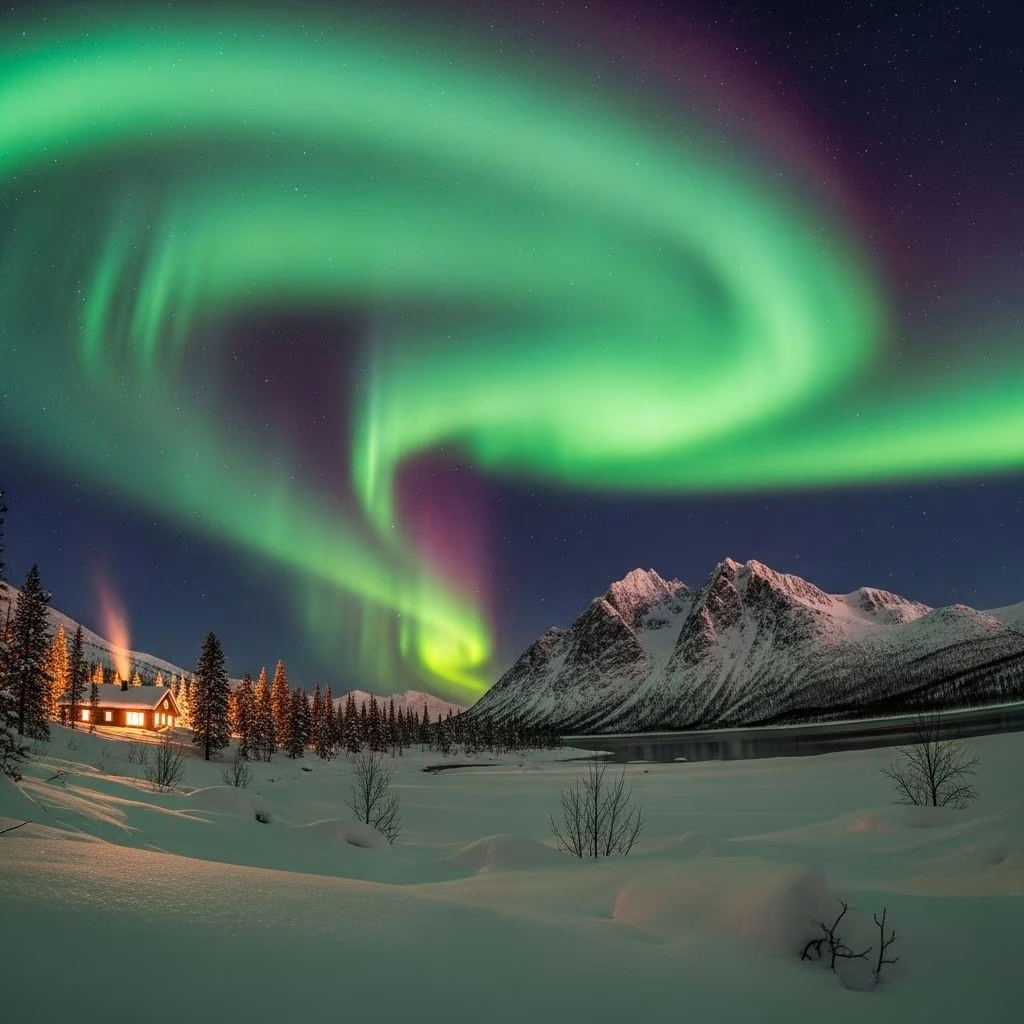
Few natural spectacles on Earth compare to the northern lights, also known as the aurora borealis. Rippling waves of green, violet, and red light swirl across the winter night sky, captivating those lucky enough to witness them. Whether you are a skywatcher, photographer, or adventurer at heart, this guide compiles everything you need to know about finding and experiencing the northern lights: from prime destinations in Europe and North America to practical tips for increasing your odds, plus essential frequently asked questions.
What are the Northern Lights?
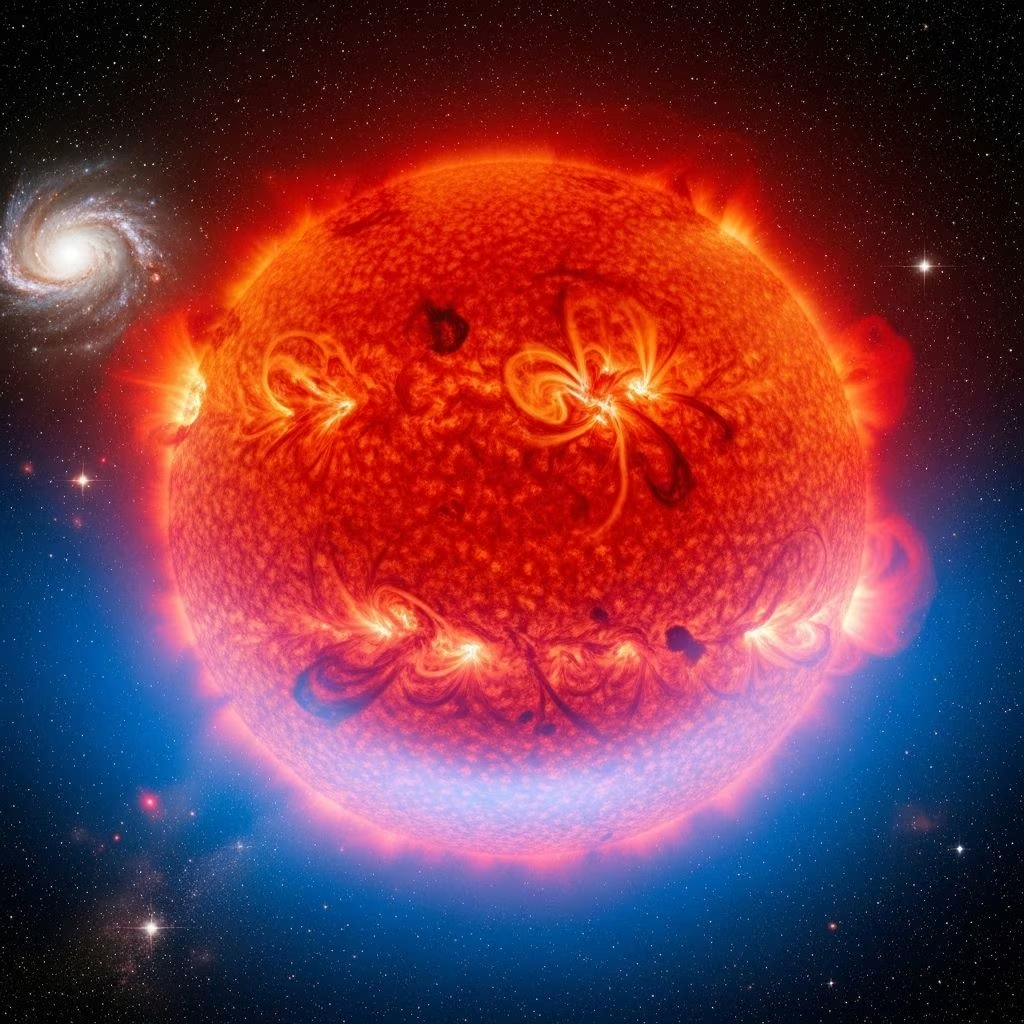
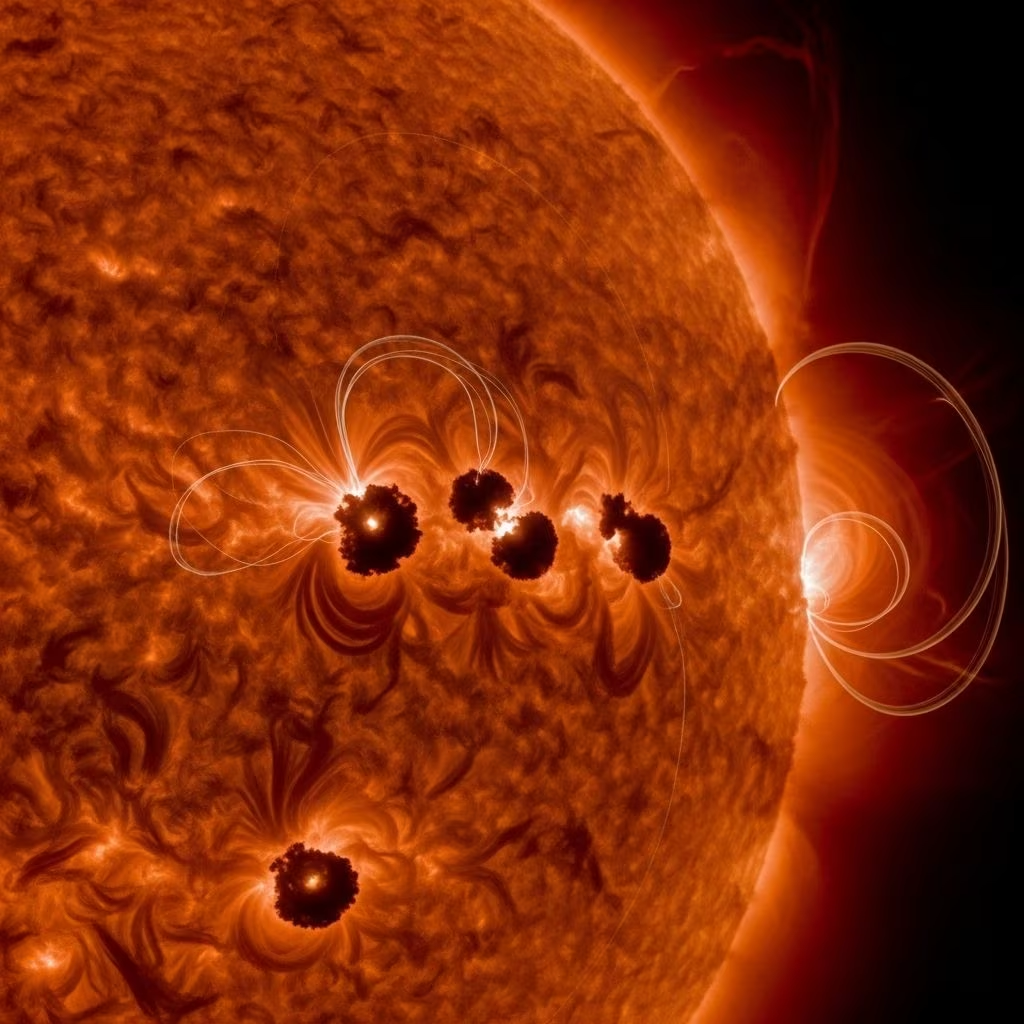
The northern lights are shimmering displays of colored light in the night sky, caused by the interaction of charged particles streaming from the Sun (known as the solar wind) with atoms and molecules in Earth’s atmosphere. These particles excite oxygen and nitrogen high above the ground, releasing energy in swathes of green, pink, purple, red, or blue. The shape, brightness, and color of the aurora are governed by both solar activity and Earth’s magnetic field lines. This phenomenon occurs in a circular ‘oval’ centered on Earth’s magnetic poles. The southern hemisphere equivalent, visible in Antarctica and parts of the southern Indian Ocean and Australasia, is called aurora australis.
Why Do the Northern Lights Happen?
The aurora borealis occurs when charged solar particles are funneled by Earth’s magnetosphere toward the magnetic poles. When these particles collide with oxygen, they mostly produce green and red colors. Nitrogen produces blue and purple hues. The different compositions in the atmosphere determine the array of colors you might witness. The most common sight is a green glow; brighter, multicolored auroras tend to occur during periods of strong solar activity, especially during the peak of the 11-year solar cycle known as solar maximum.
When Are the Northern Lights Visible?
To have the best chance to see the northern lights, timing is crucial. Auroral activity is more intense and frequent around the solar maximum—the peak of the Sun’s 11-year activity cycle. According to recent predictions, the auroras’ intensity is expected to peakin 2025, promising enhanced displays through the next couple of years.
- Best Months: Late September through late March offer the longest dark nights for viewing in the northern hemisphere. While auroras can occur year-round near the poles, the midnight sun of summer means they are invisible.
- Best Hours: Between 9 p.m. and 2 a.m. local time is often most favorable, with the highest chance around midnight.
- Peak Years: Solar maximum periods, when solar flares and sunspots are most plentiful, often lead to more frequent and vibrant auroras.
Top Places to See the Northern Lights
Although the aurora borealis is technically visible from across much of the circumpolar north, certain locations are renowned for their accessibility, darker skies, and memorable landscapes. Here’s a region-by-region breakdown:
Norway
- Tromsø – Known as the ‘Gateway to the Arctic,’ Tromsø offers vibrant city life, easy access to wild landscapes, and regular auroral displays. Its location above the Arctic Circle allows for frequent viewing opportunities and plenty of tours, activities, and world-class hospitality.
- Alta – With a long tradition of aurora research, Alta offers dry, stable weather and multiple accommodations designed for northern lights chasers, such as glass igloos.
- Lofoten Islands – Dramatic coastal peaks, fishing villages, and relatively unpolluted skies make the Lofoten archipelago a popular—though sometimes cloudier—northern lights destination.
- Senja & Vesterålen – Less crowded than Tromsø or Lofoten, these islands boast microclimates that can favor clearer night skies, maximizing aurora visibility.
- Svalbard – Located far north (74–81° N), Svalbard offers a unique chance to see daytime auroras during the polar night in winter.
Finland
- Lapland – The far north of Finland, especially the region around Rovaniemi, offers frequent auroral displays. The unique Kakslauttanen Arctic Resort allows guests to view shimmering lights from glass-domed igloos, while well-equipped wilderness lodges dot the region.
Sweden
- Abisko National Park – Renowned for its clear skies, Abisko sits in a so-called ‘blue hole’ microclimate, reducing the risk of clouds. The nearby Aurora Sky Station is a favorite aurora-watchers’ destination.
- Kiruna – Another lively northern outpost offering regular displays and plenty of aurora tour operators.
Iceland
- Reykjavik & Surroundings – Even from the city, impressive auroras can be seen when solar activity is strong and skies are clear. For the best experience, seek out countryside spots away from artificial lights.
- Akureyri and the North – The north offers more stable weather and longer evenings of darkness in mid-winter.
Greenland
- Kangerlussuaq – With an inland tundra setting, clear skies, and minimal light pollution, this is one of Greenland’s prime aurora destinations.
- Ilulissat – Beyond aurora hunting, you can witness towering icebergs beneath spectacular skies.
Scotland
- Shetland, Orkney, and the Highlands – On rare occasions during high activity, the aurora (locally called ‘Mirrie Dancers’) can be sighted from Scotland’s far north.
Canada
- Yukon Territory – Whitehorse, along with outlying wilderness lodges and campgrounds, offers breathtaking aurora experiences.
- Northwest Territories – Yellowknife is famous for frequent aurora sightings, dry winter nights, and organized aurora tours.
- Alberta – Jasper National Park, a dark sky preserve, provides magnificent viewing opportunities when solar activity is high.
- Nunavut & Manitoba – Cities like Churchill offer a combination of polar bear viewing and vibrant aurora displays.
Alaska, USA
- Fairbanks – Sitting beneath the auroral oval, Fairbanks boasts one of the world’s most reliable aurora viewing records. The aurora season runs from late August to April, and numerous lodges, hot springs, and local guides cater to eager visitors.
- Anchorage – When conditions are right, especially during solar storms, Anchorage and nearby areas see regular auroral displays.
- Denali National Park – Offers the possibility to see the aurora in a pristine wilderness setting.
Other Notable Destinations
- Russia – Murmansk and the Kola Peninsula are top choices in northwest Russia.
- Faroe Islands – These remote islands offer dark skies and unspoiled landscapes when weather cooperates.
- Southern Hemisphere – While rarer and more difficult to reach, the aurora australis can sometimes be viewed from southern New Zealand (like Invercargill and Stewart Island), Tasmania, and even the southern tip of South America.
Quick Comparison Table of Top Viewing Regions
| Region | Best Viewing Months | Advantages | Weather Challenges |
|---|---|---|---|
| Norway (Tromsø, Alta, Lofoten) | Sep-Mar | Good infrastructure, frequent clear skies | Variable coastal weather in Lofoten |
| Finland (Lapland) | Sep-Mar | Igloo hotels, wild forests | Extremely cold during peak months |
| Sweden (Abisko) | Sep-Mar | ‘Blue hole’ microclimate, Aurora Sky Station | Snow storms possible |
| Alaska (Fairbanks) | Aug-Apr | Consistent auroras, hot springs | Bitter cold, cloud cover possible |
| Canada (Yellowknife) | Aug-Apr | Dry air, frequent auroras | Cold temperatures, remote |
| Iceland | Sep-Apr | Easy access from capital, dramatic scenery | Unpredictable storms, rapid weather changes |
Tips for Seeing the Northern Lights
- Check Aurora Forecasts: Monitor space weather predictions using specialist websites or apps. Geomagnetic activity is measured as the ‘Kp index’; values of 4 or higher improve chances outside the typical auroral oval.
- Pick Dark, Clear Nights: Avoid city lights. New moon periods, or at least nights free from bright moonlight, are ideal.
- Be Patient: Auroras are as unpredictable as the weather. Prepare to wait outside, sometimes for hours, for the lights to appear.
- Dress Appropriately: Arctic conditions are harsh in winter—dress in thermal layers, wear windproof outer clothing, and protect face, hands, and feet from frostbite.
- Join Guided Tours: Local guides often have the latest weather and aurora forecasts and know the best spots for clear horizons and shelter.
- Chase Clear Skies: In cloud-prone areas, consider hiring a car or joining ‘aurora chaser’ tours which relocate at short notice based on local weather.
- Photographing the Auroras: Use a tripod, set your camera to manual mode, and experiment with wide apertures, high ISO, and several seconds of exposure. Remote rural settings often yield the best results.
Frequently Asked Questions (FAQs)
Q: Are the northern lights guaranteed during my trip?
A: No natural phenomenon can be guaranteed. Visibility depends on solar activity and local weather. Increasing the length of your stay and choosing peak months improve your odds.
Q: Is it necessary to book a special aurora tour?
A: Not mandatory, but tours offer expert guidance, transport to optimal viewing spots, and sometimes photography support, especially in unfamiliar regions.
Q: Can I see the aurora with the naked eye, or do I need a camera?
A: The aurora is usually visible to the naked eye, though color sensitivity varies under dim conditions. Cameras can capture more subtle greens and reds, enhancing the memory of faint displays.
Q: What apps or tools help with aurora spotting?
A: Several apps (such as My Aurora Forecast, Aurora Alerts, or AuroraWatch UK) deliver real-time geomagnetic and cloud cover forecasts tailored to your location.
Q: Is there a southern hemisphere aurora?
A: Yes, called ‘aurora australis.’ However, it’s more difficult to access due to remote southern latitudes, but can sometimes be seen from southernmost New Zealand and Tasmania during strong solar storms.
Q: Why do auroras come in waves or fade quickly?
A: The structure and movement of auroras reflect both the rapid shifts in solar wind and the way Earth’s magnetic field lines interact with the Polar Regions. Auroras often flicker, dance, or form wide bands that can intensify or vanish within minutes.
Q: What’s the best month for clear auroras?
A: Statistically, March and September offer a good balance of dark nights and favorable weather. Deep winter months (December–February) can be great but are often the coldest and cloudiest.
Final Thoughts
The northern lights remain one of nature’s most unpredictable and magical phenomena. Though no trip can guarantee a display, traveling to one of these prime locations at the right time dramatically increases your chances. Stay updated with forecasts, be patient, and prepare for freezing inland nights—and you may be rewarded with a light show unlike any other on Earth.
References
- https://www.discover-the-world.com/northern-lights/
- https://explorewithalec.com/best-places-to-see-the-northern-lights/
- https://www.best-served.co.uk/blog/where-to-see-the-northern-lights-2015-2016
- https://www.swpc.noaa.gov/products/aurora-viewline-tonight-and-tomorrow-night-experimental
- https://www.wendyperrin.com/where-to-see-the-northern-lights-and-when/
- https://www.theaurorazone.com/about-the-aurora/the-science-of-the-northern-lights/the-best-place-to-see-the-northern-lights/
- https://www.adventureworld.com/blog/the-best-times-places-to-see-the-northern-lights-in-2025/
- https://www.visitnorway.com/things-to-do/nature-attractions/northern-lights/
- https://guidetoiceland.is/the-northern-lights/how-to-find-the-northern-lights-in-iceland
- https://www.responsiblevacation.com/vacations/northern-lights-watching/travel-guide/where-to-see-the-northern-lights
- https://community.ricksteves.com/travel-forum/general-europe/how-to-see-the-northern-lights-a-short-guide
- https://www.space.com/stargazing/auroras/northern-lights-may-be-visible-in-these-23-us-states-tonight-june-1
- https://souvenirs.vincent.voyage/northern-lights/
- https://thewanderclub.com/blogs/blog/where-to-see-northern-lights-in-north-america
- https://guidetoiceland.is/the-northern-lights/the-northern-lights-aurora-borealis-in-iceland
- https://www.nordicvisitor.com/blog/best-times-places-northern-lights-europe/
- https://www.space.com/32601-where-to-see-northern-lights.html