Lyrid Meteor Shower: A Complete Guide for Stargazers
The Lyrid meteor shower is one of the most captivating annual astronomical events, offering skywatchers the chance to witness bright streaks of light racing across the night sky every April. This guide provides a detailed look at the origins, peak viewing times, scientific background, and the best techniques to maximize your viewing experience of the Lyrids in 2025 and beyond.
What Is the Lyrid Meteor Shower?
The Lyrid meteor shower is a burst of celestial activity that occurs each year during mid to late April as Earth passes through the debris left by long-period Comet C/1861 G1 Thatcher. Unlike some other meteor showers visible throughout the year, the Lyrids are particularly notable for their longevity, having been recorded for more than 2,600 years since their first sighting in 687 BCE.
Every time Earth encounters this cometary trail, small fragments—known as meteoroids—plunge into the atmosphere at extreme speeds, producing the spectacular flashes we see as meteors. These meteoroids travel at about 50 kilometers per second (over 110,000 miles per hour), generating enough friction to heat up and glow brightly before they disintegrate.
- The Lyrids are named after the constellation Lyra—in particular, the radiant point near the star Vega.
- Meteors from the Lyrids will appear to originate from Lyra but can streak across any part of the sky.
- A small number of exceptionally bright meteors, known as fireballs, may occasionally be seen.
A Celestial Tradition: The History of the Lyrids
The Lyrids are among the oldest known meteor showers recorded by humans, with observations noted as far back as ancient Chinese chronicles from 687 BCE. Over centuries, countless records of this meteor shower appear from cultures worldwide, making it a staple event for professional and amateur astronomers alike.
Connection to Comet Thatcher
The parent body responsible for the Lyrid meteors is Comet C/1861 G1 Thatcher. This comet travels through the solar system on a long-period orbit of roughly 415 years. Most of its icy and rocky fragments remain undisturbed in space until Earth’s annual passage through its debris trail.
When Is the Lyrid Meteor Shower in 2025?
For 2025, the Lyrid meteor shower will be active between April 16 and April 25, peaking on the night of April 22[12]. The most meteors are typically visible in the pre-dawn hours after midnight on the peak night, as Lyra rises higher in the sky.
| Shower Name | Date of Maximum | Visible Dates | Average Rate/Hour | Description |
|---|---|---|---|---|
| Lyrids | April 22 | April 16-25 | 18 | Bright, fast meteors; some produce glowing trails. Linked to Comet Thatcher. |
- Maximum activity: April 22 (night of April 22/morning of April 23)
- Activity window: April 16–25
- Best viewing: After midnight and before dawn, when the radiant point is highest
- This year, the Moon will not cause significant interference as it will be below the horizon until 3 AM GMT on peak night.
The Science Behind Meteor Showers
Most meteors in a shower like the Lyrids are the remnants of comets—small pieces of rock and ice that burn up due to friction when entering Earth’s atmosphere. As these particles strike the atmosphere, temperatures around them can soar to 1,600°C (2,900°F), causing the air to glow and creating the visible streaks we call shooting stars.
- Most Lyrids are small sand- or pebble-sized debris.
- They appear as bright flashes moving rapidly from the radiant point outwards, sometimes leaving glowing “trains” that persist for several seconds.
- Rarely, larger fragments make it to the ground as meteorites.
The direction from which the meteors seem to radiate is a matter of perspective, much like cars moving along parallel lanes appearing to diverge from a point on the horizon. In reality, the debris is travelling in parallel, but our viewpoint causes the visual effect of a radiant point in Lyra.
Where and How to Watch the Lyrid Meteor Shower
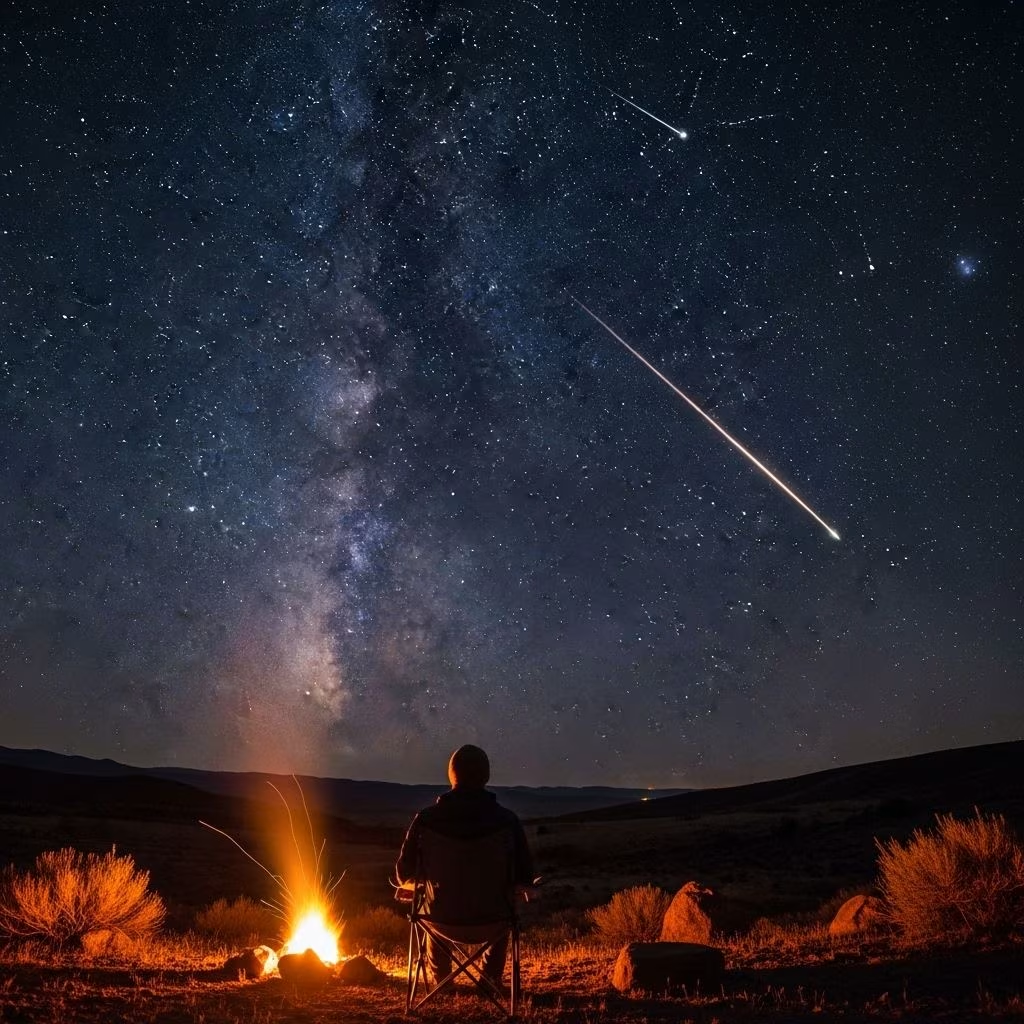
Observing the Lyrids does not require a telescope or special equipment. Instead, the most essential factors for a successful meteor watch are location, timing, and optimal viewing conditions.
Tips for Best Viewing:
- Find a dark site — Get as far away from city lights as possible to avoid light pollution.
- Unobstructed horizon — Choose a spot with a wide, clear view of the sky, free from trees or tall buildings.
- Arrive early to let your eyes adjust to the darkness (about 20–30 minutes).
- Lie back or recline — Use a blanket, sleeping bag, or reclining chair for comfort and the broadest sky view.
- Dress warmly — Even in April, nights can be surprisingly cold, so be prepared with layers and blankets.
- Don’t use your phone — Screens disrupt night vision; keep phone use to a minimum.
The radiant, or apparent origin point of the Lyrids, rises in the eastern sky after midnight and climbs higher toward dawn. The higher Lyra is, the more meteors you’re likely to observe, as fewer will be hidden below the horizon.
Weather Considerations
- Clear skies are essential. Check weather forecasts for your area ahead of time.
- If clouds threaten your location, consider traveling to areas with a better outlook if possible.
- Cold air can make long periods of skywatching uncomfortable, so pack accordingly.
The Lyrids: What to Expect
The Lyrid meteor shower typically produces about 10–20 meteors per hour at its peak under ideal conditions. On rare occasions, the shower can surge to over 100 meteors per hour, an event astronomers refer to as an “outburst.” However, such phenomena are unpredictable and relatively uncommon.
- Lyrid meteors are known for being especially bright and fast.
- Some may leave lingering glowing trains that last several seconds.
- Very infrequently, a particularly brilliant fireball will outshine even Venus, the brightest planet in the sky.
- The Lyrids are famed for sudden, intense bursts, with a historical record of outbursts in 1982 and other years.
Even if you don’t witness a massive outburst, the regular annual display provides a rewarding stargazing experience, and the proximity of the bright star Vega helps with targeting the radiant for estimates and orientation.
Lyrids Among the Major Meteor Showers
The Lyrids, while not as prolific as the Perseids (which occur in August), are highly regarded for their brightness and historical significance. Compared to the later Eta Aquariids, which overlap in late April and early May, the Lyrids are easier to spot in Northern Hemisphere skies.
| Meteor Shower | Active Dates | Peak Date | Peak Rate (meteors/hr) |
|---|---|---|---|
| Lyrids | Apr 16–25 | Apr 22 | 18 |
| Eta Aquariids | Apr 19–May 28 | May 5 | 50 (but favoring Southern Hemisphere) |
| Perseids | Jul 17–Aug 24 | Aug 12–13 | 100+ |
| Geminids | Dec 4–17 | Dec 14 | 120+ |
Where to Find the Lyrids in the Sky
The radiant of the Lyrid meteor shower is close to Vega, one of the brightest stars in the Northern Hemisphere, located in the constellation Lyra. Even if you can’t identify constellations easily, just looking up and taking in as much sky as possible is key, since meteors can appear almost anywhere overhead.
Finding Vega and Lyra
- Look eastward after midnight for the constellation Lyra; Vega will be the brightest star in the area.
- The meteors do not actually come from the stars of Lyra but appear to radiate from that region due to perspective.
Dangers, Myths, and Meteorite Reality
There is no danger in watching a meteor shower; the particles responsible for the Lyrids are typically no larger than grains of sand, and most disintegrate high above Earth’s surface. Still, sightings of a brilliant fireball or the rare finding of a meteorite can inspire awe—and occasionally fuel myths and folklore about omens or falling stars bringing luck.
Fact: Most meteors you see will not reach the ground. The small number of meteorites that survive the journey to the Earth’s surface are an exciting footnote to the spectacle but are extremely rare from the Lyrids.
Photographing the Lyrid Meteor Shower
Capturing the Lyrids on camera is possible, especially with digital or DSLR cameras set to long exposures. Here are some tips for beginners and more experienced astrophotographers:
- Use a sturdy tripod to avoid shaky images during long exposure times.
- Set your camera to manual mode with a wide aperture (low f/stop) and high ISO for best sensitivity.
- Use exposures of 10 to 30 seconds; experiment with different settings to find the ideal balance.
- Point your camera towards Lyra but include as much open sky as possible in your frame.
Lyrid Meteor Shower 2025: Special Considerations
This year, 2025, promises excellent viewing conditions for the Lyrids. The last quarter Moon sets before peak meteor viewing hours, so minimal moonlight will interfere. Early risers or those willing to stay up late will have the best opportunity for an unforgettable celestial show.
- Plan for the night of April 22 and early morning hours of April 23 for the best experience.
- If you miss the peak, activity remains above average a few days before and after the maximum.
- Take advantage of moonless, cloudless skies and enjoy one of the oldest and most reliable meteor showers known to humanity.
Frequently Asked Questions (FAQs)
Q: What causes the Lyrid meteor shower?
A: The Lyrids are caused by debris from Comet C/1861 G1 Thatcher, which Earth passes through each April. These small particles burn up in our atmosphere, creating the visible meteors.
Q: When should I watch in 2025 for the best experience?
A: The peak of the Lyrids is on the night of April 22 to early morning of April 23. Look for meteors after midnight, when Lyra is well above the eastern horizon.
Q: Do I need special equipment to see the Lyrid meteor shower?
A: No special equipment is required—just your eyes! A blanket or recliner and a dark viewing spot will help maximize your experience.
Q: Where in the world can the Lyrids be seen?
A: The Lyrids are visible from most of the globe, but are best observed in the Northern Hemisphere. The higher Lyra gets in your local sky, the more meteors you’ll likely witness.
Q: What if I miss the peak night?
A: While meteor rates are highest at the peak, the Lyrids remain active for several days before and after. You can catch some meteors any night from April 16 to 25.
Q: What’s the difference between a meteor, a meteorite, and a fireball?
A: A meteor is the streak of light from a burning meteoroid entering Earth’s atmosphere. If a piece survives to reach the ground, it’s called a meteorite. Exceptionally bright meteors are called fireballs.
Q: Can I watch other meteor showers at the same time?
A: Yes. The Eta Aquariid meteor shower begins in late April and overlaps with the Lyrids, peaking in early May.
Prepare for the Lyrids: Observing Checklist
- Check the forecast and pick a clear, dark night between April 16-25, with preference for April 22-23.
- Pack warm clothes, a blanket or reclining chair, snacks, and hot drinks.
- Let your eyes adjust to the dark and avoid using bright screens.
- Bring a friend or family—the Lyrids are best enjoyed together!
Every April, the Lyrids return as a dependable harbinger of spring’s stargazing season. With ancient roots, a breathtaking display, and minimal equipment needed, the Lyrids are a must-see event for any astronomy enthusiast or casual skywatcher. Set your calendar for peak night and prepare to marvel at nature’s own fireworks show.
References
- https://www.nhm.ac.uk/discover/meteor-shower-lyrids-perseids-geminids-leonids-orionids.html
- https://www.nasa.gov/blogs/watch-the-skies/2025/04/17/nasa-tune-in-for-the-lyrids-meteor-shower-peaking-april-21-22/
- https://www.rmg.co.uk/stories/space-astronomy/lyrid-meteor-shower-when-where-see-it-uk
- https://www.timeanddate.com/astronomy/meteor-shower/lyrids.html
- https://www.planetary.org/articles/your-guide-meteor-shower
- https://www.amsmeteors.org/meteor-showers/meteor-shower-calendar/
- https://www.youtube.com/watch?v=uz4cLmYLwI4
- https://www.youtube.com/watch?v=iRGKGPyZ6BA
- https://www.rmg.co.uk/stories/space-astronomy/meteor-shower-guide-2025
- https://www.amsmeteors.org/meteor-showers/2020-meteor-shower-list/
- https://in-the-sky.org/news.php?id=20250422_10_100
- https://www.skyatnightmagazine.com/advice/lyrid-meteor-shower
- https://in-the-sky.org/news.php?id=20250508_10_100
- https://nasaspacenews.com/2025/04/dont-miss-the-lyrids-your-guide-to-the-2025-meteor-shower-peak/
- https://www.spacecentre.co.uk/news/space-now-blog/lyrid-meteor-shower-2025/
- https://www.space.com/stargazing/meteors-showers/lyrid-meteor-shower-2025-delights-stargazers-with-the-help-of-a-dramatic-fireball-display-photos
- https://www.space.com/where-to-see-lyrid-meteor-shower-2025-top-viewing-tips
- https://timesofindia.indiatimes.com/etimes/trending/lyrid-meteor-shower-2025-when-and-where-is-it-visible-at-its-peak-hours/articleshow/120501986.cms
- https://www.ndtv.com/travel/lyrid-meteor-shower-2025-8194857
- https://timesofindia.indiatimes.com/etimes/trending/when-and-where-to-watch-the-lyrid-meteor-shower-in-2025/articleshow/117064798.cms