


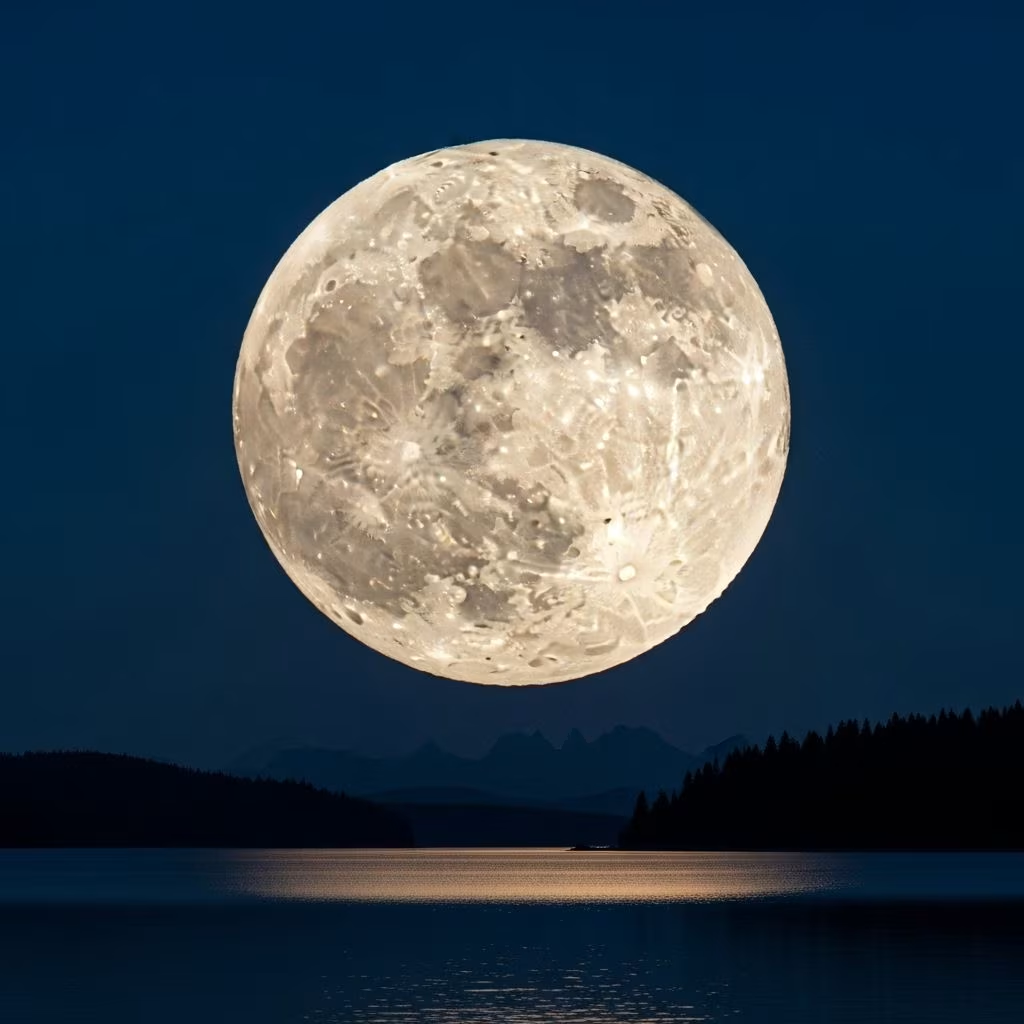
What Time Is the Full Moon in August 2025?
The full moon in August 2025, known as the Sturgeon Moon, will reach its peak illumination on Saturday, August 9, at 07:55 GMT (which is 3:55 a.m. EDT). This means observers in North America will find the best viewing opportunities late on August 8 or the early hours of August 9, depending on their time zone.
- Peak Full Moon Time: August 9, 2025, 03:55 a.m. EDT
- Alternate Time Zones: 07:55 GMT / 12:55 am PDT / 8:55 am BST
- Moonrise: Approximately 8:42 PM local time (America/New_York)[10]
- Moonset: Around 6:22 AM local time (America/New_York)[10]
The moon phase on this night will be a true full, with 99.16% illumination and a moon age of 15.63 days since the last new moon[10].
Why Is August’s Full Moon Called the ‘Sturgeon Moon’?
Each month’s full moon has a traditional name tied to cultural and natural events. August’s full moon is known as the Sturgeon Moon because in late summer, sturgeon fish were most easily caught in the Great Lakes region of North America. The name recognizes ancient fishing practices and is just one in a series of Indigenous and colonial-era full moon names, such as the Wolf Moon, Strawberry Moon, and Harvest Moon.
- Historical Origin: Linked to Great Lakes fisheries and Indigenous tradition.
- Seasonal Significance: Late summer marks peak sturgeon river migrations and fishing (hence, the name).
The full moon naming tradition helps connect natural phenomena with local ecology and cultural history.
Moon Phases in August 2025
| Phase | Date & Time (GMT) |
|---|---|
| First Quarter | August 1, 12:41 |
| Full Moon | August 9, 07:55 |
| Last Quarter | August 16, 05:12 |
| New Moon | August 23, 06:06 |
| First Quarter (Next) | August 31, 06:25 |
August’s moon cycle is typical, with the full moon occurring towards the middle of the month. The new moon (August 23) offers darker skies, especially valuable for deep-sky observation and meteor watching.
Astrological Details: The Sturgeon Moon in Aquarius
On August 9, 2025, the full moon appears in the constellation Aquarius (♒), while the current astrological sign for the moon is Leo (♌)[10]. Though astronomy and astrology are distinct, many enjoy linking celestial positions to zodiac influences for personal and calendrical significance.
- Constellation: Aquarius (visible in the night sky during August)
- Moon in Leo: Astrological placement reflecting themes of creativity/fire
Rare Planetary Alignment: Six Planets After the Sturgeon Moon
The August 2025 full moon will be followed by a rare multi-planet alignment in the early morning sky — an event that only occurs every few years. On August 10, spectators will be able to see as many as six planets (Mercury, Venus, Jupiter, Saturn, Uranus, Neptune) in the sky before sunrise.
- Visible Planets: Mercury, Venus, Jupiter, Saturn, Uranus, Neptune
- Alignment Date: August 10, 2025 (pre-dawn)
- Viewing Tips:
- Look east before sunrise for the best planetary views.
- Jupiter and Venus will be brightest, easily spotted by the naked eye.
- Uranus and Neptune require binoculars or telescopes.
This alignment is special because:
- It includes at least three and up to six visible planets — a configuration that happens only every few years.
- The display occurs in a narrow arc along the ecliptic, making it visually dramatic.
Best Times and Tips for Watching the August Full Moon
If you want to catch the full Sturgeon Moon, consider these top viewing tips:
- Look for moonrise on August 8 and August 9, as the moon will appear nearly or fully illuminated from dusk to dawn.
- Moonrise: ~8:42 PM local time (NYC, adjust for your own time zone)
- Moonset: ~6:22 AM local time
- The moon will look “full” on both nights, not just the instant of peak illumination.
- Find a location free from urban light pollution for the best lunar views.
- Allow your eyes to adjust to darkness for optimal nighttime detail.
While the full moon will be the brightest object in the night sky, you can also use an astronomy app to locate the planets in alignment for added context and stargazing excitement.
How the Full Moon Impacts Stargazing and Meteor Showers
The brightness of a full moon washes out faint stars, nebulas, and galaxies, but provides a beautiful and accessible astronomical target. In August, the Perseid meteor shower typically peaks around August 12, though the bright moon can make faint meteors harder to spot. For meteor enthusiasts:
- Wait for the new moon on August 23 for the darkest skies and best visibility of Perseid meteors.
- Deep-sky observers can turn their attention to clusters and planets during full moon nights.
The Sturgeon Moon invites casual viewers and dedicated stargazers to enjoy both easy lunar observation and rare planetary phenomena in the same weekend.
Scientific Details: Angular Size, Distance, and Illumination
| Property | Value |
|---|---|
| Illumination | 99.16% |
| Moon Age | 15.63 Days |
| Angular Diameter | 30.15° |
| Distance from Earth | 378,529.30 km |
The August full moon in 2025 will be slightly farther than average, but will still appear large and bright in the sky due to its high illumination percentage.
History and Traditions of the Sturgeon Moon
The naming of the Sturgeon Moon goes beyond astronomy, encompassing history, traditions, and folk wisdom. Early Indigenous populations in North America named this moon after the sturgeon fish due to their seasonal abundance in summer waters. Today, such names connect observers to environmental cycles and offer a window into ecology, storytelling, and lunar lore.
- Tradition: Links lunar cycles with fishing and agricultural calendars.
- Cultural Impact: Indigenous names often focus on animals, plants, or seasonal tasks (e.g., harvesting).
- Other regional names for the August full moon include “Green Corn Moon” and “Grain Moon.”
Lunar Calendar Tools for August 2025
Modern stargazers use technology and online resources to track lunar phases and plan observations. Apps like “Sky Tonight” provide:
- Lunar phase tracking for every day
- Moonrise/set times customized to location
- Guidance on best sights visible each night
- Astronomical calculators for observing deep-sky objects or planetary alignments
Handheld star charts or online lunar calendars further enrich the stargazing experience, making it easier to anticipate full moons and associated celestial spectacles.
FAQ: August 2025 Full Moon and Sturgeon Moon
Q: When exactly does the full moon occur in August 2025?
A: The full moon peaks on Saturday, August 9, 2025, at 03:55 a.m. EDT (07:55 GMT).
Q: Why is it called the Sturgeon Moon?
A: August’s full moon is named for sturgeon fish, which were plentiful in the Great Lakes in late summer.
Q: Can the full moon interfere with meteor shower viewing?
A: Yes, the full moon’s brightness can diminish the visibility of faint meteors during the Perseid shower peak.
Q: What makes 2025 special for moon watchers?
A: A rare alignment of up to six planets can be seen shortly after the full moon, adding a unique spectacle to the event.
Q: Where should I look to see the planetary alignment?
A: Look east just before sunrise on August 10 — bright planets like Jupiter and Venus are visible to the naked eye, while Uranus and Neptune need optical aid.
Recap: Key Points for August’s 2025 Sturgeon Moon Event
- Peak full moon is Saturday, August 9, 2025, at 07:55 GMT / 3:55 a.m. EDT.
- The Sturgeon Moon is connected to regional history and fish migrations.
- A rare six-planet alignment will follow the full moon on August 10.
- For best viewing, seek dark skies and check moonrise/local times.
- The moon’s phase and brightness will influence other astronomical events, especially meteor showers.
Further Reading & Resources
- Consult lunar calendars for detailed phase timing.
- Download stargazing apps for real-time tracking and educational overlays.
- Join local astronomy clubs for community viewing events.
Mark the August 2025 full moon on your calendar and prepare for a brilliant lunar spectacle paired with a rare planetary show. The interplay of tradition, science, and cosmic wonder makes this month’s sky a must-see for anyone interested in astronomy, culture, or natural beauty.
References
- https://www.space.com/stargazing/what-time-is-the-full-moon-aug-9-2025
- https://www.space.com/stargazing/august-full-moon-2025-rises-this-weekend-heres-how-to-see-the-stunning-sturgeon-moon
- https://theskylive.com/moon/2025-08-09
- https://www.astronomy.com/observing/full-moon-calendar-dates-times-types/
- https://www.goodhousekeeping.com/life/a65625269/august-full-moon-2025/
- https://starwalk.space/en/news/full-moon-august
- https://www.timeanddate.com/news/astronomy/moon-august-2025
- https://www.livescience.com/space/the-moon/sturgeon-moon-2025-what-makes-augusts-full-moon-a-special-2-night-affair
- https://griffithobservatory.org/explore/observing-the-sky/whats-in-the-sky/the-moon/2025-phases-of-the-moon/
- https://phasesmoon.com/moonday09August2025.html
- https://www.skyatnightmagazine.com/news/full-moon-planets-meteor-showers-9-10-august-2025
- https://ts2.tech/en/dont-miss-the-august-9-2025-sturgeon-moon-two-nights-of-lunar-spectacle-cosmic-meaning-global-traditions/
- https://lunaf.com/lunar-calendar/2025/08/09/
- https://www.youtube.com/watch?v=Yw7vNDi5qyE
- https://ts2.tech/en/dont-miss-this-weekends-sky-spectacle-aug-8-9-2025-meteor-showers-a-full-moon-planetary-dance-aurora-alerts/
- https://www.spaceweatherlive.com/en/moon-phases-calendar/2025/8.html
- https://www.starregistry.com/blog/sturgeon-moon/


