The 10 Best Sci-Fi TV Shows of the 1980s
The 1980s marked a dazzling resurgence for science fiction on television, blending bold futuristic concepts with the era’s distinct culture and technological optimism. These ten series captured imaginations, influenced generations, and left behind indelible legacies that still inspire today’s science fiction creators. Whether you’re a lifelong fan or new to the genre, this comprehensive guide dives into what made these shows iconic and explores the stories behind their enduring appeal.
1. Star Trek: The Next Generation (1987–1994)
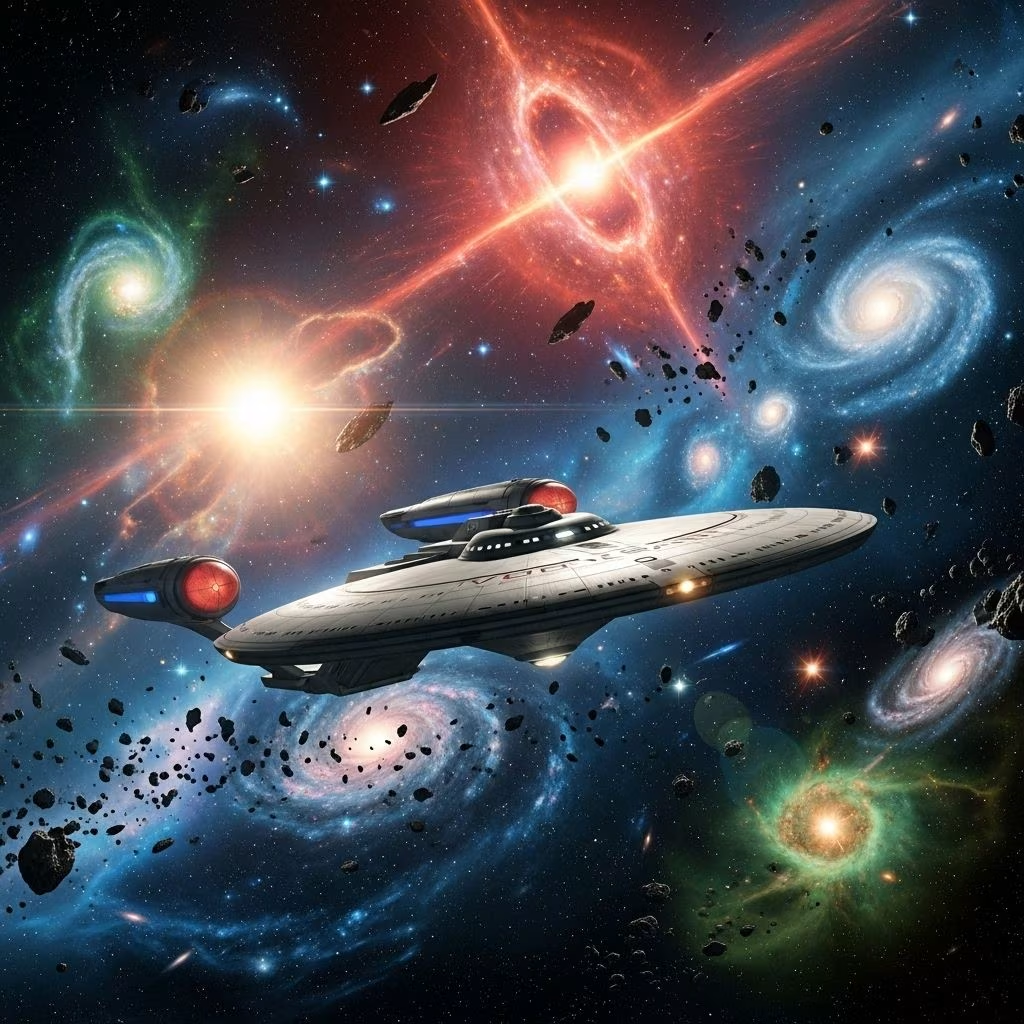
Star Trek: The Next Generation revolutionized television science fiction, introducing the USS Enterprise-D and a bold new crew charged with exploring the galaxy. The vision of creator Gene Roddenberry was seamlessly updated for the new era: a more diverse cast, impressive special effects, and stories tackling moral, political, and philosophical questions set in a hopeful future.
- Cast Highlights: Patrick Stewart as Captain Jean-Luc Picard, Brent Spiner as Data, Jonathan Frakes as Commander Riker.
- Legacy: Redefined what sci-fi TV could be. Its syndication success paved the way for multiple spinoffs and movies.
- Notable Episodes: “The Measure of a Man” (questions Data’s humanity), “Best of Both Worlds” (Borg invasion).
The series’ balance of cerebral storytelling and emotional resonance cemented its place in sci-fi history and global culture, continuing to attract new fans decades later.
2. V (1983, 1984, 1985)
V began as a two-part miniseries before evolving into a weekly series, bringing to screens a chilling tale of an apparent alien friendship that soon reveals sinister intentions. The lizard-like Visitors, disguised as benevolent humans, plan a secret takeover of Earth.
- Signature Features: Blend of resistance drama and science fiction, with striking special effects for the time.
- Key Characters: Juliet Parrish (Faye Grant), Mike Donovan (Marc Singer), and the memorable villain Diana (Jane Badler).
- Cultural Impact: Explored themes of propaganda, fascism, and rebellion, echoing historical allegories.
V’s distinctive approach to alien invasion inspired decades of television, from its visual iconography (from red uniforms to unmasking scenes) to reinvigorating the miniseries format.
3. Quantum Leap (1989–1993)
In Quantum Leap, Dr. Samuel Beckett (Scott Bakula) invents time travel with unintended consequences—leaping into other people’s bodies, striving to put right what once went wrong in various decades of American culture and history.
- Originality: Blends science fiction with heartfelt drama and social commentary—each episode a new experience for Sam and viewers.
- Supporting cast: Dean Stockwell as Al, Sam’s wise-cracking holographic guide.
- Innovations: Flexible storytelling format; playful yet poignant explorations of identity, gender, race, and morality.
The show’s blend of moral depth and adventure, along with Bakula’s charismatic performance, make it a favorite for fans and critics alike. Its open-ended finale remains one of TV’s most discussed conclusions.
4. Max Headroom (1987–1988)
Max Headroom was set “twenty minutes into the future,” reflecting both a dystopian cyberpunk vision and black comedy. Its title character, an AI with a stuttering delivery, quickly became a pop-culture icon.
- Plot Focus: Edison Carter (Matt Frewer), a crusading TV reporter, fights media corruption within a technologically saturated society.
- Innovative Aspects: Satirical take on TV, advertising, and corporate power.
- Lasting Influence: Foretold issues of media manipulation and information overload in the 21st century.
Although short-lived, it has since achieved cult status for its bold visual style, experimental storytelling, and enduring relevance.
5. ALF (1986–1990)
Cleverly hiding biting satire under a laugh-track sitcom, ALF (Alien Life Form) follows Gordon Shumway, the wisecracking, furry alien whose spacecraft crash-lands in the suburban Tanner family’s garage.
- Key Points: Fish-out-of-water humor merged with heartwarming family themes.
- Standout Characters: ALF’s deadpan wit, Willie Tanner (Max Wright), Kate Tanner (Anne Schedeen), and the kids.
- Cultural Significance: Widespread popularity, leading to merchandise, TV movies, and a lasting legacy in sci-fi/comedy programming.
The show’s subversion of the traditional family sitcom, as well as its unique blend of slapstick and science fiction, made ALF a defining character of the era.
6. Automan (1983–1984)
An early attempt to tap into the digital age’s possibilities, Automan features police computer expert Walter Nebicher (Desi Arnaz Jr.) who creates a holographic AI crime-fighter—Automan—who can enter the real world and assist him in solving cases.
- Signature Style: Neon digital effects and TRON-like visual flair.
- Premise: Blends police procedural with high-concept sci-fi; Automan boasts superhuman abilities thanks to his virtual origins.
- Why It Stands Out: Fun, campy premises and ambitious technical effects, even if short-lived.
While lasting only one season, Automan remains beloved for its energetic style and imaginative take on technology’s potential.
7. Misfits of Science (1985–1986)
Misfits of Science is a fast-paced action series about a team of young scientists with superpowers, backed by a government institute. The show’s wild tone, quirky effects, and camaraderie among the cast brought comic-book energy to television.
- Main Characters: Dr. Billy Hayes (Dean Paul Martin), Johnny “El” (Mark Thomas Miller, with electrical powers), Gloria Dinallo (Courteney Cox), and the towering human icicle “Ice Man.”
- Appeal: Combined superhero adventure with irreverent humor.
- Pop Culture: Early exposure for Courteney Cox, later a star of “Friends.”
Despite a short run, its cult influence is seen in many subsequent superhero and genre TV shows.
8. Otherworld (1985)
Otherworld follows the Sterling family, accidentally transported to a parallel Earth called Thel, where they must navigate a bewildering series of new societies and authoritarian threats as they seek to return home.
- Series Format: Each episode presents a different region with unique cultures, providing rich world-building.
- Visuals: Inventive, if low-budget, special effects underscore its interdimensional premise.
- Lasting Value: Gained a cult following as a rare example of high-concept parallel-worlds TV from the 1980s.
The family’s journey serves as an allegory for the search for belonging, freedom, and hope against all odds.
9. The Twilight Zone (1985–1989)
This Twilight Zone revival continued the tradition of thought-provoking stories with moral twists. Anthology-style, every episode offered a self-contained narrative exploring science fiction, fantasy, and the unexplained.
- Heritage: Direct successor to Rod Serling’s classic, updated with 1980s tech and themes.
- Storytelling: Famous for surprise endings and philosophical dilemmas—social commentary cloaked in fiction.
- Noteworthy: Gave rise to additional reboots in the decades since.
The revival maintained the franchise’s intellectual depth while appealing to new generations hungry for speculative fiction.
10. The Greatest American Hero (1981–1983)
The Greatest American Hero turned the superhero formula on its head: high school teacher Ralph Hinkley (William Katt) receives an alien “super suit,” only to immediately lose the instruction manual.
- Tone: Comedy, adventure, and the struggles of ordinary people to become extraordinary.
- Supporting Cast: FBI agent Bill Maxwell (Robert Culp), and love interest Pam Davidson (Connie Sellecca).
- Theme Song: “Believe It or Not,” became a chart hit in its own right.
Its mixture of slapstick, heroism, and heartfelt moments delighted audiences, influencing decades of offbeat superhero storytelling.
Legacy of 1980s Sci-Fi TV Shows
The 1980s established many of the formulas—and broke many of the boundaries—that now define science fiction television:
- Diversity of genres: From space opera to comedy to action-adventure, the decade proved sci-fi’s flexibility.
- Technical innovation: Advances in effects, costuming and storytelling made otherworldly tales possible on the small screen.
- Enduring popularity: Reruns, reboots, fan conventions, and continued home video sales attest to these shows’ lasting power.
- Cultural reflection: Many 1980s sci-fi series grappled with changing geopolitics, rapid technological advancement, and shifting social norms.
From whimsical aliens living in suburbia to philosophical journeys across the stars, these series didn’t just reflect the era—they helped shape it.
Comparison Table: Hallmarks of 1980s Sci-Fi TV
| Show | Notable Element | Main Theme | Cultural Impact |
|---|---|---|---|
| Star Trek: TNG | Diverse cast, ethical stories | Exploration & diplomacy | Set standard for modern sci-fi TV |
| V | Alien conspiracy, rebellion | Freedom vs. fascism | Inspired miniseries revival trend |
| Quantum Leap | Body-hopping time travel | Changing history, morality | Enduring cult following |
| Max Headroom | Cyborg host, satire | Media manipulation | Anticipated cyber-punk themes |
| ALF | Alien sitcom humor | Alienation, family bonds | Major pop-culture icon |
| Automan | Digital hero, neon visuals | Human-technology synergy | Sought-after by retro fans |
| Misfits of Science | Superpowers, comic tone | Outcasts unite | Preceded superhero TV boom |
| Otherworld | Alternate reality | Family, survival | Cult favorite with sci-fi fans |
| Twilight Zone 1985 | Anthology, twists | Moral parables | Sustained the franchise |
| Greatest American Hero | Incompetent superhero | Responsibility, courage | Became a comedic template |
Frequently Asked Questions (FAQs)
Q: Why was the 1980s a golden era for sci-fi TV?
A: The 1980s saw increased investment in speculative fiction thanks to rising public interest in space and technology, advances in practical effects, and a willingness by networks to experiment with new formats and ideas.
Q: Are 1980s sci-fi shows suitable for modern audiences?
A: Yes. Many series remain engaging due to timeless themes, inventive writing, and their influence on today’s sci-fi productions. They’re also enjoyed for their retro charm and creativity.
Q: Which 1980s sci-fi show had the greatest influence on future television?
A: Star Trek: The Next Generation is frequently cited for setting narrative and production standards, inspiring spinoffs and imitators, and shaping the modern portrayal of sci-fi in popular culture.
Q: What themes did 1980s sci-fi TV commonly address?
A: Popular themes included the fear and promise of technology, social conformity vs. rebellion, time travel, alternate realities, identity, and humanity’s relationship with the unknown.
Q: How did these shows influence mainstream culture?
A: Beyond entertainment, these series influenced fashion, language, attitudes toward technology, and perceptions of the possible. Iconic phrases, music, and images from these shows endure in today’s media landscape.
References
- https://www.imdb.com/list/ls000097680/
- https://en.wikipedia.org/wiki/Category:1980s_American_science_fiction_television_series
- https://collider.com/80s-sci-fi-shows-best-ranked/
- https://www.cinemablend.com/television/great-sci-fi-tv-shows-from-the-70s-and-80s
- https://www.youtube.com/watch?v=swKRx9jJhik
- https://movieweb.com/forgotten-sci-fi-shows-80s/
- https://screenrant.com/best-sci-fi-tv-shows-1980s-list/
- https://winteriscoming.net/10-great-sci-fi-fantasy-shows-from-the-1980s-that-should-be-revived
- https://www.ranker.com/list/best-1980s-sci-fi-shows/ranker-tv
- https://www.imdb.com/list/ls022409065/
- https://editorial.rottentomatoes.com/guide/best-sci-fi-tv-shows/
- https://www.space.com/entertainment/space-movies-shows/the-10-best-sci-fi-tv-shows-of-the-1980s
- https://www.youtube.com/watch?v=Fwa9kHjFJIQ
- https://editorial.rottentomatoes.com/guide/best-sci-fi-tv-shows/5/
- https://en.wikipedia.org/wiki/Category:1980s_science_fiction_television_series
- https://screenrant.com/80s-sci-fi-shows-better-than-modern-series/
- https://www.cbr.com/unforgettable-1980s-sci-fi-series-list/
- https://www.protipsandpicks.com/best-80s-sci-fi-tv-shows/