The full moon of July 2025, often called the Buck Moon, will rise on Thursday, July 10, illuminating night skies around the globe. This guide explores the astronomical details, cultural significance, and observational tips for this low-slung lunar showpiece, along with frequently asked questions and timing specifics for global skywatchers.
What Is the July Full Moon and When Is It?
Every lunar month has a full moon, but July’s has earned special recognition. In 2025, the Buck Moon reaches full phase at 20:37 GMT (4:37 p.m. EDT) on July 10. To the unaided eye, the moon will appear nearly full on the evening of July 9 and July 11 as well, with more than 98% of its disk illuminated on these adjacent nights.
- Date of Full Moon: July 10, 2025
- Peak Illumination Time: 20:37 GMT (4:37 p.m. EDT)
- Moonrise in New York: Approx. 8:53 p.m. local time
- Appears Full For: About 3 days to most casual observers
Why Is It Called the Buck Moon?
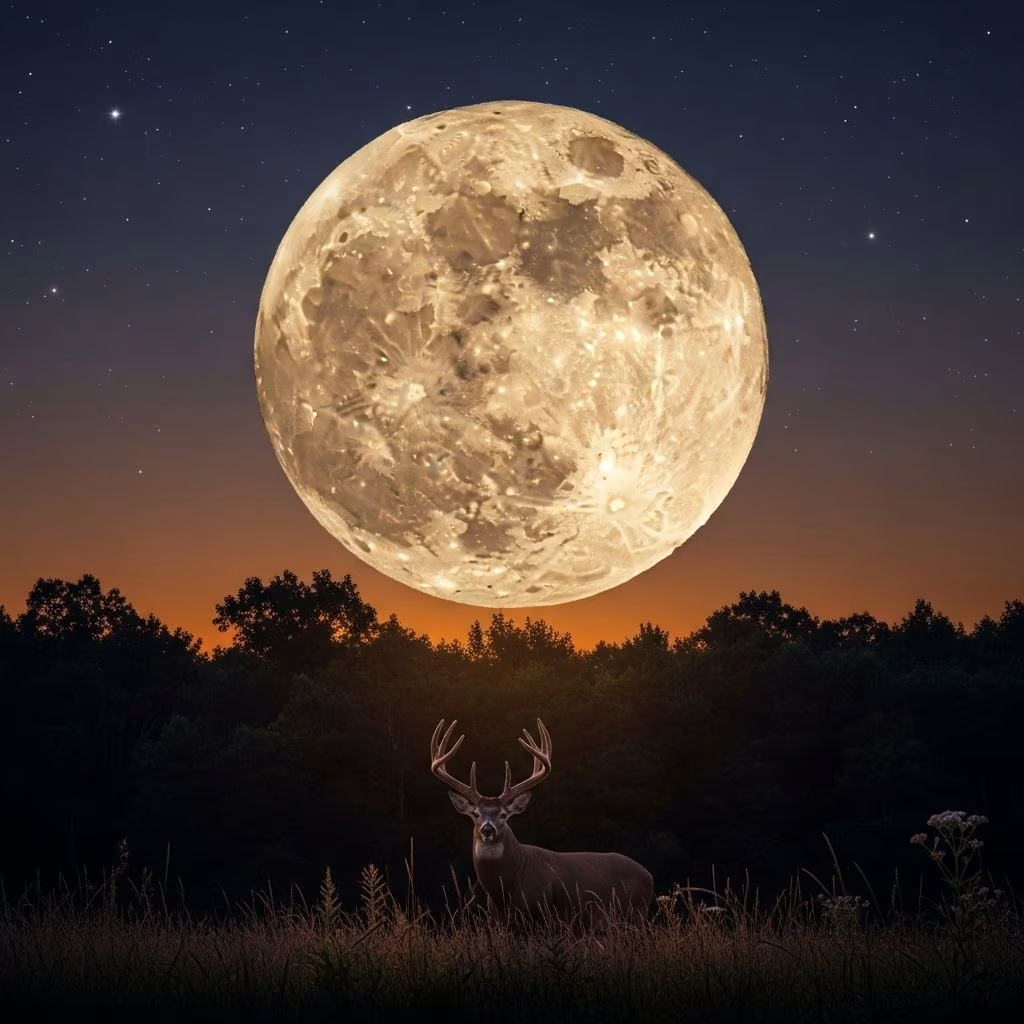
The most common name for the July full moon is the Buck Moon. This name comes from Native American traditions, referencing the period when male deer (bucks) begin to regrow new antlers after shedding them in late winter. The term captures a pivotal point in the wildlife calendar and has become an embedded part of English-language lunar lore.
- Buck Moon: Signifies the regrowth of deer antlers.
- Thunder Moon: Early summer storms are common during July evenings in North America, inspiring this alternate name.
- Hay Moon: In parts of Europe, July coincides with haymaking; farmers collect animal feed during the late-summer harvest.
These seasonal full moon names reflect human dependence on, and observation of, natural cycles tied to moonlight and weather.
Moon Phases Calendar: July 2025
| Date | Phase | Time (GMT) |
|---|---|---|
| July 2 | First Quarter | 19:30 (3:30 p.m. EDT) |
| July 10 | Full Moon | 20:37 (4:37 p.m. EDT) |
| July 18 | Last Quarter | 00:38 (July 17, 8:38 p.m. EDT) |
| July 24 | New Moon | 19:11 (3:11 p.m. EDT) |
For a detailed moonrise and moonset schedule specific to your location, consider reliable astronomical calendars or online tools. The exact time of moonrise varies according to geographic location and can be best predicted by reference sites such as timeanddate.com and in-the-sky.org.
Orbital Mechanics: Why the July Buck Moon Sits Low
The 2025 Buck Moon offers a vivid demonstration of orbital quirks. Its low path in the sky is closely related to its timing close to the northern hemisphere’s summer solstice. While the summer sun climbs high, the full moon in July takes a mirror approach, traversing lower along the southern horizon for northern observers.
- At full phase, the moon stands opposite the sun—when the sun appears highest, the moon maintains a lower, flatter trajectory at night.
- This creates a “low-riding” effect: even at midnight, the moon barely clears the southern skyline for observers at mid-northern latitudes.
- Conversely, skywatchers in the southern hemisphere can observe the full moon riding higher in their winter sky.
This lunar geometry influences visibility and the appearance of the moon, often enhancing the illusion that the moon appears larger during its rise and set—an optical effect known as the moon illusion.
Best Ways to Observe the July Full Moon
- Find a low, unobstructed eastern or southeastern horizon for moonrise views.
- Use mobile astronomy apps (such as Sky Tonight or Stellarium) to pinpoint rise/set times and follow the moon’s progression across the sky.
- Observe near sunset for dramatic color effects, as the atmosphere scatters blue light and casts a golden or reddish hue over the moon as it rises (a phenomenon similar to sunrise and sunset colors).
- Binoculars or a small telescope can reveal craters and lunar “seas,” though the brilliant, direct light of the full moon washes out most surface contrast.
- Photographing the full moon as it appears behind trees, buildings, or landscapes can create memorable compositions due to its apparent size and low elevation.
Nearby Stars and Constellations
The July 2025 full moon will be positioned in the constellation Sagittarius, making it neighborly with some of the summer’s most prominent stars as visible in the evening skies.
- The bright stars of Scorpius and Ophiuchus will be nearby.
- The region also hosts the rich star fields and nebulae of the Milky Way’s bulge, though their faintness will be greatly outshined by the moon’s glare.
Moonlight will wash out fainter objects, but the presence of these constellations offers context and opportunities for the curious skywatcher to explore the wider summer sky before or after moonrise.
July Full Moon: Global Perspectives and Traditions
Different cultures have celebrated or marked the July full moon across ages and continents:
- North America: Known as Buck Moon, signaling the antler regrowth cycle for deer and associated with fertility and renewal myths.
- Europe: Known as Hay Moon, intertwined with the agricultural rhythms and harvest preparations of mid-summer.
- Indigenous Peoples: Names often reflect animal behaviors, seasonal climate (“Thunder Moon”), or ecological cues important for survival and storytelling.
Such lunar names chart the ancient and ongoing relationship between moon phases and human customs. Many modern almanacs still reference these historical names, continuing their legacy in popular astronomy.
Why Does the Full Moon Appear Full for Several Days?
Though the term “full moon” refers to the instant Earth sits directly between the sun and moon, the moon appears almost completely illuminated to the human eye for roughly 24 hours before and after the exact full phase. During this period, the moon is more than 98% illuminated, making the full moon spectacle accessible for several days.
Photographing the July Full Moon
- Best Time for Photography: During moonrise or moonset, when atmospheric effects enhance color and size.
- Foreground Subjects: Buildings, trees, or natural landmarks can provide scale and composition depth.
- Equipment: Any camera or smartphone can capture the full moon, though a tripod and telephoto lens deliver greater detail.
- Tips: Use manual mode or lunar presets, lower your exposure to reduce the risk of a washed-out image, and bracket your settings for optimal results.
When Is the Next New Moon?
The July New Moon occurs on the 24th at 19:11 GMT (3:11 p.m. EDT). New moons are prime opportunities to observe faint celestial wonders—the lack of moonlight means darker skies and improved visibility for meteors, distant galaxies, and nebulae.
Viewing Tips: Maximizing Your Buck Moon Experience
- Consult moonrise tables for exact timings in your area.
- Consider observing over open landscapes (lakes, oceans, prairies) for the unhindered low-rising moon effect.
- Join a local astronomy club for group observing events, discussions, and access to telescopes.
- Check weather forecasts: Clouds or stormy conditions (fitting the “Thunder Moon” moniker) can impede viewing on July evenings.
- For Southern Hemisphere observers, look higher overhead for an especially lofty lunar ride.
Frequently Asked Questions (FAQs)
Q: What is the Buck Moon?
A: The Buck Moon is the traditional full moon of July, named for the period when male deer, or bucks, begin to grow new antlers.
Q: Why is the July full moon so low in the sky?
A: The July full moon appears low because it is positioned opposite the high-riding summer sun in the sky, causing it to follow a flatter trajectory over the southern horizon for northern observers.
Q: Can I see other celestial objects during the full moon?
A: While the full moon’s bright light washes out faint stars and deep-sky objects, the brightest planets and some prominent stars will still be visible. For best stargazing of faint objects, plan during the new moon.
Q: What equipment do I need to watch the Buck Moon?
A: No equipment is necessary; the full moon is easily visible to the naked eye. Binoculars or a telescope can enhance the experience by revealing surface details, but aren’t required for enjoyment.
Q: Does the July full moon always have the same name?
A: No, while “Buck Moon” is the most common name, it is also known as the Thunder Moon (for seasonal storms) or Hay Moon (for agricultural harvesting), with variations based on regional traditions.
Summary Table: Key Facts for the July 2025 Full Buck Moon
| Aspect | Details |
|---|---|
| Date of Full Moon | July 10, 2025 |
| Peak Illumination | 20:37 GMT (4:37 p.m. EDT) |
| Common Names | Buck Moon, Thunder Moon, Hay Moon |
| Trajectory | Low across southern sky (northern hemisphere) |
| Constellation | Sagittarius |
| Next New Moon | July 24, 2025 |
Final Thoughts
From its striking visual placement to its deep-rooted cultural significance, the July 2025 Buck Moon offers a chance to connect with the rhythms of nature and the wonders of orbital mechanics. Whether observing from countryside or city rooftop, its luminous presence is a mid-summer treat for novice skywatchers and seasoned astronomers alike.
References
- https://www.space.com/stargazing/july-full-moon-2025-rises-tonight-everything-you-need-to-know-about-the-low-riding-buck-moon
- https://www.space.com/stargazing/july-full-moon-2025-rises-this-week-heres-what-to-expect-from-the-buck-moon
- https://www.timeanddate.com/news/astronomy/moon-july-2025
- https://www.spaceweatherlive.com/en/moon-phases-calendar/2025/7.html
- https://starwalk.space/en/news/full-moon-july
- https://www.astronomy.com/observing/full-moon-calendar-dates-times-types/
- https://www.moongiant.com/calendar/july/2025/
- https://en.as.com/latest_news/moon-calendar-july-2025-what-are-the-phases-of-the-moon-and-when-will-the-moon-be-full-this-month-n/
- https://www.chron.com/news/space/article/full-moon-this-week-20760676.php
- https://www.calendar-12.com/moon_calendar/2025/july
- https://www.timesnownews.com/world/us/us-news/buck-moon-2025-why-julys-full-moon-will-look-bigger-and-lower-this-year-article-152248397
- https://griffithobservatory.org/explore/observing-the-sky/whats-in-the-sky/the-moon/2025-phases-of-the-moon/
- https://starwalk.space/en/news/full-moon-calendar-2025
- https://www.fullmoonology.com/news/full-moon-july-2025/
- https://www.rmg.co.uk/stories/space-astronomy/full-moon-calendar-2025
- https://www.youtube.com/watch?v=wKmZvmlJflQ
- https://www.theweathernetwork.com/en/news/science/space/first-full-moon-of-summer-2025-rises-thursday-night?_guid_iss_=1