Steph Curry’s Moon-Landing Remark: A Joke That Went Viral
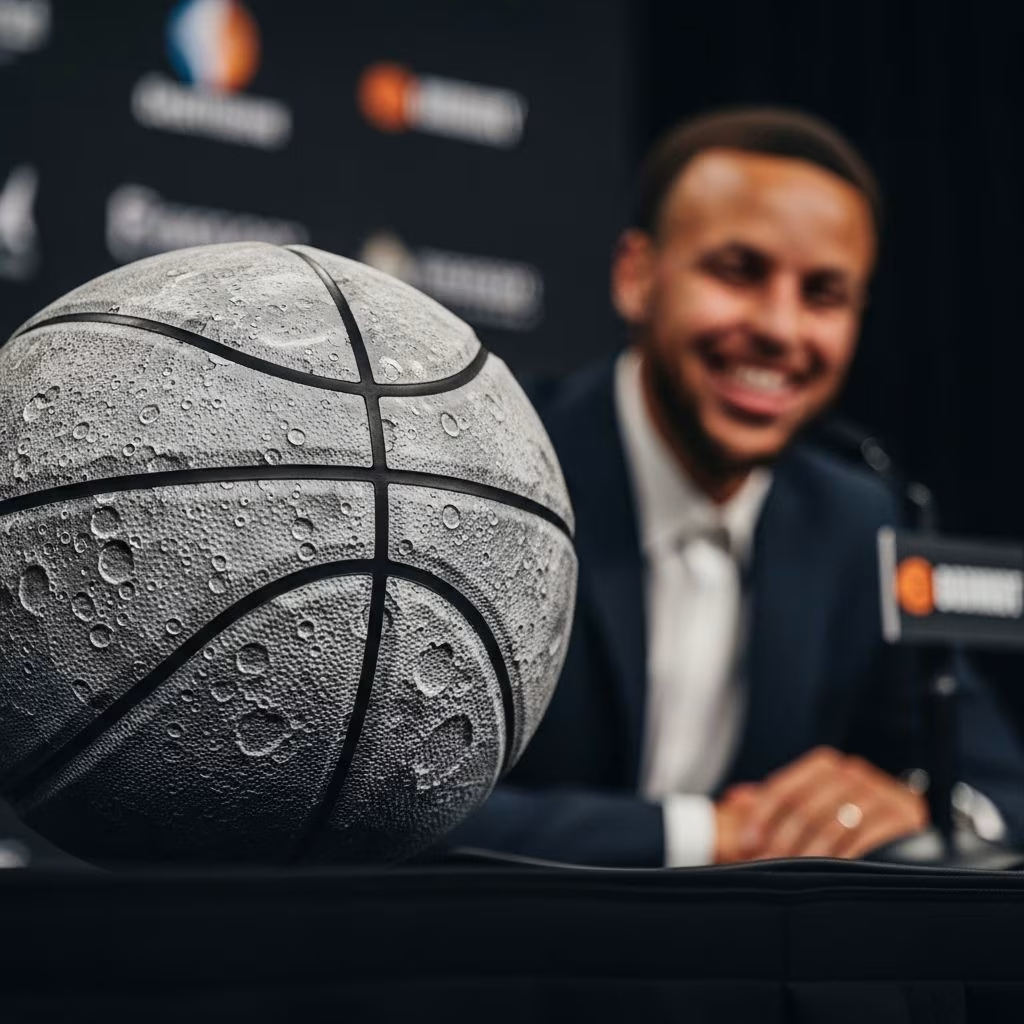
In December 2018, NBA superstar Stephen Curry made a comment on the “Winging It” podcast that quickly stirred public curiosity, media frenzy, and expert debate. When Curry wondered aloud if humans had ever landed on the moon, several fellow athletes on the podcast agreed, sparking instant viral headlines. The resulting uproar was far-reaching, prompting responses from NASA, astronauts, scientists, and educators, all eager to set the record straight about one of humanity’s greatest achievements.
The Podcast That Ignited Debate
Curry, joined by NBA colleagues Vince Carter, Kent Bazemore, Annie Finberg, and Andre Iguodala, ventured into a light-hearted discussion about unknowns—including dinosaur sounds—before Curry joked, “We ever been to the moon?” His co-hosts immediately responded, “Nope,” followed by Curry’s worried quip: “They’re going to come get us. I don’t think so, either. Sorry, I don’t want to start conspiracies.”
Key Reactions from the Podcast Episode
- Viral Sensation: Curry’s comment rapidly became headline news, trending across sports and science media.
- Public Critique: Fans, journalists, and experts implored Curry to clarify or retract his statement, warning of the risks associated with questioning major scientific accomplishments.
- Social Media Response: Curry tweeted a cool emoji with sunglasses and linked to a CNN article about NASA’s response, highlighting the playful yet serious tone of the ongoing exchange.
Expert Response: Astronaut Scott Kelly Joins the Conversation
Among the many voices responding to Curry was Scott Kelly, a renowned astronaut who spent 520 days in space and participated in four missions. Kelly took to Twitter to address Curry directly: “Steph, so much respect for you, but re the moon-landing thing, let’s talk. DM me.”
The Power of Celebrity Influence on Public Understanding
- Serious Talk: Recognizing the gravity of Curry’s influence, Kelly highlighted that even flippant remarks can fuel conspiracy theories, undermining public trust in science.
- Education and Apology: Curry apologized to Kelly for his offhand comment and emphasized his respect for NASA’s accomplishments, clarifying that it was meant in jest and not intended as a genuine denial of the moon landing.
- Live Dialogue: Kelly and Curry’s conversation, streamed live on Instagram, delved into topics like the Apollo program, NASA’s present efforts, and the importance of inspiring young minds in science, technology, engineering, and math (STEM).
Curry’s Clarification and Apology: Lessons Learned
During the Instagram Live conversation, Curry candidly expressed regret over how his comment was construed and the resulting headlines:
“It was a very unfortunate situation for me, because it was a comment that was made in jest and not to be taken seriously. But the headlines and the reaction kind of took on a life of its own.” — Stephen Curry
Curry emphasized that he did not mean to demean the achievements of astronauts or NASA and apologized for any misunderstanding:
“I did not want in any way, shape or form to demean the significant accomplishment that you and people that you work with on a daily basis were able to make a reality.”
Scott Kelly’s Perspective: The Danger of Casual Conspiracies
- Science Undermined: Kelly noted that feeding conspiracy theories—however minor—can contribute to a larger culture of skepticism toward science.
- Broader Impact: He pointed out the real-world consequences, such as doubts about climate change, vaccine safety, and the prevalence of other conspiracy beliefs.
“What happens is, then, when people believe those things [e.g., the moon-hoax conspiracy], they believe other things that are more important, like climate change not being real, and vaccines [causing autism], and 9/11 being a government conspiracy theory.” — Scott Kelly
NASA Steps In: A Hands-On Science Invitation
Responding to Curry’s curiosity and the ensuing debate, NASA publicly offered Curry a tour of the Johnson Space Center lunar lab in Houston. During the tour, Curry would see the Apollo mission control, meet lunar scientists, and examine hundreds of actual moon rocks brought back between 1969 and 1972.
- Educational Outreach: NASA spokesperson Allard Beutel suggested that Curry and his teammates could witness, firsthand, the legacy of Apollo 11, and learn about current lunar initiatives.
- Science as Experience: The invitation emphasized a personal encounter with evidence, transcending mere words or online arguments.
- Curry’s Acceptance: Curry expressed enthusiastic interest, hoping the experience would further his own scientific literacy and aid public awareness of NASA’s work.
Key Apollo Program Facts Presented to Curry
- Apollo 11 Landing Date: July 20, 1969
- Total U.S. Moon Walks: Six successful Apollo landings (1969–1972)
- Moon Rocks Returned: Hundreds of pounds of lunar material, now studied globally
- Astronaut Achievements: Historic milestones in science, engineering, and international collaboration
The Ripple Effect: Science Centers and Public Education
Institutions like the Chabot Space and Science Center weighed in with their own invitations and commentary:
- Moon Rocks on Display: Chabot houses Apollo 15 lunar samples for public education.
- Astronomer Perspective: Astronomers, like Ben Burress, highlighted the geological uniqueness of moon rocks and explained how detailed analyses confirm their extraterrestrial origins.
- Historic Support: Chabot’s 20-inch telescope played a role in Apollo program tracking, solidifying NASA’s achievements with both physical evidence and a wide network of collaborators.
Why Science Centers Matter
- Offer hands-on, tangible experiences that directly demonstrate space science.
- Serve as community resources to debunk myths and inspire curiosity.
- Welcome public figures and students for tours, solidifying learning with real-world context.
Celebrity Influence and the Spread of Science Conspiracies
The Curry episode highlights the unique power celebrities have over popular discourse, especially when discussing scientific topics. Other NBA players, like Kyrie Irving, have previously voiced conspiracy beliefs—Irving infamously asserted the Earth was flat before retracting under public pressure and apologizing to science teachers.
The Role of Public Figures
- Amplifying Messages: Celebrity comments, positive or negative, get far-reaching attention and can shape public perceptions.
- Responsibility: Science advocates warn that even jokes can perpetuate misinformation and increase public skepticism about established facts.
- Opportunities for Dialogue: When celebrities engage with experts and educators, teachable moments arise—transforming controversy into growth.
Science, Conspiracies, and Education: A Deeper Dive
Why do conspiracy theories—like the idea that the moon landing was faked—persist despite a wealth of physical evidence?
- Psychological Appeal: Conspiracies often thrive on mystery, skepticism, and distrust of authority.
- Information Overload: The rise of social media and online forums enables misinformation to spread quickly, sometimes unchecked.
- Science Literacy: Gaps in education can leave people susceptible to doubting even well-established facts.
Tackling Misinformation: Strategies and Recommendations
- Promote Hands-On Learning: Encourage visits to museums, science centers, and labs.
- Engage Public Figures: Support opportunities for celebrities to experience and share science education.
- Teach Critical Thinking: Implement curriculum changes that foster analysis and inquiry.
- Leverage Social Media: Use influential platforms to spread accurate information swiftly and widely.
Steph Curry’s Commitment to Scientific Engagement
Curry’s ultimate response was positive and forward-looking:
- He expressed gratitude for the chance to learn and grow from the experience.
- He pledged to visit NASA’s facilities, hoping it would both educate himself and his many fans.
- He acknowledged how much weight his words carry, promising greater care in future commentary about science and education.
Potential for Positive Change
- By embracing dialogue with experts, Curry turned a viral controversy into a teachable moment.
- He helped highlight the importance of curiosity, lifelong learning, and open-mindedness.
- He inspired millions to examine their assumptions about science and history.
Frequently Asked Questions (FAQs)
Q: Did Steph Curry really believe the moon landing was a hoax?
A: No. Curry clarified that his podcast comment was a joke, not a genuine expression of disbelief in the moon landing. He apologized for any confusion and acknowledged the significant achievements of NASA and astronauts like Scott Kelly.
Q: How did NASA respond to Curry’s remarks?
A: NASA invited Curry to tour the Johnson Space Center’s lunar facility in Houston, offering him the opportunity to see Apollo mission artifacts and moon rocks firsthand.
Q: Why do moon landing conspiracy theories keep coming up?
A: Conspiracy theories persist due to psychological factors, gaps in science literacy, and the rapid spread of misinformation online. Experts encourage hands-on learning and critical thinking as solutions.
Q: What can celebrities do to support science education?
A: Public figures can amplify accurate, evidence-based information and engage with expert communities, turning controversy into opportunities for education and positive change.
Table: Timeline of Key Events in the Curry Moon-Landing Dialogue
| Date | Event | Impact |
|---|---|---|
| December 2018 | Curry questions moon landing on podcast | Viral headlines, public debate |
| Immediately After | Social media and expert reactions | Invitations from NASA, Scott Kelly, science centers |
| Dec 15, 2018 | Instagram Live conversation between Curry and Kelly | Clarifications, apology, teaching moment |
| Upcoming | Curry plans NASA lunar lab visit | Anticipated educational outreach |
Conclusion: A Joke’s Unexpected Journey to Science Advocacy
What started as a lighthearted remark became a nationwide conversation about the role of celebrities, the impact of words, and the importance of science education. Through dialogue with astronauts, NASA, and educators, Curry’s story illustrates how even viral controversy can be transformed into meaningful progress. The importance of scientific literacy—and the responsibility of influential voices—remains evident, inviting both public figures and everyday citizens to learn, question, and advocate for discovery.
Author: Michael Wall, Senior Space Writer. Join our forums to keep talking space, follow latest missions, and share your questions and insights.
References
- https://www.space.com/42763-steph-curry-moon-landing-scott-kelly.html
- https://abc7news.com/post/stephen-curry-comments-on-moon-landing-stirring-up-debate/4881308/
- https://www.cbsnews.com/news/stephen-curry-moon-landing-nasa-golden-state-warriors-winging-it-podcast-vince-carter-kent-bazemore-annie-finberg-johnson-space-center-houston/
- https://www.inquirer.com/science/stephen-curry-scott-kelly-moon-landing-20181216.html
- https://www.sfchronicle.com/warriors/article/Warriors-Stephen-Curry-chats-with-retired-13469344.php