


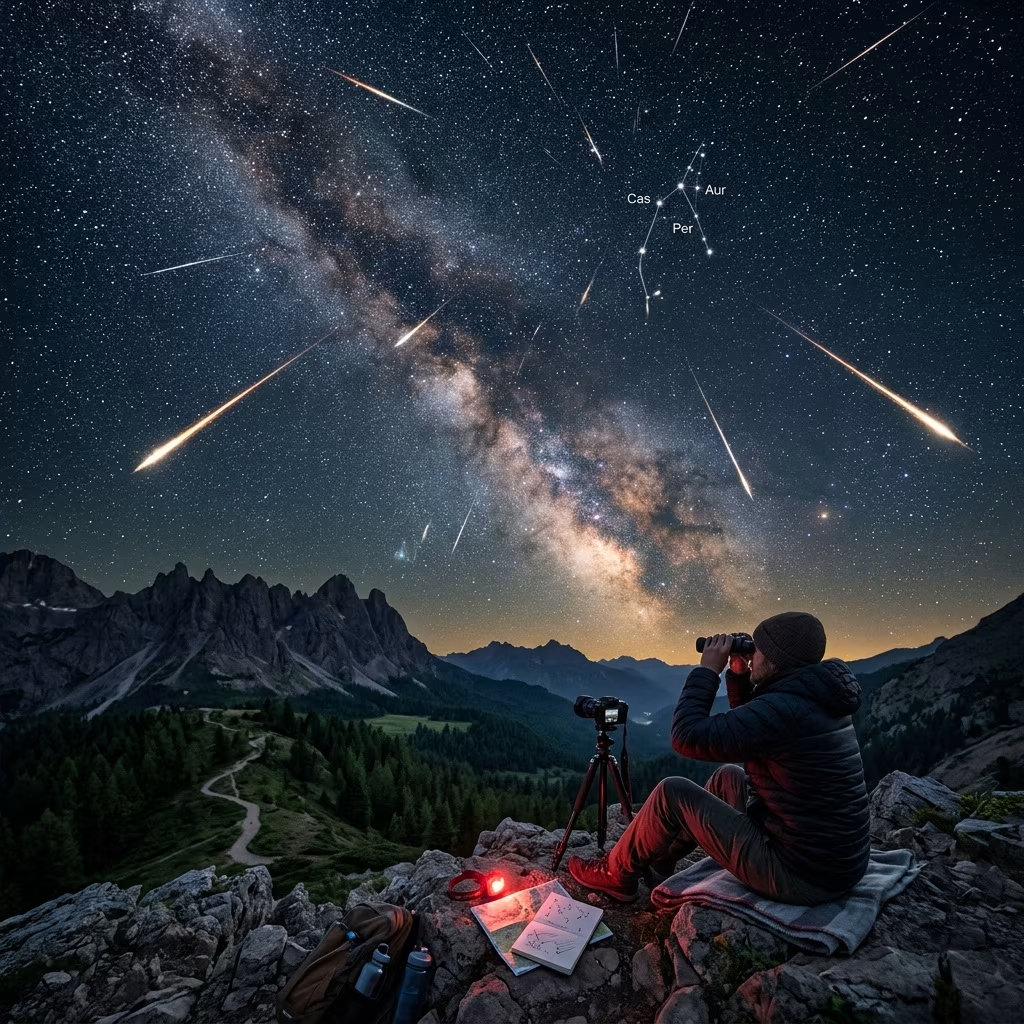
Perseid Meteor Shower: Your Essential Guide
The Perseid meteor shower is a highlight of the astronomical calendar every August, captivating skywatchers around the world with frequent, brilliant shooting stars. Known for its high meteor rate and spectacular fireballs, the Perseids offer one of the year’s most impressive celestial shows. This comprehensive guide covers the shower’s origins, the best times and places to observe it, historical context, and expert viewing tips, ensuring you make the most of your stargazing experience.
What is the Perseid Meteor Shower?
The Perseid meteor shower is an annual astronomical event resulting from Earth’s passage through dusty debris left by the comet 109P/Swift-Tuttle. As our planet plows through this trail of particles, fragments enter the atmosphere at tremendous speeds—typically around 36 miles per second (about 58 km/sec)—producing dazzling streaks of light as they burn up, sometimes culminating in exceptionally bright ‘fireballs’ that momentarily illuminate large swaths of the sky.
- The Perseids occur every year between mid-July and late August, peaking in intensity in August.
- The shower is named after the constellation Perseus, from which the meteors seem to radiate.
- Swift-Tuttle, the source comet, completes an orbit around the Sun every 133 years, shedding material that persists as the meteor stream.
- The spectacle includes both faint shooting stars and occasional, dramatically bright fireballs.
When and Where to Watch the Perseid Meteor Shower in 2025
2025 Dates: The Perseid meteor shower is active from July 17th to August 24th, with maximal meteor activity on the night of August 12 into the early morning of August 13.
| Event | Date | Details |
|---|---|---|
| Shower Activity Begins | July 17, 2025 | Meteors start appearing, rates gradually increase. |
| Shower Peak | Night of August 12–13, 2025 | Highest rates: up to 50–75 meteors/hour from dark sites. |
| Shower Activity Ends | August 24, 2025 | Rates taper off after peak; fewer meteors visible. |
This year, a gibbous Moon will be visible during the shower’s peak, potentially washing out some of the fainter meteors. Observing during the darkest hours before dawn will improve your chances.
Where to Look
- The Perseid meteors emanate from the area near the constellation Perseus—the shower’s “radiant”—but meteors can appear anywhere in the sky.
- Choose a location with a wide, unobstructed view of the sky and as little light pollution as possible.
- Rural settings, parks, and elevated areas away from city lights are ideal.
How to Observe the Perseids: Viewing Tips
Maximize your Perseid viewing experience with these practical tips:
- Plan Ahead: Check weather forecasts and pick a clear night near the shower’s peak. Cloudy or rainy conditions will obscure the view.
- Reduce Light Pollution: Head far from urban lighting. Even dim street or porch lights can dramatically reduce meteor visibility.
- Let Your Eyes Adjust: Spend at least 15–20 minutes in darkness to fully adjust your vision. Avoid looking at phones or bright screens during this period.
- Get Comfortable: Bring a reclining lawn chair, sleeping bag, or blanket. Stargazing involves looking up for extended periods, so comfort is key.
- No Telescope Needed: The Perseids are best viewed with the unaided eye, since telescopes and binoculars limit your field of view.
- Look Up, Not Just at Perseus: Meteors may appear anywhere; scan large portions of the sky for best effect.
The Science Behind the Perseids: Origin and Composition
The Perseid meteors are fragments from comet Swift-Tuttle, which last visited the inner solar system in 1992. Over millennia, its debris spread along its orbit, forming a vast, diffuse stream of ice and rock. Each summer, as Earth intersects this stream, the particles—often no larger than grains of sand—collide with our atmosphere at tremendous speeds and heat up due to friction. This produces the distinctive streaks of light called meteors.
Notable Facts:
- Typical Perseid meteors enter the atmosphere at 36 miles/second (about 58 km/second), heating the air ahead to thousands of degrees Celsius and vaporizing instantly.
- Larger chunks produce persistent trails or even bright explosions called “fireballs”.
- The shower’s radiant is in the constellation Perseus, which rises in the northeast after midnight during the peak.
Discoverers and Historical Context
The connection between meteor showers and comets was first understood by astronomer Giovanni Schiaparelli in the 19th century. The comet responsible for the Perseids, Swift-Tuttle, was discovered independently by Lewis Swift and Horace Tuttle in 1862, two years before Schiaparelli announced its link to the annual shower.
What to Expect: Rates, Fireballs, and Spectacle
- During the Perseids’ peak night, dark sites can yield 50–75 meteors per hour. Ideal conditions and absence of moonlight can sometimes increase rates, but this varies by year and observation site.
- The Perseids are famous for producing a higher-than-average number of bright meteors and occasional fireballs. A fireball is a meteor so bright it can cast shadows and can be seen over wide areas.
- Depending on your location (Northern or Southern Hemisphere), meteor rates and visibility may vary; Northern Hemisphere observers get the best view.
| Feature | Description |
|---|---|
| Typical Rate (peak) | 50–75/hr (dark site; up to 150/hr under perfect conditions) |
| Brightness | Many visible to the naked eye, including fireballs |
| Duration | 6–8 hours on peak night, with activity for several days before and after |
| Source Comet | 109P/Swift-Tuttle |
| Best Viewing Time | Midnight to dawn |
Frequently Asked Questions (FAQs)
Q: What causes the Perseid meteor shower?
A: The Perseid meteor shower is caused by Earth passing through debris left by comet Swift-Tuttle. As this cometary dust enters our atmosphere, it vaporizes, creating the familiar shooting stars.
Q: When is the best time to observe the Perseids?
A: The shower peaks during the night of August 12–13, 2025. The best viewing time is after midnight through the pre-dawn hours when the constellation Perseus is high in the sky and rates are highest.
Q: Where should I look to see the most meteors?
A: Although Perseid meteors appear to originate from the constellation Perseus in the northeast, they can be seen streaking across all parts of the sky. For best results, find a location with a clear, wide view of the sky away from lights.
Q: Can I see the Perseids from the Southern Hemisphere?
A: The Perseid shower is best seen from the Northern Hemisphere, where Perseus rises higher. Southern observers may see fewer meteors, but some should still be visible low in the northern sky.
Q: Do I need telescopes or special equipment?
A: No. The Perseids are best viewed with the naked eye. Telescopes and binoculars restrict the field of view and make it harder to catch meteors streaking across the sky.
Q: Why are some Perseids brighter than others?
A: Brighter meteors, or fireballs, come from larger or denser comet debris. The Perseids are especially known for producing a higher number of these bright events compared to other meteor showers.
How the Perseids Compare to Other Meteor Showers
The Perseids are among the most prolific and reliable annual meteor showers. Only the Geminids (in December) rival the Perseids in terms of meteor rates and brightness. Unlike some other showers which produce fainter or fewer meteors, the Perseids are accessible, convenient for Northern Hemisphere viewers, and present a high number of bright streaks and fireballs per hour, making them a favorite among novice and experienced observers alike.
Quick Perseid Meteor Shower Observing Checklist
- Check the peak date for your location (August 12–13, 2025).
- Find a dark-sky site well away from city lights.
- Bring warm clothes, a reclining chair, snacks, and water.
- Let your eyes adjust for at least 15–20 minutes before observing.
- Stay patient; sporadic bursts (with multiple meteors appearing within minutes) are common.
- Leave telescopes and binoculars at home for this event.
- Try to observe after midnight, when Perseus climbs higher in the sky.
- Enjoy the natural spectacle and consider bringing friends or family for a shared experience.
Summary Table: Perseid Meteor Shower 2025 Key Facts
| Feature | Details |
|---|---|
| Active Period | July 17 – August 24, 2025 |
| Peak | Night of August 12–13 |
| Hourly Rate at Peak | 50–75 (up to 150 under ideal conditions) |
| Best Viewing Time | Late night – dawn |
| Source | Comet Swift-Tuttle (109P) |
| Radiant | Constellation Perseus |
Additional Resources
- Check local astronomy clubs for group observation events.
- Follow meteor organizations for live updates on activity rates during the peak.
- Use astronomy mobile apps to locate Perseus and plan your night under the stars.
The Perseids remain a must-see event for anyone interested in the night sky. Whether you’re a seasoned astronomer or a first-time stargazer, witnessing dozens of meteors flashing overhead creates lasting memories and deepens our connection with the cosmos.
References
- https://www.planetary.org/articles/your-guide-meteor-shower
- https://www.rmg.co.uk/stories/space-astronomy/perseid-meteor-shower-guide-uk-when-where-to-see
- https://www.sciencefocus.com/news/perseid-meteor-shower-2025
- https://in-the-sky.org/news.php?id=20250812_10_100
- https://www.amsmeteors.org/2025/08/viewing-the-perseids-in-2025/
- https://www.timeanddate.com/news/astronomy/perseid-meteor-shower-2025
- https://www.amsmeteors.org/meteor-showers/meteor-shower-calendar/
- https://www.youtube.com/watch?v=gxxRY2FsKno
- https://www.nhm.ac.uk/discover/meteor-shower-lyrids-perseids-geminids-leonids-orionids.html
- https://www.livescience.com/space/meteoroids/perseid-meteor-shower-2025-how-to-see-shooting-stars-despite-the-full-moon
- https://www.space.com/stargazing/meteor-showers/september-epsilon-meteor-shower-sept-9-2025
- https://visitlaketahoe.com/event/perseid-meteor-shower/2025-08-12/
- https://www.youtube.com/watch?v=UPENtbotKt4
- https://www.nasa.gov/blogs/watch-the-skies/2025/08/08/bright-moonlight-could-interfere-with-view-of-perseids-peak/
- https://www.space.com/stargazing/meteor-showers/perseid-meteor-shower-2025-outshines-moon-to-put-on-a-spectacular-display-photos
- https://www.severe-weather.eu/global-weather/perseid-meteor-shower-2025-tears-of-saint-lawrence-peak-mk/


