Space in Focus: Artemis II, Rocket Launches, and the Next Era of Exploration
The universe is abuzz with activity as fall 2025 marks profound advances in space exploration. From the naming of the Artemis II spacecraft for the next crewed mission around the moon to innovations in Mars science, rocket launches, dazzling celestial events, and new frontiers in space weather monitoring, humanity’s reach into the cosmos has never been more ambitious or dynamic. This comprehensive report covers the most significant developments, remarkable scientific undertakings, and practical tips for stargazers and enthusiasts alike.
Latest Space Headlines
- Artemis II: NASA’s Next Historic Moon Mission – The crewed Orion capsule, now named “Integrity,” is nearly set for launch. Four astronauts are preparing to circle the Moon, laying critical groundwork for future lunar and Mars missions.
- Galactic Collisions – Galaxies plunging into the Virgo Cluster at over 547 miles per second underscore ongoing cosmic evolution.
- Nuclear-Powered Rocket Concepts – Scientists are moving closer to enabling deep-space travel to Mars and beyond with advanced nuclear propulsion systems.
- Twin Mars Spacecraft – NASA and Rocket Lab ready their unique dual-satellite Mars mission, designed to unravel atmospheric mysteries using cost-effective, innovative designs.
- GOES-19 Satellite’s New Views – The latest NOAA satellite captures rare images of a partial solar eclipse from space.
- SpaceX Launch Updates – New batches of satellites and groundbreaking weather probes are expanding our orbital capabilities and understanding of the solar system’s boundaries.
Artemis II: Charting the Next Giant Leap
NASA and its partners are powering ahead with the Artemis II mission—the first crewed lunar flyby in decades, marking a crucial milestone in the Artemis Program’s roadmap to Mars.
Mission Overview and Objectives
- First Crew: Four astronauts will embark on a 10-day journey around the Moon, testing vital spaceflight systems.
- ‘Integrity’ Revealed: The Orion capsule has been officially named “Integrity,” reflecting the resilience and trust shaping every aspect of this historic mission.
- Scientific Experiments: Crew members will serve as subjects in a range of biomedical studies to better understand human health during deep-space travel.
Artemis II will prove technologies needed for future lunar landings and Mars ambitions. As emphasized by NASA leadership, mastering human adaptability in cislunar space is a stepping stone for exploring the solar system’s farther reaches.
Who Are the Artemis II Astronauts?
| Name | Role | Notable Experience |
|---|---|---|
| Reid Wiseman | Commander | ISS Veteran |
| Victor Glover | Pilot | First Black astronaut assigned to lunar mission |
| Christina Koch | Mission Specialist | Holds record for longest female spaceflight |
| Jeremy Hansen | Mission Specialist | First Canadian to fly into deep space |
Key Artemis II Milestones
- Simulations and Training: Astronauts undergo helicopter drills and integrated mission rehearsals to prepare for both in-space operations and potential unforeseen events.
- Community Engagement: The crew and NASA teams highlight the mission in ongoing public events and media sessions, sharing inspiration and the latest scientific goals.
- Launch Window: Artemis II is scheduled for no earlier than early 2026, pending system readouts and safety checks.
Rocket Launches and New Missions
The cadence of launches has accelerated in 2025, with commercial and governmental agencies achieving new feats, from the deployment of spy satellites to scientific missions destined for Mars, Jupiter, and beyond.
SpaceX: Pushing Rocketry Frontiers
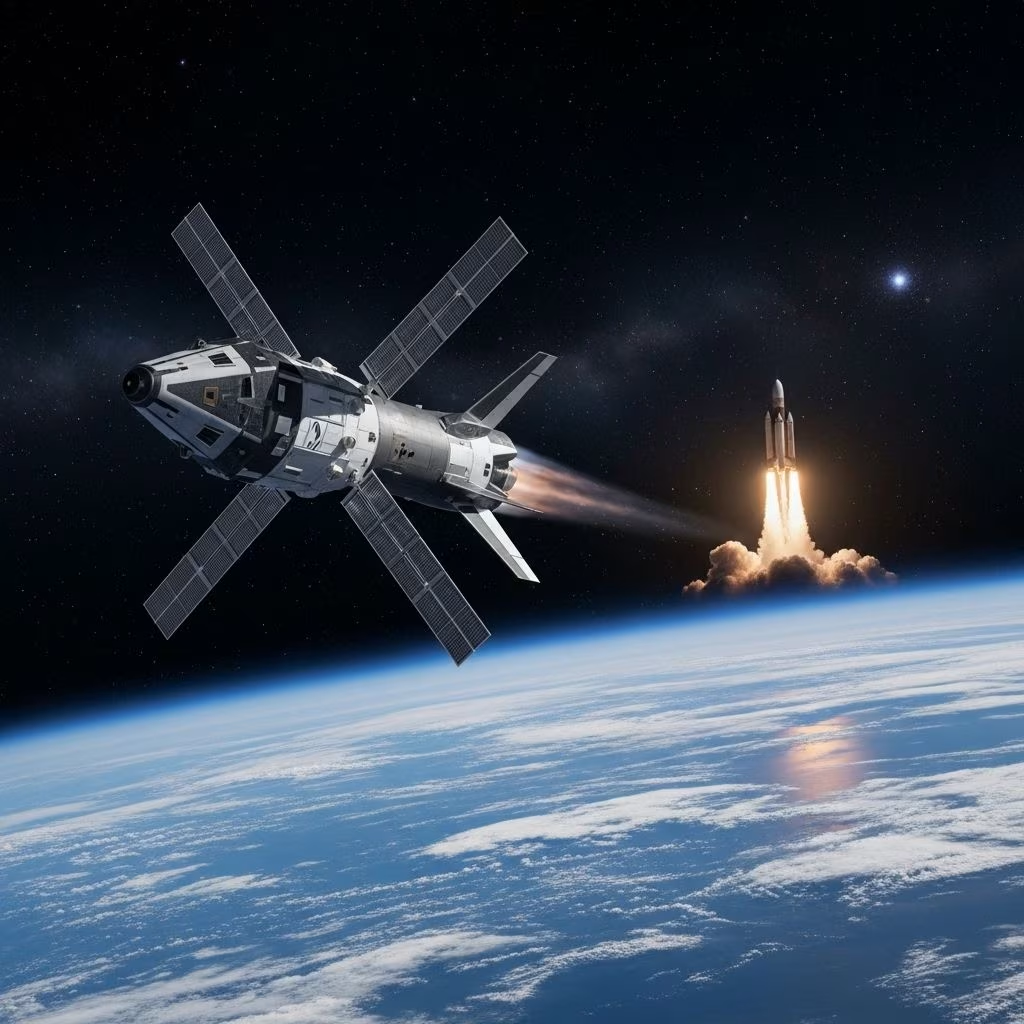
- Satellite Trains and Mega-Constellations: Starlink missions continue equipping the world with high-speed, low-latency internet, while batches of U.S. “proliferated architecture” spy satellites augment global surveillance and resilience.
- Space Weather Missions: Three specialized probes launched to map the boundaries of the heliosphere, improve solar wind forecasting, and track cosmic radiation events.
Innovations in Mars Exploration
- Twin Mars Spacecraft (ESCAPADE): Launching soon, these paired satellites will analyze atmospheric loss on Mars, providing clues about habitability and environmental changes crucial to future astronaut safety.
- Blue Origin’s Role: New Glenn, Blue Origin’s heavy-lift rocket, is readying for its first deep-space deployment, further diversifying access to interplanetary destinations.
Major Upcoming Events
- International Space Station (ISS) Live Feeds: Continuous 4K HD streaming from the ISS lets enthusiasts experience daily life aboard Earth’s largest orbital laboratory.
- Next Starship Launches: Preparations advance for the next Super Heavy booster firing as SpaceX inches closer to fully reusable deep-space systems.
New Frontiers: Nuclear-Powered Rockets and Interstellar Exploration
The future of space propulsion is rapidly evolving as researchers work to unlock new speeds and possibilities for travel:
- Nuclear Thermal Propulsion (NTP): Offering a dramatic efficiency upgrade over current chemical rockets, NTP research aims to slash the duration of missions to Mars, reduce cosmic radiation risks, and enable regular round-trips for crew and cargo.
- Challenges and Risks: Technical hurdles include miniaturizing nuclear reactors safely and ensuring robust systems for rapid, long-distance missions.
If realized within the next decade, nuclear-powered rockets could facilitate flexible crewed journeys to the Martian surface, deep asteroids, or even icy moons in Jupiter’s system. These advances promise to support not only scientific investigations but also the growing dream of human settlement beyond Earth.
Notable Cosmic Phenomena and Satellites
Galactic Mergers and Black Hole Mysteries
- Galaxies Collide: Observers document the rapid infall of galactic pairs into the Virgo Cluster, a process reshaping our cosmic neighborhood?
- Messy Black Holes: Japanese spacecraft observe that smaller black holes are surprisingly inefficient eaters, upending long-held theoretical predictions about their accretion behaviors.
Satellite Achievements
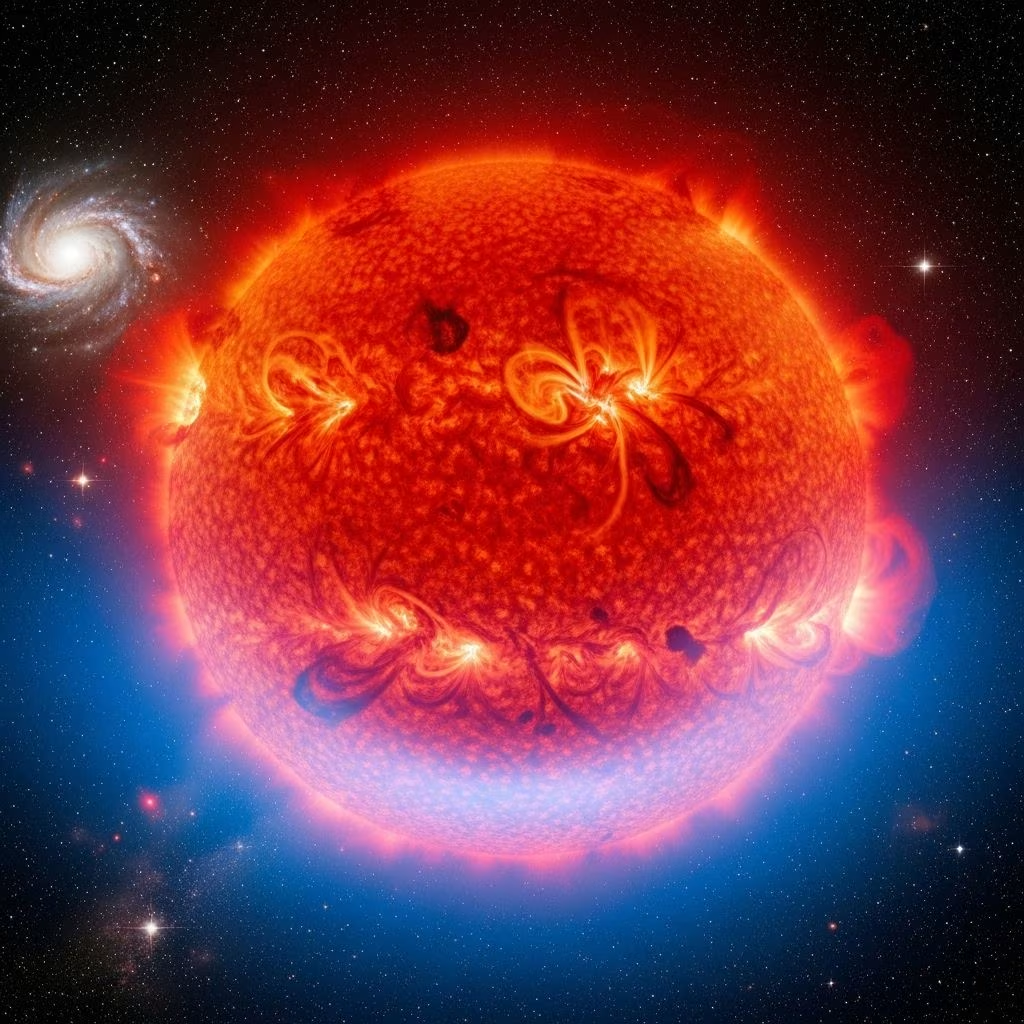
- GOES-19 Eclipses: NOAA’s GOES-19 weather satellite recently captured a rare view of a partial solar eclipse, spotlighting the advanced remote sensing technology now available to monitor Earth’s dynamic atmosphere from space.
- Earth Science from Space: Continued monitoring of extreme weather, wildfires, and the solar-terrestrial environment is furnishing critical real-time data for disaster response and climate science.
- IMAP Unveiled: NASA’s new Interstellar Mapping and Acceleration Probe, freshly launched atop a Falcon 9, is investigating how solar wind interacts with interstellar space, unlocking secrets of cosmic radiation and space weather.
Exoplanets and Asteroids
- Milestones: NASA celebrates the cataloging of over 6,000 exoplanets, vastly expanding our understanding of worlds beyond the solar system.
- Asteroid Bennu’s Stardust: Recent sample returns reveal grains older than the sun itself, providing a window into the solar system’s earliest moments.
Stargazing and Sky Events: What to See Tonight
Each night offers a new marvel, from mesmerizing auroras to celestial alignments. Here’s how to make the most of skywatching this season:
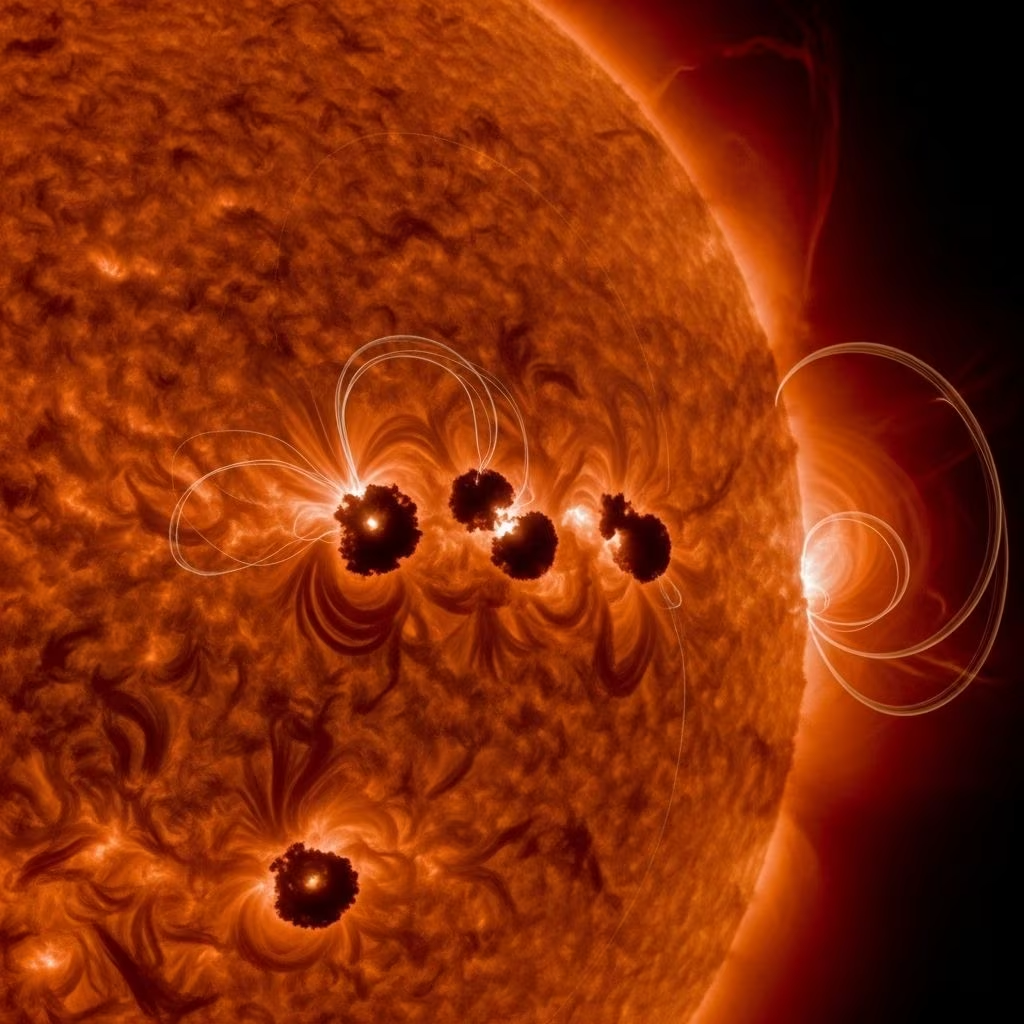
- Northern Lights Alerts: Real-time aurora forecasts help you catch the next mesmerizing display by tracking geomagnetic activity and solar eruptions.
- Meteor Showers: Dark-sky nights, especially near new moons, maximize your chances of catching meteor showers, including the spectacular September displays.
- Planetary Views: Venus, Jupiter, and Saturn are prominent in this season’s evening skies—visible with small telescopes or even the naked eye in clear conditions.
- Live Space Video: Continuous 4K streams from the ISS let skywatchers witness breathtaking views and Earth’s daily changes from orbit without leaving home.
Recommended Skywatching Practices
- Find a dark-sky site away from city lights.
- Use red-light flashlights to preserve night vision.
- Check dedicated stargazing apps for precise rise/set times of planets, stars, and events.
- Follow aurora and meteor updates for spontaneous night sky shows.
Frequently Asked Questions (FAQs)
Q: When is Artemis II scheduled to launch?
A: Artemis II aims to launch no earlier than early 2026, pending mission readiness assessments and technical verifications.
Q: What is the significance of the Artemis II mission?
A: This mission will be the first crewed lunar flyby in decades, marking critical progress toward sustained lunar exploration and long-duration crew flights to Mars.
Q: Why are nuclear-powered rockets important for Mars missions?
A: Nuclear-powered rockets could drastically cut transit time to Mars, shielding astronauts from deep-space radiation and enabling more flexible exploration and cargo return options.
Q: How can I know if the northern lights will be visible in my location?
A: Use real-time aurora forecast maps and mobile apps, which combine satellite and geomagnetic data to pinpoint the likelihood of visible auroras for your area.
Q: How do I watch rocket launches or ISS live?
A: Most launches and ISS activities are streamed live in HD on official space agency channels and dedicated space news platforms, offering real-time commentary and on-demand replays.
Further Resources
- NASA and ESA Mission Pages: Access direct updates on Artemis, ISS, Mars, and future exploration plans.
- Space News Outlets: Platforms such as Space.com provide near-daily updates on launches, science news, and skywatching guides.
- Planetarium and Astronomy Clubs: Local organizations and online communities host events and open nights linked to major celestial happenings.
Looking Ahead
The spirit of exploration, innovation, and global cooperation is reaching new heights. With Artemis II paving the way for crewed journeys beyond Earth, commercial partners fueling rocket innovation, and scientists uncovering the oldest stardust or the quirks of foreign black holes, space is a frontier open to everyone. Whether you’re following launches, observing the aurora, or simply gazing up at the night sky, the universe’s next chapter is unfolding—and it’s brighter, bolder, and more interconnected than ever before.
References
- https://www.space.com/news/archive
- https://www.space.com
- https://www.youtube.com/watch?v=lH9BiTu4bAY
- https://www.space.com/stargazing/solar-eclipses/noaa-goes-19-satellite-captures-partial-eclipse-space-photo-of-the-day-for-sept-23-2025
- https://www.space.com/space-exploration/could-astronauts-travel-to-mars-on-nuclear-powered-rockets-these-scientists-want-to-make-it-happen
- https://www.space.com/space-exploration/launches-spacecraft/spacex-launches-11th-batch-of-proliferated-architecture-us-spy-satellites
- https://www.space.com/stargazing/happy-autumnal-equinox-fall-begins-northern-hemisphere-today-sept-22-2025
- https://www.space.com/stargazing/solar-eclipses/see-moon-bite-sun-1st-photos-partial-solar-eclipse-sept-21-2025
- https://www.space.com/news