Blue Alien Planet HD 189733b: Glass Rain and Extreme Weather
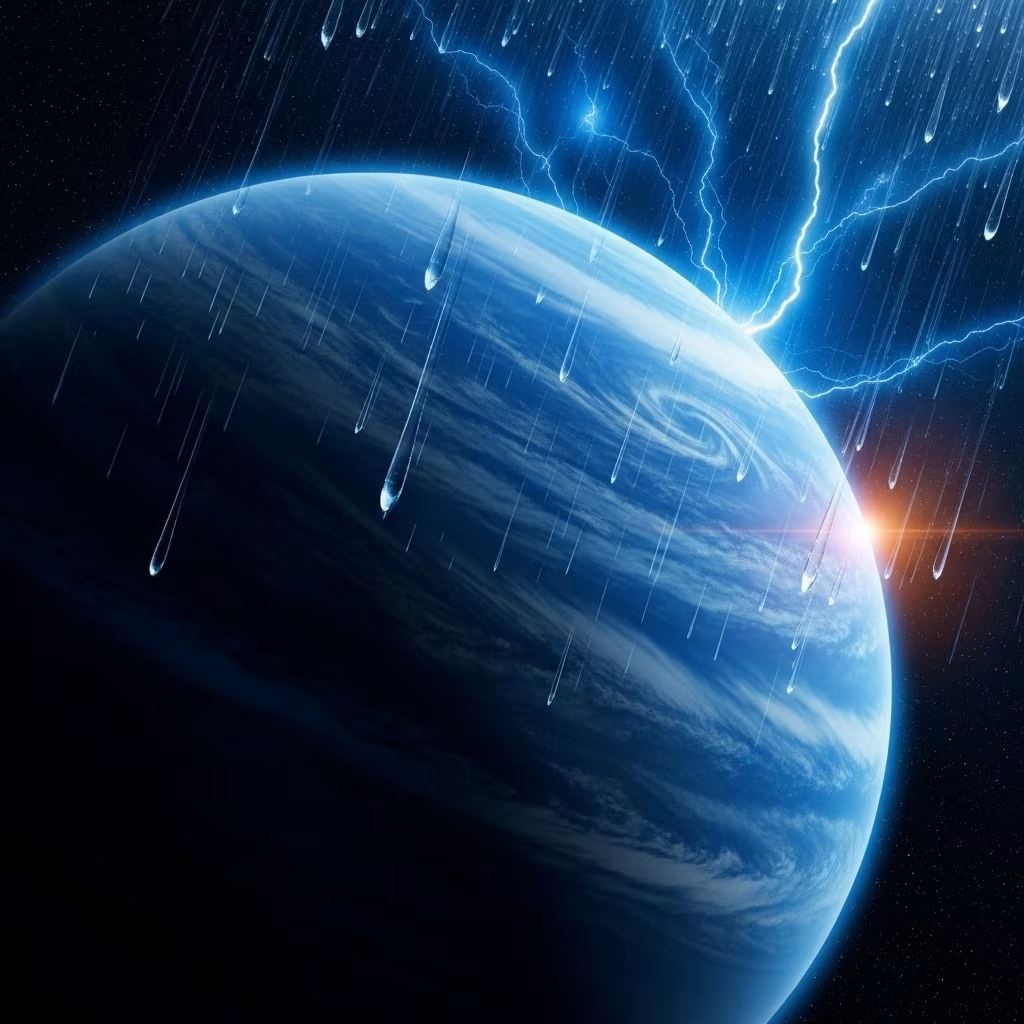
Just 63 light-years from Earth lies HD 189733b, a giant exoplanet bathed in striking blue hues. At first glance, it mirrors the colors of our own planet when seen from afar, but surface appearances are deceptive. This world, classified as a hot Jupiter, endures extremes unknown on Earth: temperatures soar well over 1,000 degrees Celsius, furious winds sweep at thousands of miles per hour, and glass rains sideways in a relentless storm. The scientific exploration of HD 189733b has not only revealed its stunning color but also revolutionized our understanding of planetary formation and atmospheric physics in distant worlds.
Planetary Overview
HD 189733b is a gas giant orbiting near its star in the constellation Vulpecula. Discovered in 2005, it quickly captured astronomers’ attention due to its size, proximity to its parent star, and violently erratic weather.
- Type: Hot Jupiter (gas giant exoplanet)
- Distance from Earth: 63 light-years
- Orbital Period: 2.2 Earth days (significantly closer to its star than any planet in our solar system)
- Size: Comparable to Jupiter
Telescope Discoveries & Measurement of Color
The true color and atmospheric properties of HD 189733b came to light with data from sophisticated space telescopes:
- Hubble Space Telescope: First observation of the planet’s vivid cobalt blue color, achieved by measuring the light reflected off the planet as it passed behind its star.
- NASA’s Spitzer Space Telescope: Provided temperature maps revealing dramatic differences between day and night sides, which drive the planet’s fierce winds.
- Chandra X-ray Observatory & ESA’s XMM Newton: Helped characterize the planet’s atmosphere and the high-energy environment imposed by its parent star.
- Observational Technique: Drop in blue light detected as the planet moves behind its parent star, confirming the world’s blue color independent of the light from the star itself.
Extreme Atmospheric Conditions
Although HD 189733b appears inviting as a swirling marble of deep blue, its reality is hostile and forbidding:
- Surface temperature: Over 1,700 degrees Fahrenheit (930 degrees Celsius) during the day.
- Atmospheric pressure: Exceptionally high due to the expanded nature of its atmosphere.
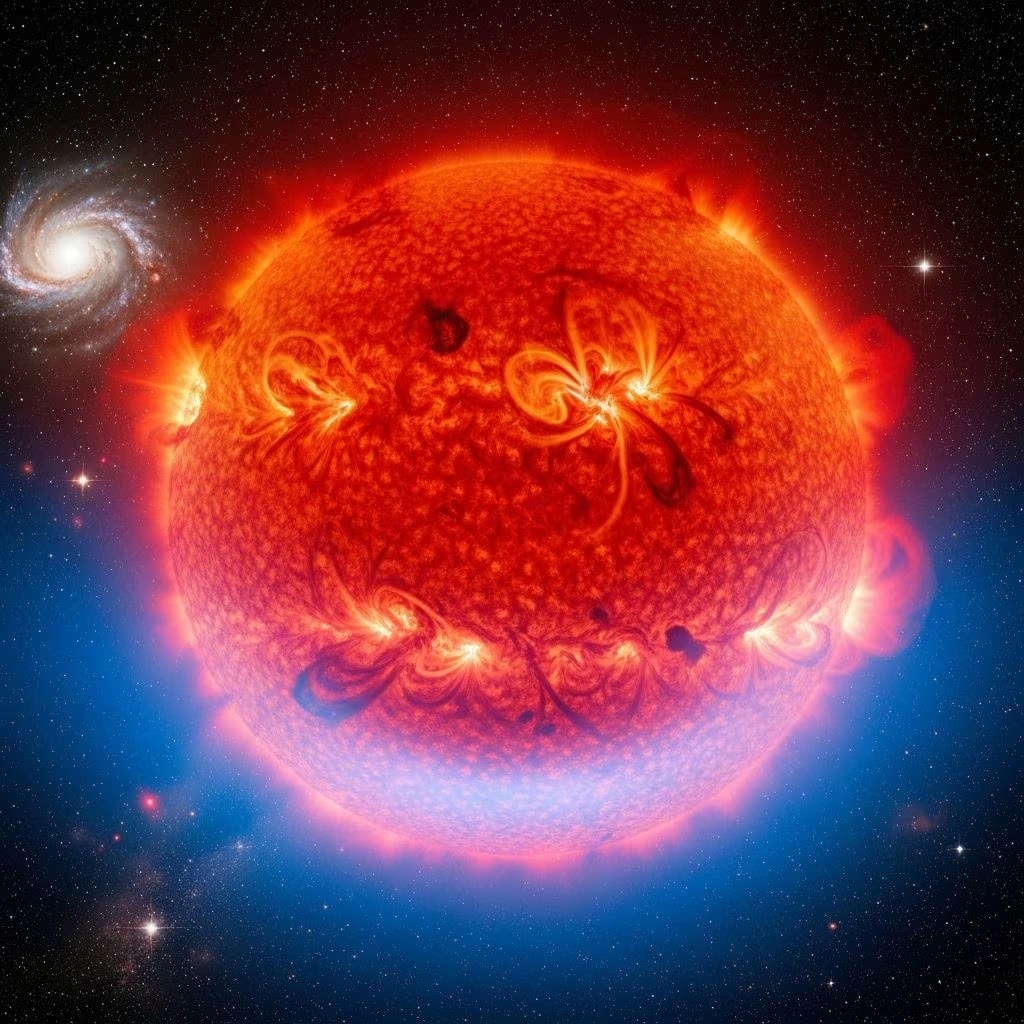
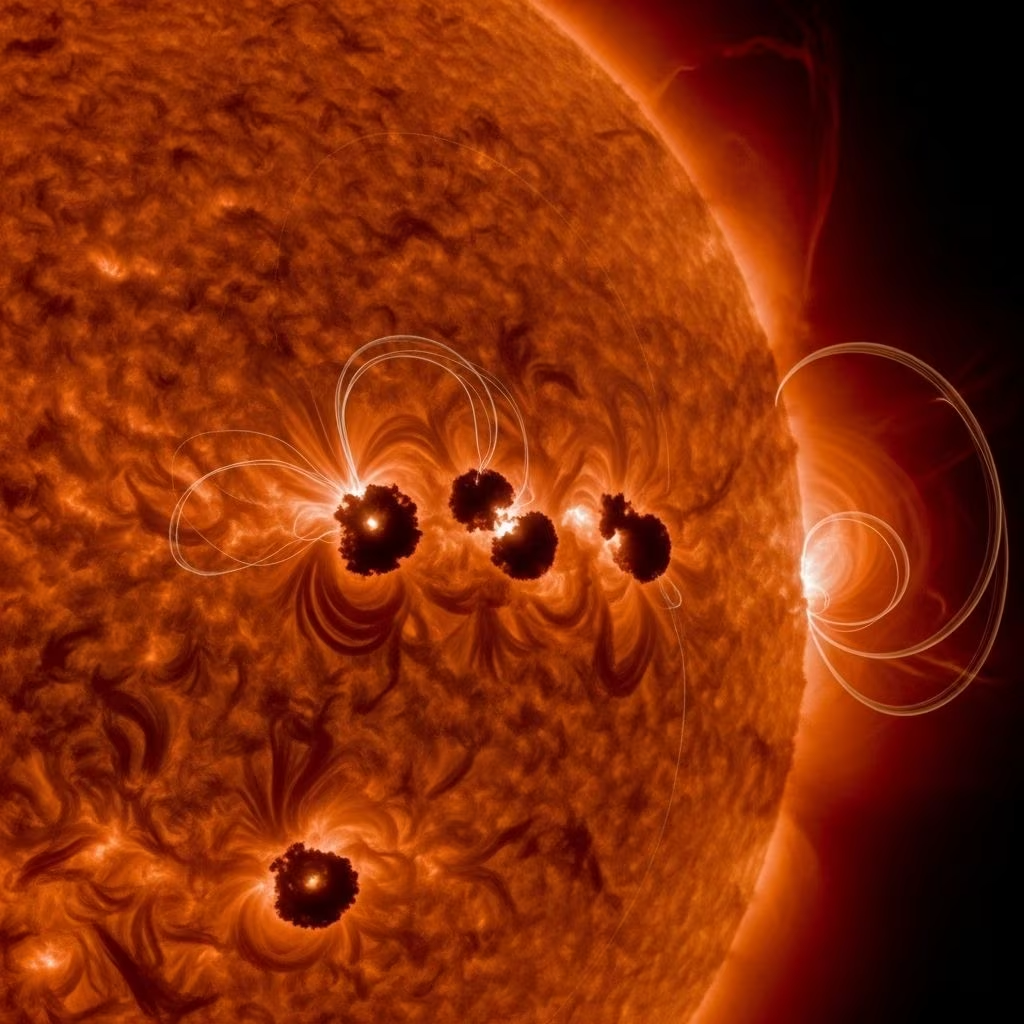
- Outer atmosphere: Larger than expected, rapidly escaping to space as high-energy radiation from the parent star breaks apart molecules.
- Wind speeds: Up to 4,350-5,600 miles per hour (7,000-9,000 kilometers per hour), which blows glass particles sideways, transforming simple rain into a gale of microscopic shards.
- Tidally locked: Always displays one face toward the star, so the day side is perpetually scorched, while the night side remains in darkness.
This continuous exposure to the star’s radiation leads to extreme differences between the day-side and night-side temperatures, creating hurricane-like atmospheric flows never seen on Earth.
What Makes HD 189733b Blue?
- The planet’s blue color is not an illusion caused by tropical oceans (as with Earth), but rather the light-scattering effects of high clouds containing silicate particles in the upper atmosphere.
- When molten glass (made of silicate) is swept up by hurricane-force winds, it captures and refracts blue wavelengths from the star, giving HD 189733b its cobalt appearance.
- The relationship of color, atmospheric composition, and light scattering is complex: much of what is observed is the result of superheated, high-altitude haze.
Scientists remain uncertain as to all the precise mechanisms creating the blue tint. However, they agree that the appearance is more than superficial—the processes at work are unique signatures of an active and highly dangerous environment.
Weather on HD 189733b
This is where HD 189733b truly earns its reputation:
- Instead of water, the rain consists of molten glass. Silicate particles condense in the upper atmosphere and get picked up by hyper-velocity winds, falling as shards that whip sideways across the planet.
- Winds reach 7 times the speed of sound, causing rain to arc horizontally rather than simply drop vertically.
- Each glass raindrop becomes a projectile, adding to the chaos and violence of the planet’s weather system.
- Ongoing loss of atmosphere: The intense radiation from the parent star ensures the planet is slowly being stripped of its gases, compounding the extreme conditions already present.
In summary, HD 189733b is a showcase for planetary hazards—hostile to life as we know it and filled with phenomena that defy terrestrial understanding.
Rewriting Planetary Formation
Hot Jupiters like HD 189733b have forced astronomers to reconsider earlier models of how planets form and evolve:
- Location: Their close orbits were unexpected; traditional models suggested giant planets could only form far from their stars.
- Orbital migration: It is believed hot Jupiters moved inward after formation, driven by complex gravitational interactions and possibly by other massive planets or passing stars.
- Atmospheric loss: The rapid stripping of their atmospheres due to proximity to their stars challenges ideas about gas giant longevity and dynamics.
As data from HD 189733b and similar worlds accumulates, scientists continue to refine their theories of planet formation, migration, and atmospheric loss.
Significance of Hot Jupiters
- Hot Jupiters are the easiest type of exoplanet to detect from Earth due to their size and proximity to their stars.
- Their passage in front of their stars causes substantial dips in brightness, making them identifiable using transit photometry techniques.
- The gravitational influence on their stars creates noticeable wobbles, further affirming their presence.
- They’ve provided an invaluable window into the diversity of planetary systems and challenged our preconceptions about solar system architecture.
Despite their inhospitable conditions, hot Jupiters like HD 189733b are scientific goldmines, revealing the astonishing breadth of planetary possibilities beyond our solar system.
Earth vs. HD 189733b: A Comparison
| Feature | Earth | HD 189733b |
|---|---|---|
| Distance from Sun/Star | 1 AU (approx. 93 million miles) | Very close to parent star (2.2-day orbit) |
| Length of Year | 365.25 days | 2.2 Earth days |
| Atmospheric Composition | Nitrogen, Oxygen, Argon, CO₂ | Hydrogen, Helium, Silicate Clouds |
| Mean Surface Temp. | 15°C (59°F) | 930°C (1700°F) |
| Precipitation | Water Rain | Molten Glass Rain |
| Wind Speeds | 200 mph max in hurricanes | 8700-9000 km/h (5400-5600 mph) |
| Color from Space | Blue + white clouds, brown/green continents | Deep cobalt blue |
Frequently Asked Questions (FAQs)
Q: Why is HD 189733b blue?
The blue color comes from silicate-rich high-altitude clouds, not water. These silicates scatter blue light from the parent star, producing the planet’s striking cobalt hue.
Q: What is glass rain?
On HD 189733b, silicate material condenses in the super-heated atmosphere and falls as molten glass. High winds sweep the glass particles sideways, making rain a projectile assault rather than gentle precipitation.
Q: How fast are the winds on HD 189733b?
Winds reach up to 5,600 miles per hour (9,000 kilometers per hour), far exceeding anything found on Earth and making the weather extremely violent.
Q: Could HD 189733b support life?
Given its extreme heat, deadly winds, and glass rain, HD 189733b is entirely inhospitable to life as we know it.
Q: What is a hot Jupiter?
Hot Jupiters are gas giant exoplanets that orbit very close to their stars, making them extremely hot. Their existence defied early planet formation models and led to new theories about planetary migration.
Additional Points of Interest
- Observations of HD 189733b have inspired scientists to search for similarly exotic weather phenomena on other exoplanets, such as iron rain seen on WASP-76b.
- As technology advances, future telescopes may uncover many more worlds with unpredictable and extreme environments, broadening our understanding of the universe far beyond the familiar.
- While the cobalt blue marble of HD 189733b may look beautiful from space, its conditions serve as a reminder that the diversity of planets goes far beyond what is comfortable or habitable.
For astronomers and enthusiasts alike, HD 189733b is a symbol of the strange and fascinating phenomena waiting to be found as we look deeper into the cosmos.
References
- https://www.space.com/21928-alien-planet-blue-color-revealed.html
- https://www.space.com/10-super-extreme-exoplanets
- https://www.space.com/22614-blue-alien-planet-glass-rain.html
- https://www.space.com/34576-blue-alien-planet-glass-rain.html
- https://www.space.com/alien-planet-iron-rain-WASP-76b.html
- https://www.nasa.gov/image-article/rains-of-terror-exoplanet-hd-189733b/
- https://www.space.com/astronomy/earth/a-massive-eruption-74-000-years-ago-affected-the-whole-planet-archaeologists-use-volcanic-glass-to-figure-out-how-people-survived