Astronomers Discover a New Type of Supernova: Star Stripped to the Bone
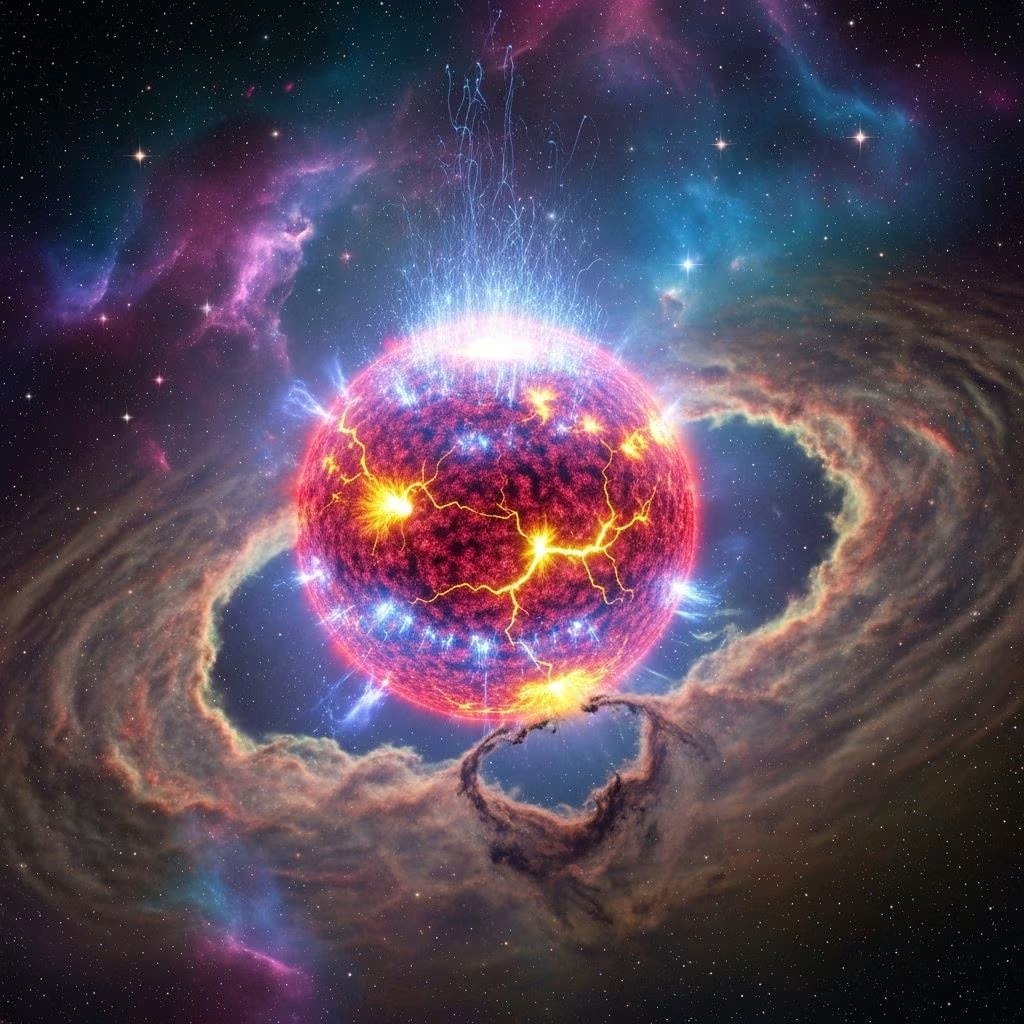
In a ground-breaking astronomical advance, researchers have identified an extraordinary new type of supernova – one that reveals a massive star stripped almost entirely to its dense inner layers. This historic observation, led by astrophysicists from Northwestern University, challenges existing models of stellar evolution while confirming long-held theories about the internal structure of massive stars.
Key Highlights
- “Stripped-to-the-bone” Supernova: Astronomers studied a supernova named SN2021yfj, located 2.2 billion light-years from Earth, in which a massive star lost nearly all its outer layers before exploding.
- First Direct Glimpse of Stellar Core: The explosion’s chemical signature revealed elements such as silicon, sulfur, and argon, which are typically found deep within a star, not on the surface.
- Challenges Conventional Models: The discovery forces scientists to reconsider the processes through which massive stars shed their outer layers, and how different types of stellar deaths are possible.
What Is a Supernova?
A supernova marks the catastrophic end of a massive star’s life, resulting in an immense explosion that emits vast amounts of light and energy. Traditionally, astronomers have used supernovae as cosmic laboratories for studying the fundamental processes governing the birth and death of stars.
Conventional Understanding of Stellar Interiors
Astrophysicists have long theorized that massive stars are built like onions, with distinct layers consisting of progressively heavier elements:
- Outer Layers: Dominated by light elements such as hydrogen and helium.
- Middle Layers: Rich in slightly heavier elements, including carbon, oxygen, neon.
- Deep Core: Composed of progressively heavier nuclei, such as silicon, sulfur, argon, and finally iron at the very center.
When these stars explode as supernovae, astronomers typically detect signals from the lighter elements in the outer layers, because the explosion expels this material first, resulting in spectra dominated by hydrogen and helium signatures.
The Discovery: SN2021yfj and Its Unique Signature
In September 2021, the Zwicky Transient Facility (ZTF) detected an unfamiliar and unusually bright supernova now designated SN2021yfj . Unlike typical supernovae, its light spectrum was bereft of hydrogen and helium and instead rich in signatures from silicon, sulfur, and argon. This surprising chemical fingerprint meant the outer shells were absent, revealing heated material from much deeper inside the progenitor star.
Quotes from the Research Team
“This is the first time we have seen a star that was essentially stripped to the bone.” — Steve Schulze, Northwestern University
Co-researcher Adam Miller expressed astonishment, noting that SN2021yfj’s characteristics pointed to a much broader range of potential endpoints for massive stars than previously understood.
Evidence Supporting Layered Structured Models
The extraordinary nature of SN2021yfj provides the first direct observational confirmation of the onion-like structure theorized for massive stars. The star appears to have lost its outer hydrogen, helium, and even carbon layers prior to the explosion, exposing the much deeper, silicon- and sulfur-rich layers. This allowed astronomers to witness the deep interior of a dying massive star in the moments before its explosive demise .
| Feature | Typical Supernova | SN2021yfj |
|---|---|---|
| Observed Elements in Spectra | Hydrogen, Helium (Light elements) | Silicon, Sulfur, Argon (Heavier elements) |
| Progenitor Layers | Outer layers present | Outer layers missing, inner core exposed |
| Confirmation of Layered Structure | Theoretical | Directly observed |
| Significance | Majority of supernovae | First of its kind ever observed |
How Does a Star Lose Its Outer Layers?
One of the mysteries raised by SN2021yfj is how such a massive star could shed not just hydrogen and helium, but even its carbon envelope. Theories for such extensive mass loss include:
- Intense stellar winds driving away material as the star ages.
- Interactions with a binary companion star, potentially stripping the progenitor via gravitational influence or mass exchange.
- Violent, episodic eruptions late in the star’s life.
Determining the precise method by which SN2021yfj’s progenitor was stripped will require further research and may open the door to an expanded understanding of both single-star and binary-star evolution.
Significance of the Discovery
- Confirmation of Stellar Theory: By observing elements only produced in the hot, high-pressure interior of stars, scientists now have direct evidence for the onion-like internal layering model long believed but never directly verified.
- Insights into Stellar Evolution: The fact that a star can be stripped to such an extent, yet still explode brilliantly, broadens the known range of how massive stars end their lives.
- A Rare Glimpse Inside a Star: SN2021yfj offers an unprecedented look at matter forged billions of years and light-years away, usually hidden deep within stellar interiors.
- Impacts on Future Research: This discovery challenges theorists to expand models of both stellar structure and the possible ‘paths’ a giant star may take toward its supernova fate.
Expert Perspectives
The discovery has led to worldwide excitement within the astronomical community. Steve Schulze emphasized the scientific value:
“Not only can stars lose their outermost layers, but they can be completely stripped all the way down and still produce a brilliant explosion that we can observe from very, very far distances.”
The event’s detection and follow-up were enabled by the global collaboration of astronomers and large-scale sky surveys like the Zwicky Transient Facility and the use of multi-wavelength observational tools.
Implications for the Future
- Stellar Death Pathways: SN2021yfj demonstrates that stars may end their lives in a greater variety of ways than previously thought – not always cloaked in their outer shells.
- Validity of the Onion Model: The direct observation of an exposed inner core supports the classic layered model, a fundamental framework for astrophysics.
- Observational Opportunities: With modern survey telescopes, astronomers may identify more such supernovae, allowing for population studies and deeper insights into their formation and frequency.
Understanding SN2021yfj: The Backstory
SN2021yfj was discovered by chance during routine imaging by the Zwicky Transient Facility, an automated observatory scanning the sky for fleeting cosmic events. Upon detection, immediate follow-up with spectroscopy revealed the unprecedented chemical signature. International teams rallied quickly, using telescopes across different wavelengths to capture as much information as possible before the event faded from view .
Timeline of Observation
- September 2021: SN2021yfj is first detected as an optical transient.
- Spectroscopic analysis is performed within days, securing the unique chemical fingerprint of silicon and sulfur dominance.
- Data interpretation and peer review followed over subsequent months, culminating in publication.
Why Are Supernovae Important in Astronomy?
- Element Creation: Supernovae are responsible for forging and dispersing many elements critical for planet and life formation—iron, calcium, silicon, and more.
- Galactic Recycling: The explosive death of a star sends enriched material into the interstellar medium, seeding future stellar generations.
- Cosmic Distances: Some types of supernovae serve as ‘standard candles’ for measuring vast cosmic distances, hastening the discovery of the universe’s expansion.
SN2021yfj and the Expanding Complexity of Stellar Demise
Until SN2021yfj, astronomers generally categorized supernovae by the light elements present in their spectra. The discovery that a star can be entirely stripped down, yet still explode as a luminous supernova, adds a new dimension to our understanding of the final stages of stellar evolution. It validates the layered internal structure long predicted for massive stars and emphasizes that stellar demise is more complex and varied than previously imagined.
Frequently Asked Questions (FAQ)
Q: What makes SN2021yfj different from other supernovae?
A: Unlike typical supernovae, SN2021yfj lacked outer hydrogen and helium layers in its spectrum, exposing signatures of heavier elements like silicon and sulfur, indicating the progenitor was stripped to its core before explosion.
Q: How far away was this supernova?
A: SN2021yfj occurred approximately 2.2 billion light-years from Earth, making it detectable yet still revealing enough detail to study its chemical signatures.
Q: What does this discovery tell us about massive stars?
A: It confirms that stars have distinct internal layers and can be almost entirely stripped before their deaths, providing the first direct observational evidence of such structure.
Q: How often do such stripped-to-the-bone supernovae occur?
A: SN2021yfj is the first of its kind detected, so its frequency remains unknown, but improved surveys may uncover more in the coming years.
Q: Could this event change the way astronomers model stellar evolution?
A: Yes, the event suggests a broader diversity in supernova types and star death pathways than was previously incorporated into models, prompting theorists to refine their understanding.
Conclusion: Peering into the Heart of a Star
The observation of SN2021yfj marks an unprecedented leap in stellar astrophysics. For the first time, astronomers directly glimpsed elements created deep within a massive star’s core, exposed by the loss of its external layers before a spectacular supernova explosion. This discovery not only confirms the layered structure of stellar giants but also redefines the possible destinies awaiting the universe’s most massive stars. As sky surveys continue to uncover new cosmic wonders, discoveries like this will continue to push the boundaries of our cosmic understanding.
References
- https://www.space.com/astronomy/astronomers-discover-strange-new-type-of-supernova-this-is-the-first-time-we-have-seen-a-star-that-was-essentially-stripped-to-the-bone
- http://www.sciencedaily.com/releases/2025/08/250821004234.htm
- https://www.youtube.com/watch?v=KPomdvo2Sqs
- https://www.youtube.com/watch?v=umPDFeikBnU
- https://phys.org/news/2025-08-kind-supernova-reveals-dying-star.html
- https://news.ssbcrack.com/astronomers-discover-unique-supernova-stripped-to-the-core-revealing-new-insights-into-stellar-life-and-death/
- https://phys.org/news/2025-08-exposed-core-supernova-scratcher.html
- https://news.northwestern.edu/stories/2025/08/first-of-its-kind-supernova-reveals-innerworkings-of-a-dying-star
- https://scitechdaily.com/astronomers-stunned-by-strange-supernova-stripped-to-its-core/
- https://news.ssbcrack.com/astronomers-observe-rare-extremely-stripped-supernova-revealing-inner-structure-of-dying-star/
- https://ground.news/article/astronomers-discover-a-new-type-of-supernova-the-remains-of-a-massive-star-skinned-to-the-bone
- https://starlust.org/stripped-to-the-bone-supernova-offers-first-direct-look-inside-a-dying-stars-core/
- https://ts2.tech/en/star-stripped-to-the-bone-antarctic-sea-ice-alarm-and-brain-aging-reversed-science-news-roundup-aug-20-21-2025/
- https://www.futura-sciences.com/en/a-star-stripped-to-its-core-astronomers-discover-an-extraordinary-supernova_19898/
- https://www.news18.com/world/first-star-stripped-to-the-bone-astronomers-discover-new-type-of-supernova-ws-ekl-9523845.html
- https://www.livescience.com/space/astronomy/the-universe-only-made-sense-if-these-stars-existed-25-ultra-rare-stars-are-missing-link-in-supernova-science
- https://dailygalaxy.com/2025/08/bone-stripped-supernova-stellar-evolution/
- https://scientificinquirer.com/2025/08/20/first-of-its-kind-supernova-reveals-innerworkings-of-a-dying-star/
- https://www.universetoday.com/articles/the-exposed-core-of-this-supernova-is-a-headscratcher