NASA’s Parker Solar Probe Captures Closest-Ever Images of the Sun
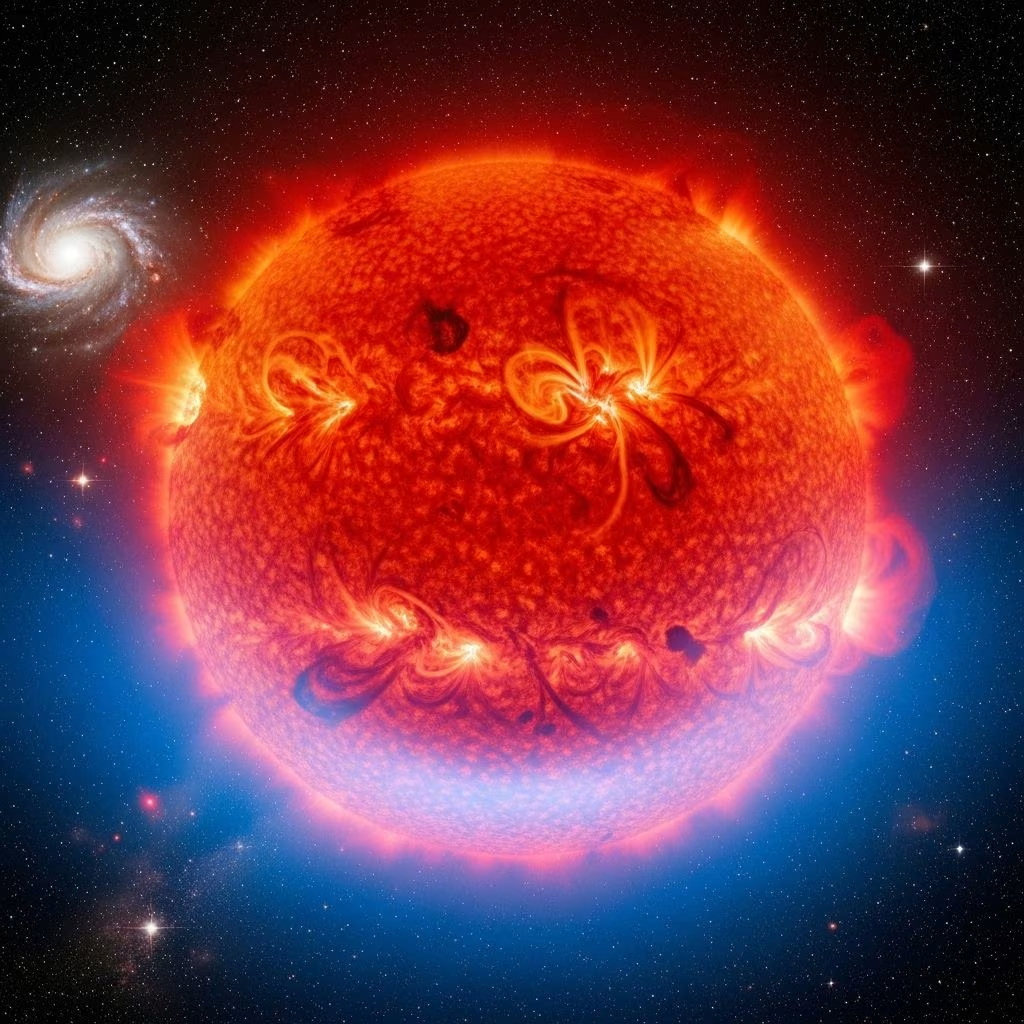
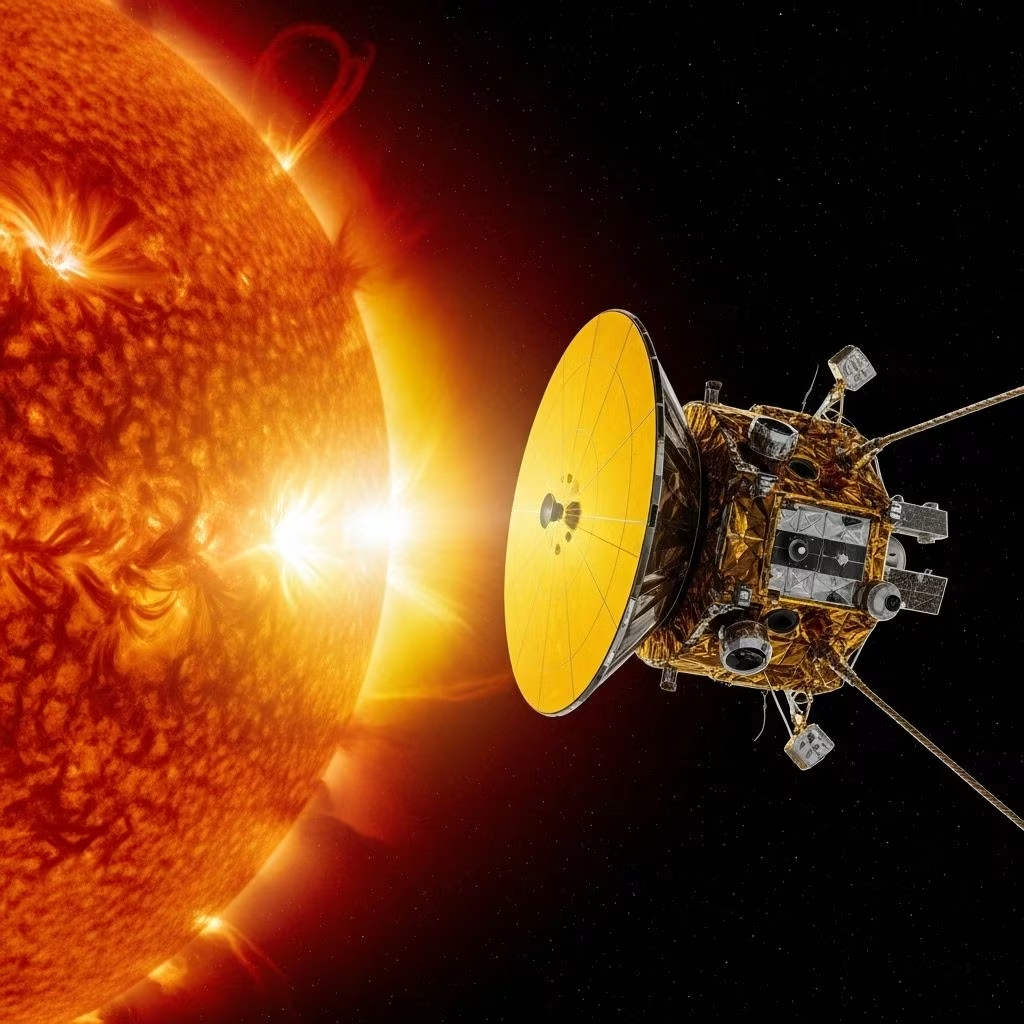
In late December 2024, NASA’s Parker Solar Probe achieved a historic milestone in solar exploration, capturing the closest images ever taken of the Sun’s atmosphere. Flying just 3.8 million miles from the solar surface, the probe’s observations have set a new benchmark in our quest to understand the behavior of our star and its immense influence on the solar system.
The Parker Solar Probe: Mission Overview
- Launched: August 12, 2018
- Mission Duration: Nearly seven years as of its 24th perihelion in June 2025
- Primary Goal: Investigate the solar corona and solar wind mechanics up close
- Closest approach: 3.8 million miles from the Sun, breaking previous records
The probe’s frequent close passes, or perihelia, have allowed scientists to collect unprecedented data and images from the Sun’s outer atmosphere, known as the corona.
Imaging the Sun: The Role of WISPR
Key to Parker Solar Probe’s success has been the Wide-Field Imager for Solar Probe (WISPR) instrument:
- WISPR captures images in visible light, focusing on the solar wind — material streaming out just as it leaves the Sun, not the surface directly.
- It provides visual data of the dynamic solar atmosphere, specifically showing the behavior of plasma and charged particles.
During its historic December 2024 flyby, WISPR imaged the rapid solar wind — a stream of electrically charged subatomic particles — hurtling into space at speeds exceeding 1 million miles per hour.
What Do These Images Show?
The WISPR images have revealed:
- Solar wind features: Detailed patterns and waves moving outward from the corona.
- Coronal Mass Ejections (CMEs): Bursts of plasma visible at the very start of their journey through space.
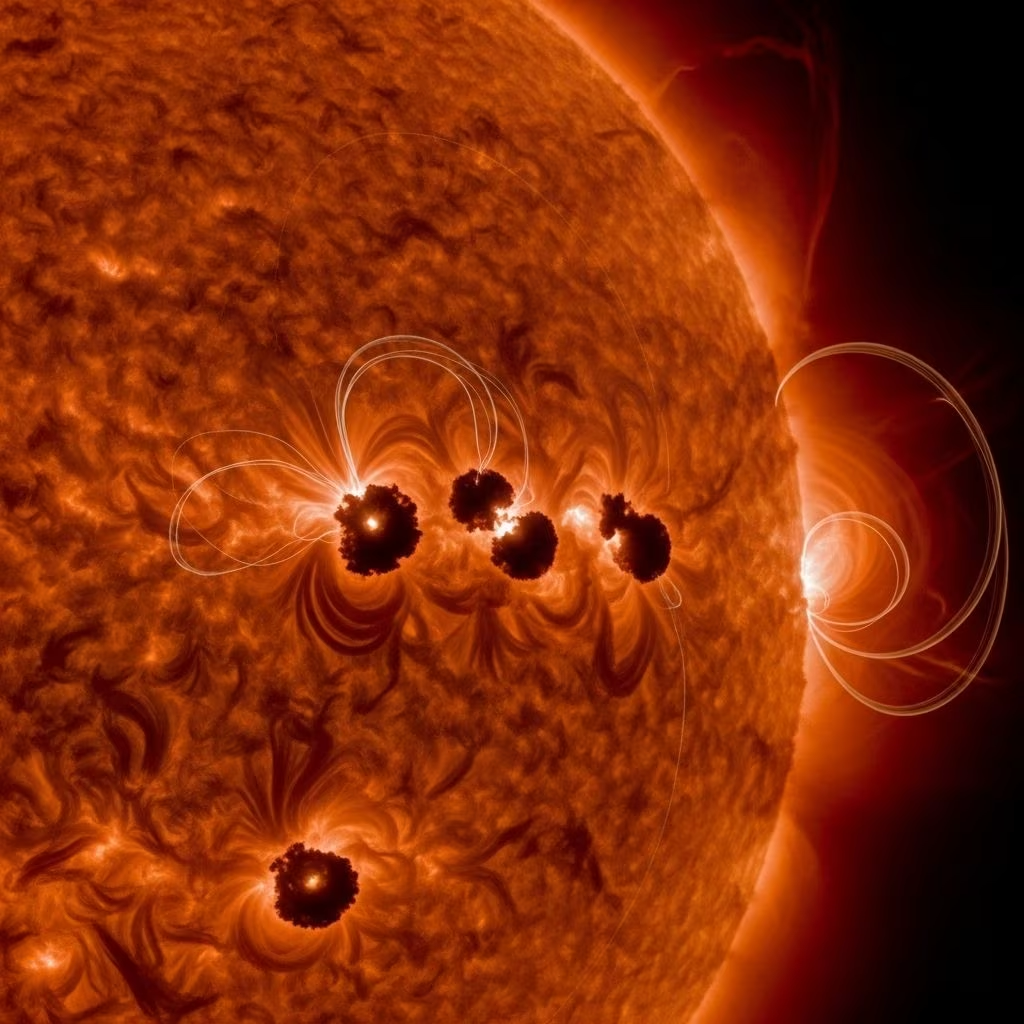
- Plasma trails and magnetic activity: The solar wind interacting and shaping the Sun’s magnetic field.
A particularly striking element captured is the departure of CMEs — massive eruptions of solar material that, once they reach Earth, can trigger the Aurora, disrupt satellites, threaten astronaut safety, and impair communications.
The Impact on Science: Why Do These Images Matter?
Images from Parker Solar Probe are not simply photographs — they’re transformative tools for advancing heliophysics and practical predictions:
- Space weather forecasting: Seeing the space weather threats arise directly, not just through computer models.
- Electric and magnetic field data: Understanding how solar wind shapes Earth’s magnetosphere and interacts with planetary environments.
- Protection of technology and astronauts: By mapping space weather phenomena, scientists can help safeguard satellites and astronauts travelling through affected regions.
Nicky Fox, NASA’s Science Mission Directorate associate administrator, explains, ‘We are witnessing where space weather threats to Earth begin, with our eyes, not just with models. This new data will help us vastly improve our space weather predictions.’
The Physics: Solar Wind and Its Effects
- Solar wind: A constant stream of charged particles emanating from the corona, responsible for the dynamic space environment throughout the solar system.
- Coronal Mass Ejections: Large-scale eruptions that can cause geomagnetic storms upon interacting with Earth’s magnetic field, resulting in auroras and interference with communications.
- Temperature extremes: The solar atmosphere (corona) can reach millions of degrees, but understanding why it is so much hotter than the solar surface remains a key scientific question being explored by Parker Solar Probe data.
Comparative Perspectives: Solar Orbiter and International Efforts
While Parker Solar Probe holds the record for the closest imaging, the European Space Agency’s Solar Orbiter mission also contributes high-resolution views of the Sun from farther away (approximately 77 million km).
- Solar Orbiter provides wide-angle ultraviolet images, functioning as a complementary perspective to Parker Solar Probe’s close-up visual data.
- Together, these missions offer layered insights into solar activity, magnetic field structure, and plasma dynamics.
| Mission | Closest Approach | Main Instrument | Primary Data |
|---|---|---|---|
| Parker Solar Probe | 3.8 million miles | WISPR | Solar wind, corona, plasma dynamics |
| Solar Orbiter | 77 million km | Extreme Ultraviolet Imager (EUI) | Ultraviolet corona, large-scale structure |
Key Milestones of the Parker Solar Probe Mission
- December 24, 2024: Record-breaking close approach and first release of closest-ever Sun images.
- March 22 & June 19, 2025: Additional close approaches and imaging, marking the 24th and final perihelion of the primary mission.
- Ongoing: Science teams continue to analyze new data and imagery to unlock the mysteries of solar physics.
Frequently Asked Questions (FAQs)
Q: How close did the Parker Solar Probe get to the Sun?
A: The probe reached within 3.8 million miles of the solar surface during its closest approach.
Q: What new insights have scientists gained from these images?
A: The images have helped identify previously unknown features in the solar wind and document coronal mass ejections (CMEs) from their origin point, enabling more accurate space weather prediction and deeper understanding of plasma interactions.
Q: Why is it important to forecast space weather?
A: Space weather events, such as CMEs, can damage satellites, harm astronauts, and disrupt power grids and communications on Earth. Forecasting helps protect these vital infrastructures.
Q: How does WISPR differ from other solar imaging technologies?
A: WISPR’s unique approach captures the solar wind and plasma in visible light as it leaves the corona, providing unique contextual data compared to ultraviolet imaging like that used by Solar Orbiter.
Q: Will Parker Solar Probe continue sending back data?
A: Yes. Even after the completion of its primary mission, Parker Solar Probe will continue to collect and transmit invaluable science data during subsequent perihelia passes.
Conclusion: A New Era of Solar Science
Parker Solar Probe’s record-setting images from the very heart of the Sun’s atmosphere are revolutionizing heliophysics. By directly observing and measuring the origins of solar wind and CMEs, scientists are developing a deeper, more practical understanding of the forces that shape space weather — knowledge that is crucial for protecting technology and humanity as we explore further into our solar system.
- Unprecedented proximity: Delivering images and data closer than any previous mission.
- Expanded knowledge: Helping to explain longstanding mysteries about the Sun’s heat, the solar wind’s dynamics, and space weather’s impact here on Earth.
- Collaborative future: Joint NASA and ESA missions mean a multi-perspective approach to unraveling solar secrets.
For the first time, humanity can clearly visualize the birthplace of space weather and witness the mechanics of our Sun in stunning, high-resolution detail.
SEO-Optimized Highlights
- Parker Solar Probe sets record for closest approach to the Sun, transforming solar science.
- WISPR instrument captures direct visual data of solar wind and coronal mass ejections.
- Findings contribute to improved space weather forecasts, protecting technology and astronauts.
- International collaborative missions deepen our understanding of the Sun’s temperature, magnetic field, and plasma dynamics.
References
- https://svs.gsfc.nasa.gov/14865/
- https://science.nasa.gov/science-research/heliophysics/nasas-parker-solar-probe-snaps-closest-ever-images-to-sun/
- https://www.nasaspaceflight.com/2025/07/psp-close-approach-images/
- https://www.youtube.com/watch?v=k1dTwEyuD44
- https://www.esa.int/ESA_Multimedia/Images/2025/04/Solar_Orbiter_s_widest_high-res_view_of_the_Sun
- https://apod.nasa.gov/apod/ap250811.html
- https://parkersolarprobe.jhuapl.edu
- https://www.sciencealert.com/nasa-reveals-the-closest-images-ever-taken-of-the-sun