


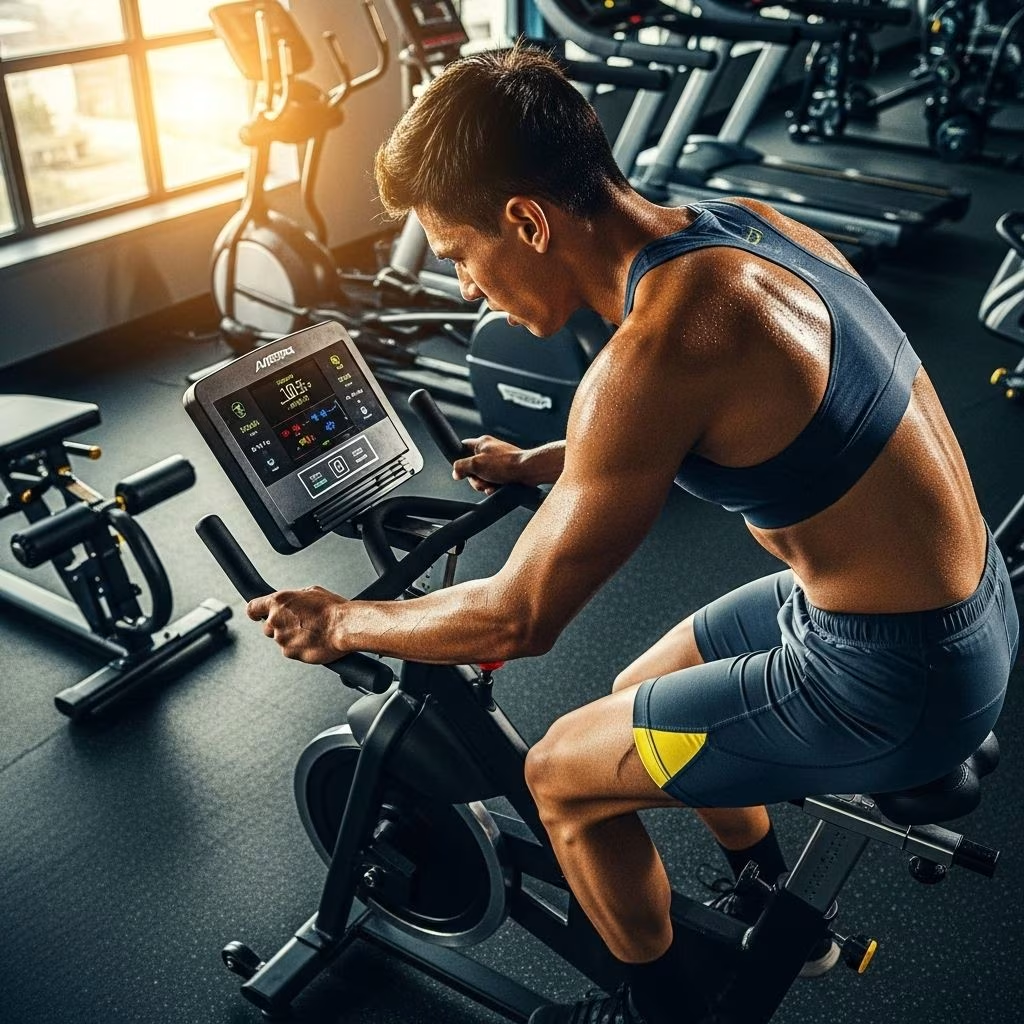
How to Burn More Calories on a Stationary Bike
Stationary bikes have long been a staple for cardiovascular workouts—providing a versatile, low-impact, and highly effective tool for fitness enthusiasts at any level. Whether you seek weight loss, heart health, or endurance improvements, your stationary bike can help achieve those goals. But are you truly maximizing your calorie burn every session? Below, we break down expert-backed strategies, interval routines, and techniques to ensure every minute you spend pedaling counts.
Why Choose a Stationary Bike?
Stationary bikes, also known as indoor cycling bikes, are favored for good reasons:
- Low impact on joints, protecting knees, ankles, and hips from the pounding of running or jumping.
- Convenient year-round exercise that isn’t affected by weather or daylight.
- Suitable for all fitness levels—from beginners to seasoned athletes—thanks to easy adjustment of resistance and intensity.
- Safe and accessible for those recovering from injuries or with mobility concerns, especially with options like recumbent bikes.
This versatility makes stationary bikes one of the best cardio options for home and gym workouts alike.
How Many Calories Can You Burn on a Stationary Bike?
The answer depends on intensity, duration, resistance settings, body weight, and individual effort. For example:
- A 150-lb person cycling at a moderate pace (12 to 13 mph) on a stationary bike can burn about 272 calories in 30 minutes.
- Higher-intensity intervals and increased resistance can significantly boost this number.
| Body Weight (lbs) | Calories Burned (30 min, moderate pace) |
|---|---|
| 125 | 210 |
| 150 | 272 |
| 175 | 336 |
| 200 | 400 |
Values are approximate; actual calorie burn will vary with effort, resistance, and individual metabolism.
Top Ways to Burn More Calories on a Stationary Bike
1. Incorporate Intervals (HIIT)
One of the most proven ways to rapidly increase calorie burn is with interval training. With high-intensity interval training, you alternate short bursts of all-out effort (sprints or heavy climbs) with easier recovery periods. This not only burns more calories during the session, but also elevates your metabolism for hours afterward due to the afterburn effect (EPOC).
- Warm up: 5–10 minutes at an easy pace
- Interval: 30 seconds all-out effort, followed by 60 seconds slow pedaling
- Repeat for 4 rounds; after the final round, recover for 4 minutes
- Repeat cycle 3 more times for a total of 37 minutes
Not only does HIIT increase calorie burn and metabolism, but research also links it to improved cardiovascular health and more efficient fat loss.
2. Add Resistance and Vary Your Routine
The more resistance you add, the harder your body works—translating into greater calorie expenditure and muscle engagement. Mix up your routine with climbs, sprints, and steady-state rides. Many stationary bikes include adjustable resistance; take advantage by:
- Cranking up the resistance for 1–2 minutes at a time, then lowering for recovery
- Attempting a ‘hill climb’ by gradually raising resistance, standing up (if possible), and engaging your core
- Mixing short, hard intervals with longer, moderately challenging segments
3. Maintain Good Form
Efficient calorie burning isn’t just about speed or resistance. Proper form protects you from injury and connects major muscle groups for a full-body effect:
- Keep your back straight, shoulders relaxed, and elbows slightly bent
- Your knees should have a gentle bend at the lowest pedal position—not fully locked or deeply bent
- Engage your core muscles to stabilize your upper body and get a more effective workout
4. Use Full-Body Movements
Some stationary bikes or add-ons involve moving handles, resistance bands, or extra features allowing for upper-body engagement. Incorporating arms, back, and even standing intervals can dramatically increase overall exertion and calorie burn.
- Switch to standing climbs when possible (if your bike is sturdy and designed for it)
- Experiment with models featuring attached resistance bands or moveable handles for biceps, triceps, and back
5. Increase Duration and Frequency
While higher intensity increases calorie burn, total time still matters. If you can’t always ride harder, try riding longer or more frequently. Aiming for 150+ minutes of moderate-intensity cycling per week is recommended for health and weight loss benefits.
Choosing the Right Stationary Bike for Calorie Burn
Your choice of bike may affect both comfort and calorie expenditure. Here’s a breakdown of common options:
| Type | Best For | Special Features |
|---|---|---|
| Upright Bike | General fitness, interval training, mimics outdoor riding | Compact; good for varied workouts |
| Spin Bike | High-intensity cycling, studio-class enthusiasts | Heavy flywheel for smooth action; designed for standing intervals |
| Recumbent Bike | Rehabilitation, seniors, comfort seekers | Reclined seat; less strain on joints/back; typically lower heart rate response |
| Dual-Action/Air Bike | Full-body calorie burning | Moving handles for arms; wind resistance increases with effort |
Many premium bikes sync with fitness apps, heart rate monitors, and have built-in routines—making it easier to stay motivated and track progress.
Pro Tips For Maximizing Your Stationary Bike Workout
- Warm up for 5-10 minutes to prepare your muscles and prevent injury.
- Use a heart rate monitor to ensure you’re in your target calorie-burning zone.
- Set clear goals for each ride (distance, calories, intervals, time).
- Stay consistent: Try to fit cycling into your weekly routine several times a week.
- Hydrate before, during, and after your sessions.
- Don’t overlook recovery—allow time for rest and cross-training.
Sample Calorie-Burning Stationary Bike Workouts
1. Classic Endurance Ride
- Warm-up: 5 minutes easy pedaling
- Steady ride: 20–45 minutes at moderate effort (60–75% max heart rate)
- Cool-down: 5 minutes easy pedaling
2. Interval Session (HIIT)
- Warm-up: 5–10 minutes
- 30 seconds maximum effort, 60 seconds easy; repeat for 8–12 rounds
- Cool-down: 5–10 minutes
3. Climbing Challenge
- Warm-up: 5 minutes
- Alternate 3 minutes heavy resistance (simulating a hill) with 2 minutes lighter resistance for a total of 30 minutes
- Cool-down: 5 minutes
Always adjust resistance to match your fitness level and check your form regularly.
Key Health and Fitness Benefits Beyond Calorie Burn
- Cardiovascular health: Strengthens heart, improves cholesterol and blood pressure.
- Fat loss and body composition: Regular cycling helps reduce body fat and increase muscle tone.
- Mood elevation: Releases endorphins, lowers stress, and contributes to better sleep.
- Joint-friendly: Ideal for people with arthritis, joint pain, or those recovering from injury.
- Flexible routines: Easily fits into busy schedules and can be adapted for group classes or solo training.
Common Mistakes to Avoid
- Skipping warm-up or cool-down: Increases injury risk and slows recovery.
- Wrong seat or handlebar height: Can strain knees or back—check adjustments before starting your ride.
- Only doing steady-state rides: Mix in intervals and resistance for best results.
- Leaning too heavily on handlebars: Reduces core engagement and can lead to discomfort.
- Neglecting posture: Keep a straight back, avoid tensing shoulders.
FAQs About Stationary Bike Calorie Burning
Q: Is a stationary bike as effective as running for calorie burn?
A: Both can burn a significant number of calories, but running typically burns slightly more per minute. However, cycling is lower impact, making it sustainable for longer sessions and a safer alternative for those with joint issues.
Q: How often should I use a stationary bike for weight loss?
A: Aim for at least 150 minutes per week at moderate intensity, or 75 minutes of vigorous cycling. Consistency is key for seeing weight loss or fitness improvements.
Q: Can I do interval training if I’m a beginner?
A: Yes! Start with shorter intervals and gentler resistance. As you build endurance and confidence, increase the difficulty. Listen to your body and focus on good form.
Q: Do I need any special equipment for stationary bike workouts?
A: Not necessarily, but padded shorts, proper shoes, a towel, and access to hydration can make sessions more comfortable. A heart rate monitor or fitness tracker helps track remaining in your target intensity zone.
Q: What if I have an injury or chronic pain?
A: Stationary bikes—especially recumbent models—are gentle and often recommended during rehab. Always consult your healthcare professional before starting new routines if you have medical concerns.
Boost Your Burn: Final Tips
- Track your progress with fitness apps or bike consoles—seeing improvement keeps you motivated.
- Join virtual or live cycling classes for extra motivation, structure, and community.
- Vary your music playlist to keep sessions engaging and energizing.
- Remember: A balanced diet and overall healthy lifestyle are as critical to weight loss as exercise.
With the right approach and variety, your stationary bike can become the cornerstone of an effective, fat-burning, and sustainable fitness program.
References
- https://www.prevention.com/fitness/fitness-tips/a38740053/is-stationary-bike-good-exercise/
- https://www.prevention.com/fitness/workout-clothes-gear/g27558787/best-exercise-bikes/
- https://www.prevention.com/weight-loss/a20474562/best-weight-loss-exercises/
- https://www.prevention.com/fitness/fitness-tips/a20453820/how-to-burn-more-calories-with-cardio/
- https://www.prevention.com/fitness/fitness-tips/g20496122/overcoming-bike-commuter-obstacles/
- https://www.prevention.com/weight-loss/a41046481/what-exercise-burns-the-most-calories/
- https://www.prevention.com/fitness/fitness-tips/a20454321/break-through-a-weight-loss-plateau/
- https://www.prevention.com/fitness/fitness-tips/a20472634/strength-exercises-and-brain-health/
- https://pmc.ncbi.nlm.nih.gov/articles/PMC6722762/


