


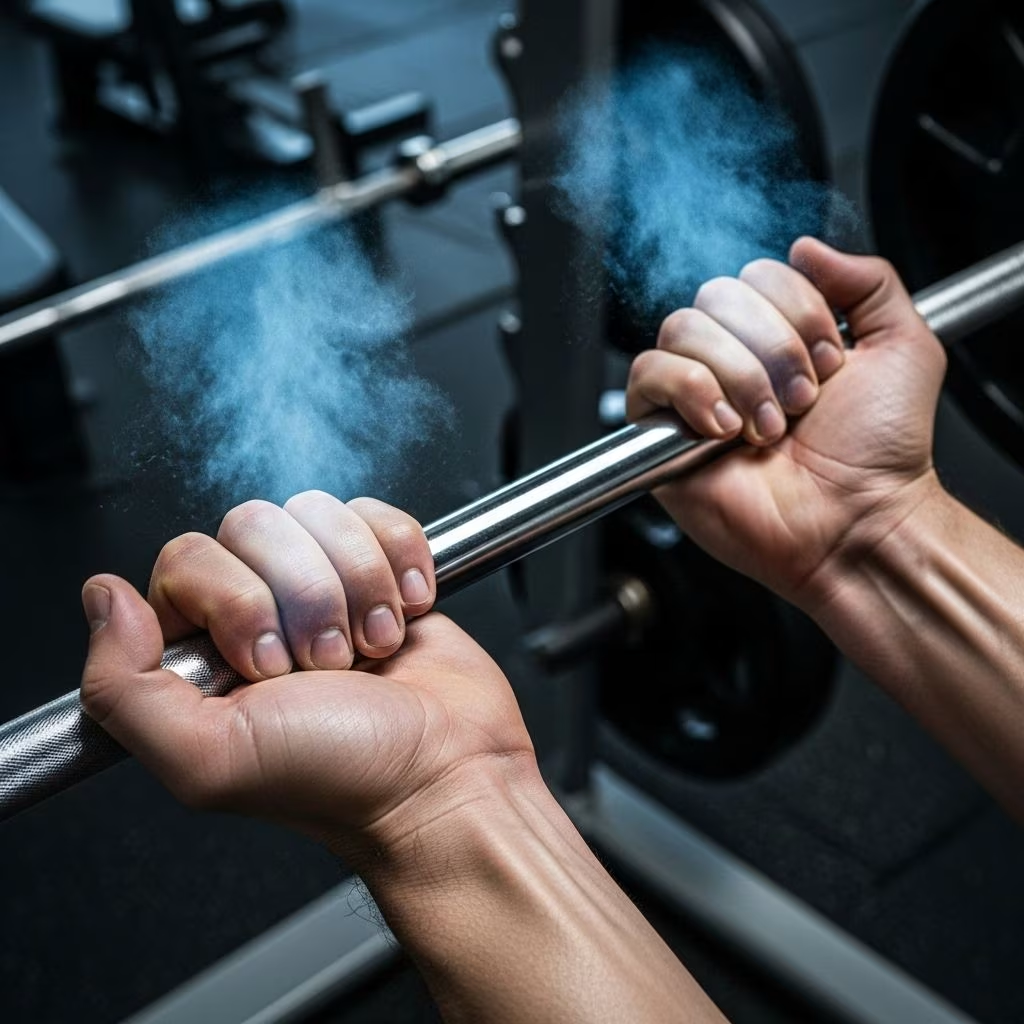
Could Cooling Your Palms Improve Your Workout?
Imagine squeezing out a few more reps, running that extra mile, or recovering faster, all by using an innovative technique that involves no fancy supplements or high-tech devices: just cooling your hands. Recent scientific investigations have highlighted an unexpected way to enhance exercise performance—by keeping your palms cool during or between training sessions. This article will break down the latest research, the underlying mechanisms, practical tips for implementation, and answer your most pressing questions about palm cooling for fitness.
Why Hand Temperature Matters During Exercise
Anyone who has ever hit a workout plateau knows how challenging it can be to keep making progress. Fatigue sets in, and your body’s limits start to feel insurmountable. But what if your core body temperature—and, more specifically, the temperature of your palms—could play a critical role in your performance?
- During exercise, your muscles work hard and generate heat, driving up your core temperature.
- Excess heat can accelerate fatigue, decreasing endurance, strength output, and even mental focus.
- Palm cooling works by promoting heat loss through an area rich with specialized blood vessels, acting as a natural radiator for your body.
Mechanistically, research has shown that higher muscle temperatures can impair key enzymatic processes, slowing ATP (energy) production and limiting muscle contraction efficiency.
What Is Palm Cooling and How Does It Work?
Palm cooling leverages the anatomy of the hands to accelerate heat loss. The palms contain unique vascular structures called arteriovenous anastomoses (AVAs), which allow for rapid blood flow and heat transfer. By cooling these areas:
- Your body’s core temperature can be lowered more rapidly.
- This mitigates heat-induced fatigue and allows muscles to perform at higher capacity for longer.
- It can be as simple as holding a cool device, or immersing your hands in cold water at controlled temperatures (ideally 10–16°C, or 50–61°F).
Importantly, temperatures that are too cold (like ice) can constrict blood vessels and reduce effectiveness, whereas moderate coolness is optimal for performance benefits.
Key Scientific Findings: Does Cooling Palms Really Work?
The idea might sound too good to be true, but multiple studies have put palmar cooling to the test:
- One study in the Journal of Strength and Conditioning Research found that cooling the palms during strength training increased total work volume by 40%, compared with only a 13% increase in control groups who didn’t use cooling.
- Research published in the American Journal of Sports Medicine observed that palm cooling at 15°C could lower core temperature by half to one degree Celsius, resulting in a 15% longer time until exhaustion during high-intensity activity.
- An NIH study found a 144% increase in pull-up work volume over 6 weeks in experienced subjects who used hand cooling between sets.
- Participants reported lower perceived exertion (feeling less tired) and showed higher endurance and strength metrics when palm cooling was part of the workout protocol.
Breakdown of Performance Improvements
| Study | Performance Measured | Improvement with Palm Cooling |
|---|---|---|
| J Strength Cond Res | Bench press work volume over 3 weeks | 40% increase vs 13% (no cooling) |
| Am J Sports Med | Time to exhaustion (cardio) | 15% longer with cooling |
| NIH Pull-up Study | Pull-up work volume over 6 weeks | 144% increase (experienced subjects) |
These gains rival, and in some cases exceed, those seen with legal performance-enhancing supplements or specialized training regimens.
How Palm Cooling Affects the Body
Cooling the palms during workouts taps into several physiological and psychological processes:
- Maintains Muscle Performance: Cools muscle tissue, keeping enzyme activity high and ATP production efficient.
- Delays Fatigue: Slows the rise in core temperature, so you can go harder for longer before your body forces you to stop.
- Accelerates Recovery: Lower heat means faster removal of metabolic byproducts, which may reduce soreness and speed up post-workout recovery.
- Supports Cognitive Function: Exercise in the heat can sap mental sharpness; palm cooling helps you stay focused and make better decisions, crucial in sports and competitive events.
- Improves Motivation: Less heat stress means more energy and mental drive to push through tough sessions.
Practical Guide: How to Use Palm Cooling
You don’t need an expensive device to try palm cooling. Here are practical methods anyone can use:
- Fill a bottle or pouch with water cooled to 10–16°C (50–61°F); hold it in your hands for 2-3 minutes between sets.
- Submerge your hands in a bowl of cool water during strength or endurance workouts.
- Purchase specialized palm-cooling tools designed for fitness use. These often maintain safe, optimal temperatures and provide ergonomic comfort.
- Do not use ice water; excessively cold temperatures can constrict blood vessels, actually reducing heat dissipation.
- For high-intensity intervals, try holding the cool object or device during active rest periods.
Consistency is key: even periodic use between sets can help maintain core temperature and boost training capacity.
Who Can Benefit from Palm Cooling?
The scope of palm cooling extends across all fitness levels and several populations:
- Strength Athletes (weightlifters, powerlifters): More work volume per session increases strength gains over time.
- Endurance Athletes (runners, cyclists): Delayed fatigue means longer training sessions and improved aerobic performance.
- Recreational Gym-Goers: Anyone stuck on a plateau, seeking better results or managing workout exhaustion.
- Individuals Sensitive to Heat: Older adults, people with heat intolerance, or those living in warm climates can exercise more comfortably.
- Clinical Populations (such as Multiple Sclerosis): Early research shows palm cooling can help MS patients extend exercise tolerance by up to 35%.
Limitations and Considerations
While palm cooling promises impressive benefits, there are important caveats:
- Results can vary based on individual physiology, workout type, and cooling method.
- Some studies found no statistically significant increases in peak power or maximal strength during single efforts—most benefits appear in endurance or repeated high-intensity activities.
- Careful temperature control is important; excessively cold or hot methods may impair results or cause discomfort.
- Long-term effects are still being studied, but short- and medium-term outcomes are extremely promising, particularly in terms of increasing training volume and reducing perceived exertion.
Common Myths About Palm Cooling
As with any new fitness trend, myths and misconceptions abound. Here are facts to clear things up:
- “It’s just a placebo effect.” Multiple controlled clinical studies have shown statistically significant performance gains, well beyond psychological effects.
- “You need expensive equipment.” Simple and low-cost tools can be just as effective as commercial palm-cooling devices for most users.
- “It’s only for elite athletes.” Research shows all fitness levels, from professional athletes to beginners, can benefit—especially during intense or extended sessions.
Step-by-Step: DIY Palm Cooling Techniques
- Prepare the Cooling Source: Chill water, gel packs, or even a damp towel to between 10–16°C (50–61°F).
- Apply During Rest: Hold, wrap, or immerse your palms for 2–3 minutes during scheduled breaks.
- Repeat: Use between multiple sets, sprints, or high-intensity intervals for sustained results.
- Monitor Temperature: Avoid over-chilling—discomfort, tingling, or numbness indicate the need for warmer temperatures.
For additional safety, always test the cooling source for brief periods before full application, especially if you have circulatory or neurological health conditions.
The Next Frontier: Palm Cooling and the Future of Performance Training
With mounting evidence and user-friendly approaches, palm cooling is quickly gaining popularity among trainers and athletes. As more fitness professionals adopt innovative cooling routines, the technique may soon become a mainstream training strategy, especially for those seeking efficient, legal, and low-cost performance enhancement.
Expect to see new products, smarter cooling technologies, and more in-depth research into the psychological and physiological ways cooling can reshape boundaries in sports and personal fitness. Early adopters may gain a sizable edge—just by keeping their palms cool while others sweat it out.
Frequently Asked Questions (FAQs)
Q: How cold should my palms get for the best results?
A: The optimal range is 10–16°C (50–61°F). Avoid using ice or freezing temperatures, as these can cause blood vessels in your hands to constrict, reducing the cooling effect.
Q: Is palm cooling safe for everyone?
A: Palm cooling is generally safe but should be used with caution by people with temperature sensitivity, circulation disorders, Raynaud’s phenomenon, or certain neurological conditions. Always consult a healthcare provider if unsure.
Q: How quickly can I expect to see benefits?
A: Many people notice improved stamina or capacity in the first session, particularly in prolonged or high-repetition workouts. Consistent practice over weeks can result in sustained gains in endurance and total work volume.
Q: Can I use palm cooling outdoors or in a gym without special equipment?
A: Yes! A cool bottle or water pouch, chilled towel, or even quick access to a water fountain can provide the cooling effect needed for performance boosts.
Q: Will palm cooling help me with single, maximal lifts?
A: Research suggests palm cooling is most effective in multi-set endurance, interval, or volume training. It has less impact on maximal single-rep lifts, but it can help maintain performance across longer sessions or repeated effort.
References
- https://commons.und.edu/cgi/viewcontent.cgi?article=1787&context=pt-grad
- https://www.ironmaster.com/blog/health-fitness/unlocking-peak-performance-palmar-cooling-athletes/
- https://pubmed.ncbi.nlm.nih.gov/22076097/
- https://pmc.ncbi.nlm.nih.gov/articles/PMC5356217/
- https://www.prevention.com/weight-loss/a20432229/cool-palms-may-improve-workouts-study/
- https://news.stanford.edu/stories/2017/12/cooling-glove-helps-athletes-patients
- https://www.apexcoollabs.com/blog/palm-cooling-explained
- https://getnice.com/blogs/articles-rocc/a-comprehensive-buyer-s-guide-to-palm-cooling


