


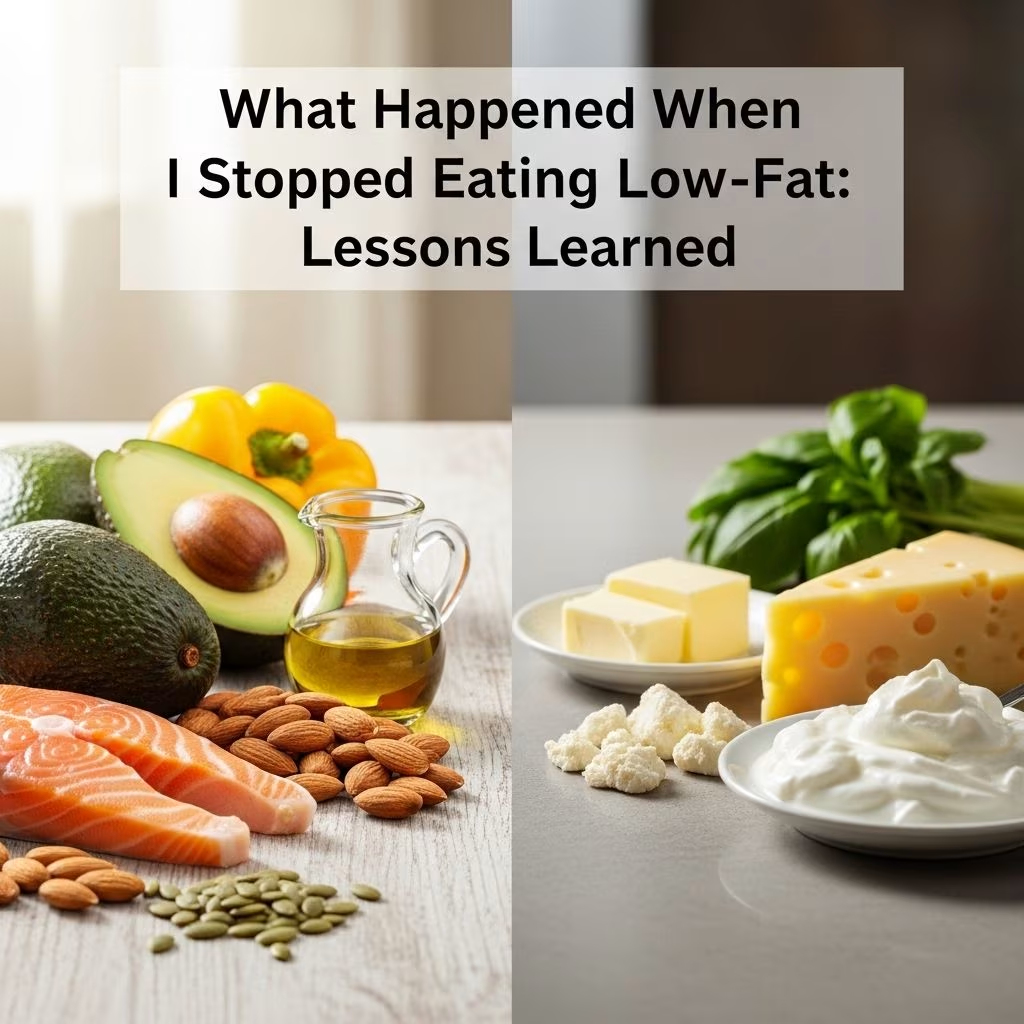
What Happened When I Stopped Eating Low-Fat
For years, the low-fat diet craze dominated nutrition advice, ingrained in everything from supermarket products to public health campaigns. Many believed cutting fat was the holy grail of healthy eating and sustainable weight loss. But what truly happens when you quit counting fat grams and embrace a more balanced diet, including healthy fats? This article reviews the personal insights and research-backed lessons learned from moving away from low-fat eating.
How the Low-Fat Diet Trend Started
The low-fat movement took off in the late 20th century, fueled by fears over heart disease and cancer. Dietitians, doctors, and food companies jumped on board, replacing fat in processed foods with added sugars and refined carbohydrates. Grocery aisles lined with ‘fat-free’ and ‘low-fat’ labels promised health and weight loss for all. However, mounting research suggested cutting fat alone wasn’t the solution it once seemed.
My Life on a Low-Fat Diet
For years, I religiously followed a low-fat eating pattern. My meals centered around rice cakes, fat-free yogurt, steamed veggies, and lean meat with any visible fat trimmed away. Salad dressings were light, snacks were baked, and any cravings for cheese or avocado were ignored. The focus was always on keeping fat grams low—even at the expense of taste or satisfaction.
- Constant hunger and energy swings were common.
- Cravings for fatty foods, especially late at night.
- Difficulty sticking with the diet, especially during social events.
- Stagnant weight loss after an initial drop.
The Turning Point: Rethinking Fat
It’s easy to believe dietary fat is the enemy, but emerging studies began to challenge this belief. Reports showed that low-fat diets may not protect against heart disease or cancer, especially when fat is replaced with refined carbohydrates or sugars. Some studies even highlighted that certain fats, like those from fish, nuts, seeds, and olive oil, have health benefits.
| Diet Type | Main Feature | Potential Risks | Potential Benefits |
|---|---|---|---|
| Low-Fat | Fat restricted, high carb | Increased cravings, low HDL, high triglycerides | May lower LDL (bad cholesterol) |
| Balanced Diet | Healthy fats included | Overeating if processed foods are chosen | Improved satiety, better energy, diverse nutrients |
What I Learned After Quitting Low-Fat Eating
Quitting the low-fat approach was a leap of faith. Here’s what changed:
1. Reduced Hunger and Fewer Cravings
One of the biggest revelations was a dramatic decline in constant hunger and food cravings. Adding back foods like eggs, olive oil, nuts, and avocado meant meals were more filling and satisfying. Scientific literature supports this: dietary fat helps slow digestion and stabilize blood sugar, leading to greater satiety and fewer binge urges.
- Meals last longer; I could go hours between eating without feeling desperate for snacks.
- Cravings disappeared; especially for sweets and late-night snacks.
- Enjoyment of food increased; with richer tastes and textures on my plate.
2. Energy Levels Improved Significantly
Fat is a key energy source for the body, especially for the brain. When I started adding more fats, energy crashed less often and I felt more focused throughout the day. Instead of relying on a sugar high from fat-free snacks, energy became more consistent.
Studies warn that low-fat diets, especially those rich in refined carbs, can cause energy spikes and crashes as blood sugar levels fluctuate. Higher-fat, balanced diets seem to offer more stable energy and mood.
3. Weight Loss Didn’t Stall – It Improved
Ironically, stepping off the low-fat bandwagon didn’t make me gain weight; it actually helped me shed pounds more sustainably. Recent meta-analyses reveal that low-carb or balanced-fat diets may result in more long-term weight loss than low-fat regimens, with low-fat diets sometimes showing the least advantage in studies of 12 months or longer. Replacing fat with refined carbs commonly found in “fat-free” products can have the opposite effect, raising triglycerides and leading to gradual weight gain.
- Lost a few stubborn pounds after switching my focus to balanced nutrition rather than calorie restriction alone.
- Weight fluctuations decreased; my body settled into a new normal.
4. Healthy Fats and Mindset: No More Food Guilt
Psychologically, the change was profound. Adding healthy fats removed the guilt attached to enjoying butter or cheese and normalized eating out at restaurants or family parties. Food was no longer the enemy; it became about nourishment and satisfaction.
Focus shifted to quality of calories, not just quantity—whole foods, fewer processed snacks, mindful choices about which fats and carbohydrates to include.
- Mindful eating replaced rigid calorie tracking.
- No more obsession over grams fat or light products.
- Enjoyed social occasions without dietary stress.
Why Not All Fats Are Created Equal
Not all fats are healthy. Saturated fats and trans fats (found in processed foods and baked goods) increase cardiovascular risk, while polyunsaturated and monounsaturated fats (from fish, olive oil, avocados, nuts, and seeds) offer protective effects. The key is choosing fats wisely and balancing macronutrients for overall health.
Low-Fat Diet Myths and Realities
- Myth: Eating fat makes you fat.
Reality: Excess calories from any source, including carbohydrates, can lead to weight gain. - Myth: Low-fat is best for heart health.
Reality: Diets low in saturated or trans fats are healthier, but total fat intake is less important than fat type. - Myth: Fat-free foods are always better.
Reality: Many fat-free products contain more sugar or refined grains, which can increase metabolic risk.
Frequently Asked Questions (FAQs)
Q: Are all fats unhealthy?
No. Unsaturated fats (like those in olive oil, fish, nuts, and seeds) have health benefits, while saturated and trans fats (often in processed foods) should be minimized.
Q: Did you gain weight when adding healthy fats back?
No. Studies show that incorporating healthy fats can lead to greater satiety and, for many, more sustainable weight loss than low-fat diets alone.
Q: What types of foods should I focus on after quitting low-fat?
- Whole foods: fruits, vegetables, whole grains, lean meats, fish
- Healthy fats: olive oil, avocado, nuts, seeds, fatty fish
- Avoid heavily processed or “fat-free” packaged foods, which often contain added sugar and refined carbs
Q: What are the main risks of sticking with a strict low-fat diet?
- Increased hunger and snacking due to lower satiety
- Potential energy swings and cravings
- Poorer heart health if healthy fats are excluded
- Possible decrease in HDL (good cholesterol) and rise in triglycerides
Summary: Rethinking Fat for Better Health
Quitting a low-fat diet isn’t an excuse to eat fried foods or ignore nutrition labels. Instead, it’s about embracing balance, quality, and satisfaction in your meals. Listen to your body, choose nutrient-dense whole foods, and don’t fear healthy fats. The result: better energy, improved mood, sustainable weight management, and a healthier relationship with food.
SEO Optimization Tips for Balanced Eating
- Focus on whole foods and “healthy fats” keywords when researching options.
- Avoid “fat-free” processed products; prioritize nutrient density.
- Choose olive oil, nuts, fatty fish, and avocado as primary fat sources for optimal health impact.
- Monitor portion sizes, since fats are calorie-dense.
- Use search-friendly terms: “balanced diet”, “energy levels”, “satiety”, “healthy weight loss”, “nutrition myths”.
Key Takeaways
- The low-fat craze wasn’t the cure-all promised; focus on quality over quantity.
- Healthy fats are essential for satiety, energy, hormone balance, and heart health.
- Weight loss is sustainable when meals are satisfying, steady, and mindful.
- Research continues to evolve; balance and variety remain the safest nutrition advice.
References
- https://www.prevention.com/food-nutrition/healthy-eating/a20436803/cancer-heart-disease-and-low-fat-diets/
- https://www.ncbi.nlm.nih.gov/books/NBK553097/
- https://www.ahajournals.org/doi/10.1161/01.CIR.98.9.935
- https://pmc.ncbi.nlm.nih.gov/articles/PMC4667723/
- https://www.prevention.com/food-nutrition/healthy-eating/a43867248/low-carb-or-low-fat-diet-better-for-longer-life-study/
- https://www.prevention.com/food-nutrition/healthy-eating/a65664887/ultra-processed-foods-weight-loss-gut-health-study/
- https://www.prevention.com
- https://med.stanford.edu/news/insights/2019/03/a-skeptical-look-at-popular-diets-the-lowdown-on-low-carb-3.html
- https://jamanetwork.com/journals/jama/fullarticle/2673150


