


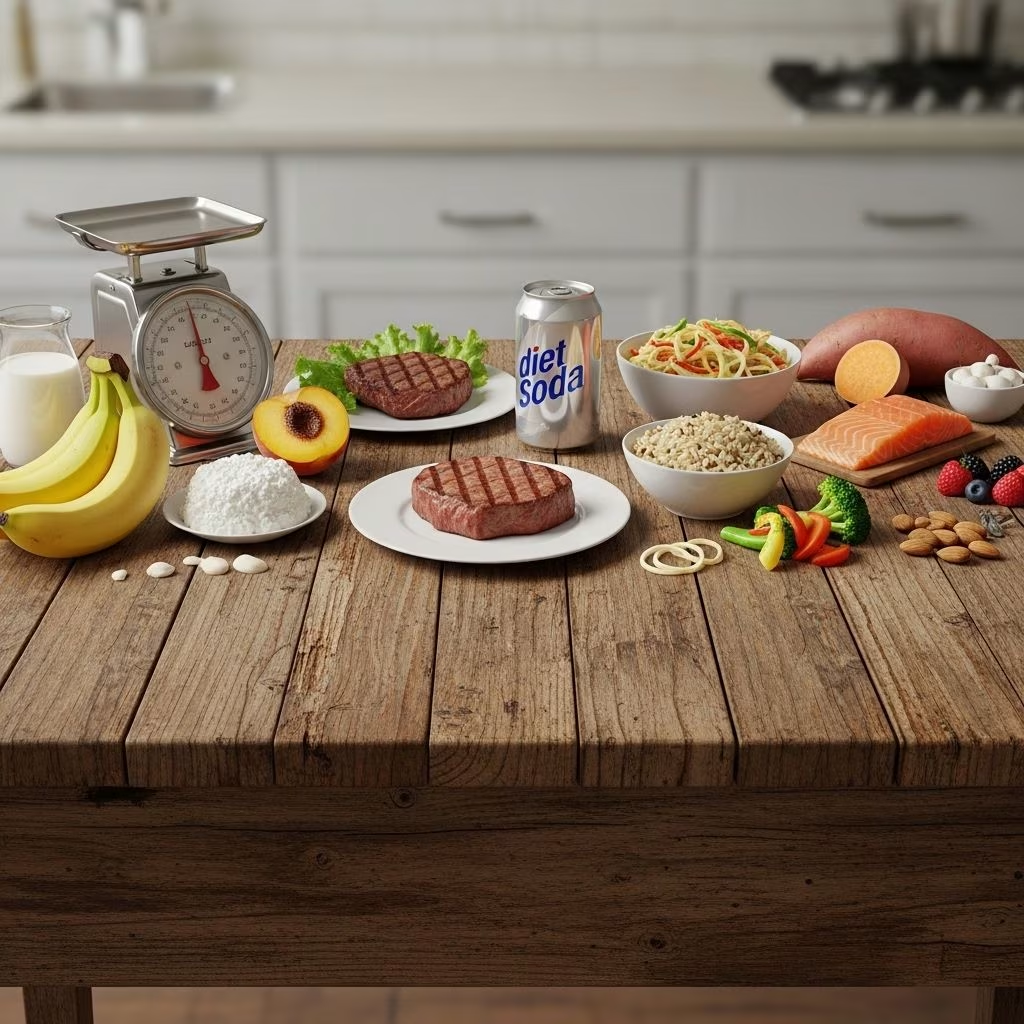
A Century of Diet Fads in America
Over the past hundred years, America has witnessed a dizzying array of diet fads—each reflecting changing attitudes toward health, weight, and nutrition. Some diets promised quick fixes, others touted scientific breakthroughs, and many mirrored broader societal trends, from the pursuit of convenience to the embrace of natural living. This article takes you through the most memorable moments in American diet history, dissecting what fueled each trend and their impact on our nation’s approach to food.
Early Diet Fads: The 1920s to 1940s
The concept of dieting for weight loss gained popularity in the early 20th century, spurred on by new understandings of calories and nutrition:
- 1925: The Cigarette Diet
Advertising campaigns such as “Reach for a Lucky instead of a sweet” encouraged Americans to substitute food with cigarettes as an appetite suppressant. Nicotine’s effects were leveraged in the earliest diet marketing—foreshadowing later reliance on pharmacology for body management.
Societal impact: The normalization of thinness and the rise of commercial diet solutions. - 1928: The Inuit (Eskimo) Diet
Heavily featured in media as “primitive wisdom,” this fad encouraged eating raw caribou, fish, and whale blubber, idealizing ancestral diets. Its popularity foreshadowed the later Paleo movement. - 1930: The Grapefruit Diet (Hollywood Diet)
Eating grapefruit at each meal was promoted as a means to quick fat loss. Seen as a symbol of diet culture, grapefruit was believed to suppress appetite and became synonymous with weight loss.
Result: Grapefruit as enduring diet icon. - 1934: Bananas and Skim Milk Diet
United Fruit Co. promoted this combination for rapid weight loss. It was endorsed widely, targeting both celebrities and the everyday person.
By the 1940s, calorie consciousness grew, aided by books like “Diet and Health, With Key to the Calories.” Diet drinks—liquid meals such as Stoll’s Diet Aid—started to appear, appealing to busy Americans seeking fast results.
Midcentury Diet Crazes: The 1950s to 1970s
- 1950: The Cabbage Soup Diet
This classic fad diet, which allows unlimited cabbage soup, recurs every decade and is still used today. While effective for short-term, mostly water weight loss, it is notorious for side effects like gas and bloating.
Enduring legacy: Simplicity and “eat as much as you want” mentalities. - 1960: Zen Macrobiotic Diet
Rooted in Japanese philosophy, this grain-heavy regimen prioritized holistic wellness, spiritual discipline, and natural foods. - 1961: Weight Watchers
Founded by Jean Nidetch, it moved dieting away from deprivation toward “eating management,” emphasizing group support and balanced eating.
Impact: The birth of communal, sustainable diet approaches. - 1964: The Drinking Man’s Diet
Popularized by Robert Cameron, this diet encouraged drinks like martinis alongside high-fat foods. Declared unhealthful by nutritionists, it played off the decade’s cocktail culture. - 1975: Cookie Diet & Pritikin Program
A doctor’s hunger-controlling cookie was sold to desperate dieters, while the Pritikin Longevity Center warned of saturated fat’s dangers.
Result: Growing distrust of fats and embrace of low-cholesterol, low-fat foods. - 1976: Sleeping Beauty Diet
Extremely controversial, this approach used sedation to force people to sleep through meals—reflecting extreme measures in the pursuit of thinness.
Food Combining, Natural Foods, and Reinvented Classics: The 1980s to 1990s
- 1981: Beverly Hills Diet
Popularized food-combining rules (e.g., fruit only alone), aimed to optimize digestion and fat burning. Champagne, however, was deemed “neutral” and allowed with anything. - 1985: Caveman Diet
Precursor to Paleo, this approach revisited Paleolithic eating, favoring ‘ancient’ natural foods over modern processed fare. - 1990s: Vegetarian and Mediterranean Diets
Old as civilization, these diets became central to American nutrition discussions, emphasizing plant-based and olive oil-rich regimens for health. - 1994: Atkins Diet
Dr. Robert Atkins revolutionized weight loss with a high-fat, low-carb philosophy. Bacon, steak, cheese were celebrated as “fat is our friend.”
Legacy: Changed the perception of dietary fats. - 1995: The Zone Diet
Barry Sears’s 40-30-30 ratio (carbs/fats/protein) promised optimal hormonal balance and easy-to-follow rules for health.
Impact: Sparked a flood of branded cookbooks, snacks, and wellness products. - 1995: Sugar Busters!
Sugar was branded America’s greatest food villain, fueling low-sugar alternatives and label scrutiny. - 1996: Eat Right for Your Type
Peter J. D’Adamo’s diet connected eating patterns to blood type, with meal plans tailored to specific genetic markers—a testament to America’s search for personalized nutrition.
Diet Innovation and Business: 2000 to Present
- 2000: Raw Foods Diet
Eating only uncooked, unprocessed foods surged among wellness enthusiasts, aligning with trends toward organic, minimally processed living. - 2003: South Beach Diet
Arthur Agatston’s plan condemned “white stuff”—refined sugars, flour, and potatoes—embracing good carbs and lean proteins. Its broad popularity reflected a shift toward GI-based nutrition. - 2010s: Paleo, Primal, Carnivore
Books like “The Paleo Diet,” “The Paleo Solution,” and “The Primal Blueprint” reignited interest in evolutionary nutrition. More recently, the Carnivore Diet pushed exclusivity of animal products, despite lack of clinical support.
Popular Modern Diets in Summary
| Decade | Diet | Key Idea | Impact |
|---|---|---|---|
| 1920s | Cigarette Diet | Nicotene to suppress appetite | Commercialization of dieting |
| 1930s | Grapefruit Diet | Fruit as appetite suppressant | Symbol of diet era |
| 1950s | Cabbage Soup Diet | Unlimited soup, fast loss | Recurring popularity |
| 1960s | Zen Macrobiotic | Holistic, grain-heavy | Wellness philosophy |
| 1970s | Sleeping Beauty | Sedation to avoid eating | Extreme fad |
| 1980s | Beverly Hills Diet | Food combining rules | Digestive focus |
| 1990s | Atkins | High fat, low carb | Shifted dietary norms |
| 2000s | South Beach | No white stuff, balanced carbs | GI awareness |
| 2010s | Paleo/Carnivore | Evolutionary eating | Retro diet popularity |
What Drives Diet Fads?
Diet fads often thrive on the following factors:
- Media Influence: The widespread reach of magazines, television, and later the internet gave massive exposure to new diet ideas.
- Celebrity and Doctor Endorsements: Fads gained momentum via endorsements from trusted professionals or famous personalities, lending credibility despite scientific shortcomings.
- Quick-Fix Mentality: The desire for immediate results drives the popularity of extreme and restrictive plans, often at the expense of sustainability or health.
- Scientific Innovations and Myths: Diet marketers regularly claim cutting-edge science or secret formulas—sometimes by misunderstanding legitimate nutritional research.
- Cultural Trends: Shifts in social values (e.g., naturalism, convenience, moral eating) often coincide with new dietary paradigms.
Enduring Diet Myths from Past to Present
- “Fat is Dangerous”: The fat-phobic era of the 1980s and ’90s demonized all fats, ignoring the value of healthy fats like olive oil and avocado.
- “Carbs Are the Enemy”: Atkins, South Beach, and others made carbs seem uniformly bad, overlooking complex carbs’ nutritional benefits.
- “There’s a Magic Food”: Grapefruit, cabbage, or cookies have all been credited as miracle weight loss foods—mythologizing single foods over common sense balance.
- “Personalized Dieting Solves Everything”: Plans like Eat Right for Your Type suggest that blood type or genetics narrowly define optimal nutrition, but science does not support such precise personal solutions for most people.
Scientific Perspective and Safety Concerns
Most diet fads are characterized by:
- Rapid Weight Loss Claims: Often misleading or unsafe, these diets can result in water loss, nutrient deficiencies, and unhealthy weight cycling.
- Restrictiveness: Extreme limitations (zero carbs, zero fat, or only one or two foods) risk long-term health or foster disordered eating patterns.
- Lack of Scientific Backing: Many fads rely on anecdotal evidence, celebrity endorsements, or pseudoscience. For example, the carnivore diet lacks clinical evidence for health benefits.
- Potential Harm: Some fads, such as the sleeping beauty or cotton ball diet (emerged in the 2010s), are medically dangerous and have resulted in serious health complications.
The American Heart Association and other institutions consistently warn against “quick-fix” fad diets, advocating for balanced, varied eating patterns and skepticism toward dramatic claims.
Frequently Asked Questions (FAQs)
Q: Which diet fad was the most widespread in America?
A: The Atkins Diet stands out for its mass adoption and lasting impact, selling millions of books and fundamentally changing how Americans view fats and carbohydrates.
Q: Are any fad diets actually healthy?
A: Some plans, such as versions of the Mediterranean Diet, have scientific support and are not considered “fad” in their evidence-based forms. However, most highly restrictive or extreme diets lack research supporting safety and long-term effectiveness.
Q: Why do diet fads cycle in popularity?
A: Diet fads often resurge due to media exposure, new endorsements, or rebranding that makes an old idea seem new again. Human nature’s hope for an easy fix, along with the commercial diet industry, perpetuates these cycles.
Q: What should people consider before trying a trendy diet?
A: Consult with a qualified health professional, research evidence-based recommendations, and be wary of diets promising fast, dramatic results or requiring restrictive eating patterns.
Q: Have American attitudes toward dieting changed over time?
A: Yes. From early calorie counting and rigid restrictions, the culture has shifted periodically through fat phobia, carb avoidance, holistic philosophies, and, lately, curiosity about ancestral diets. The most recent trend favors balanced eating, mindful choices, and sustainability over dramatic intervention.
Key Takeaways
- Diet fads reflect changing views of health, beauty, and science.
- Many fads are revived across generations, indicating persistent desires for easy solutions.
- Despite their popularity, most fad diets lack research backing and should be approached with caution.
- Long-term success typically requires balanced, sustainable nutrition—not restrictive short-term fixes.
References
- https://www.latimes.com/health/la-he-diet-timeline-20150228-story.html
- https://en.wikipedia.org/wiki/Fad_diet
- https://www.smithsonianmag.com/innovation/the-seesawing-history-of-fad-diets-180981586/
- https://pmc.ncbi.nlm.nih.gov/articles/PMC8805510/
- https://dieteticallyspeaking.com/a-brief-history-of-ridiculous-fad-diets/
- https://pmc.ncbi.nlm.nih.gov/articles/PMC9294402/
- https://sahrc.org/2022/04/diet-culture-a-brief-history/
- https://www.heart.org/en/news/2024/03/13/too-much-of-a-food-thing-a-century-of-change-in-how-we-eat


