


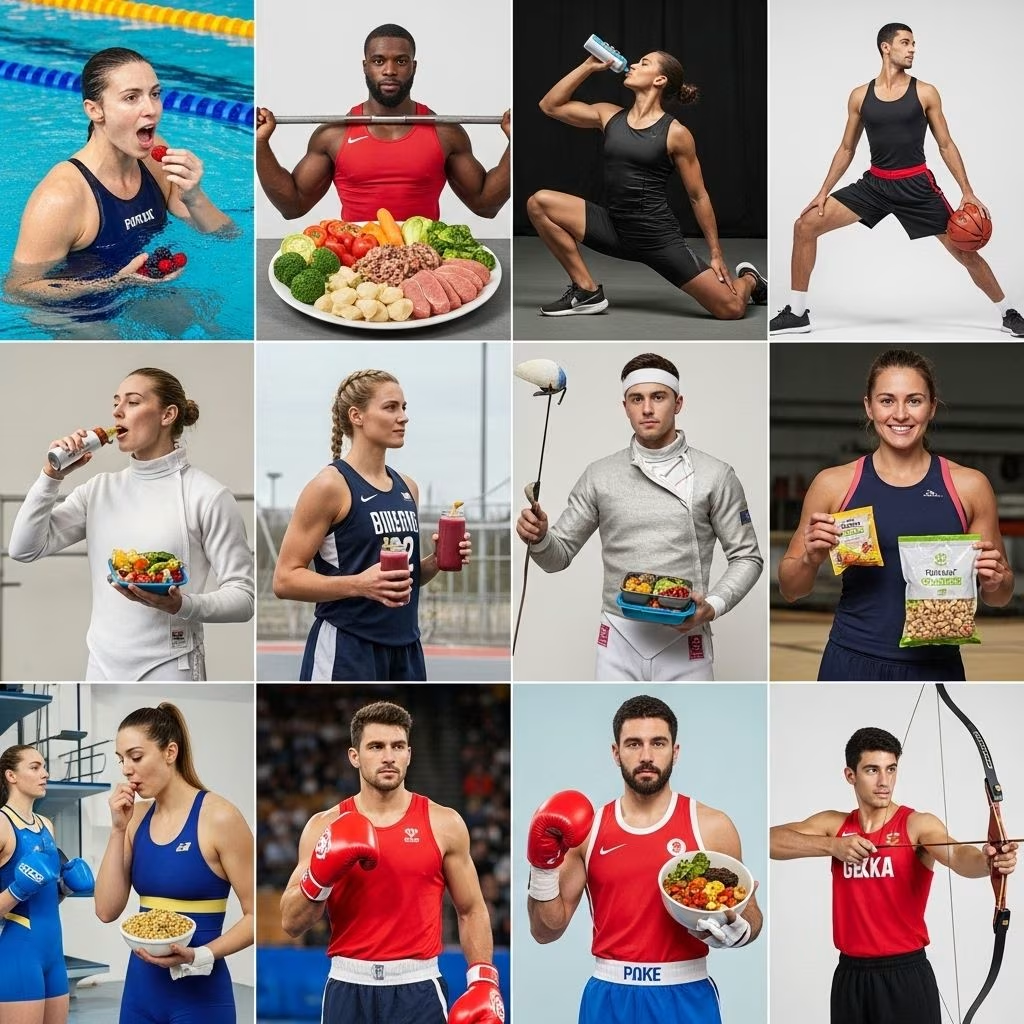
If you’ve ever wondered what fuels the world’s fastest runners, strongest swimmers, or fiercest competitors, you may be surprised by just how uncommon some Olympic nutrition plans are. Forget standard health advice—some athletes turn to raw veganism, others feast on fast food, and quite a few find comfort in quirky traditions to perform at their best.
Gold Medal Eats: The Stories Behind Unconventional Olympic Diets
The Olympics aren’t just a showcase of supreme athletic performance—they’re also a parade of the world’s most innovative, specific, and sometimes downright peculiar eating habits. With the stakes as high as Olympic glory, athletes will try almost anything to get an edge. Below, discover 12 Olympic athletes whose diets might surprise you—and the reasons behind the choices that power their training and competition.
Venus Williams: The Raw Vegan Advantage
Tennis superstar Venus Williams turned to a raw vegan diet after being diagnosed with Sjogren’s Syndrome, an autoimmune disorder. The raw vegan lifestyle excludes all animal products and processed foods, focusing on uncooked fruits, vegetables, nuts, and seeds.
- Favorite Foods: Green juices, sprout salads, lentils
- Why Raw? To help reduce inflammation and manage symptoms of her condition
This approach is challenging, especially for a top-performance athlete, but Venus credits it for helping her regain strength and energy. “It’s all about health for me now,” she’s declared, highlighting how tailored nutrition can be just as crucial as training.
Serena Williams: Sibling Solidarity with Plant-Based Choices
Serena Williams, sharing a home and close bond with her sister Venus, also adopted a largely raw, vegan-inspired diet—at least while at home. She chose to show solidarity and avoid tempting Venus with non-vegan fare. However, Serena says it’s not much of a stretch, admitting, “I’ve always been a better eater… even though I’m a lot thicker.” In competition season, Serena’s diet may vary, but the spirit of support remains a powerful motivator.
- Typical Meals: Plant-based dishes, green salads, fruit smoothies
- Motivation: Family health, supporting her sister’s commitment
Usain Bolt: Chicken Nuggets and Yams for the Fastest Man Alive
Eight-time Olympic gold medallist Usain Bolt became legendary not only for his sprinting, but also for his surprisingly simple diet at the 2008 Beijing Olympics: up to 100 chicken nuggets per day. Finding Chinese cuisine unfamiliar, Bolt stuck to what was available—and convenient—at the Olympic Village McDonald’s.
- Quirkiest Choice: Chicken nuggets, fries, yams
- Home Favorites: Yams were a dietary staple during his upbringing—his father called it the secret behind his speed
Bolt has shared that he’s not fond of vegetables, jokingly saying, “I’ll eat broccoli, but I’m not a big fan.” Still, his coach encouraged more greens to keep his nutrition balanced.
Nathan Brannen: Gluten-Free for Performance
To prevent injury and follow his coach’s guidance, Canadian middle-distance runner Nathan Brannen adopted a gluten-free diet. This diet eliminates wheat, barley, and rye, which can help athletes with sensitivities or those looking to reduce inflammation.
- Favorite Dinner: Spinach salad with strawberries, feta cheese, olive oil, and balsamic vinegar; quinoa; and protein (chicken, steak, or salmon)
- Goal: Improved recovery, better gut health, and reduced inflammation
Louis Smith: Gymnastic Adventures with Exotic Foods
British gymnast Louis Smith isn’t afraid of culinary adventure. Throughout his travels, he’s dabbled in everything from sliced sheep’s tongue in Ukraine to sheep’s testicles in France. Despite the global oddities, he enjoys a homemade roast duck with plum sauce.
- Unusual Eats: Sheep’s tongue, sheep’s testicles
- At Home: Prefers refined dishes like roast duck
Smith’s willingness to try anything earns him respect—and perhaps a slightly stronger stomach than his competition.
Ryan Lochte: From Fast Food to Refined Fueling
American swimmer Ryan Lochte was once famous for a McDonald’s-heavy diet, but preparation for the London Games saw him overhaul his plate. Lochte cut back on candy, soda, and fast food, opting instead for whole grains, lean proteins, and fruit.
- Previous Habits: McDonald’s almost every day
- Healthy Swaps: Heart-healthy alternatives, more fruits, fewer processed foods
Lochte still believes in the importance of tradition—he savors a weekly blue-cheese pizza and chicken wings as a lifelong Friday ritual.
Janet Evans: The Power of Fiber
Four-time Olympic swimming gold medalist Janet Evans is vigilant about her health, specifically heart disease risk. She relies on a morning dose of Metamucil—a fiber supplement—to keep her system regular, citing family history as her motivation.
- Health Focus: Fiber for digestive and heart health
- Risk: High doses can cause side effects (abdominal pain, headaches)
Evans hopes her disciplined regimen keeps her healthy for years to come, though she’s careful not to overdo it.
Ana Ivanovic: Simplicity and Consistency
Serbian tennis ace Ana Ivanovic believes in keeping things simple. Her diet focuses on lean proteins, vegetables, and hydration. Ivanovic avoids processed snacks and uses portion control, eating five to six small meals throughout the day to maintain energy levels and sustain her training intensity.
- Sample Meals: Chicken salads, whole grain toast, fresh fruit
- Philosophy: “Listen to your body and give it what it needs, not just what it wants.”
Kerri Walsh Jennings: Morning Rituals and Nutrient Focus
Beach volleyball champion Kerri Walsh Jennings starts her day with a strong nutritional base. Her breakfast typically includes whole eggs, whole wheat toast, and fruit. She tracks macronutrients closely to ensure her demanding training sessions are fully supported.
- Key Focus: Nutrient density, hydration, controlled protein intake
- Mindset: “Fuel up, play hard, recover right.”
Michael Phelps: Legendary Calorie Consumption
Though not exclusive to the Prevention article, no discussion of Olympic diets is complete without Michael Phelps. The American swimmer was known for his rumored 12,000 calorie-a-day meal plan during his peak training years, including stacks of pancakes, omelets, pizza, and pasta.
- Breakfast Example: Fried egg sandwiches, chocolate-chip pancakes, omelets, French toast, grits
- Purpose: Extreme energy demands for six-hour training days
Paul Biedermann: Pasta Power
German swimmer Paul Biedermann reportedly relies on carbo-loaded meals the night before a big race—often choosing Italian pasta to maximize his muscle glycogen stores for top performance.
- Race Prep: Pasta dishes for carbohydrate loading
Todd Rogers: Chocolate Milk Recovery
Beach volleyball gold medalist Todd Rogers swears by chocolate milk as a post-workout recovery drink. The combination of carbohydrates and protein in chocolate milk has been shown to help muscle repair and restore glycogen levels rapidly—making it a surprisingly practical and delicious choice.
- Favorite Recovery Drink: Chocolate milk
- Why: Balanced mix of protein and sugar for fast muscle recovery
Nick Symmonds: Beer as Ritual
American middle-distance runner Nick Symmonds incorporates a post-race beer as part of his celebration ritual. While not recommended as a recovery drink by most nutritionists, Symmonds claims it helps him relax and enjoy his hard-earned victories.
- Unique Ritual: Post-race beer
- Mental Benefit: Relaxation and a sense of reward
Comparing the Unique Diets of Olympic Athletes
| Athlete | Main Diet Quirk | Purpose/Philosophy |
|---|---|---|
| Venus Williams | Raw Vegan | Manage autoimmune disease, reduce inflammation |
| Serena Williams | Mostly Raw/Vegan | Support Venus and maintain healthy habits |
| Usain Bolt | Chicken Nuggets, Yams | Familiarity, convenience, tradition |
| Nathan Brannen | Gluten-Free | Injury prevention, improved recovery |
| Louis Smith | Adventurous Eating | Try new foods, exploring culture |
| Ryan Lochte | Fast Food (past), Healthier Swaps (now) | Tradition, performance optimization |
| Janet Evans | Metamucil supplement | Digestive health, family heart risk |
| Ana Ivanovic | Balanced, Simplified Meals | Consistency, portion control |
| Kerri Walsh Jennings | Macronutrient Tracking | Optimized training, recovery |
| Michael Phelps | Extremely High Calorie Intake | Meet extreme energy demands |
| Paul Biedermann | Carb Loading with Pasta | Maximize energy for races |
| Todd Rogers | Chocolate Milk Recovery | Muscle repair, glycogen restoration |
| Nick Symmonds | Post-race Beer | Mental unwinding, celebration |
Frequently Asked Questions (FAQs)
Q: Why do Olympic athletes sometimes eat such unusual foods?
A: Olympic athletes often experiment with unique diets for performance, tradition, health concerns, or even psychological comfort. These choices are frequently based on individual needs, their coaches’ guidance, or personal and cultural habits.
Q: Is it healthy to eat like an Olympic athlete?
A: Not necessarily. Elite athletes have very different energy and nutrient requirements compared to most people. Many of their odd-sounding habits are carefully balanced with their overall training and medical needs. Following such diets without professional supervision can be risky.
Q: Do fast food or processed foods ever really help athletes?
A: Most nutritionists recommend whole, nutrient-dense foods, but some athletes—like Usain Bolt or Ryan Lochte—have occasionally used fast food as a convenient or familiar option, especially when traveling. However, these choices are usually short-term and balanced with a generally healthier routine.
Q: What is carb-loading and why do athletes do it?
A: Carb-loading is the practice of increasing carbohydrate intake before intense events like distance racing to maximize muscle glycogen stores. It can enhance endurance and delay fatigue in competition.
Q: Are supplements like fiber or protein shakes necessary for high-level athletes?
A: Supplements can help elite athletes meet very high nutrient needs, but ideally most nutrition should come from food. The use of supplements is typically doctor- or dietitian-recommended and customized to each athlete’s training demands.
Key Takeaways: The Science and Rituals Behind Gold Medal Diets
- There’s no single “Olympic diet”—athletes tailor what they eat based on health needs, tradition, superstition, and convenience.
- From raw veganism to fast food binges, performance fueling can look very different depending on the athlete’s sport and physiology.
- Diet plays a critical role in recovery, injury prevention, and performance optimization at the elite level.
- What works for an Olympian’s body might not be healthy or helpful for everyday people.
While the eating habits of Olympic athletes can be as unique as their competitive strategies, they all share one thing: a relentless drive to find what works best for their minds and bodies. Sometimes, that means salads and green juices; other times, it’s chicken nuggets, chocolate milk, or even a post-race pint. Gold isn’t just won in the arena—it’s forged in the daily choices, big and small, that help athletes reach their full potential.
References
- https://www.rte.ie/brainstorm/2024/0716/1460111-olympic-games-athletes-diet-nutrition-usain-bolt-frank-omara-thomas-hicks-emil-zatopek/
- https://www.prevention.com/weight-loss/a20472362/12-olympics-athletes-on-weird-diets/
- https://www.womenshealthmag.com/uk/collective/long-reads/a61655767/what-olympians-really-eat/
- https://www.refinery29.com/en-us/olympian-diets
- https://www.latimes.com/food/sns-dailymeal-1868393-healthy-eating-olympic-athlete-diet-secrets-20180126-story.html


