


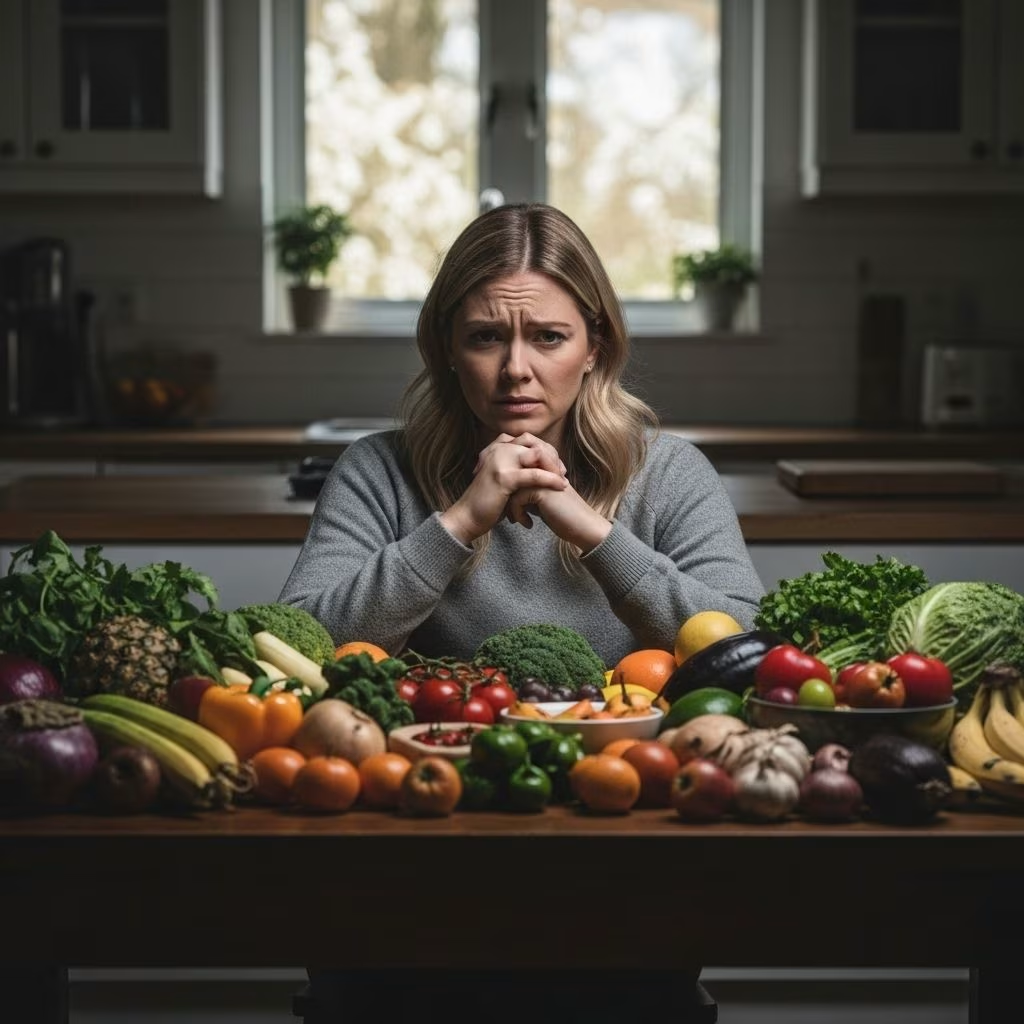
When Clean Eating Becomes an Obsession: The Journey of The Blonde Vegan
In the digital age, food bloggers inspire millions with their vibrant recipes and meticulous lifestyle routines. But what happens when the pursuit of purity and health morphs into a dangerous fixation? This is the true account of Jordan Younger, once widely known as “The Blonde Vegan,” who bravely revealed her struggle with an eating disorder exacerbated by the pressure to maintain an image of perfect, plant-based health.
The Rise of a Clean Eating Influencer
As a young woman passionate about wellness, Jordan Younger launched a blog advocating for plant-based, clean eating. Under the moniker The Blonde Vegan, her colorful bowls and positive mantras gained a devoted following. Readers looked to her as a shining example of vibrant health, vitality, and discipline.
- Her philosophy centered on eating only whole, unprocessed, and “clean” foods.
- She maintained a strict vegan diet, eschewing animal products and all traces of processed sugars, wheat, and oils.
- Younger published daily posts and even sold merchandise that celebrated her lifestyle with playful slogans.
For a time, her unwavering discipline provided an identity and purpose. However, beneath the posts and shiny lifestyle, an invisible struggle grew.
When Healthy Living Turns Unhealthy
Younger’s commitment to clean eating slowly evolved from a healthy lifestyle into a rigid set of rules that dictated every aspect of her life. What began with ethical veganism escalated to increasing restrictions: only raw foods, periods of juice-fasting, and eventually, eliminating entire groups of foods she once enjoyed.
- She found herself preoccupied with food choices throughout the day—planning meals, tracking ingredients, and scrutinizing restaurant menus.
- Family vacations became stressful, as she transported her own carefully packed food to maintain her diet.
- Younger spent nights thinking about what she would eat the next day, afraid of deviating from her self-imposed rules.
Physical symptoms emerged, signaling her body’s distress:
- Severe weight loss and low energy
- Orange-tinged skin from excessive consumption of beta-carotene-rich vegetables
- Hair thinning and loss of her menstrual cycle (amenorrhea)
Despite these warning signs, social media validation and an internal drive to embody “wellness” pushed her to suppress concerns. It wasn’t veganism, per se, that harmed her—it was the extremity of her obsession with dietary purity.
Orthorexia Nervosa: The Hidden Eating Disorder
When Younger consulted her family and later, health professionals, she discovered a diagnosis that was relatively new yet growing in prevalence: orthorexia nervosa. Unlike other eating disorders that often focus on the quantity of food or weight, orthorexia is characterized by an obsession with the quality and purity of food .
| Feature | Orthorexia | Traditional Eating Disorders |
|---|---|---|
| Focus | Food quality and purity | Food quantity, weight, appearance |
| Typical Behaviors | Elimination of ‘impure’ foods, rigid diets, anxiety over eating ‘unhealthy’ | Bingeing, purging, fasting, over-exercise |
| Mental Patterns | Obsessive thoughts about food healthfulness | Obsessive thoughts about body size and calories |
Orthorexia is a modern phenomenon, closely linked to contemporary diet culture and the growing popularity of “clean eating” or extreme wellness trends. Although it often masquerades as a commitment to health, it can be profoundly isolating and dangerous.
The Moment of Realization and Going Public
The pivotal moment arrived when another influencer confided in Younger about her own unhealthy fixation on food. Reflecting on her deteriorating health and faltering personal life, Younger finally acknowledged the truth: she suffered from an eating disorder.
- Coming forward required immense courage, especially from someone whose identity and income were tied to her public image.
- Younger wrote candidly about her struggle in a blog post, announcing that she would no longer adhere strictly to veganism for the sake of her health.
The response was swift and polarized. Some followers offered support and empathy. Others lashed out, accusing her of betrayal and hypocrisy. Nevertheless, honesty propelled her on a path to healing and deeper self-understanding.
The Social Media Dilemma: Influence and Responsibility
Younger’s story is emblematic of a broader problem in the age of social media: the blurring of wellness, image, and self-worth. As a wellness influencer, her own struggle reveals how online platforms can reinforce unhealthy behaviors:
- Validation Cycles: Constant praise for discipline and appearance can reinforce restrictive or obsessive behaviors.
- Fear of Disappointing Followers: For influencers, changing dietary habits or revealing struggles may feel like letting down a community.
- Perfection Pressure: Competing images of health and purity can cause anxiety, guilt, or shame over eating “imperfect” foods.
Ultimately, Younger’s willingness to speak out shifted the dialogue, encouraging authenticity and vulnerability in a landscape often polished to perfection.
The Backlash and the Conversation around Veganism
After she publicly left veganism behind, Younger experienced severe backlash from segments of the plant-based community. She received criticism, accusations, and personal attacks. The controversy highlighted complex intersections between:
- Ethical reasons for veganism (animal rights, environmentalism)
- Personal health needs and medical advice
- The tendency to equate dietary strictness with moral virtue or worth
Younger and experts point out that veganism in itself is not harmful. Instead, risk emerges when motivations for dietary choices are entangled with mental health issues or when restrictive patterns mask deeper struggles. Individuals and clinicians often face challenges in distinguishing between true ethical convictions and disordered eating patterns .
What Are the Warning Signs of Orthorexia?
- An ever-increasing list of forbidden foods, beyond medical necessity
- Extreme anxiety or guilt after eating “unapproved” foods
- Social withdrawal due to fear of being unable to control food choices
- Physical symptoms of malnutrition, despite eating “healthy” foods
Experts advise asking yourself: Are your food rules interfering with relationships, work, or enjoyment of life? If dietary habits become isolating or all-consuming, it may signal a deeper problem requiring attention .
Expert Insights: Balancing Wellness and Mental Health
Modern eating disorders aren’t only about thinness; they can masquerade as a quest for health, discipline, or environmental ethics. Dr. David Baron, a psychiatrist specializing in eating and exercise disorders, notes that orthorexia is characterized by thought patterns mirroring those found in obsessive-compulsive disorder:
- Obsessional thinking around food and health
- Inability to relax rules, despite negative consequences
- Using food as a way to exert control over anxiety, uncertainty, or self-esteem
Recovery requires reframing food: not as a measure of worth, but as nourishment and a source of joy. This includes diversifying one’s diet, reintroducing once-forbidden foods, and seeking support when anxiety or rigid behaviors persist.
Jordan Younger’s Recovery: A New Relationship with Food
With the guidance of therapists and nutritionists, Younger embarked on a journey to rediscover balance. She gradually expanded her diet, reintroducing foods—including fish and meat—that she once strictly avoided. Most importantly, she worked to rebuild a healthier relationship with food and her own body.
- She now values feeling nourished and energized over conforming to an ideal.
- Her platforms shifted to discuss mental health, authenticity, and self-compassion.
- Followers appreciated her honesty, and she became an advocate for eating disorder awareness and recovery.
Lessons for the Wellness Community and Beyond
Younger’s story offers critical lessons:
- Perfect eating is not perfect health. Overly restrictive diets can backfire, leading to mental and physical imbalance.
- Authenticity is more powerful than appearance. Sharing struggles can foster community and healing.
- Food should fuel, not imprison. A truly healthy lifestyle honors both physical nourishment and mental wellbeing.
If you suspect that your or a loved one’s focus on food has become unhealthy, reaching out to a medical professional or an eating disorder specialist is crucial.
Frequently Asked Questions (FAQs)
Q: What is orthorexia?
A: Orthorexia is an eating disorder marked by an obsessive focus on eating foods one considers healthy and the strict avoidance of foods deemed “unhealthy” or “impure.” Unlike other eating disorders, the preoccupation is largely with food quality rather than quantity.
Q: Can veganism cause eating disorders?
A: Veganism itself does not cause eating disorders. However, for some individuals, restrictive diets like veganism can become intertwined with disordered eating patterns, particularly if underlying mental health challenges exist.
Q: What are the signs that healthy eating has become too extreme?
A: Warning signs include constant anxiety about food choices, rigid or increasingly restrictive rules, guilt after eating certain foods, and social isolation due to dietary limitations.
Q: How can someone seek help if they suspect orthorexia?
A: It is vital to contact a mental health professional, therapist, or eating disorder specialist. Early intervention and open discussion can significantly improve outcomes.
Q: How can influencers foster a healthier dialogue around wellness?
A: By sharing both their triumphs and struggles honestly, emphasizing self-care over perfection, and supporting followers in pursuing health holistically—mind and body together.
Final Thoughts: Reclaiming Balance in the Age of Extremes
Jordan Younger’s experience stands as a reminder that even the pursuit of health can turn harmful when it eclipses self-compassion and flexibility. Her transition from The Blonde Vegan to an advocate for balanced living urges us all to question not just what we eat, but how we relate to food, ourselves, and one another in an era captivated by extremes.
References
- https://pmc.ncbi.nlm.nih.gov/articles/PMC9074139/
- https://www.elle.com/culture/travel-food/a31411/feeding-frenzy/
- https://abc7.com/post/blogger-speaks-out-about-orthorexia-eating-disorder/505708/
- https://www.eatingdisorderhope.com/treatment-for-eating-disorders/eating-disorder-hotlines
- https://www.refinery29.com/en-us/jordan-younger-vegan-orthorexia
- https://fairwindstreatment.com/popular-vegan-blogger-tells-fans-she-has-eating-disorder/
- https://www.healthyeatingandliving.ca/post/orthorexia-and-the-blonde-vegan
- https://www.beateatingdisorders.org.uk/about-beat/policy-work/treating-vegan-patients-with-eating-disorders/


