


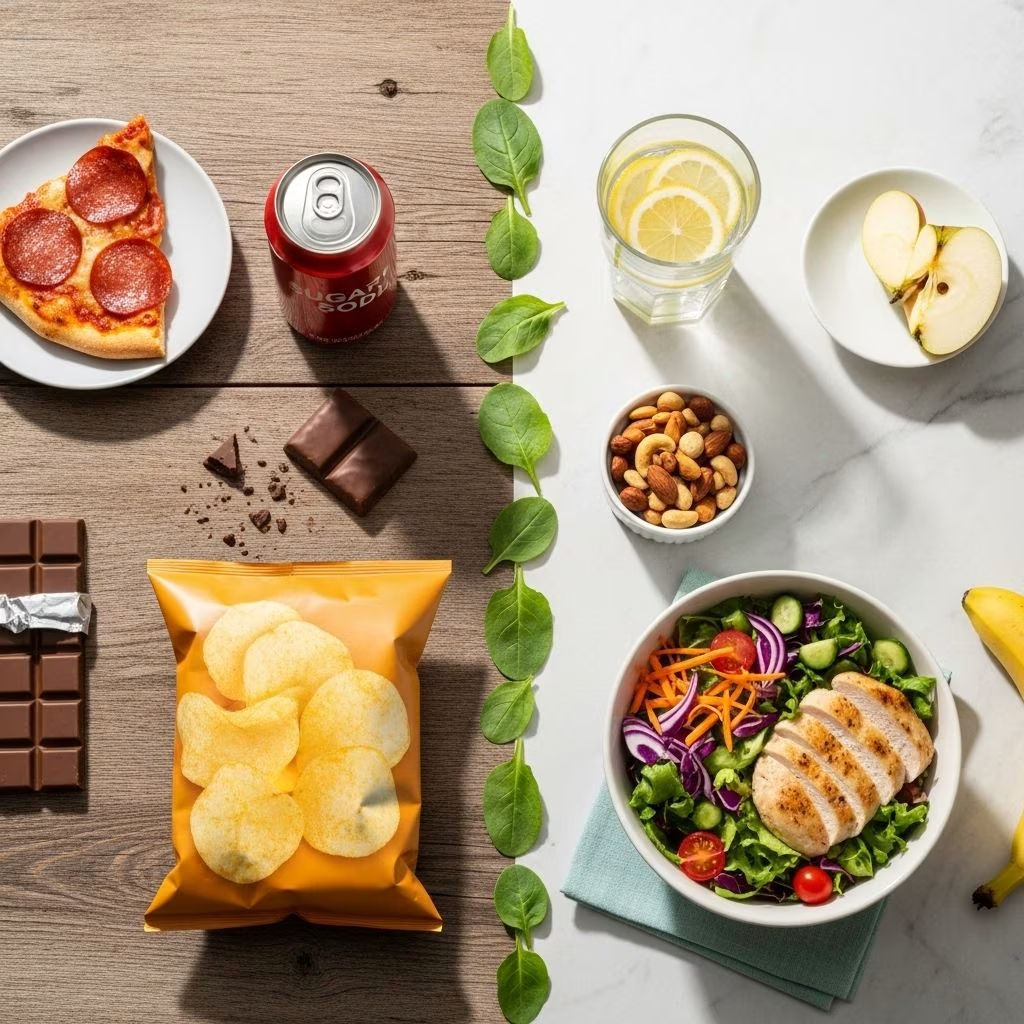
Smart Food Swaps to Lose One Pound Per Week
Losing weight doesn’t have to mean counting every calorie or depriving yourself of great-tasting food. In fact, making a few targeted food swaps each day can help you cut 500 calories—enough to lose about one pound per week—without dramatically changing your lifestyle. This guide details practical, research-backed swap strategies that simplify healthy eating, support weight loss, and maximize nutrition.
How Small Changes Can Yield Big Results
Most successful weight loss plans focus not on drastic restrictions but on sustainable tweaks. By swapping higher-calorie foods for lower-calorie alternatives, you benefit from reduced calorie intake, improved nutritional quality, and often lower cost. Many of these alternatives feature heart-healthy fats, whole grains, and naturally filling fiber—all key for curbing hunger and supporting healthy metabolism.
- Swap processed snacks for fresh produce to cut empty calories and gain essential vitamins.
- Replace sugar-laden beverages with lighter drinks to significantly reduce daily sugar and calorie consumption.
- Choose reduced-fat dairy and lean proteins for fullness and muscle health.
53 Satisfying Food Swaps for Weight Loss
The foundation of this approach is to swap out calorie-dense options for lighter, nutrient-rich foods. The following swaps, grouped by category, show you how easy it can be to cut calories without sacrificing flavor or satisfaction.
Beverage Swaps
| Instead Of… | Choose… | Calories Saved |
|---|---|---|
| 16 oz latte | 12 oz latte with fat-free milk | 120 |
| 16 oz soda | Water with lemon | 180 |
| 16 oz Iced Mocha Frappuccino | 16 oz iced coffee with fat-free milk | 270 |
| Iced tea with 2 tsp sugar & lemon | Iced tea with fresh citrus (no added sugar) | 30 |
| 1 cup fruit juice | ½ cup juice, ½ cup sparkling water | 60 |
| 4 oz wine | 2 oz wine + 2 oz sparkling water | 50 |
| 16 oz beer | 12 oz light beer | 100 |
| 12 oz coffee with 2 tbsp cream | 12 oz coffee with ¼ cup fat-free milk | 20 |
Why it works: Beverage calories add up quickly. Switching to lower-calorie drinks not only decreases your sugar intake but also aids hydration and digestion.
Dairy & Eggs Swaps
| Instead Of… | Choose… | Calories Saved |
|---|---|---|
| ¼ cup Cheddar cheese | 1 tbsp Parmesan cheese | 90 |
| ½ cup whole mozzarella | ½ cup reduced-fat mozzarella | 85 |
| ½ cup cottage cheese | ½ cup 1% fat cottage cheese | 35 |
| 8 oz 2% milk | 8 oz fat-free milk | 50 |
| 2 large eggs | 3 large egg whites | 95 |
| ½ cup whole milk ricotta | ½ cup part-skim ricotta | 45 |
Tip: Reduced-fat dairy maintains taste and mouthfeel with far fewer calories. Egg whites deliver all the protein, minus cholesterol and fat.
Snack Swaps
- Pita chips — Try swapping for bell pepper strips. Bell peppers provide crunch, filling fiber, and vitamin C with virtually no fat or excess calories.
Result: Save about 100 calories per cup of bell pepper strips vs. pita chips, plus $2 per swap. - Bagged popcorn — Choose air-popped kernels instead. Air-popped popcorn has only 30 calories per cup compared to 65 for bagged, and lets you control salt and fat.
Result: Eat twice as much for the same calories and save $3.25 per swap. - Granola bars — Instead, opt for unsalted nuts or homemade nut bars. They’ll keep you fuller longer thanks to higher protein and healthy fats.
- Chips and crackers — Swap for raw veggies with hummus for crunch, nutrition, and satiety without the empty processed carbs.
Produce Swaps
- Pre-cut produce — Buy whole fruits and vegetables instead. Whole produce is fresher, tastier, and often packs more nutrients (like vitamin C) than pre-cut versions. It also saves money: whole pineapple costs up to eight times less than pre-cut.
Result: Save up to $20 per month by doing your own prep. - Frozen veggies — Choose fresh seasonal produce when available for flavor and nutrition.
Protein & Entree Swaps
- Fatty red meats — Swap for grilled chicken breast, turkey, or plant proteins (such as beans). These proteins are lower in saturated fat, rich in nutrients, and typically much less calorie-dense.
- Sandwich meats and cheeses — Replace with smashed avocado, roasted vegetables, or lean proteins for added fiber and healthy fats.
- White bread — Choose whole grain bread to boost fiber and maintain fullness.
How Processed Foods Sabotage Your Goals
A study comparing minimally processed vs. ultra-processed diets revealed that participants on whole food diets (fresh veggies, proteins, grains) lost twice as much weight and saw more body fat reduction over eight weeks. This underscores the role of food quality—choosing whole, less-processed items delivers better results than merely counting calories.
- Whole foods offer sustained energy due to slower digestion.
- Ultra-processed foods trigger overeating and disrupt fullness cues.
Practical Shopping and Prep Strategies
It’s not just about what you eat—it’s also how you shop and prepare food. These cost-saving, health-boosting tactics make swaps simple and sustainable:
- Plan meals in advance to minimize impulse buys.
- Batch cook proteins and grains on weekends for easy mixing-and-matching during busy weeks.
- Invest in a reusable water bottle to cut beverage costs and boost hydration.
- Swap pre-packaged snacks for DIY versions like homemade trail mix or fruit cups.
- Eat slowly and mindfully to recognize fullness and avoid overeating.
Cost Savings at a Glance
Making swaps isn’t just good for your waistline—it’s great for your wallet. For example:
- Bell pepper strips vs. pita chips: Save $2 per swap, or $8 per month.
- Air-popped popcorn vs. bagged popcorn: Save $3.25 per swap, or $13 per month.
- Whole produce vs. pre-cut: Save $1–8 per swap, for up to $20 per month.
Portion Control: Why Less is Sometimes More
Portion size also impacts calorie intake. Swaps to smaller servings of calorie-dense foods—combined with larger portions of low-calorie vegetables—mean you still feel satisfied while trimming your daily total.
- Cheese portions: Use a sprinkle of sharp Parmesan instead of a ¼ cup of Cheddar.
- Wine and juice: Cut with sparkling water for dilution and satisfaction.
Meal Replacements: Bars and Shakes
Meal replacement bars and shakes offer controlled portions and can be a smart choice in a pinch. Look for products with at least 3g fiber, 10g protein, and 3g or less saturated fat.
- As a meal: Pair with a fruit or salad for volume without excess calories.
- As a snack: If you have a high-calorie bar between meals, reduce your dinner size accordingly.
Making the Most of Your Daily Choices
Weight loss isn’t just about isolated swaps—it’s the cumulative effect of many small decisions:
- Write down everything you eat in a food diary to spot habits and hidden calories.
- Hydrate often with water, sparkling water, or unsweetened herbal teas.
- Eat more whole foods: fruits, vegetables, whole grains, lean proteins, and legumes.
Commonly Asked Questions (FAQs)
Q: What’s the fastest way to reduce calorie intake for weight loss?
A: Focus on beverage swaps and eliminating sugary, high-fat snacks. Simple changes like choosing water or unsweetened tea, and eating raw veggies can quickly cut significant calories.
Q: Will swapping for lower-fat versions compromise satisfaction?
A: Most people find that lower-fat versions retain much of the taste and texture while eliminating excess calories and saturated fats. Combining with fiber-rich foods also maintains feelings of fullness.
Q: How do I prevent food waste if buying whole produce?
A: Plan meals ahead, prep and portion fruits and veggies as soon as you get home, and use leftovers creatively (e.g., homemade soups, stir-fries, or roasted snacks).
Q: Are minimally processed diets better than calorie counting?
A: Studies show that focusing on whole, minimally processed foods—not just calories—leads to more sustainable weight and fat loss.
Conclusion: Your Path to Sustainable Weight Loss
Making thoughtful food swaps is a simple, sustainable path to losing weight, saving money, and nourishing your body. Each smarter choice brings you closer to your health goals, whether it’s trimming your waistline, flattening your belly, or simply feeling better every day. Build these swaps and strategies into your routine—and watch the pounds come off, one week at a time.
References
- https://www.prevention.com/weight-loss/a20456544/grocery-swaps-for-weight-loss/
- https://www.prevention.com/weight-loss/a20429152/eat-for-a-slim-belly/
- https://www.prevention.com/weight-loss/a20465900/weight-loss-programs-diet-tips/
- https://www.prevention.com/food-nutrition/healthy-eating/a65664887/ultra-processed-foods-weight-loss-gut-health-study/
- https://www.prevention.com/weight-loss/g20454584/prevent-summer-weight-gain/
- https://www.prevention.com/weight-loss/a20449716/food-swaps-to-cut-calories/
- https://www.prevention.com/weight-loss/a20473550/weight-loss-tips-for-people-who-dont-cook/
- https://www.prevention.com/weight-loss/a20501539/how-to-maintain-weight-loss/
- https://www.prevention.com/food-nutrition/g20428211/25-ridiculously-low-calorie-foods/


