


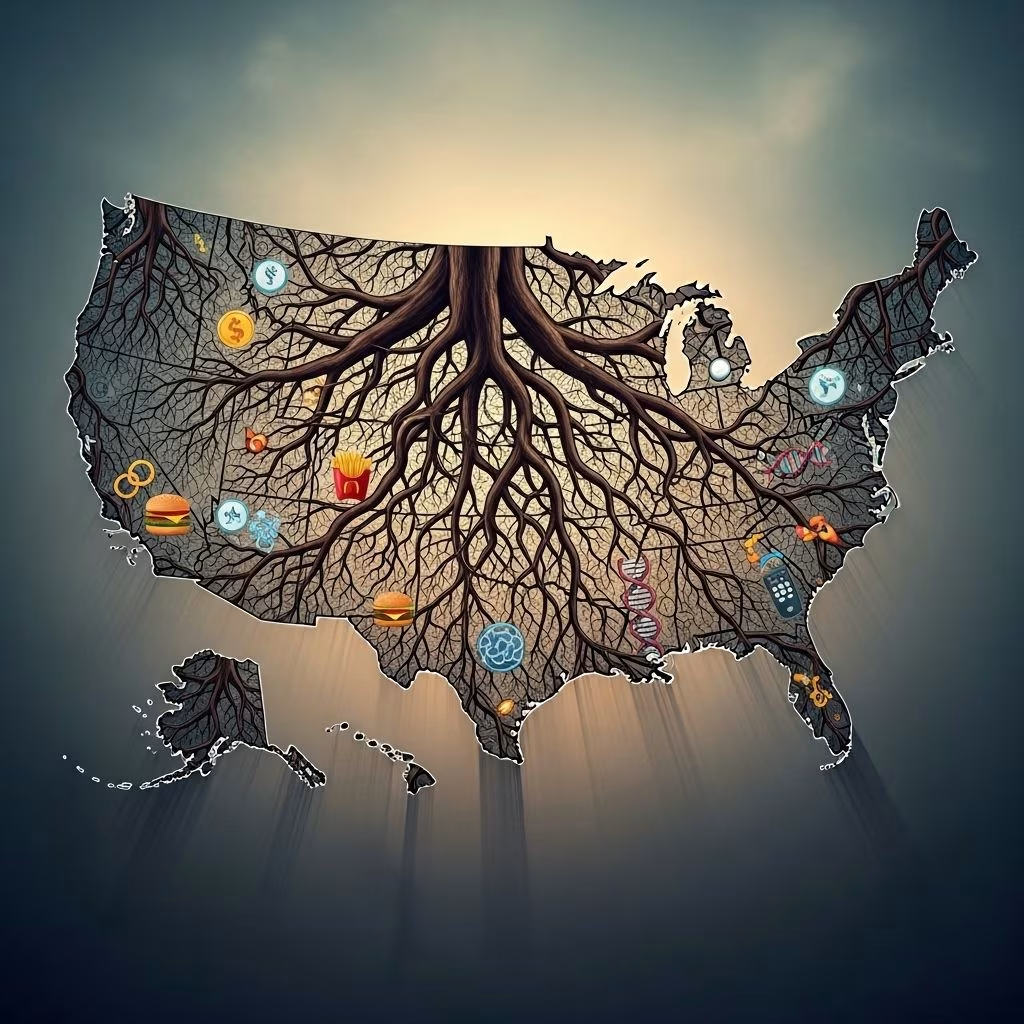
Obesity in America: How We Got So Fat
The United States faces an unprecedented public health crisis as rates of overweight and obesity continue to climb across all age groups and demographics. Nearly three-quarters of adults are now considered overweight or have obesity, with obesity rates projected to rise well into the future. To understand this epidemic, we must delve into the history, causes, and potential solutions shaping America’s battle with weight gain.
The Scale of the Problem: Escalating Obesity Rates
Recent research paints a stark picture:
- Nearly 75% of U.S. adults are overweight or have obesity, up from just over half in the 1990s.
- Obesity prevalence: 40.3% among adults from 2021–2023, with severe obesity (BMI ≥ 40) at 9.4%.
- By 2050, forecasts suggest 64% of all Americans will have overweight or obesity, including dramatic rises among children and adolescents.
- The South and Midwest show particularly high rates, with states like Mississippi, Oklahoma, and North Dakota especially affected.
| Group | Obesity (%) | Overweight + Obesity (%) |
|---|---|---|
| Children | 22.6 | 45.1 |
| Adolescents | 34.2 | 57.3 |
| Adult Men | 55.3 | 81.1 |
| Adult Women | 58.8 | 82.1 |
The Evolution of American Obesity: From Rarity to Norm
Obesity, once a relatively rare condition, has become synonymous with modern American life. In the early 20th century, thinness was often considered the ideal and obesity was unusual. Today, heavier bodies are the norm, shaped by changes in lifestyle, environment, and attitudes toward food and physical activity.
The Shift in Perspective: Disease, Not Just Choices
Expert understanding has shifted dramatically in recent decades. Once blamed solely on personal choice—overeating and lack of exercise—obesity is now recognized as a complex, chronic disease. It is driven by a web of genetic, hormonal, environmental, and cultural factors. This new perspective brings urgency and nuance to public health debates.
Why Is America Getting So Fat?
The roots of the obesity epidemic are deep and intertwined. While weight gain can be attributed to calorie imbalance—consuming more than is burned—it is the underlying causes that set America apart. Key drivers include:
- Sedentary lifestyles: Technology and urbanization have led to more screen time, both for adults and children, reducing time spent on physical activity.
- Food environment: The rise of processed, calorie-dense foods has made it easier to overeat. Portion sizes are larger than ever, and unhealthy foods are more affordable and accessible than fresh, nutritious alternatives.
- Economic factors: Lower-income families are more likely to live in “food deserts,” with limited access to healthy options, driving reliance on cheaper convenience and fast foods.
- Cultural shifts: Busy American lifestyles often prioritize convenience over nutrition. Meals are increasingly eaten on the run—often alone—versus the traditional family dinner.
- Genetic susceptibility: Some people may be genetically predisposed to gain more weight in modern environments, though genes alone cannot explain rapid rises.
The Role of the Food Industry
American agribusiness and food manufacturers have fundamentally altered diets through mass production, aggressive marketing, and formulation of foods designed for craveability.
- Portion size inflation: Restaurant meals and packaged foods have grown dramatically in size across recent decades, contributing to higher caloric intake.
- Ultra-processed foods: Foods rich in refined grains, sugars, and unhealthy fats are cheaper and more readily available than ever, often engineered to be hyper-palatable.
- Marketing to children: Junk food advertising targets younger consumers, shaping preferences from an early age and influencing lifelong habits.
- Economic incentives: Subsidies and market structures favor mass production of corn, soy, and processed ingredients over fruits and vegetables.
Societal and Structural Drivers
Obesity rates don’t exist in a vacuum; instead, they are shaped by broad systems and policies. Researchers drive home the need for a “whole-of-government” approach targeting:
- Urban planning that encourages physical activity—walking, biking, green spaces—over car-dependence.
- Legislative reforms to improve food labeling, restrict unhealthy food marketing (especially to children), and tax sugary beverages.
- Strategies to fight food insecurity: Ensuring households—especially disadvantaged ones—can afford and access healthy food.
| Driver | Impact |
|---|---|
| Built Environment | Determines accessibility for walking, exercise |
| Food Policy | Regulates manufacturing, marketing, and distribution |
| Economic Inequality | Limits healthy choices for low-income families |
| Education | Lower obesity prevalence in those with higher education |
Regional Trends: Obesity Hotspots
Obesity rates are not uniform across the nation. Disparities persist at the state and local levels:
- Southern states (Mississippi, Alabama, Arkansas, Kentucky, West Virginia) have the highest prevalence, reflecting economic, educational, and cultural divides.
- Midwest states like North Dakota and Oklahoma also show elevated adult obesity rates.
- Rising youth obesity: Adolescents in Utah and adults in Colorado are expected to see rapid increases.
- Women vs. men: Obesity rates are generally higher among women, with severe obesity affecting women almost twice as often as men.
Health Consequences of Obesity
Obesity brings a cascade of health risks and costs:
- Chronic conditions: Hypertension, type 2 diabetes, coronary heart disease, stroke, and certain cancers occur more frequently in people with excess weight.
- Mental health: Obesity is linked to depression, anxiety, and social isolation.
- Economic burden: From medical costs to lost productivity, obesity is estimated to cost billions each year in direct and indirect expenses.
Fighting Obesity: Solutions That Go Beyond Willpower
Given the complexity of causes, fighting obesity requires comprehensive measures:
- Environmentally focused policies: Taxing sugary beverages, limiting junk food advertising, and subsidizing fruits and vegetables can shift consumption habits affordably.
- Community action: Programs that encourage physical activity, improve access to healthy food, and reduce inequality show promise.
- Medical treatments: Antiobesity medications and bariatric surgery are evolving, but their long-term benefits and accessibility remain under study.
- Education and behavior: Nutrition education, counseling, and sustained lifestyle support are keys to prevention and maintenance.
Policy Failures and the Call for Reform
Researchers highlight that existing policies have not addressed America’s obesity crisis effectively. Without major reforms, disease burden and economic costs will continue to escalate.
- Legislative changes to increase access to healthy foods.
- Stronger regulations on food industry practices.
- Greater investment in community health infrastructure.
Frequently Asked Questions (FAQs)
Q: What is the difference between overweight and obesity?
A: Overweight is defined as a BMI over 25, while obesity is a BMI over 30.
Q: Why are obesity rates higher in some states?
A: Socioeconomic factors, local food environments, cultural preferences, and differences in legislation all contribute.
Q: Is obesity only a result of lifestyle choices?
A: No. Genetics, hormones, the built environment, economic status, and broader policy decisions play major roles.
Q: Are children and teens affected by the obesity epidemic?
A: Yes. Rates of childhood and adolescent obesity are rising rapidly, particularly among girls and in southern states.
Q: What can individuals do to reduce their risk?
A: Focus on regular physical activity, balanced nutrition emphasizing whole foods, and limit intake of highly processed and sugary foods. Community and policy changes can make healthier choices easier to access.
Key Takeaways
- America’s obesity epidemic is multifaceted, driven by intertwined social, economic, biological, and environmental forces.
- Without significant intervention, over three-fifths of Americans will have overweight or obesity by 2050.
- Policy, education, and community health approaches are essential to stem the tide.
Sources
- American Journal of Managed Care (AJMC), “Overweight, Obesity to Affect 64% of Americans by 2050”
- Henry Ford Health, “American Obesity Rates Are Increasing”
- Centers for Disease Control and Prevention (CDC), “Obesity and Severe Obesity Prevalence in Adults”
- American Society for Metabolic and Bariatric Surgery, “Obesity in America Fact Sheet”
References
- https://www.ajmc.com/view/overweight-obesity-to-affect-64-of-americans-by-2050
- https://www.henryford.com/blog/2025/02/american-obesity-rates-are-increasing
- https://www.cdc.gov/nchs/products/databriefs/db508.htm
- https://asmbs.org/wp-content/uploads/2025/06/ObesityDisease2025.pdf
- https://www.who.int/news-room/fact-sheets/detail/obesity-and-overweight
- http://www.ers.usda.gov/amber-waves/2025/august/us-obesity-rate-changes-differ-for-rural-and-urban-areas-as-well-as-across-regions
- https://epicresearch.org/articles/after-a-decade-of-increase-obesity-and-severe-obesity-have-trended-back-down
- https://www.worldobesity.org/news/world-obesity-atlas-2025-majority-of-countries-unprepared-for-rising-obesity-level
- https://www.niddk.nih.gov/health-information/health-statistics/overweight-obesity
- https://www.healthdata.org/news-events/newsroom/news-releases/lancet-more-half-adults-and-third-children-and-adolescents


