


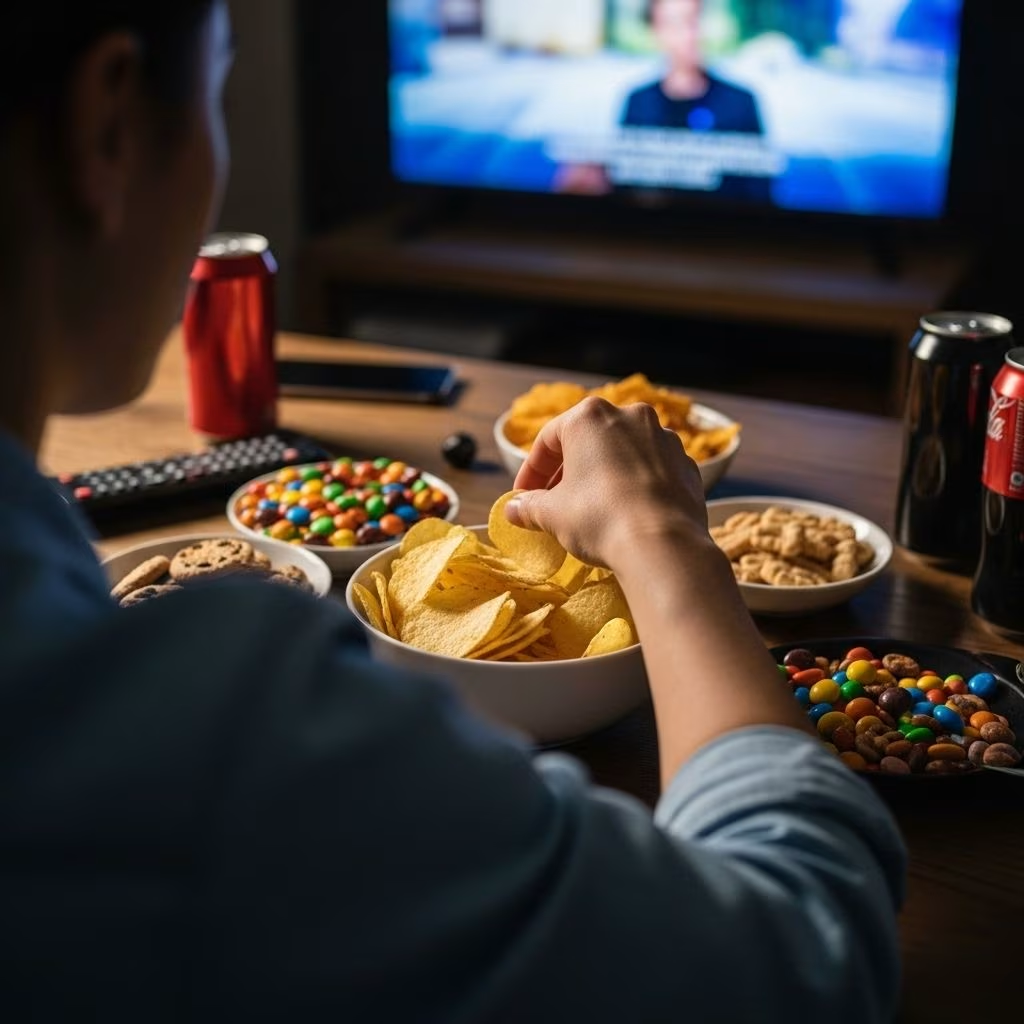
Mindless Eating: How Unconscious Habits Influence Your Diet
Many people believe that controlling their diet is a matter of willpower, but emerging research shows our food choices are influenced far more by our environment, ingrained habits, and subtle cues than we realize. The concept of mindless eating explores how we often eat unconsciously, driven by factors far beyond hunger. Understanding these hidden influences offers a powerful way to regain control, achieve a healthier weight, and develop a more positive relationship with food.
What Is Mindless Eating?
Mindless eating refers to the automatic, unconscious consumption of food that occurs when we’re distracted, influenced by environmental cues, or simply unaware of how much we’re eating. According to Brian Wansink, PhD, author of Mindless Eating and director of Cornell University’s Food and Brand Lab, we make over 200 food-related decisions each day — but we’re only aware of a tiny fraction. The rest happen beneath our conscious awareness, making us vulnerable to overeating and making unhealthy choices without realizing why .
The Hidden Cues That Drive Overeating
Our eating behaviors are shaped by a complex interplay of environmental signals, psychological triggers, and physiological responses. Below are some of the most important cues that drive mindless eating, along with practical strategies to counteract their effects.
1. Visual Reminders and the Power of ‘Leftovers’
One of the most reliable ways to eat less is to keep visual evidence of what you’ve already consumed. In a Cornell University study, graduate students who attended a free chicken-wing buffet ate 28% less when their used plates and bones remained on the table, compared to those whose tables were continuously cleared. The presence of leftovers acted as a subconscious reminder of fullness, while the absence led many to overeat, believing they were still hungry .
- Leaving empty glasses or dirty dishes visible provides a direct cue to your brain about how much you’ve eaten.
- This subtle reminder helps align your perception of hunger with your actual intake.
- Cleared or bused tables, in contrast, remove this accountability and can lead you to eat more.
2. Plate and Bowl Size: The Illusion of Portions
The size and shape of your plates and bowls can strongly impact how much you eat. Larger plates and bowls create an optical illusion that makes servings appear smaller, prompting you to serve and consume more food to fill the perceived gap.
- Large plates: Encourage oversized servings. People typically eat more when their dishes are larger because the same portion looks less substantial.
- Small plates: Naturally limit portions. Using smaller dishes tricks your brain into feeling satisfied with less food.
This visual illusion extends to drinks as well: tall, narrow glasses lead people to pour (and drink) less than short, wide ones. Adjusting your dishware is a simple, sustainable strategy to reduce calorie intake without feeling deprived .
3. Buffet and Serving Style: The Danger of Endless Refills
Buffets, shared dishes, and family-style meals can encourage overindulgence by providing constant, easy access to food. When participants in a study ate soup from bottomless bowls that were secretly refilled as they ate, they consumed 73% more soup than those with standard bowls, yet they did not feel any fuller or perceive that they had eaten more calories .
- Continuous access leads to ‘just one more bite’ behavior.
- Visual cues, such as an empty plate, are removed, making it harder to judge fullness.
Tip:
- Pre-plate your meals. Serve food onto a plate or bowl before starting, and avoid eating directly from large containers or serving dishes.
4. The Mindless Margin: Tiny Changes, Big Impact
Wansink describes the concept of the mindless margin: the few hundred calories we can eat extra (or cut out) each day without noticing, which ultimately determine weight gain or loss over the long term . Eating just 100–200 calories more or less each day might seem trivial, but over a year, it can mean the difference between weight gain and steady weight maintenance.
- Small, unnoticed changes in eating habits add up over time.
- Focus on consistency and sustainability, not drastic diet overhauls.
5. The Impact of Variety: How Choice Drives Consumption
Having a wide variety of flavors, colors, and textures at a meal can push people to eat more. This phenomenon, known as sensory-specific satiety, means that you get bored with one flavor and eat more when there are new stimuli to explore. Research shows that simply offering more types of snack foods can increase consumption by up to 23% .
- Dessert buffets, mixed candy bowls, or appetizer spreads naturally encourage sampling and overeating.
- When possible, limit the array of snacks and focus on wholesome, less processed foods.
6. Visibility and Accessibility: Out of Sight, Out of Mind
The foods we keep visible and easy to access are the ones we’re most likely to eat. A study giving secretaries Hershey’s Kisses in clear versus opaque containers found that those with visible candy ate 71% more — about 77 extra calories per day .
- Keep sweets, chips, and high-calorie snacks out of sight (and ideally out of the house).
- Display fresh fruit, nuts, and other healthy options in clear sight for easier, healthier snacking.
The Influence of Packaging and Labels
Packaging size, labeling, and branding can all trick our brains into eating more. Larger packages and ‘health halo’ phrases (like ‘low-fat’ or ‘organic’) promote overconsumption by making us feel less guilty about taking extra portions .
- Larger packages or economy sizes: Encourage us to pour larger portions and lose track of how much we’ve eaten.
- Misleading labels: Foods labeled ‘fat-free’ or ‘healthy’ can lead to overeating because of a false sense of permission.
- Famous brands: Influence our perception of taste and quality, sometimes making us ignore nutritional value.
The Social Side of Mindless Eating
Our eating companions and social context have a dramatic effect on our food intake. People tend to eat more in groups and family gatherings, partly because meals last longer and social norms encourage matching the eating pace of those around us .
- Eating with others can extend mealtime, leading to increased consumption.
- We often adopt others’ eating habits without realizing — for example, mirroring a friend’s portion size or snack frequency.
- Social occasions, like parties and celebrations, abound with high-calorie options and unmonitored eating.
Simple Strategies to Outsmart Mindless Eating
While it’s impossible to avoid all environmental cues, there are effective, science-backed ways to take back control:
- Use smaller plates and bowls to naturally reduce portion size.
- Pre-plate meals — serve food away from the table, returning seconds only for fruits or vegetables.
- Keep tempting foods out of sight and healthy options visible and easy to grab.
- Limit food variety at snacks and dessert; establish healthy defaults for meals.
- Eat only at the table and set distinct rules (e.g., no eating while watching TV or on the go).
- Slow down eating pace by putting the fork down between bites and savoring flavors mindfully.
- Pay attention to packaging and be skeptical of health claims on labels — check the nutrition facts instead.
Comfort Foods: The Hidden Drivers of Cravings
Comfort foods — typically high in sugar, fat, and salt — have unique power to trigger mindless eating. This powerful flavor trio is rarely found in nature but is common in processed foods. Their combination is engineered to be ‘hyper-palatable,’ making it easy to overeat without noticing .
- Cravings for comfort food often arise in response to emotional cues such as stress, sadness, or nostalgia.
- Recognizing these triggers can help you break the automatic cycle and make more conscious choices.
The Role of Habit: Engineering Your Environment for Success
Our eating habits are largely shaped by our environment, but small, intentional changes can produce lasting results. Wansink recommends reengineering your environment for success, emphasizing that subtle nudges — not drastic overhauls — are the most effective path to healthier living .
- Arrange your kitchen so healthy foods are the easiest to access.
- Buy single-serving packages of snacks, or portion them immediately into small containers to avoid accidental overeating.
- Store high-calorie foods in hard-to-reach places, such as the back of the pantry or top shelves.
- Develop mindful eating scripts (such as eating only at the table or not eating after a certain hour).
Mindless vs. Mindful Eating: Key Differences
| Mindless Eating | Mindful Eating |
|---|---|
| Eating while distracted (TV, smartphone) | Focusing fully on the meal and flavors |
| Large portions, no portion control | Smaller portions, served intentionally |
| Frequent snacking from packages | Eating only at designated times and places |
| Ignoring satiety and hunger cues | Listening to internal signals of fullness |
| Heavily influenced by environment | Conscious choices, controlling the environment |
Frequently Asked Questions (FAQs) About Mindless Eating
Q: What is the best first step to prevent mindless eating?
The simplest start is to use smaller plates and bowls for every meal. This immediate change will likely reduce your portions, helping you eat less without feeling deprived.
Q: How can I break the habit of eating in front of the TV?
Set a new rule: Eat only at the kitchen or dining table, and turn off screens during mealtimes. Create new rituals (such as enjoying music or conversation) to replace mindless entertainment eating.
Q: Are occasional indulgences in comfort food really that harmful?
Occasional treats are fine. The problem arises when comfort foods become an unconscious go-to response for stress or boredom. Awareness is key — enjoy your favorite treats, but do so deliberately and infrequently.
Q: How can I make healthy eating mindless rather than a chore?
Restructure your environment to make healthy choices automatic: keep fruit visible, pre-chop veggies, and stock up on nutritious snacks to remove friction from good choices.
Q: What are some proven cues that trigger overeating?
- Large plates and bowls
- Visible snacks and treats
- Social gatherings with unlimited food
- Eating while distracted
- Mislabeled or oversized packaged foods
Final Thoughts: Small Steps, Sustainable Change
The science of mindless eating uncovers the hidden forces that shape our diets. By recognizing and reengineering these subtle cues — portion sizes, dishware, food visibility, and our eating scripts — we can leverage our environment to promote healthier, more mindful habits. Sustainable change doesn’t require more willpower, but smarter strategies that make the healthy choice the easiest, most natural one.
References
- https://www.healthline.com/nutrition/13-tips-to-stop-mindless-eating%23section8
- https://sobrief.com/books/mindless-eating
- https://www.prevention.com/weight-loss/a20428862/mindless-eating/
- https://www.prevention.com/weight-loss/a20492960/21-day-healthy-eating-challenge/
- https://www.prevention.com/weight-loss/a20451989/mindless-eating-0/
- https://www.prevention.com/weight-loss/a20452429/diet-success-and-mindless-eating/
- https://www.prevention.com/weight-loss/a20451331/5-ways-to-stop-mindless-eating/
- https://www.prevention.com/weight-loss/a20516027/3-stretches-that-can-help-get-your-mindless-eating-under-control/
- https://pmc.ncbi.nlm.nih.gov/articles/PMC3799612/
- https://www.roswellpark.org/cancertalk/201912/mindful-eating-promotes-healthy-relationship-food


