


Table of Content
- What Is Fermented Bean Curd?
- History and Origins
- How Is Fermented Bean Curd Made?
- Types and Varieties
- Nutritional Value
- Health Benefits
- Culinary Uses
- Taste and Texture Profile
- Storing and Shelf Life
- Fermented Bean Curd vs. Other Soy Products
- Frequently Asked Questions
What Is Fermented Bean Curd?
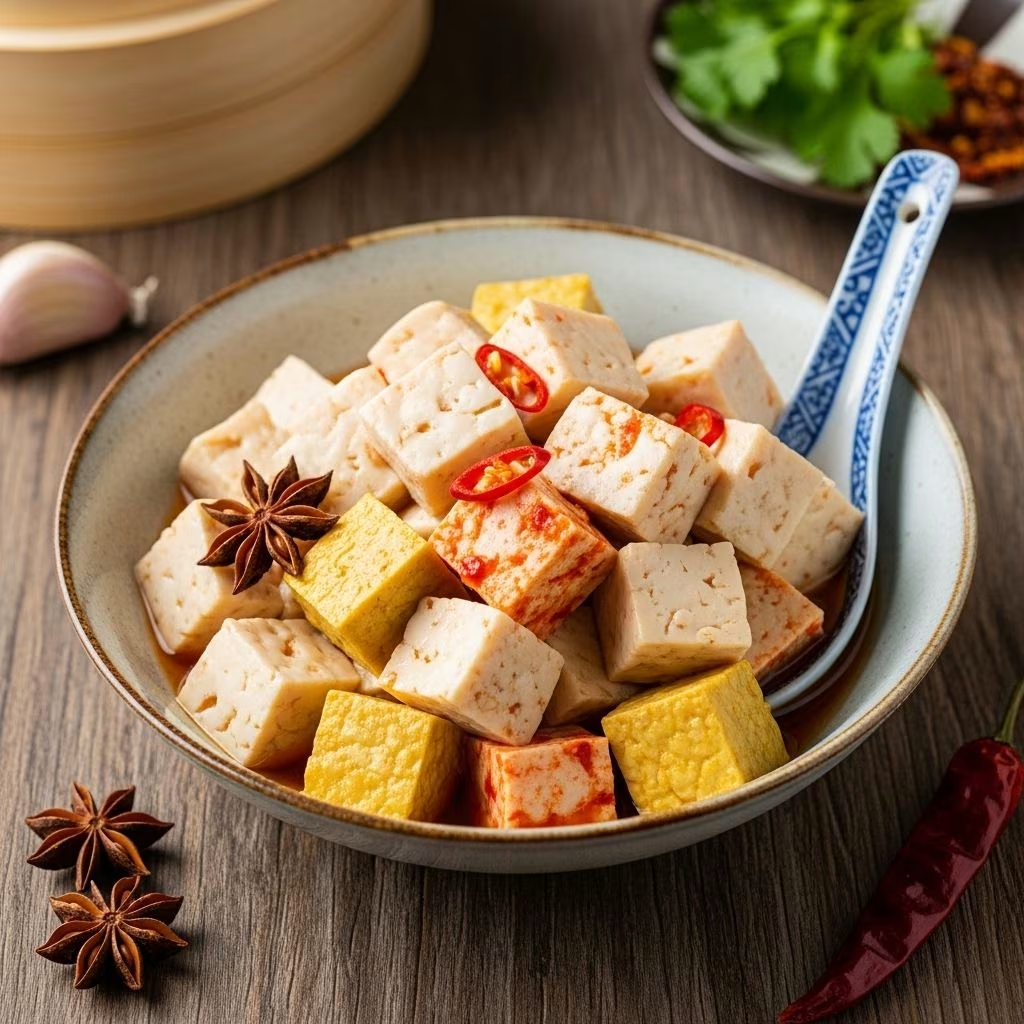
Fermented bean curd, also known as fermented tofu, preserved tofu, or tofu cheese, is a traditional East Asian condiment and ingredient made by fermenting tofu cubes with a mixture of salt, rice wine, and various spices and molds. The fermentation process gives the tofu a soft, creamy texture and a complex umami flavor, often compared to rich cheeses like blue cheese. It is commonly sold in small jars, either as white, red, or flavored varieties, and is used to enhance the taste of many dishes across China, Japan, Korea, Vietnam, and other parts of Southeast Asia.
History and Origins
The history of fermented bean curd is deeply rooted in the broader history of tofu, which is believed to have originated in China during the Han Dynasty (206 BCE – 220 CE). Fermentation likely developed later as a preservation technique before the advent of refrigeration, resulting in a product with a much longer shelf life than plain tofu. Over time, fermented bean curd spread throughout East and Southeast Asia, with each region developing its own variations in terms of molds, fermentation techniques, and added ingredients.
In many cultures, fermented bean curd was not only a culinary staple but also a valuable commodity, used in trade, as a form of payment, and even in traditional medicine. Today, it remains a cherished ingredient in home kitchens and restaurants alike.
How Is Fermented Bean Curd Made?
The production of fermented bean curd involves several key stages:
- Cubes of firm tofu are air-dried and sometimes covered with straw or hay to encourage the growth of natural molds and bacteria.
- Commercially, specific molds such as Actinomucor elegans, Mucor sufu, or Rhizopus spp. are introduced to speed up fermentation, much like in cheese or tempeh production.
- The mold-inoculated tofu is then soaked in a brine mixture containing salt, rice wine, and often additional spices like chili, sesame oil, or red yeast rice (for red fermented bean curd).
- The tofu ferments further in the brine for weeks or months, transforming in texture and flavor.
- The finished product is packaged in jars with some of the brine, which can also be used for flavoring.
Types and Varieties
Fermented bean curd comes in several main varieties, each with distinct flavors and uses:
| Type | Description | Key Ingredients | Flavor Profile |
|---|---|---|---|
| White Fermented Bean Curd | Most common variety, brined with salt and rice wine | Salt, rice wine, spices | Salty, umami, mild funk |
| Red Fermented Bean Curd | Infused with red yeast rice and sometimes chili | Red yeast rice, chili | Salty, savory, slightly sweet, spicy (if chili is used) |
| Chiang Fermented Bean Curd | Fermented in soy sauce or miso paste | Soy sauce, miso | Deep umami, rich, savory |
| Spiced Varieties | Infused with additional aromatics | Star anise, cinnamon, Sichuan peppercorns, etc. | Complex, aromatic, savory |
Regional differences also exist, with local ingredients and techniques shaping unique variations across cultures.
Nutritional Value
Fermented bean curd is rich in protein, healthy fats, and essential amino acids, thanks to its soy base. The fermentation process enhances its digestibility and increases the availability of certain nutrients. While it is high in sodium due to the brining process, it is also a source of isoflavones, which are plant compounds with potential health benefits. Compared to regular tofu, fermented bean curd has a more concentrated flavor and, when used sparingly, can add significant taste to dishes without adding excess calories or fat.
Health Benefits
- Probiotics: The fermentation process introduces beneficial bacteria that can support gut health, although the live cultures are often reduced in commercially pasteurized products.
- Protein and Amino Acids: Like all soy products, fermented bean curd provides a complete protein profile, making it a valuable addition to vegetarian and vegan diets.
- Isoflavones: These compounds, found in soy, have been studied for their potential antioxidant and anti-inflammatory effects.
- Digestibility: Fermentation breaks down proteins and fats, making the nutrients more bioavailable and easier to digest.
- Long Shelf Life: Its preservation qualities make it a practical food in regions without refrigeration, providing nutrients even during periods of scarcity.
Culinary Uses
Fermented bean curd is incredibly versatile:
- Condiment: Straight from the jar, it is served as a side with rice, porridge, or congee, often mashed and mixed with spring onions and chili.
- Sauces: Mixed with vinegar, chili, or aromatics, it becomes a dipping sauce for meats, vegetables, or dumplings.
- Cooking Ingredient: Added to stir-fries, braises, or stews, it imparts a deep umami flavor—popular with leafy greens like water spinach.
- Baking: In the Chaoshan region of China, it is used as a filling for stuffed biscuits called furu bing.
- Marinades: The brine can be used to marinate meats or vegetables, adding complex taste with minimal effort.
Taste and Texture Profile
Fermented bean curd has a distinctive, pungent aroma that may be off-putting to the uninitiated but evolves into a rich, savory depth when cooked. Its texture is soft, creamy, and spreadable, with variations depending on age and type—older varieties tend to be saltier and more complex. The flavor is salty, umami, slightly sweet, and sometimes spicy (especially in red varieties), with a mild funkiness that is sometimes compared to blue cheese.
When used in moderation, it acts as a flavor enhancer, much like anchovies or oyster sauce, adding complexity without overwhelming the dish.
Storing and Shelf Life
Fermented bean curd has an exceptionally long shelf life due to its salt content and fermentation. When stored in a sealed jar and refrigerated, it can last for several years, and its flavor is believed to improve with age. Ensure it is always covered with brine to prevent spoilage. If mold or off-odors develop, it should be discarded.
Fermented Bean Curd vs. Other Soy Products
| Product | Fermentation | Texture | Flavor | Main Uses |
|---|---|---|---|---|
| Fermented Bean Curd | Yes, with molds and brine | Soft, creamy | Salty, umami, funky | Condiment, flavor enhancer |
| Regular Tofu | No | Firm to silken | Mild, neutral | Main ingredient, protein source |
| Tempeh | Yes, with Rhizopus | Firm, nutty | Earthy, nutty | Meat substitute, grilling |
| Miso | Yes, with koji | Paste | Salty, sweet, savory | Soup base, marinade |
Fermented bean curd is unique for its cheesy flavor and smooth texture, setting it apart from other soy products.
Frequently Asked Questions
Q: What does fermented bean curd taste like?
A: Fermented bean curd has a salty, umami, slightly sweet, and mildly funky flavor, often compared to blue cheese. The taste can vary from mild to intensely pungent, depending on the type and age.
Q: Is fermented bean curd healthy?
A: Yes, in moderation. It is high in protein, contains beneficial isoflavones, and the fermentation process enhances digestibility. However, it is also high in sodium, so it should be consumed in small quantities.
Q: How should I store fermented bean curd?
A: Keep it in a sealed jar, covered with its brine, and refrigerated. Properly stored, it can last for several years.
Q: Can I make fermented bean curd at home?
A: Yes, but it requires careful hygiene and specific molds. The process involves air-drying tofu, inoculating it with mold, and fermenting it in a brine solution.
Q: What dishes can I use fermented bean curd in?
A: Use it as a condiment, in dipping sauces, stir-fries, braises, marinades, or even baked goods like stuffed biscuits.
Q: Is fermented bean curd vegetarian or vegan?
A: Most varieties are vegetarian and vegan, as they are made from soybeans, salt, and rice wine. Always check labels for added ingredients.
References
- https://www.linsfood.com/fermented-bean-curd-fermented-tofu/
- https://en.wikipedia.org/wiki/Fermented_bean_curd
- https://www.cookinghub.com/recipe-ingredient/fermented-bean-curds-fermented-tofu/
- https://curatedkitchenware.com/blogs/soupeduprecipes/easy-fermented-bean-curd-recipe
- https://www.thehongkongcookery.com/2022/08/chinese-fermented-tofu.html
- https://www.madewithlau.com/recipes/ong-choy-water-spinach-fermented-bean-curd
- https://www.uwajimaya.com/uwajipedia/fermented-tofu/


