


- Table of Contents
- Introduction
- Definition of Game Meat
- Main Types of Game Meat
- Nutritional Benefits of Game Meat
- Game Meat vs. Farmed Meat
- Taste, Texture, and the Concept of Gaminess
- Culinary Uses and Popularity
- Preparation, Storage, and Cooking Tips
- Frequently Asked Questions (FAQ)
- Conclusion
Introduction
Game meat—the flesh from animals typically found in the wild—holds a notable place in the history of human nutrition, hunting traditions, and culinary exploration. As global food trends shift toward diversifying protein sources, game meat is re-emerging on restaurant menus and in home kitchens for its distinct nutritional profile, unique flavors, and sustainable sourcing options .
Definition of Game Meat
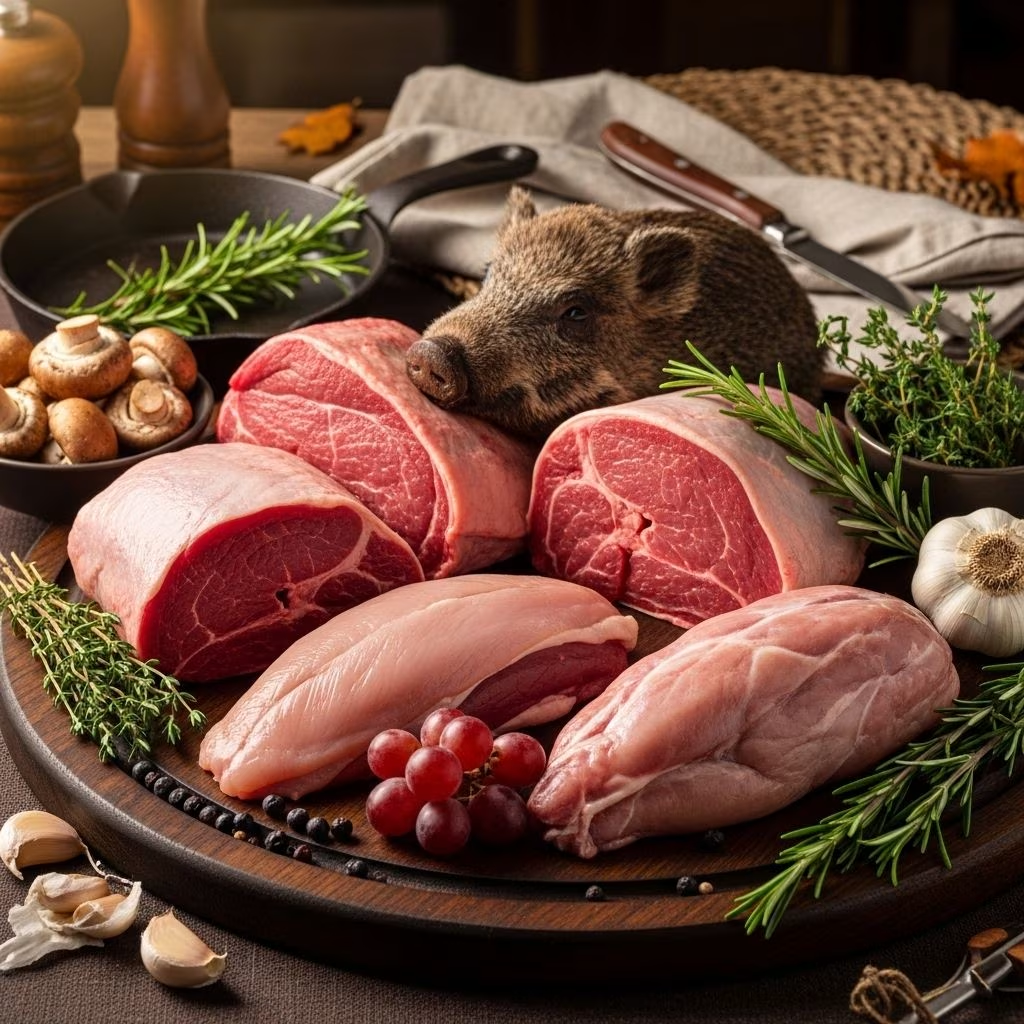
Game meat is derived from animals not raised domestically for mass consumption. Traditionally, these are species hunted in the wild, such as deer, elk, wild boar, duck, or pheasant. However, much commercially available game meat in restaurants comes from animals raised on supervised pastures or game farms that are inspected and regulated for quality and safety . Game meats are often grouped into three main categories:
- Winged Game: Pheasant, quail, partridge, duck, turkey, guinea fowl, squab
- Ground Game: Rabbit, hare, squirrel
- Big Game: Venison (deer), elk, bison, moose, caribou, wild boar, bear, goat, water buffalo
Main Types of Game Meat
| Category | Examples | Notes |
|---|---|---|
| Winged Game | Pheasant, Quail, Duck, Partridge, Turkey, Guinea Fowl, Squab | Often lean with delicate but complex flavors; may have a slightly “gamey” taste |
| Ground Game | Rabbit, Hare, Squirrel | Usually red meat, tender when young |
| Big Game | Venison (Deer), Elk, Bison, Moose, Caribou, Wild Boar, Bear, Water Buffalo, Goat | Leaner and more intensely flavored than domestic meats; suitable for a variety of preparations |
Some animals are exclusively hunted (such as moose and bear), while others may be farm-raised for commercial supply, like quail and pheasant .
Nutritional Benefits of Game Meat
Game meats tend to be leaner and higher in protein compared to conventional meats. Because wild animals forage and roam freely, their meat contains less fat and frequently offers more vitamins and minerals . Notable benefits include:
- High Protein: Game meat is an excellent source of protein, supporting muscle health and satiety.
- Low Fat & Cholesterol: Most game is lower in saturated fat and cholesterol than beef or pork.
- Rich in Iron and Zinc: Venison and elk, for example, provide significant amounts of iron and trace minerals.
- Omega-3 Fatty Acids: Wild game often contains more omega-3s due to a natural diet and active lifestyle.
- No Growth Hormones or Antibiotics: Because game is not factory farmed, it is typically free from added hormones or antibiotics.
Furthermore, younger game meat is generally more easily digested; small birds like quail may be as digestible as poultry and are ideal for light meals .
Game Meat vs. Farmed Meat
| Aspect | Game Meat | Farmed Meat |
|---|---|---|
| Source | Wild or sustainably farmed; free-ranging | Commercially raised, confined environments |
| Nutrition | Leaner, higher in protein | May be fattier, varies by breed |
| Flavor | Distinctly “gamey” (earthy, robust, sometimes sour) | Neutral or mild flavor |
| Texture | Denser, firmer, strong tendons | Softer, less fibrous |
| Sourcing | Regulated hunting or farmed under close supervision | Industrial-scale farming |
Game animals work for a living and eat varied, natural diets. In contrast, domestic cattle and poultry are often confined and fed processed food, impacting flavor and nutritional quality .
Taste, Texture, and the Concept of Gaminess
The defining feature of game meat is its flavor profile, commonly described as “gamey.” This taste is the result of:
- Natural Diet: Wild animals forage plant matter, nuts, berries, and insects, imparting earthy, robust, or even slightly sour flavor notes.
- Active Lifestyle: Regular movement leads to denser, firmer meat with stronger tendons.
- Age and Species: Older animals have deeper, more pronounced flavors and can be tougher. Younger game is typically more tender and mildly flavored .
“Gamey meat gives character, depth, and a wholly unique flavor,” notes wild food expert Hank Shaw . For newcomers, milder species such as axis deer, young venison, and rabbit provide a gentle introduction to gamey flavors. In contrast, elk, wild boar, and duck are favored for their more intense taste profiles .
Culinary Uses and Popularity
Game meat’s distinct taste and nutritional value make it increasingly popular for chefs and adventurous eaters. Notable culinary applications include:
- Grilling, Roasting, and Smoking: Game meat stands up well to robust cooking methods that highlight natural flavors.
- Stews and Braises: Tougher cuts, often from older animals, benefit from slow-cooking, which tenderizes them and mellows strong flavors.
- Cured and Dried Meats: Venison and wild boar are commonly made into sausages, jerky, or charcuterie.
- Fine Dining: High-end restaurants offer game meat dishes for patrons seeking novel and sustainable protein sources .
Consumers are encouraged to inquire about the sourcing and health standards of game served, as restaurants must follow regulations ensuring safe, inspected meat .
Most popular game meats in restaurants include venison (whitetail and axis deer), elk, and wild boar, with rabbit and duck also frequently featured .
Preparation, Storage, and Cooking Tips
- Proper Aging: Big game like venison and elk is often hung for several days to tenderize and deepen flavors. Birds may be eaten shortly after the kill, but some chefs prefer hanging for added complexity .
- Drawing and Cleaning: For birds with slender beaks (thrush, corncrake), drawing (removing internal organs) is sometimes delayed; for others, prompt cleaning is recommended .
- Marinating: Marinating tougher cuts softens texture and tempers strong flavors. Choose wine-based, herbal, or citrus marinades based on species.
- Cooking Techniques: Lean game should be cooked gently to avoid dryness. Steaks, loins, and tender cuts do well grilled or pan-seared; tougher portions are suited to slow braising.
- Serving Suggestions: Pair game with rich sauces, wild berries, mushrooms, root vegetables, or earthy grains to complement the “gamey” profile.
Store game meat in the coldest part of the refrigerator and consume promptly; it often lacks added preservatives found in commercial meats.
Frequently Asked Questions (FAQ)
Q: What makes game meat different from standard supermarket meats?
A: Game meat qualifies as wild (or free-range/farm-raised) animal protein, offering a leaner, more nutrient-rich, and distinctly flavored alternative to mass-produced meats. Animals are generally more active, eat varied diets, and are subject to less intensive farming practices .
Q: How healthy is game meat compared to beef and pork?
A: Game meats are typically lower in fat and cholesterol, richer in protein, iron, and omega-3s, and free from antibiotics or growth hormones, making them a healthier choice for most eaters .
Q: What does “gamey” taste mean?
A: “Gamey” refers to the earthy, sometimes stronger flavor found in many game meats, shaped by the animal’s wild diet and age. It may be described as robust, mildly sour, or simply more flavorful .
Q: Are all game meats tough and strongly flavored?
A: No. Younger animals and certain species (like rabbit or axis deer) are tender and have a milder flavor, while older or larger game may be tougher and more intense. Proper cooking and aging reduce toughness and intensify taste .
Q: Can wild game be sold in restaurants?
A: Only farm-raised or ranch-sourced game, inspected and USDA-approved, can be served commercially. Wild-hunted game is not legally distributed through restaurants for food safety reasons .
Q: What are good beginner game meats for someone new?
A: Choose milder options such as axis deer, venison loin, or rabbit. These are less “gamey” and easier to prepare .
Q: Are there vegetarian or vegan alternatives at restaurants that serve game?
A: Many restaurants specializing in game offer plant-based options as well. Always ask your server for current choices .
Conclusion
Game meat—whether from wild or responsibly farmed sources—offers a unique culinary experience rooted in tradition, adventure, and nutrition. Its lean profile, high nutritional value, and bold flavors make it a favored alternative for those seeking to broaden their dietary horizons and explore sustainable food choices. By understanding the differences in taste, preparation, and sourcing, adventurous diners and home chefs alike can fully appreciate the spectrum of possibilities that game meat brings to the table.
References
- https://www.webstaurantstore.com/blog/3892/types-of-game-meat.html
- https://www.tastingtable.com/1202438/types-of-game-meat-explained/
- https://www.yoranchsteakhouse.com/blog/a-travelers-guide-to-texas-game-meats/
- https://honest-food.net/gamey-meat-explained/
- https://www.britannica.com/topic/game-meat
- https://pmc.ncbi.nlm.nih.gov/articles/PMC10048761/
- https://www.nature.scot/professional-advice/social-and-economic-benefits-nature/food-and-drink/game


