


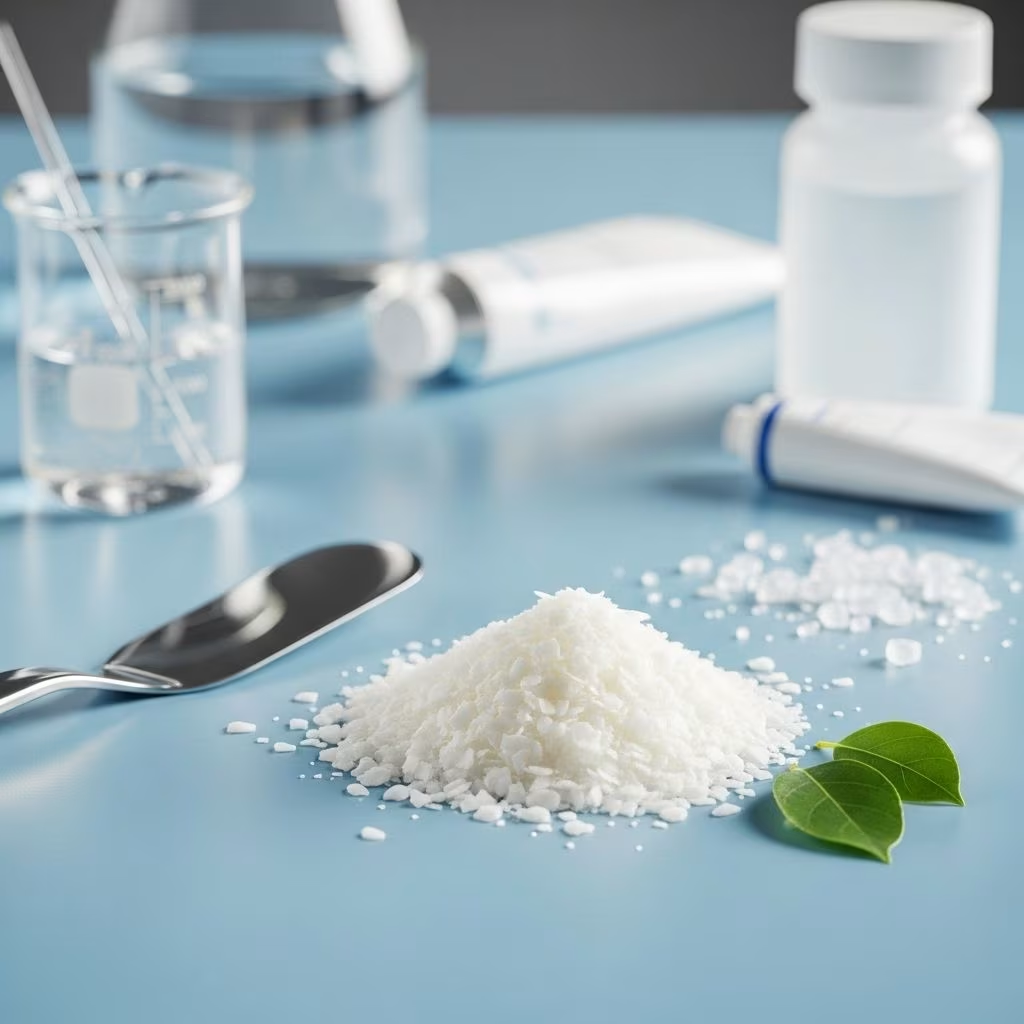
Glyceryl Monostearate (GMS) is one of the most widely used ingredients across food, pharmaceutical, and cosmetic industries due to its versatile properties as an emulsifier, stabilizer, thickener, and texturizer. This comprehensive guide explores what GMS is, its chemical structure, functional benefits, major applications, and its unique impact on product texture and flavor.
What Is Glyceryl Monostearate (GMS)?
Glyceryl Monostearate (GMS), sometimes referred to as glycerol monostearate, is an organic compound derived from glycerol (a sugar alcohol) and stearic acid (a long-chain fatty acid). It most commonly appears as a white, odorless, and slightly sweet-tasting powder or waxy solid. GMS is primarily composed of the monoglyceride form—one fatty acid molecule (stearic acid) attached to a glycerol backbone, resulting in a unique balance between hydrophilic (water-liking) and lipophilic (fat-liking) characteristics.
The International Nomenclature of Cosmetic Ingredients (INCI) name for GMS is ‘Glyceryl Stearate,’ but it is distinct in that it has a much higher proportion (over 90%) of the monoglyceride form compared to ordinary glyceryl stearate.
Quick Facts
- Appearance: White or pale yellow powder or flakes
- Odor & Flavor: Odorless, faint sweet note in taste
- Solubility: Insoluble in water, easily dispersible in hot oils and solvents
- Emulsifier Type: Nonionic (E number: E471 in Europe)
- Common Synonyms: Glycerol monostearate, E471, GMS
Chemical Composition and Properties
GMS is a monoglyceride produced by the reaction (esterification) of glycerol and stearic acid. As a nonionic surfactant, it features a hydrophilic head (from glycerol) and a lipophilic tail (from stearic acid). This amphiphilic structure is key to its abilities as an emulsifier and stabilizer.
Chemical Formula and Structure
Its systematic chemical name is glyceryl 1-octadecanoate (C21H42O4), often represented as:
- Chemical formula: C21H42O4
- Functional groups: Ester linkages between glycerol & fatty acid
Physical Properties:
- Melting point: 58–65°C
- HLB (Hydrophilic-Lipophilic Balance) value: 3.7 to 4.2—favours oil-in-water emulsions but can accommodate both types.
- Solubility: Insoluble in water; soluble in hot oils, hot ethanol, ether, chloroform, and acetone.
How GMS Works
The hydrophilic-lipophilic balance allows GMS to sit at the boundary between water and oil, reducing surface tension and enabling the fine dispersal of oil droplets in water-based solutions (or vice versa). This forms smooth, stable emulsions that are critical in many food, pharmaceutical, and cosmetic applications.
Key Benefits Across Industries
GMS is valued mainly for its diverse and functional benefits:
- Emulsification: Creates stable emulsions in food and cosmetic formulations, stopping separation of oil and water.
- Texture Enhancement: Adds smoothness, creaminess, and body to foods and lotions, improving mouthfeel and application.
- Stabilization: Prevents syneresis (water separation), crystal formation, and ingredient separation to increase shelf life.
- Moisture Retention: Acts as a humectant, reducing water loss and keeping baked goods fresh.
- Improved Processing: Enhances dough machinability, prevents food sticking, and maintains uniform consistency in industrial processes.
- Controlled Ingredient Release: Used in pharmaceuticals for timed-release tablets and consistent delivery of active ingredients.
Major Uses of Glyceryl Monostearate
GMS is a widely accepted ingredient in multiple global sectors. Below are its main applications:
1. Food Industry
- Baked Goods: Improves dough elasticity and crumb structure, prevents staling, and extends shelf life of products such as bread, cakes, and pastries.
- Dairy Products: Emulsifies and stabilizes creams and ice creams, offering a smoother, less icy texture, and better body.
- Margarine and Spreads: Ensures consistent texture and stable emulsions, avoiding phase separation.
- Processed Meats: Maintains juiciness, binds fat, and improves sliceability.
- Instant Mixes and Sauces: Prevents lumping, maintains suspension of powders, and stabilizes sauces and gravies.
- Confectionery and Desserts: Stabilizes foams and fat dispersions in sweets, whipped toppings, and mousses.
2. Pharmaceutical Applications
- Tablet Manufacturing: GMS is used as a binder, coating agent, and controlled-release matrix for active pharmaceutical ingredients (APIs), facilitating consistent dosage forms.
- Medicated Creams & Ointments: Acts as a base for medicated topical products, improving spreadability and therapeutic delivery.
- Encapsulation: Allows encapsulation of sensitive compounds or gradual release formulations.
3. Cosmetics and Personal Care Products
- Creams & Lotions: Emulsifies oil and water, providing a silky, non-greasy texture and helping lotions retain moisture on the skin.
- Hair Conditioners: Enhances spreadability and stability, imparting a smooth soft feel to hair products.
- Makeup & Sunscreens: Prevents separation of ingredients and maintains product homogeneity.
4. Industrial and Other Applications
- Plastics and Resins: Acts as an anti-static, lubricant, and release agent.
- Textile & Leather Treatments: Helps improve texture and manageability.
- Waxes & Paints: Enhances application and dispersion.
Summary Table: GMS Applications by Industry
| Industry | Application | Functional Role |
|---|---|---|
| Food | Baked goods, dairy, sauces, spreads, desserts | Emulsifier, texture improver, moisture retention |
| Pharmaceutical | Tablets, creams, ointments, capsules | Binder, controlled release, carrier |
| Cosmetic | Creams, lotions, conditioners, makeup | Emulsifier, stabilizer, emollient |
| Industrial | Plastics, textiles, paints, waxes | Lubricant, dispersant, anti-static agent |
Taste and Sensory Profile
Although GMS is odorless, it can impart a subtle sweet flavor and creamy mouthfeel when used in foods. Its presence is generally not perceptible in low concentrations, but it contributes significantly to the overall texture by improving smoothness, reducing iciness in frozen desserts, and enhancing the body of baked goods or creamy foods.
- Taste: Subtly sweet, bland, and neutral; does not introduce overt flavors into final products.
- Mouthfeel: Creamy, smooth, non-greasy texture—especially in ice creams, whipped toppings, and fat-based spreads.
- Appearance: Helps create opacity and uniformity, especially in cosmaceutical emulsions and processed foods.
Its mild sweetness and ability to mask unpleasant off-notes from other ingredients make it particularly valued in processed baked products and desserts.
Safety, Side Effects, and Regulations
Glyceryl Monostearate is widely recognized as safe (GRAS) in major health jurisdictions when used within recommended concentrations. The FDA and the European Food Safety Authority approve E471/GMS as a direct and indirect food additive, typically at concentrations below 2% by weight in final food products. There are minimal documented side effects when consumed as part of a balanced diet and used as intended in cosmetics or pharmaceuticals.
Potential Side Effects
- Excessive consumption (usually as part of a high-processed-food diet) may contribute to caloric intake, but GMS itself is generally inert.
- Rarely, some individuals with very sensitive skin could experience irritation from topical products, though this is uncommon.
As with any additive, it is important for manufacturers to adhere to permitted uses, and for consumers to maintain a balanced intake.
Glyceryl Monostearate vs. Glyceryl Stearate
While both glyceryl monostearate (GMS) and glyceryl stearate function as emulsifiers and stabilizers, there are key differences:
| Property | Glyceryl Monostearate (GMS) | Glyceryl Stearate |
|---|---|---|
| Composition | Primarily monoglyceride (>90%) (1 stearic acid + glycerol) | Mixture of mono-, di-, and triglycerides |
| Main Use | Strong, specific emulsifier for oil-in-water emulsions | Versatile, works in both oil-in-water and water-in-oil emulsions |
| Emulsifying Power | Higher, especially in food and cosmetics | Moderate, often used with other emulsifiers |
| Typical Applications | Baked goods, ice cream, lotions, ointments | Broader range: creams, serums, emulsions |
| HLB Value | 3.7–4.2 | Similar, but may be lower due to mixed glyceride content |
Overall, GMS is preferred where stronger, more consistent emulsification and texture improvement are needed.
Conclusion
Glyceryl Monostearate (GMS) is an essential multifunctional ingredient in modern manufacturing, particularly valued for its emulsifying, stabilizing, and texturizing effects. Its role in improving food quality, extending shelf life, enhancing product texture, and contributing to sensory pleasure in both food and cosmetic sectors cements its status as a vital ingredient. Its generally recognized safety and broad utility ensure GMS will remain indispensable for years to come.
Frequently Asked Questions (FAQs)
Q: Is glyceryl monostearate safe to eat?
A: Yes. GMS is approved as a food additive (E471) by international regulatory agencies, such as the FDA and EFSA. It is considered safe for consumption in the amounts typically used in foods and has a long track record of safe use.
Q: Can GMS trigger allergic reactions?
A: Allergic responses to GMS are extremely rare. Most reactions in cosmetics are due to other ingredients, not GMS itself.
Q: What is the difference between GMS and other emulsifiers?
A: GMS is particularly effective in oil-in-water emulsions and delivers stronger thickening, stabilizing, and texture-enhancing effects compared to many basic emulsifiers. It is neutral in taste and odor, making it highly versatile.
Q: Is glyceryl monostearate vegan?
A: GMS is often vegan-friendly, as it can be synthesized from vegetable sources. However, in rare cases, animal-derived stearic acid may be used, so check labeling for vegan certification if necessary.
Q: Does it affect the taste of food?
A: GMS imparts little to no flavor at recommended concentrations but can enhance texture and mouthfeel, making foods seem creamier and fresher.
References
- https://www.yourcosmeticchemist.com/post/glyceryl-stearate-vs-glyceryl-monostearate
- https://www.nimbasia.com/blogs/what-is-glycerol-monostearate-its-benefits-side-effects-and-uses.html
- https://www.mondstar.com/what-is-glyceryl-monostearate-emulsifier-and-what-is-it-used-for/
- https://foodadditives.net/emulsifiers/glycerol-monostearate/
- https://www.cnchemsino.com/blog/different-types-of-glycerol-monostearate-properties-and-applications.html
- https://www.chemicalbook.com/ChemicalProductProperty_EN_CB7234695.htm
- https://bulknaturaloils.com/glyceryl-monostearate-gms-organic-c1018.html
- https://www.thegoodscentscompany.com/data/rw1026741.html


