


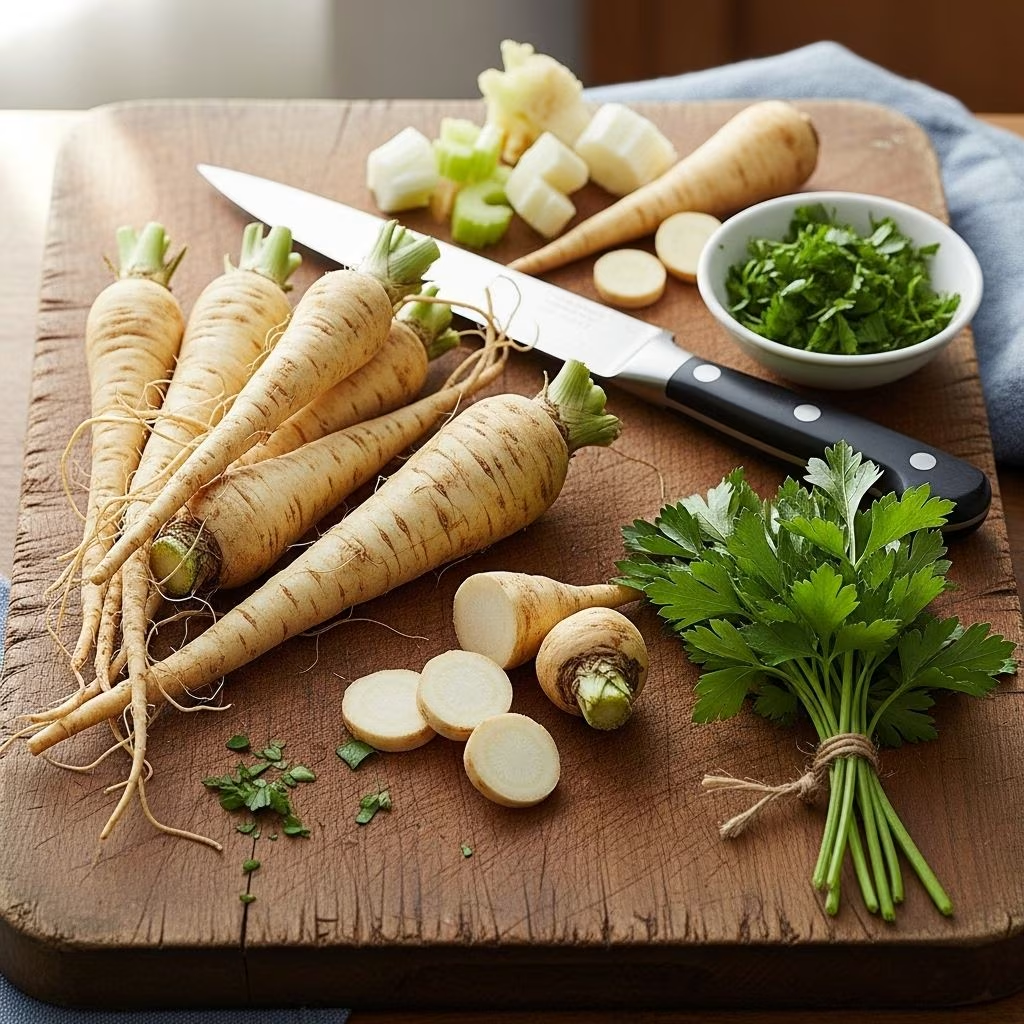
Hamburg parsley root, scientifically known as Petroselinum crispum var. tuberosum, is an heirloom vegetable cherished for its dual role in the kitchen as both an aromatic green and a versatile root.
Originating in Europe, especially Germany, Austria, and Eastern Europe, it stands out for its intriguing taste—an herbal complexity with earthy undertones—and its adaptability in various recipes. This all-inclusive guide explores the flavor, uses, nutrition, cultivation, and practical substitutes for Hamburg parsley root, ensuring you harness its full culinary potential.
What is Hamburg Parsley Root?
Hamburg parsley root (sometimes called root parsley, Dutch parsley, or turnip-rooted parsley) is a biennial plant belonging to the parsley family, distinct for its thick, edible taproot. Unlike familiar curly or flat-leaf parsley, which are grown for their leaves, Hamburg parsley is cultivated primarily for this flavorful root.
The plant resembles flat-leaf parsley above ground and develops a pale beige, parsnip-like root underground. Both leaves and root are edible, offering a dual-purpose ingredient for both garnishing and robust savory preparations.
Historically, the root has been a staple in Central and Eastern European cuisine since the 16th century, particularly as a key element in soups and stews.
Quick Characteristics of Hamburg Parsley Root
- Botanical Name: Petroselinum crispum var. tuberosum
- Origin: Believed to have originated in Germany
- Common Names: Root parsley, Dutch parsley, Hamburg parsley root
- Edibility: Entire plant is edible (roots and greens)
Flavor Profile of Hamburg Parsley Root
The flavor of Hamburg parsley root is what truly distinguishes it. It offers a delightful combination of herbaceous parsley freshness with earthy, sweet hints reminiscent of parsnip, celeriac, and carrot.
- Raw Taste: Crisp texture, mild parsley flavor with underlying sweetness and earthy tones.
Slightly warm and woody aroma; described as more exciting than raw carrot but less sweet. - Cooked Taste: Roasting transforms the root, intensifying its sweetness and herby notes. When cooked, the texture becomes creamy and the flavor is richer—a cross between roasted parsnip, celery root, and a hint of parsley.
| Vegetable | Flavor Comparison |
|---|---|
| Hamburg Parsley Root | Herbal, earthy, mildly sweet (parsley + parsnip + celeriac) |
| Parsnip | Sweet, earthy, nutty |
| Carrot | Sweet, slightly earthy |
| Celeriac | Earthy, celery-like, robust |
Roasting or simmering Hamburg parsley root enhances its aroma, lending a subtle complexity to broths and purees without overpowering other ingredients.
Culinary Uses: How to Cook with Hamburg Parsley Root
Hamburg parsley root’s versatility spans many classic and modern dishes. In Europe, it is a traditional ingredient in hearty comfort food—soups, stews, root vegetable medleys, and as a key “soup green” component in German, Polish, and Russian cooking.
Main Methods of Preparation
- Soups and Broths: Adds body and a mild, aromatic sweetness. A classic ingredient in traditional “suppengrün” (soup greens) mixes alongside carrot, celeriac, and leek.
- Stews and Casseroles: Sliced or diced root enhances braises, slow-cooked mixed vegetables, and winter one-pots.
- Roasting: Roasted parsley root develops caramelized sweetness; try it alone or mixed with parsnip and carrot.
- Pureed: Blends easily into smooth mashes, creamy soups, or mixed root purees for a herby undertone.
- Raw in Salads: Grated or thinly sliced, it brings crunch and freshness, much like celeriac remoulade.
- Pickled: Sliced root can be pickled, lending a subtle, herbal tang to salads and antipasti.
- Edible Greens: Leaves can be used as parsley—chopped in salads, sprinkled over finished dishes, added to sauces, or made into pesto.
Popular Recipe Ideas
- Traditional European chicken soup with slices of Hamburg parsley root
- Roasted root vegetables: parsley root, carrot, celeriac, and sweet potato
- Creamy parsley root puree as a bed for fish or roast meats
- Parsley root salad with apple, celery, and a lemon-mustard dressing
- Vegetable gratin: layered with potatoes, parsnips, and cheese
Nutrition and Health Benefits
Hamburg parsley root is impressively nutritious, providing a rich supply of vitamin C, folate (vitamin B9), minerals such as potassium, magnesium, zinc, and iron, as well as dietary fiber.
| Nutrient | Amount |
|---|---|
| Calories | 55 kcal |
| Carbohydrates | 12 g |
| Fiber | 4 g |
| Protein | 2 g |
| Fat | 0.6 g |
| Vitamin C | 55% of Daily Value |
| Folate (B9) | 45% of Daily Value |
| Potassium | 12% of Daily Value |
| Magnesium | 11% of Daily Value |
| Zinc | 13% of Daily Value |
| Iron | 7% of Daily Value |
- High in Vitamin C: Supports immunity and skin health
- Rich in Fiber: Aids digestion and promotes satiety
- Good Source of Folate: Essential for cell health and pregnancy
- Mineral-Rich: Provides magnesium, zinc, and potassium
- Low in Fat and Calories: Suitable for weight-conscious diets
This makes it a smart addition to plant-forward and nutrient-dense meal plans, offering health benefits in both raw and cooked forms.
How to Grow Hamburg Parsley Root
Though less common than other root vegetables, Hamburg parsley root is easy to grow in home gardens given patience and the right conditions.
Growing Tips:
- Soil: Prefers well-drained, fertile, loose soil free from stones
- Planting: Sow seeds in early spring or fall, around 0.5 inch deep
- Spacing: Thin seedlings to about 4 inches apart
- Sunlight: Full sun preferred, but tolerates partial shade
- Water: Keep soil consistently moist for best root development
- Growing Period: 90–120 days to harvest; roots mature in late fall or early winter
- Harvest: Roots can be stored in the ground into winter (flavor improves after frost)
- Edible Greens: Harvest as needed through the growing season
The plant is usually grown as an annual but is technically biennial if left to overwinter and produce seeds the following year.
Selecting, Storing, and Preparing Parsley Root
For best flavor and nutrition, select firm, unblemished roots about 6 inches long with fresh, vibrant greens attached. Avoid soft, shriveled, or heavily marked roots.
- Storing Roots: Place unwashed roots in a refrigerator crisper drawer, loosely wrapped; they keep for 2–3 weeks.
- Storing Greens: Greens are more perishable—store in a sealed bag in the fridge and use within a few days.
- Preparation: Scrub root thoroughly, peel if needed (skin is edible but can be tough), and slice as desired.
- Cooking: Enjoy raw for crunch or cook by roasting, boiling, or steaming for a tender, creamy texture.
Easy Substitutes for Hamburg Parsley Root
If you cannot find Hamburg parsley root, several vegetables can stand in for its unique flavor and texture in cooking. Substitution success depends on which aspect—sweetness, herbal note, or texture—is most important for your dish.
| Substitute | Flavor/Texture | Best Uses |
|---|---|---|
| Parsnip | Sweet, earthy, similar texture | Roasted, pureed, soups |
| Celeriac (Celery Root) | Earthy, milder herbal notes, creamy texture | Soups, mashes, roasted |
| Carrot | Sweet, milder herbal flavor | All-purpose root veg dishes |
| Turnip | Earthy, with mild pungency | Braises, soups, blends |
| Combination: Parsnip + Flat-leaf Parsley | Replicates sweet & herbal notes | Soups, purees, stews |
- For herbal accent, mix parsnip with a small handful of chopped fresh parsley.
- For texture, parsnip and celeriac are your best bet, especially pureed.
- For use in classic Eastern European soups, parsnip or celeriac will yield a similar result.
In most cases, use an equal amount of the substitute in place of Hamburg parsley root for the best consistency.
Frequently Asked Questions (FAQs)
Q: Can I eat Hamburg parsley root raw?
A: Yes, the root can be eaten raw, providing a crisp texture and a mild yet distinctive flavor profile. Raw root works well grated or sliced thin in salads or slaws.
Q: What is the difference between Hamburg parsley root and regular parsley?
A: Hamburg parsley root is grown for its thick, edible root, while regular curly or flat-leaf parsley is cultivated for its leaves. Regular parsley varieties do not produce large edible roots.
Q: How do I store Hamburg parsley root for winter?
A: Leave roots in the ground through frosts and harvest as needed. Alternatively, store unwashed roots in a slightly damp medium like sand or peat moss in a cool cellar or refrigerator drawer.
Q: Does Hamburg parsley root taste like parsnip?
A: While it shares a sweet, earthy quality with parsnip, Hamburg parsley root also exudes distinctive herbal and slightly peppery notes from its parsley lineage.
Q: Are there any specific dishes the root is famous for?
A: Yes, Hamburg parsley root stars in Eastern and Central European cuisines, particularly in German “suppengrün” mixes, Polish chicken soup, and Russian broths.
Q: Are the leaves from Hamburg parsley root edible?
A: Absolutely. The greens can be used just like regular parsley leaves in salads, soups, sauces, and as garnishes.
Key Takeaways & Cooking Inspiration
- Distinct Herbal-Earthy Flavor: Blends parsley, parsnip, and celeriac notes, making it ideal for layered, hearty dishes
- Versatile Culinary Roles: Enjoy raw in salads, roasted, pureed, or simmered in broths
- Nutrient Dense: High in fiber, vitamin C, folate, and essential minerals
- Flexible Substitution: Parsnip, celeriac, or a combination of parsnip and parsley leaves mimic its flavor and texture
Whether you are experimenting with heritage vegetables or simply seeking a multi-purpose root that bridges the gap between herb and vegetable, Hamburg parsley root deserves a place in your kitchen garden and on your table.
References
- https://stores.southgaseedco.com/hamburg-rooted-parsley-seeds-qty-75/
- https://specialtyproduce.com/produce/Parsley_Root_2026.php
- https://www.gardeningknowhow.com/tbt/hamburg-rooted-parsley
- https://living-mudflower.blogspot.com/2020/04/what-does-parsley-root-taste-like.html
- https://www.healthline.com/nutrition/parsley-root
- https://britishfoodhistory.com/2017/01/04/forgotten-foods-5-parsley-root/
- https://migardener.com/products/hamburg-rooted-parsley
- https://seedsofitaly.com/hamburg-parsley-root-parsley-berliner-endangered-variety/
- https://www.harvesting-history.com/product/parsley-hamburg-rooted/


