


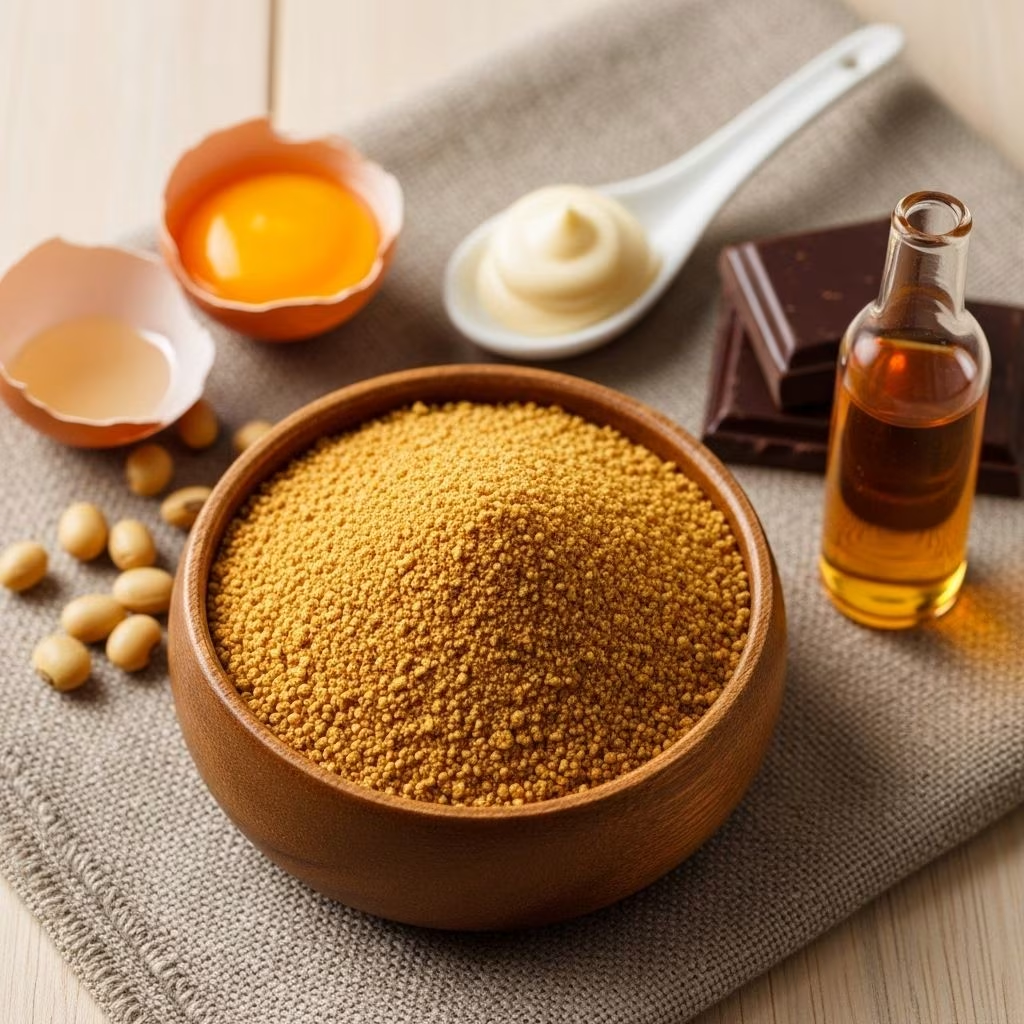
Lecithin is a unique, naturally occurring compound with crucial roles in biology, food technology, health, and industry. This article offers an extensive exploration of lecithin’s composition, sources, diverse applications, health effects, and sensory characteristics.
Definition and History
Lecithin is a generic term for a group of yellow-brown fatty substances found naturally in both plant and animal tissues. These substances, scientifically known as phospholipids, are amphiphilic: they can attract both water and fat. This unusual property makes lecithin especially valuable for creating smooth textures and stable mixtures from otherwise incompatible ingredients like oil and water .
Lecithin was first isolated in 1845 by the French chemist Théodore Gobley, who extracted it from egg yolk—hence its name, derived from the Greek lekithos for “yolk.” By 1850, Gobley named the compound “lécithine” and established that it was present in blood, the brain, bile, and various other biological materials .
Sources and Composition of Lecithin
Lecithin can be found in many foods and can also be manufactured from a variety of natural sources:
- Soybeans – the primary commercial source
- Egg yolks
- Sunflower seeds
- Rapeseed (canola)
- Milk
- Marine foods
- Cottonseed
The composition of lecithin varies by source, but commonly includes glycerophospholipids such as:
- Phosphatidylcholine
- Phosphatidylethanolamine
- Phosphatidylinositol
- Phosphatidylserine
- Phosphatidic acid
Soy lecithin, for example, consists of roughly one-third soybean oil, with various phospholipids and minor components .
How Does Lecithin Work?
Lecithin acts as an emulsifier, meaning it helps stabilize mixtures of oil and water that would otherwise separate. This ability is due to its amphiphilic molecular structure, composed of both water-loving (hydrophilic) and fat-loving (lipophilic) components. This makes lecithin extremely valuable in food processing, pharmaceuticals, and cosmetics .
Uses of Lecithin in the Food Industry
In foods, lecithin is widely used as an additive (E322). Its main applications include:
- Emulsifying – Preventing fat and water from separating (e.g., in chocolate, mayonnaise, dressings, and margarine)
- Homogenizing – Promoting a uniform texture in products such as peanut butter or ice cream
- Anti-spattering – Used in cooking sprays to prevent oil from splattering
- Stabilizing – Prolonging shelf-life by retarding crystallization and ingredient separation
- Improving dough and baking properties – Enhancing water absorption and flexibility in bread and pastries
Lecithin is so effective in these roles that it is found in a vast array of processed foods, ranging from baked goods to instant soup mixes .
Health Benefits of Lecithin
Lecithin is not just a food additive—it also provides essential nutrients for the body. Lecithin’s benefits include:
- Cell Membrane Function: Phospholipids like phosphatidylcholine (a major component of lecithin) are crucial for maintaining healthy cell membranes and facilitating cell signaling .
- Choline Source: Lecithin is a significant source of choline, vital for liver function, normal brain development, muscle movement, nervous system health, and metabolism .
- Support for Heart Health: Some studies suggest that lecithin supplements may help lower cholesterol by increasing the excretion of bile and improving the metabolism of fat in the liver .
- Cognitive Function: Choline is the precursor to acetylcholine, a neurotransmitter involved in memory and muscle control. Lecithin supplements are sometimes marketed to support brain and nerve health.
- Digestive Help: Lecithin’s emulsifying action may promote fat digestion and absorption. In some cases, lecithin supplements are used to manage ulcerative colitis or as a supportive therapy for other digestive disorders.
- Skin Health: When applied topically or used in skincare formulations, lecithin can reduce flaking, restore suppleness, and enhance the delivery of active ingredients .
Despite these promising effects, more large-scale human studies are needed to confirm some of lecithin’s long-term health benefits and clarify its role in different medical conditions.
Lecithin in Cosmetics and Other Industries
Lecithin is highly valued in the cosmetics and personal care industry and is also used in several non-food technical applications:
- Cosmetics: Used as a skin emollient (moisturizer), to enhance skin hydration, and stabilize creams and lotions .
- Pharmaceuticals: Functions as a wetting agent, stabilizer, encapsulant, and choline carrier. Used in intravenous fat infusions and drug delivery systems .
- Paint and Printing: Acts as a dispersant, stabilizer, rust inhibitor, and color intensifier.
- Animal Feed: Improves pellet formation and nutrient utilization in animal nutrition.
- Plastics, Lubricants, and More: Serves as a release agent, emulsifier, and processing aid in plastics, textiles, and the rubber industry.
Lecithin as a Dietary Supplement
Lecithin supplements (often derived from soybeans or sunflower) are available in powders, granules, capsules, and liquid forms. They are generally marketed for benefits such as:
- Promoting liver health
- Supporting healthy cholesterol levels
- Enhancing brain function and memory
- Improving milk flow and reducing the risk of clogged ducts in breastfeeding women
Clinical support for these benefits varies. For general health, lecithin supplements are considered safe and well-tolerated when used as directed .
Lecithin: Taste and Texture in Foods
Lecithin’s taste and influence on food products depend on its source and purity:
- Taste: Pure lecithin typically has a mild, neutral, slightly fatty or eggy flavor. In the low concentrations used in food, it is generally considered tasteless or minimally detectable.
- Texture: Lecithin dramatically improves the mouthfeel and creaminess of food products by stabilizing emulsions and dispersing fats evenly.
- Color and Aroma: Commercial lecithin may impart a pale yellow to brownish hue due to natural pigments present in the source material. Its aroma is usually faint and does not impact most food matrices.
In some applications, high-purity or deodorized lecithin is used to minimize any influence on taste or color. For example, chocolate manufacturers may select specific lecithin grades to avoid unwanted flavors or odors in premium products.
Safety and Side Effects
Lecithin is generally recognized as safe (GRAS) by food safety authorities when consumed in moderate amounts as part of a normal diet. Potential side effects are rare and usually limited to:
- Mild digestive symptoms (e.g., diarrhea, stomach upset), especially at high supplemental doses
- Allergic reactions, mainly in individuals sensitive to soy or egg-sourced lecithin
No major toxicities have been associated with lecithin consumption in food-grade or supplement form .
Comparison Table: Common Lecithin Sources
| Source | Main Phospholipids Present | Typical Use | Allergen Risk |
|---|---|---|---|
| Soybeans | Phosphatidylcholine, Phosphatidylinositol, Phosphatidylethanolamine | Food additive, supplements, cosmetics | Soy allergy |
| Egg yolks | Phosphatidylcholine, Sphingomyelin | Traditional food emulsifier, dietary source | Egg allergy |
| Sunflower | Phosphatidylcholine, Phosphatidylethanolamine | Food additive, hypoallergenic alternative | None (for common allergens) |
| Rapeseed | Phosphatidylcholine | Supplement and industrial use | Rare |
Frequently Asked Questions (FAQs)
Q: Is lecithin vegan?
A: Lecithin from soybeans, sunflower, or rapeseed is vegan-friendly. Lecithin from egg yolk is not suitable for vegans.
Q: Can lecithin help lower cholesterol?
A: Some small studies indicate lecithin supplements may help reduce cholesterol by promoting bile secretion and fat metabolism, though more research is needed for conclusive evidence.
Q: Is lecithin safe for people with soy or egg allergies?
A: People with soy or egg allergies should avoid lecithin sourced from the allergen in question. Sunflower lecithin is a common hypoallergenic alternative.
Q: Does lecithin affect flavor or texture in foods?
A: Lecithin is usually flavorless at food additive levels but greatly improves texture, stabilizing and smoothing creamy or fatty foods.
Q: Are there any side effects?
A: Lecithin is very safe for most people. Minor digestive upset is possible at very high doses. Allergic reactions are rare but possible if sensitive to the source material.
References
- Wikipedia: Lecithin (General definition, history, sources, applications in industry and food)
- cosmeticsinfo.org (Use and benefits in cosmetics and personal care)
- Merriam-Webster Dictionary (Basic definition and example uses)
- PubChem (Chemical composition details)
- WebMD (Health benefits, supplement information, side effects)
References
- https://en.wikipedia.org/wiki/Lecithin
- https://www.cosmeticsinfo.org/ingredient/lecithin/
- https://www.merriam-webster.com/dictionary/lecithin
- https://pubchem.ncbi.nlm.nih.gov/compound/Lecithin
- https://www.webmd.com/vitamins/ai/ingredientmono-966/lecithin
- https://www.ncbi.nlm.nih.gov/books/NBK501772/
- https://www.healthline.com/health/lecithin-benefits
- https://www.youtube.com/watch?v=oz4VhTYBA2w


