


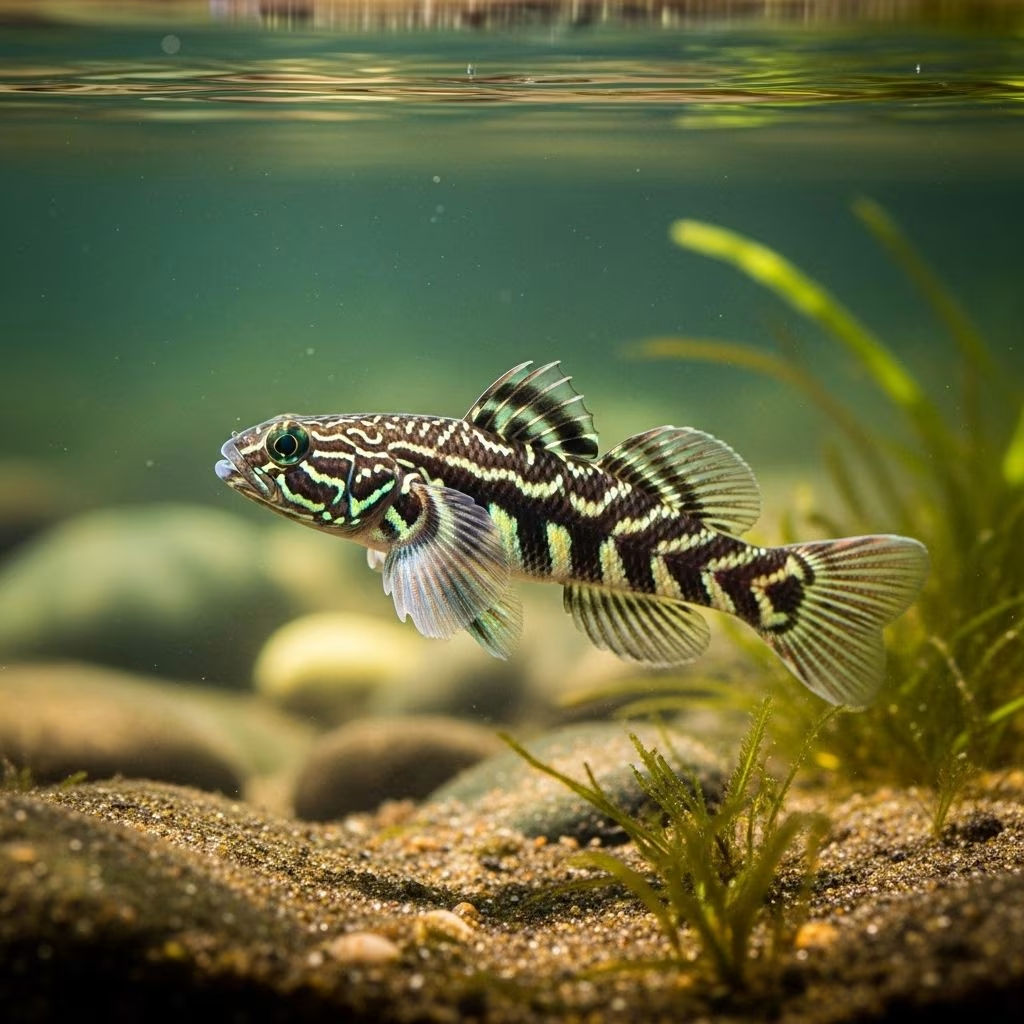
The Marble Goby (Oxyeleotris marmorata) stands as one of Southeast Asia’s most revered freshwater fishes, renowned not only for its distinctive marbled appearance and size but also for its culinary and medicinal significance. This article covers the Marble Goby’s biology, habitats, health benefits, culinary uses, and its celebrated taste, offering a comprehensive understanding of this fascinating species for aquarists, anglers, and food enthusiasts alike.
Introduction: Understanding Marble Goby
The Marble Goby, also known as the Marbled Sleeper Goby, Marbled Gudgeon, or Pla Bu (in Thailand), is a large predatory fish valued in both the aquarium trade and culinary circles. Native to the freshwater and brackish environments of Southeast Asia, the Marble Goby distinguishes itself with its unique marbled coloration, lazy yet aggressive predatory tactics, and notable culinary versatility.
Biology & Habitat
The scientific name of the Marble Goby is Oxyeleotris marmorata. It belongs to the Eleotridae family, commonly referred to as the ‘Sleepers.’ This species is native to a vast region of Southeast Asia, including countries such as:
- Thailand
- Vietnam
- Cambodia
- Malaysia
- Laos
- Singapore
- Philippines
- Indonesia (Sumatra and Borneo)
It thrives in diverse aquatic settings—ranging from slow-moving rivers, ponds, swamps, reservoirs, to flooded forests—often preferring areas with minimal water movement and plenty of hiding spots such as submerged logs, rocks, or dense vegetation. The Marble Goby can also tolerate mildly brackish waters, contributing to its wide distribution.
Physical Characteristics
The Marble Goby is the largest known gobioid fish in Southeast Asia, reaching lengths of up to 65 cm (over 2 feet) and weighing as much as 5.5 pounds in some cases. Its body is torpedo-shaped with the following notable features:
- Large, upturned mouth—adapted for ambush predation
- Flattened head and robust jaw structure
- Oblique mouth with two dorsal fins and a rounded caudal fin
- Unique marbled camouflage—a brown or tan body dappled with darker markings, perfect for blending into the muddy and rocky substrate
Table: Key Physical Features of the Marble Goby
| Feature | Description |
|---|---|
| Maximum Size | Up to 65 cm (approx. 2 ft) |
| Average Weight | 1.5–2.5 kg (3–5.5 lbs) |
| Body Shape | Torpedo-like, flat head |
| Coloration | Marbled brown/tan with darker spots/blotches |
| Mouth | Large, upturned for swallowing prey whole |
Life Cycle and Breeding Behavior
Marble Gobies are cave-spawners, meaning they prefer to lay their eggs in dark and secluded crevices, such as under rocks, logs, or in submerged pipes. A single breeding event can produce tens of thousands of tiny eggs. However, successful captive breeding is rarely documented and is a potential area for further aquaculture research.
In the wild, eggs hatch relatively quickly, and juveniles display a similar predatory instinct, feeding on small invertebrates and gradually moving to larger prey as they grow.
Diet and Natural Behavior
The Marble Goby is a nocturnal and solitary ambush predator. Its feeding and behavioral patterns are characterized by:
- Nocturnal activity—most active at night, lurking in crevices during daylight
- Carnivorous diet—feeds primarily on:
- Small fish
- Prawns and crustaceans
- Worms
- Mollusks
- Aquatic insects and larvae
- Lethargic predation style—rather than actively hunting, the Marble Goby waits motionless for unsuspecting prey to approach before launching a sudden strike.
- Greedy and capable of swallowing large prey whole—will attempt to eat anything it can fit in its mouth, including similarly sized fish
Aquarium Care & Requirements
Due to their size, aggressiveness, and water quality sensitivities, Marble Gobies require specialized care in captivity:
- Tank size: At least 280 liters (about 75 gallons) for adult specimens
- Water conditions:
- Temperature: 22–29°C (72–85°F)
- pH: 6.5–8.0
- General hardness: 10–15 dGH
- Substrate: Fine sand preferred, with plenty of caves, bogwood, or pipes for shelter
- Filtration: Strong filtration and regular water changes required due to sensitivity to poor water quality
- Lighting: Dim lighting to reflect their nocturnal habits
- Tank mates: Best kept alone or with robust, larger peaceful species; will attack or consume smaller fish
Nutritional & Health Benefits
The Marble Goby is highly prized in Asian gastronomy and traditional medicine for its nutritional value and reputed therapeutic properties. Some key health attributes and benefits include:
- High protein content—lean, low-fat meat valuable for muscle repair and growth
- Rich in essential amino acids—supports metabolic and immune functions
- Contains beneficial micronutrients—notably potassium, magnesium, phosphorus, and calcium
- Traditional healing value: Believed in various Asian cultures to promote healing after surgery, childbirth, or illness, attributed to its restorative protein profile
- Easy digestibility—considered gentle on the stomach, making it suitable for convalescents and elders
While scientific data supporting some medicinal claims are limited, its status as an energy-restoring fish is deeply embedded in Chinese and other Southeast Asian folk medicines.
Culinary Uses
The Marble Goby is one of the most esteemed freshwater food fishes in Asia, celebrated for its versatility and delicate taste. It features prominently in:
- Chinese cuisine: Steamed whole with ginger, scallions, and soy sauce to accentuate its natural flavors
- Thai cuisine: Grilled, fried, or used in spicy soups; known locally as Pla Bu
- Vietnamese cuisine: Grilled, braised, or cooked in sweet-savory caramelized sauces
- Malaysian and Singaporean kitchens: Found in both fine dining and home recipes
Its firm yet flaky flesh is loved for not disintegrating during cooking, making it ideal for various preparations.
- Common cooking methods:
- Steaming (to preserve moistness and sweetness)
- Grilling (often over charcoal for a smoky flavor)
- Braising or in curries
- Deep-frying (resulting in crispy skin and tender meat)
Taste: Flavor Profile & Preparation
Marble Goby’s taste is often compared to other premium white-fleshed fish such as groupers or snappers. Key attributes of its flavor and texture include:
- Mild, sweet taste—not overly ‘fishy’
- Delicate, flaky flesh with a pleasant firmness
- Moist and tender, provided it is not overcooked
- Absorbs the flavors of accompanying seasonings exceptionally well
- Minimal small bones, offering a favorable dining experience
This makes Marble Goby a favorite for celebratory meals and festive occasions, with restaurant menus often highlighting it as a luxurious or medicinal fish option.
Sample Recipe: Classic Steamed Marble Goby
- Season cleaned Marble Goby with salt and pepper
- Place slices of fresh ginger and scallion inside the fish cavity
- Steam for 10–15 minutes (depending on size), until flesh is just set
- Pour hot oil and seasoned soy sauce over the fish, garnish with cilantro
- Serve with steamed rice
This preparation enhances Marble Goby’s subtle sweetness and delicate texture.
Conservation and Sustainability
Due to high demand and habitat loss, wild Marble Goby stocks face pressure in some areas. Although not formally classified as threatened, concerns regarding overfishing exist, particularly where local consumption is high and aquaculture is limited. In response:
- Some aquaculture initiatives have started, especially in Vietnam, Malaysia, and Thailand, to ensure sustainable supply and relieve pressure on wild stocks
- Consumers are encouraged to seek responsibly farmed or certified sources when possible
Protecting natural habitats—rivers, swamps, and floodplains—is crucial for the continued survival of both wild and farmed Marble Goby populations.
Frequently Asked Questions (FAQs)
Q: Is Marble Goby easy to keep in a home aquarium?
No. Marble Gobies require very large tanks, strict water parameter management, a meaty diet, and are highly territorial. They are best suited for experienced aquarists or public displays.
Q: Are there any health risks to eating Marble Goby?
There are no unique risks. Like most freshwater fish, Marble Goby should be cooked thoroughly to reduce the risk of foodborne parasites or bacteria.
Q: Why is Marble Goby so expensive in Asian markets?
Its slow growth, limited wild supply, difficulty in farming, and perceived medicinal value all raise its market price—especially for larger, wild-caught specimens.
Q: How does Marble Goby compare to Grouper in taste?
Both are valued for mild, sweet, and tender flesh. Marble Goby has slightly firmer texture and richer flavor, often considered superior for specific Asian recipes.
Q: Is Marble Goby suitable for children or elderly diets?
Yes. Its soft, easily digestible flesh and high protein content make it excellent for children, elders, or those recovering from illness—as supported by traditional dietary practices.
References
- Information synthesized from aquadiction.world/species-spotlight/marbled-sleeper-goby/ , Gillhamsfishingresorts.com , handlinefishing.com , and seriouslyfish.com/species/oxyeleotris-marmorata/ .
References
- https://aquadiction.world/species-spotlight/marbled-sleeper-goby/
- https://www.gillhamsfishingresorts.com/fish-library/marble-goby/
- https://www.handlinefishing.com/whatsthisfish/gobies/marblegoby.htm
- https://www.seriouslyfish.com/species/oxyeleotris-marmorata/
- https://en.wikipedia.org/wiki/Oxyeleotris_marmorata
- https://www.fishbase.se/summary/Oxyeleotris-marmorata
- https://www.monsterfishkeepers.com/forums/threads/marble-goby-info.331697/


