


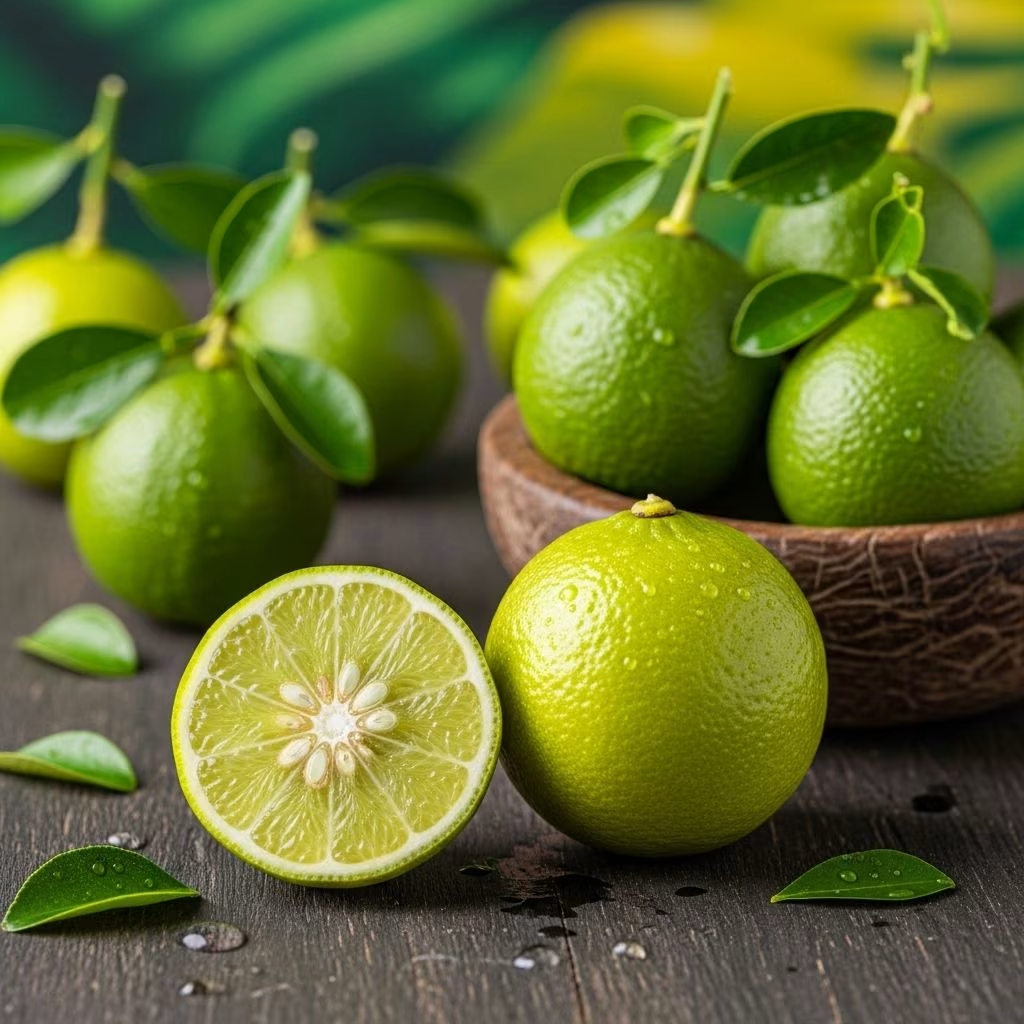
Mexican Lime—also known as Key Lime—is a small but mighty citrus fruit celebrated for its unique tartness and aromatic zest. From the heart of traditional Latin American and Caribbean cuisines to the renowned Key Lime Pie of Florida, this citrus is more than just a flavor enhancer—it’s a cultural icon. This guide delves deeply into the world of Mexican limes, detailing their origins, botanical characteristics, health benefits, culinary uses, and more.
What Is Mexican Lime (Key Lime)?
Mexican Lime, scientifically known as Citrus × aurantiifolia, is a tangy, aromatic citrus fruit native to Southeast Asia and widely cultivated in tropical and subtropical regions around the world today. It is commonly referred to as Key Lime—especially in the United States—because it became synonymous with the famous pies made in the Florida Keys. Other names for this fruit include West Indian Lime and Bartender’s Lime.
Key limes are small, generally 3–5 centimeters in diameter, round to oval-shaped, and distinguished by their thin, smooth, leathery skin that turns from dark green to a light yellow when fully mature. They grow on bushy, often thorny trees that can reach up to three meters in height.
Botanical Characteristics and Origin
- Scientific classification: Family Rutaceae; genus Citrus; species Citrus × aurantiifolia.
- Origin: A natural hybrid, originating from crossing Citrus micrantha and Citrus medica.
- Common names: Key lime, Mexican lime, West Indian lime, Bartender’s lime, Egyptian lime.
- Tree: Dense, evergreen, shrubby, bears white aromatic flowers throughout much of the year; trees are often thorny (though thornless varieties exist).
- Fruit: Small (1.5–2 inches in diameter), harvested green but ripens to yellow, thin-peeled, seedier than Persian lime; juice comprises a large portion of fruit mass and is highly acidic.
Key limes thrive in hot, sunny environments and are especially sensitive to cold temperatures and frost. They are now grown globally, but the leading commercial growers are Mexico and Central America, with smaller production in Florida and California.
How Mexican Key Lime Differs From Other Limes
Key limes are often compared to the more common Persian lime (Citrus × latifolia), which is larger and frequently found in supermarkets. The differences are substantial and go beyond just size and appearance.
| Property | Key Lime (Mexican Lime) | Persian Lime |
|---|---|---|
| Size | Small (3–5 cm diameter) | Medium-large (5–7 cm diameter) |
| Shape | Round to oval, often with short neck | Oval, more elongated |
| Rind | Thin, smooth, slightly leathery | Thick, coarse, glossy |
| Color (mature) | Green to yellowish, pale when ripe | Deep green (turns yellow when overripe) |
| Seeds | Many, often over 10–15 | Few, often considered seedless |
| Juice | Tart, highly acidic, more bitter | Milder, less acidic, sweeter |
| Aroma | Very floral, distinctive citrus scent | Gentle citrus scent |
| Perishability | Highly perishable, best used fresh | Longer shelf life |
| Main growing regions | Mexico, Central America, Florida, Southeast Asia | Brazil, Mexico, Southern U.S., Mediterranean |
Key limes deliver a flavor and fragrance profile dramatically different from Persian limes—smaller, seedier, significantly more acidic, and with intense floral and herbal notes.
Nutritional Value and Health Benefits
Mexican limes offer more than just refreshing flavor; they’re packed with nutrients and health-promoting compounds.
- High in vitamin C: A single Key lime can provide a significant portion of the daily recommended intake, supporting the immune system and promoting collagen synthesis.
- Rich in antioxidants: Contains flavonoids and other polyphenols that combat oxidative stress and help prevent cell damage.
- Low calorie: About 20 calories per fruit, with no fat and minimal natural sugars.
- Hydration support: High water content (over 40% juice by weight) contributes to hydration.
- Contains essential minerals: Notably potassium, magnesium, and small amounts of calcium.
- Digestive aid: The acidity can help increase digestive juices and promote gut health, while citrus oils from the zest may have antimicrobial properties.
- May support weight management: Low-calorie, high-flavor fruits like lime can help reduce calorie intake when used in water or as a replacement for higher-calorie condiments.
The combination of high vitamin C, valuable phytochemicals, and minimal calories makes Mexican lime a heart-healthy choice.
Taste Profile and Aroma
Key limes are universally praised for their complex and vibrant flavor. Their juice is highly acidic, tart, and slightly more bitter than regular limes, with subtle floral and herbal undertones. The scent is deeply aromatic, with a unique citrus-floral bouquet released when zesting or cutting the fruit open.
- Flavor notes: Tart, sharply acidic, hints of bitterness; intensified floral and herbal complexity.
- Aroma: Strongly citrusy with floral and slightly spicy notes, much more potent than Persian lime.
- Texture: Juicy, fine-grained flesh; thin, slightly leathery rind often used for zest.
Because their acidity and flavor are so pronounced, fewer key limes are needed to achieve the desired effect in recipes, but more fruit is used due to their smaller size and relatively low juice yield.
Culinary Uses of Mexican Lime
Key limes are a cornerstone ingredient in numerous cuisines and beloved for their role in both savory and sweet recipes.
Popular Culinary Uses
- Key Lime Pie: The iconic dessert that made Key lime famous in the United States, particularly in Florida. Its tart-sweet filling is perfectly balanced by the bold acidity of Mexican lime juice.
- Beverages: Used in cocktails such as the classic Margarita, Daiquiri, Mojito, and Caipirinha, as well as in homemade limeade and aguas frescas.
- Seafood: Ceviche, grilled fish, and shrimp dishes are marinated with Key lime juice for its bright, acidic flavor and tenderizing effects.
- Marinades & dressings: Key lime juice and zest add vibrancy to dressings, salsas, and meat marinades, as well as boost flavor in salads and slaws.
- Savory dishes: Enhances soups (such as Mexican sopa de lima), roasted meats, and rice dishes.
- Confectionery: Used to flavor cakes, cookies, custards, jams, curds, and candies.
The zest is as cherished as the juice, packed with volatile aromatic oils that intensify the lime fragrance in culinary applications. In Latin America, thin slices or wedges of Mexican lime are found on every table, ready to squeeze over tacos, soups, fruits, or grilled corn.
International Cuisine Examples
- Mexico: Squeezed on tacos, grilled meats, fresh fruits, and popular street foods.
- The Caribbean: Key lime is essential in tropical desserts and tangy relishes.
- Southeast Asia: Used abundantly in curries, salads, and fish dishes.
Growing and Harvesting Mexican Lime
Key lime trees are compact, often bushy, and renowned for their thorny branches and dense foliage. They flourish in subtropical to tropical climates with plenty of sunlight, warm temperatures, and well-drained, fertile soil. These trees are particularly sensitive to cold and do not withstand frost well.
- Tree size: Typically grow up to 7–12 feet (2–4 meters) tall.
- Flowering: Can occur year-round, most prolific in spring.
- Fruit bearing: Produces fruit from late summer into early winter, but in suitable climates harvesting is possible year-round.
- Harvesting: Fruit is picked when it turns from bright green to a pale yellow-green, which is when its aroma and juice reach peak quality.
- Varieties: Thornless selections exist and are more compact and upright, though they typically produce less fruit.
Modern commercial production is concentrated in Mexico and Central America, with a share of fruits also grown in California, Texas, and Florida.
How to Select and Store Mexican Lime
Tips for Selection:
- Look for fruits that are heavy for their size (indicating juiciness).
- The ideal skin is thin, fine-grained, slightly leathery, and pale green to yellow—avoid dark green, shriveled, or hard-skinned limes.
- Avoid limes with blotchy brown spots, signs of mold, or excessive softness.
Storage Recommendations:
- Best used fresh due to their high perishability.
- Store whole limes in the refrigerator to extend shelf life up to two weeks.
- Freshly squeezed juice can be refrigerated for up to two days, while zest can be frozen for longer use.
Frequently Asked Questions (FAQs)
Q: What gives Mexican Lime its distinctive taste?
A: Mexican Lime (Key Lime) owes its unique tartness, bitterness, and floral aroma to its high citric acid content, volatile oils in the zest, and abundant seeds, which differ from sweeter and milder Persian limes.
Q: Are Key limes more nutritious than regular limes?
A: Both types of limes are comparably nutritious with high vitamin C, but Key limes may have a slightly higher antioxidant profile due to their volatile oils and smaller size, which is consumed whole more frequently.
Q: Can you substitute Persian limes for Key limes in recipes?
A: Technically yes, but the taste will be less tart and lack the intense floral notes unique to Key lime. For authentic flavors in dishes like Key lime pie or ceviche, true Mexican lime is recommended.
Q: Why are Key limes often more expensive and harder to find?
A: Key limes are more perishable, yield less juice per fruit, and require careful handling during transport, making them more costly and less common in supermarkets compared to Persian limes.
Q: Is there a difference between Mexican limes and Key limes?
A: Both terms refer to the same fruit (Citrus × aurantiifolia). The name “Mexican lime” highlights its major production region, while “Key lime” refers to its association with the Florida Keys.
Summary
Mexican Lime, or Key Lime, is much more than a mere sour citrus—it’s a cultural staple and a flavor powerhouse. Its pronounced acidity, complex aroma, and versatile uses make it indispensable in dishes and drinks that celebrate fresh, bright flavors. From immune support and digestive benefits to culinary stardom, this tiny fruit delivers a delightful combination of health and taste for creative home cooks and gourmet chefs alike.
References
- https://specialtyproduce.com/produce/Mexican_Key_Limes_875.php
- https://en.wikipedia.org/wiki/Key_lime
- https://uscitrus.com/blogs/citrus-delight-blog/a-guide-to-mexican-key-limes-what-makes-them-different
- https://www.foodreference.com/html/artkeylimes.html
- https://edis.ifas.ufl.edu/publication/CH092
- https://www.gardenia.net/plants/common-names/key-lime
- https://apps.cals.arizona.edu/arboretum/taxon.aspx?id=683
- https://citrusvariety.ucr.edu/crc1710


