


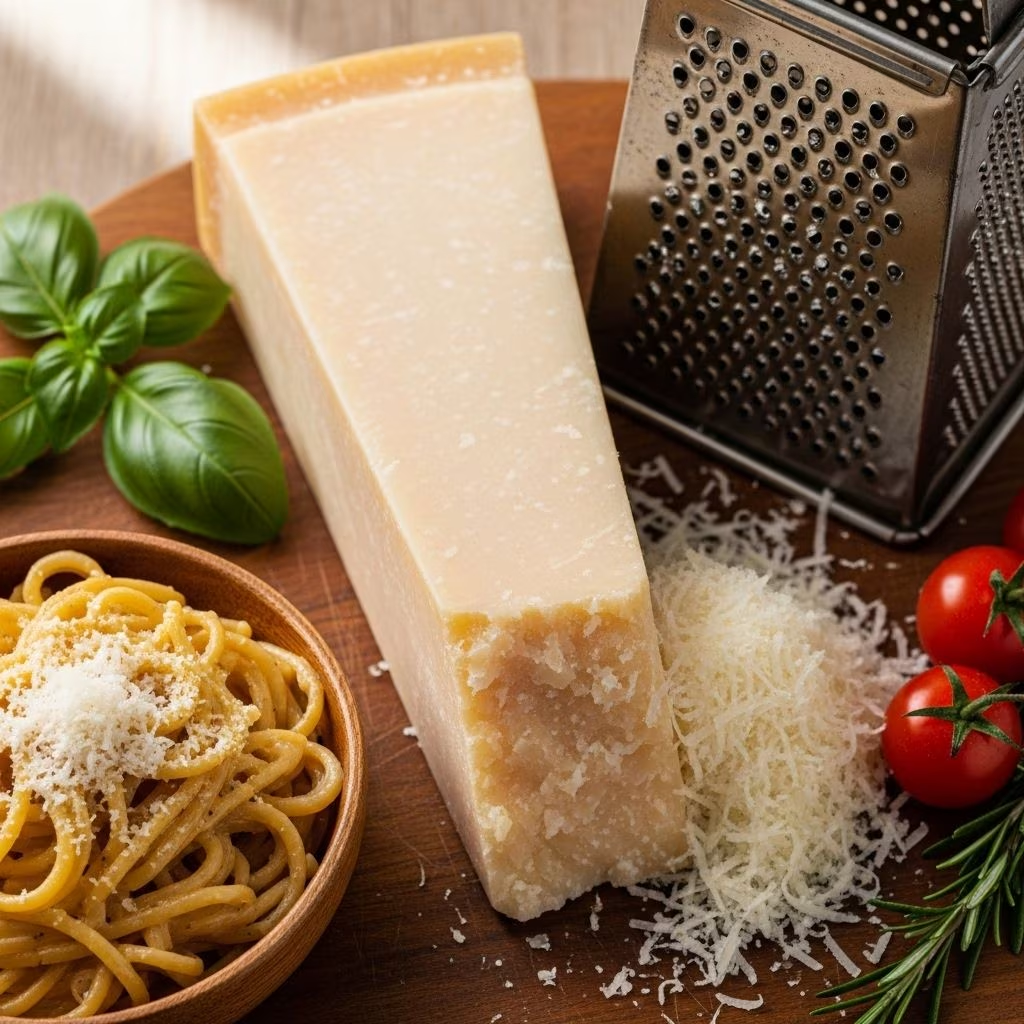
Parmesan cheese, globally celebrated for its rich flavor and versatility, is a historic Italian cheese that plays a starring role in both traditional and modern cuisines. Often called the “King of Cheeses,” true Parmesan is known in Italy as Parmigiano Reggiano — and it comes with centuries of heritage, nutritional value, and a flavor that transcends borders.
Origins and History of Parmesan Cheese
The origins of Parmesan cheese trace back nearly 900 years to the fertile plains of Northern Italy, specifically the regions between Parma and Reggio Emilia. It was first produced by Benedictine and Cistercian monks during the Middle Ages, aiming to create a cheese with exceptional durability for travelers and merchants. The earliest written record referencing Parmesan dates to 1254, mentioning “casei paramensis” (Parmesan cheese) as a valuable commodity.
Throughout the centuries, Parmesan’s fame spread throughout Europe, becoming esteemed among royalty and the clergy. Despite industrialization in cheese-making, traditional methods and the cheese’s characteristic features—hard texture, nutty aroma, and pronounced savoriness—remain preserved to this day.
Historical Highlights
- Medieval Production: Originated in monastic farms with surplus cow’s milk
- Trade and Endurance: Valued for long shelf life and trade suitability
- First Documented Sale: Noted in a Genoese notarial deed in 1254 as part of a property agreement
- European Spread: Referenced in classic literature and transported through trade routes
Production Process and Ingredients
Authentic Parmigiano Reggiano is made with only three or four core ingredients: raw cow’s milk, salt, rennet (an enzyme from calves), and naturally occurring starter cultures from previous day’s whey. Production remains centralized in the designated regions to this day, reflecting strict regulations that protect the cheese’s designation and quality.
Traditional Production Steps
- Milk Collection: Fresh, whole milk from specially fed cows is collected twice daily.
- Coagulation: Previous day’s whey and calf rennet are added to the morning’s milk in large copper vats to trigger coagulation.
- Curd Cutting: The curd is cut into rice-sized granules with a specialized tool called the spino, which is key to the cheese’s final texture.
- Cooking: The curds are slowly heated to release excess whey and firm up the granules.
- Draining and Molding: Curd mass is lifted, wrapped in muslin cloth, and placed into round molds to set the cheese’s shape.
- Salting: Cheese wheels are submerged in salt brine for around 20–25 days to develop flavor and preserve the cheese.
- Aging: Wheels are aged for a minimum of 12 months, though many are matured for 24, 36, or even up to 48 months. This process develops the signature granular structure and deep, complex flavor.
Essential Ingredients
- Raw cow’s milk from specific breeds
- Salt (for both taste and preservation)
- Calf rennet (for coagulation)
- Starter cultures from previous batches (for acidity and flavor)
Types and Varieties of Parmesan Cheese
While “Parmesan” is sometimes used generically (especially outside Europe), only cheeses produced in specific provinces and under DOP (Denominazione di Origine Protetta) regulations can be labeled as Parmigiano Reggiano. Grana Padano is the most closely related variety but with notable differences in production rules and flavor profile.
| Type | Region | Production Specifics | Typical Age | Key Differences |
|---|---|---|---|---|
| Parmigiano Reggiano | Parma, Reggio Emilia, Modena, Bologna (west of Reno), Mantua (south of Po) | Strict DOP rules; raw milk, no additives; only certain cow feed | 12–48+ months | More complex, nutty; aged longer |
| Grana Padano | Lombardy and neighboring provinces | Slightly less strict regulations; allows some additives and silage cattle feed | 9–24 months | Milder, smoother, slightly less complex |
| Generic “Parmesan” | Worldwide | No protection outside the EU; may use pasteurized milk or additives | Varies | Less stringent criteria; often lacks authentic taste/texture |
Nutritional Value and Health Benefits
Parmesan cheese is not only valued for its flavor but also for its rich nutritional composition. Due to extensive aging, it is virtually lactose-free and provides a concentrated source of essential nutrients.
Key Nutritional Components (per 30g/1oz serving, approximately):
- Calories: ~120 kcal
- Protein: 10–11g (high-quality, complete proteins)
- Fat: 7–8g (largely saturated fat)
- Calcium: ~30% of daily value
- Phosphorus, Zinc, Vitamin A, B12
- Sodium: Moderate to high
Health Benefits
- Lactose-Free: Aging breaks down almost all lactose, making it safe for most lactose-intolerant individuals.
- High Protein: Supports muscle health and repair.
- Rich in Minerals: Outstanding source of calcium and phosphorus, supporting bone and dental health.
- Digestibility: Aging and fermentation make nutrients more digestible and easier to absorb.
- Natural Product: No artificial additives or preservatives in authentic Parmigiano Reggiano.
- Potential Antioxidant Effects: Contains beneficial peptides developed during aging that may aid cardiovascular health (subject to ongoing research).
Note: Parmesan’s sodium content is moderate to high, so intake should be considered by those monitoring salt consumption.
Culinary Uses and Applications
Parmesan cheese is renowned for its versatility and ability to elevate dishes with its bold, savory flavor. Its hard, granular texture makes it ideal for both grating and shaving.
Popular Culinary Applications
- Pasta Toppings: The quintessential finishing touch for pasta dishes, especially spaghetti, fettuccine, risotto, ravioli, and lasagna.
- Soups and Stews: Adds depth when stirred in or used as a garnish in minestrone, chicken soup, or vegetable broths.
- Salads: Shaved or grated Parmesan lends texture and flavor to Caesar and arugula salads.
- Risotto and Polenta: Stirred in for creaminess and umami.
- Cheese Boards: Served in chunks; pairs well with honey, jams, figs, grapes, and strong red wines.
- Parmesan Crisps: Baked or pan-fried for a crunchy, gluten-free snack.
- In Breads and Pastries: Incorporated into dough or used as a topping for Italian-style breads and crackers.
- Rind Uses: Hard rinds are simmered in stocks, soups, and tomato sauce to impart lingering flavor (then removed before serving).
Tips for Cooking and Pairing
- Grate as needed for peak flavor—pre-grated loses aroma quickly.
- Pairs well with balsamic vinegar, fresh fruit, and aged wines.
- Use aged Parmesan in dishes requiring assertive flavor; younger for delicate applications.
Taste Profile and Sensory Characteristics
Parmigiano Reggiano stands out for its complex and evolving flavor, a hallmark of its extended aging and artisanal production.
Flavor and Texture At a Glance
- Aroma: Rich, nutty, with subtle notes of fruit and umami.
- Taste: Savory, salty, with hints of caramel, nuts, and even pineapple or butterscotch in some aged wheels.
- Texture: Hard, crumbly or grainy, and develops small crunchy crystals (tyrosine, a sign of age and quality).
- Aftertaste: Lingering, clean, and mouthwatering.
The cheese’s flavor deepens as it ages; younger Parmesan is milder and creamier, while longer-aged wheels (24–36 months or more) are more assertive and complex.
Comparison: Parmesan vs. Grana Padano
| Feature | Parmigiano Reggiano | Grana Padano |
|---|---|---|
| Minimum Aging | 12 months | 9 months |
| Flavor | Bolder, nuttier, deeper | Milder, smoother |
| Milk Source | Strictly regulated cow diets; no silage allowed | More flexible feed allowance |
| Textural Features | Crumbly, grainy, crystalline | Smoother, creamier granules |
Authenticity, Grading, and How to Identify Real Parmesan
Parmigiano Reggiano is a protected designation under European DOP law. Authentic wheels are stamped with the consortium’s mark and labeled according to their year of production and producer.
- Look for the dotted “Parmigiano Reggiano” inscription on the rind (a mark of DOP authenticity).
- Imported DOP Parmesan in the US or UK will carry a certification mark or protected designation sticker.
- “Grana Padano” and “generic Parmesan” (outside the EU) may not meet these strict criteria.
- True Parmesan is wedge-shaped, not processed or shredded, and should not contain preservatives or nontraditional flavorings.
Grading
- Wheels are tested and graded by official inspectors.
- Only those that meet strict texture, aroma, and appearance standards earn the full “Parmigiano Reggiano” mark.
- Failures are marked and sold under lesser classifications or as culinary cheese (not for use as table Parmesan).
Proper Storage and Care
- Keep Parmesan tightly wrapped (waxed paper and foil or cheese paper) in the fridge, ideally in the vegetable drawer.
- Avoid plastic wrap for long-term storage, as it traps moisture and can alter flavor.
- If the cheese dries, grate for cooking; if surface mold appears, trim (it rarely penetrates deep into the dense cheese).
- Wheels or wedges stored correctly last months; grated cheese loses flavor rapidly and should be consumed quickly.
Frequently Asked Questions (FAQs)
What is the difference between Parmesan and Parmigiano Reggiano?
“Parmigiano Reggiano” is the Italian DOP-protected cheese with strict quality controls from specific regions. “Parmesan” outside the EU may refer to other hard cheeses of similar style but does not guarantee the same ingredients, region, or aging methods.
Is Parmesan cheese vegetarian?
No. Traditional Parmesan cheese uses animal rennet from calves, a coagulant necessary in authentic production. Some alternative hard cheeses use microbial or vegetable rennet for vegetarians.
Why is authentic Parmesan more expensive than other hard cheeses?
Factors driving cost include high-quality milk, artisanal production, restricted geographical sourcing, and long aging processes. The stringent DOP regulations further ensure quality (and limit supply), affecting the price.
How do I best use Parmesan rinds?
Add cleaned Parmesan rinds to simmering soups, tomato sauces, or stews for a rich, savory boost, then remove before serving. The rinds infuse liquids with umami and depth.
Can Parmesan cheese be frozen?
Large wedges may be frozen for extended storage, but the texture can become crumbly and less appealing for slicing. Grate before freezing for best culinary use; thaw grated Parmesan as needed for cooking.
Is Parmesan cheese good for people with lactose intolerance?
Yes; the aging process eliminates nearly all lactose, making authentic Parmesan suitable for most lactose-intolerant individuals.
References
- https://agristuff.com/dairy-industry/parmesan-cheese-history-types-processing-steps-equipment-and-uses/
- https://www.ingferretti.com/en/parmesan-cheese-a-thousand-year-journey-from-its-origins-to-the-present-day/
- https://en.wikipedia.org/wiki/Parmesan
- https://www.consorziovaccherosse.it/en/2016/03/the-history-of-parmesan-cheese-parmigiano-reggiano-our-history/
- https://www.sapienstone.us/magazine/parmigiano-reggiano-museum-brief-history-king-cheeses-13083/
- https://www.parmigianoreggiano.com/product-history
- https://www.wisconsincheese.com/the-cheese-life/article/115/parmigiano-reggiano
- https://www.wipo.int/web/wipo-magazine/articles/parmesan-the-king-of-cheeses-37602
- https://oldwayspt.org/traditional-cheeses/examples-of-traditional-cheeses/all-about-parmigiano-reggiano/


