


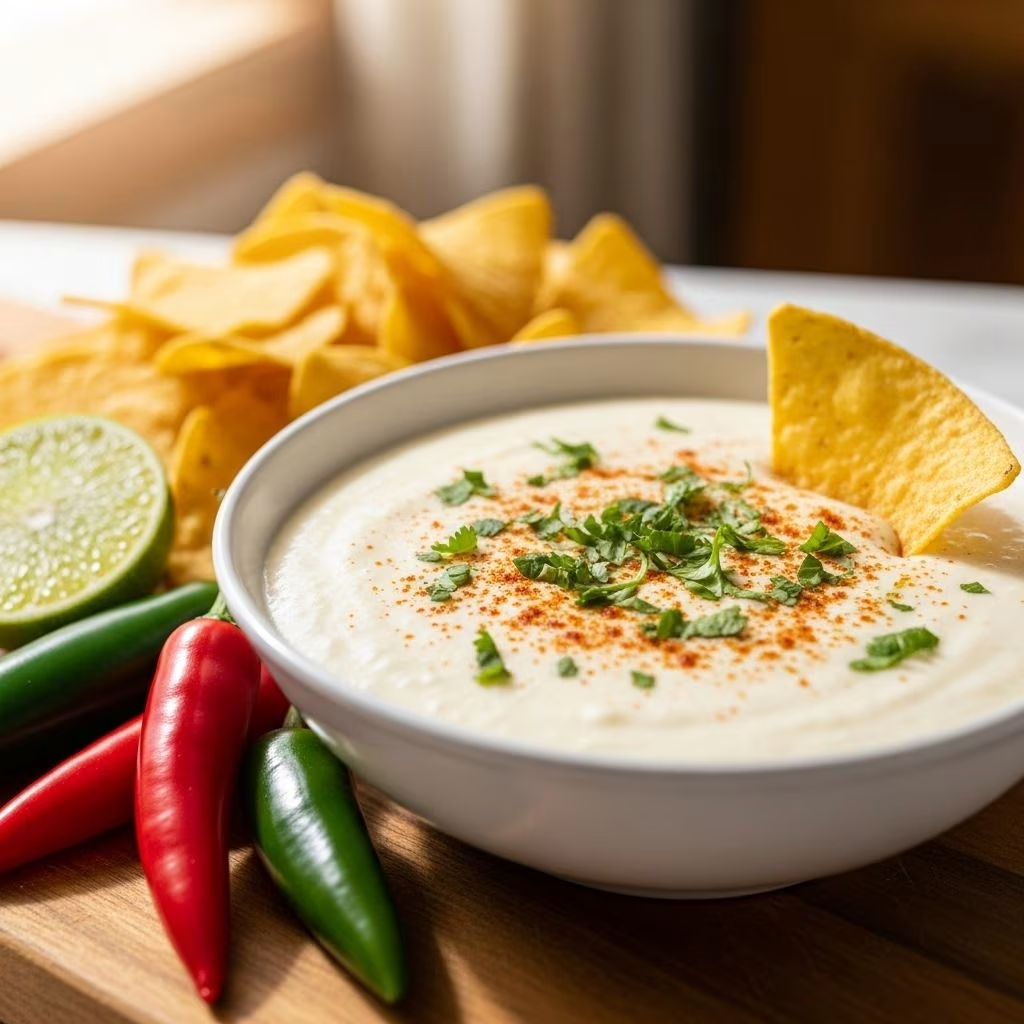
Queso Blanco, which translates to “white cheese” in Spanish, is a beloved staple in many Latin American cuisines. This fresh, unaged cheese is praised for its easy preparation, versatile use, and signature mild flavor. Whether crumbled atop salads, cubed in soups, or featured in sizzling dishes, Queso Blanco holds a valued place at tables around the world. This guide unpacks everything you need to know about Queso Blanco: its history, how it’s made, nutritional profile, benefits, common uses, taste, and answers to frequently asked questions.
Origin and History of Queso Blanco
Queso Blanco’s roots trace back to ancient Mesoamerica, where evidence of indigenous cheese-making practices can be found in the Aztec civilization. Early forms of Queso Blanco were likely produced from local milk sources, such as goats and cows introduced by the Spanish conquistadors in the 16th century. Over centuries, these dairy traditions intermingled with European cheese-making techniques, resulting in today’s Queso Blanco and its regional variations.
Various countries have made Queso Blanco their own:
- Mexico: Referred to interchangeably as Queso Blanco or Queso Fresco, commonly used in salads, beans, and rice dishes.
- Venezuela & Puerto Rico: Known for local versions with nuanced salt and moisture levels.
- El Salvador: Sometimes called Queso de Prensa or Queso de Puna.
As Latin American immigrants brought their foodways to other countries, particularly the United States, Queso Blanco gained popularity in diverse culinary contexts, notably in Tex-Mex cuisine.
What Sets Queso Blanco Apart?
Queso Blanco falls within the family of fresh, soft cheeses. Key distinguishing features include:
- Fresh and Unaged: It is rarely aged, retaining a bright, fresh taste.
- Rindless: Typically made in blocks or rounds without a rind.
- Appearance: Bright white color, crumbly to slightly firm texture.
- No Melting: Unusual among cheeses, it softens but does not melt, even when heated.
- Versatile Form: Available in pressed, cubed, crumbled, or sliced formats.
- Vegetarian: When made traditionally, it contains no animal rennet, making it suitable for many vegetarians.
How Is Queso Blanco Made?
One hallmark of Queso Blanco is its simple, approachable method of preparation. Unlike aged cheeses requiring bacterial cultures and specialized equipment, Queso Blanco can be made at home with minimal ingredients and time.
Typical Ingredients
- Whole cow’s milk (sometimes blended with goat’s milk)
- Food-grade acid (vinegar, lemon juice, or citric acid)
- Salt (for flavor and preservation)
Basic Preparation Steps
- Heat the milk to near-boiling (around 176°F or 80°C).
- Add acid to the hot milk, causing curds to form.
- Let the mixture stand until separation is complete (about 30 minutes).
- Drain the curds through cheesecloth to remove whey.
- Mix in salt evenly and press the curds into molds overnight.
This process results in a crumbly, sliceable cheese that is ready to eat within a day, though some regional styles are smoked or left to age lightly for added complexity.
Nutritional Value and Health Benefits
Queso Blanco offers several nutritional perks and can fit into various dietary preferences. While precise values vary by recipe and manufacturer, typical nutritional data per 1-ounce (28g) serving includes:
| Nutrient | Amount per 1oz (28g) | Benefits |
|---|---|---|
| Calories | 70–90 kcal | Energy for daily activities |
| Protein | 5–6g | Muscle building and repair |
| Fat | 5–7g | Satiety, flavor |
| Saturated Fat | 3–4g | Moderation advised for heart health |
| Calcium | 100–200mg | Bone and teeth health |
| Sodium | 170–300mg | May be higher in pressed/salted versions |
Key Health Benefits
- Good Protein Source: Offers high-quality dairy protein.
- Calcium-Rich: Supports bone strength and density.
- Vegetarian Friendly: Often made without animal rennet.
- Lower in Calories: Compared to harder or aged cheeses, Queso Blanco is often lower in fat and calories.
- Gluten-Free: Naturally appropriate for gluten-free diets.
- No Artificial Additives: Traditional recipes rely on simple whole foods.
Keep in mind that Queso Blanco’s sodium content can be considerable due to its brining or pressing, especially in commercial varieties. Those watching their salt intake should monitor their serving size.
Popular Culinary Uses
Queso Blanco’s firm, non-melting nature and mild flavor make it an incredibly versatile ingredient in both cooked and raw dishes. Below are some classic uses:
- Crumbling: Sprinkle over tacos, salads, beans, enchiladas, or roasted vegetables.
- Stuffing: Fill peppers, empanadas, or tamales with crumbled Queso Blanco for creamy texture.
- Cubing/Frying: Cube and pan-fry—it browns on the outside while holding its shape internally, making it a great vegetarian option for stir-fries and grilled dishes.
- As Table Cheese: Serve sliced with fruit, chutney, or marmalade as part of a cheese board.
- Soups and Sauces: Add to hot dishes for creaminess and mouthfeel without melting into the liquid.
- Sandwiches and Tortas: Use slices to add moisture and a creamy bite to breads.
- Substitutions: It can stand in for paneer (Indian), halloumi (Greek/Cypriot), or even tofu in many recipes.
Taste and Texture Profile
Queso Blanco is known for its mild, milky, and slightly salty flavor. The aroma is fresh and lightly aromatic, without sharp or pungent notes. The cheese typically features:
- Texture: Firm yet crumbly. Some versions have a rubbery feel; others are moist and break apart easily.
- Mouthfeel: Creamy but not greasy. The cheese softens with heat but maintains its shape and structure—perfect for frying or grilling.
- Flavor: Delicate, milky, and mildly salty; rarely strong or funky. The salt content may vary by region or producer.
- Finish: Clean and light, making it ideal for pairing with spicy, tangy, or sweet flavors.
This approachable taste profile is what gives Queso Blanco universal appeal, allowing it to complement rather than overpower dishes.
Queso Blanco Compared to Similar Cheeses
| Cheese | Origin | Texture | Melting Properties | Typical Uses |
|---|---|---|---|---|
| Queso Blanco | Latin America | Firm, crumbly | Does not melt | Crumbling, frying, fresh dishes |
| Queso Fresco | Latin America | Soft, moist | Softens, does not melt | Crumbling, toppings |
| Paneer | India | Firm, moist | Does not melt | Cubing, frying, curries |
| Halloumi | Cyprus | Rubbery, firm | Browns, does not melt | Grilling, frying |
| Ricotta Salata | Italy | Firm, crumbly | Does not melt | Grating, salads |
While Queso Blanco is sometimes confused with Queso Fresco, the two are subtly different: Queso Fresco is softer and more moist, while Queso Blanco tends to be firmer and crumblier. Both can be used similarly as toppings or fillings, but Queso Blanco’s ability to fry without melting is unique among cheeses globally.
Buying and Storing Queso Blanco
Where to Buy: Queso Blanco is widely available in Latin American grocery stores, supermarkets, and specialty cheese shops. It is sold under brands like Cacique and Karoun Dairies in the United States.
Storage Tips:
- Keep refrigerated, wrapped tightly to prevent drying out.
- If homemade, use within 5–7 days for best flavor and safety.
- Commercially produced Queso Blanco may last longer due to salt and pasteurization; follow the producer’s expiration date.
- If dried or smoked, it can be kept longer and even grated.
Queso Blanco is best enjoyed fresh, as aging alters its flavor and texture.
Frequently Asked Questions (FAQs)
Q: Is Queso Blanco the same as Queso Fresco?
A: The names are sometimes used interchangeably, especially in the U.S. However, Queso Blanco tends to be firmer and crumblier, while Queso Fresco is moister and softer. Both are fresh, white cheeses but have subtle texture differences.
Q: Can I make Queso Blanco at home?
A: Yes, it is one of the easiest cheeses to make at home, requiring just whole milk, an acid (like vinegar or lemon juice), and salt.
Q: Does Queso Blanco melt like mozzarella or cheddar?
A: No, Queso Blanco softens with heat but does not melt or become gooey. Instead, it holds its shape, making it ideal for frying, grilling, or crumbling over hot dishes.
Q: Is Queso Blanco suitable for vegetarians?
A: Traditional recipes do not use animal rennet but acid and heat to curdle the milk, making it vegetarian-friendly.
Q: How does Queso Blanco taste?
A: It is mild, fresh, delicate, with a pleasant salted dairy flavor. It does not have strong or pungent notes.
Q: What are good substitutes if I can’t find Queso Blanco?
A: Paneer (Indian), Halloumi (Cypriot/Greek), and even firm tofu can substitute for Queso Blanco in most recipes. Each offers a similar texture that holds up to cooking without melting.
Q: Is Queso Blanco healthy?
A: It provides a good source of protein and calcium, is usually lower in calories than aged cheeses, and fits well into many balanced diets. Sodium content can be high, so moderation is advised for those on salt-restricted diets.
Q: How is Queso Blanco typically served?
A: Commonly crumbled over dishes (like tacos and salads), fried into cubes, or included in soups and baked dishes for creaminess.
Conclusion
From ancient roots in Mesoamerica to its modern status as an international favorite, Queso Blanco is a celebration of simplicity, flavor, and versatility. Whether you enjoy it crumbled, grilled, or fresh, this cheese continues to delight cooks and diners worldwide—one mild, milky bite at a time.
References
- https://www.cheese.com/queso-blanco/
- https://www.tijuanaflats.com/blog/invention-of-queso
- https://www.thinkusadairy.org/assets/documents/Customer%20Site/C3-Using%20Dairy/C3.7-Resources%20and%20Insights/02-Product%20Resources/DMI-721%20Hispanic%20CheeseFINAL9.pdf
- https://www.splendidtable.org/story/2000/12/12/queso-blanco
- https://www.ams.usda.gov/sites/default/files/media/CID%20Cheese,%20Queso%20Blanco.pdf
- https://culturecheesemag.com/blog/latin-american-cheese-queso-blanco/
- https://cheese.fandom.com/wiki/Queso_blanco
- https://www.wisconsincheese.com/find-cheese/ch/49/queso-blanco


