


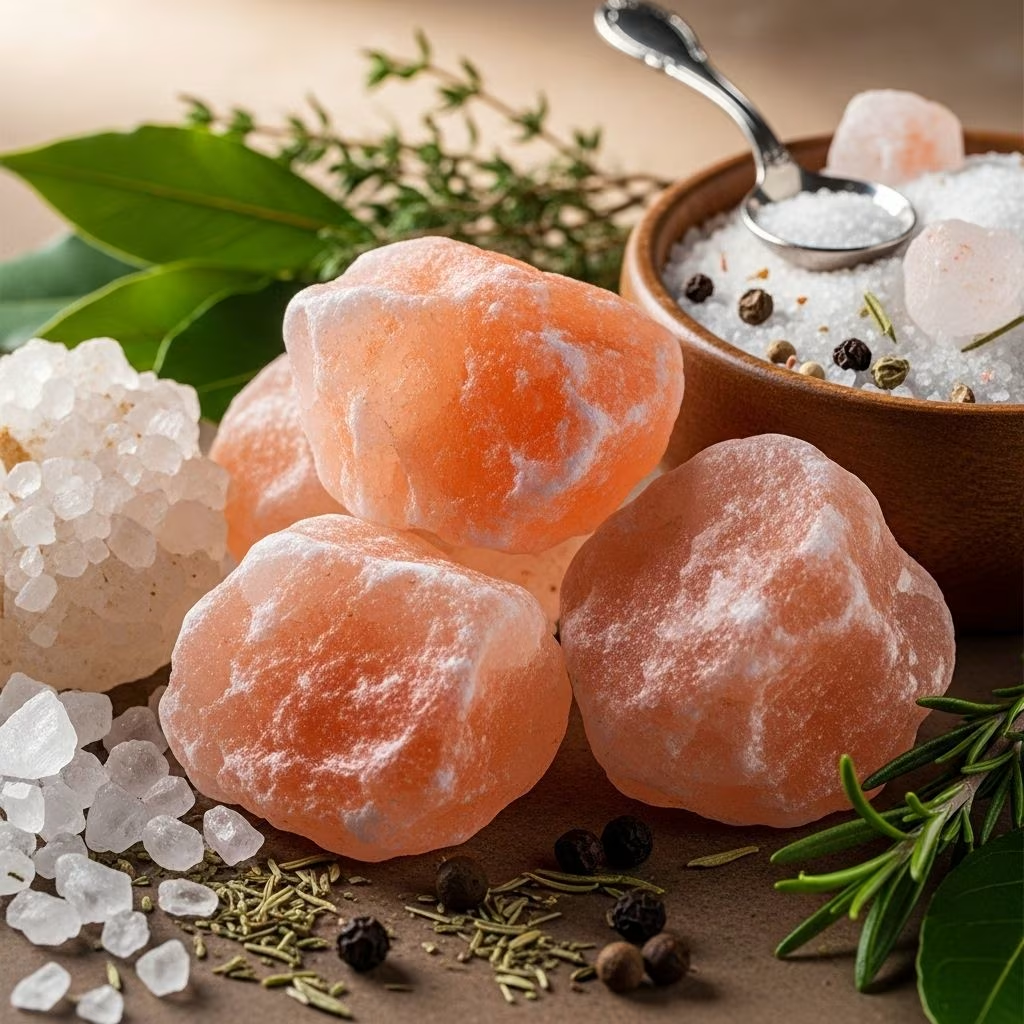
Rock salt—scientifically known as halite—is more than just a seasoning or a de-icer. It is a vital geological mineral that shapes our cuisine, supports industries, and documents the history of Earth’s water cycles. This comprehensive guide delves into the nature, formation, practical uses, benefits, and sensory properties of halite, providing clarity for scientists, chefs, and the curious alike.
Introduction to Rock Salt (Halite)
Rock salt, also known as halite, is a naturally occurring mineral form of sodium chloride (NaCl). Though most people encounter its processed form in kitchens and supermarkets, halite’s geological and industrial significance spans far beyond seasoning food. The mineral forms massive crystalline beds and domes, and its extraction supports essential services from winter road maintenance to chemical manufacturing .
Scientific Properties and Structure
Chemical and Physical Characteristics
Halite is among the simplest and most recognizable minerals on Earth. As sodium chloride, its atomic structure reflects a perfect one-to-one ratio of sodium (Na+) and chloride (Cl–) ions. The ions are bound by electrostatic forces in a classic cubic crystal lattice .
| Property | Value/Description |
|---|---|
| Chemical Formula | NaCl |
| Molecular Weight | 58.44 g/mol |
| Crystal Structure | Cubic (isometric) |
| Color | Colorless or white; impurities yield yellow, gray, red, etc. |
| Luster | Vitreous (glassy) |
| Cleavage | Perfect, cubic; three directions at 90° |
| Transparency | Transparent to translucent |
| Hardness (Mohs) | 2.5 |
| Specific Gravity/Density | 2.16 – 2.17 g/cm³ |
| Taste | Salty |
| Solubility | Highly soluble in water |
Ionic Bonding and Melting Point
The ionic bonding between sodium and chloride gives halite its high melting point (about 801°C) and notable stability under normal conditions. When heated in a flame, sodium ions impart a yellow color—a classic test for this element .
Sensory Properties
- Taste: Salty, universally recognizable
- Texture: Brittle, easily cleaves into cubic crystals
- Color: Pure halite is colorless; various mineral impurities yield pink, blue, gray, or brown hues
Optical and Other Features
- Optically isotropic (does not show birefringence)
- Fluorescent under ultraviolet light in some cases
- Poor electrical conductivity as a solid, but highly conductive in solution
Formation and Geological Deposits
Halite typically forms in arid sedimentary environments—especially within evaporite deposits where large volumes of water have evaporated, leaving sodium chloride to crystallize . Notable formation settings include:
- Evaporation of Ocean Water: Most large deposits originated from successive cycles of sea water evaporation in restricted marine basins.
- Inland Saline Lakes: Current-day formations are evident in bodies like the Great Salt Lake (Utah, USA) and the Dead Sea.
- Salt Domes: Under deep burial, salt layers can rise to form domes, which may penetrate surface rock.
- Volcanic Craters: Rarely, halite is found crystallizing near volcanic emissions.
Major Global Deposits
- US: Great Salt Lake, Michigan Basin, and deep bedded deposits in New York and Texas
- Europe: Cheshire Basin (UK), Poland’s Wieliczka Salt Mine
- Asia: Himalayan salt beds (notably ‘pink salt’ from Pakistan)
- Middle East: Dead Sea and surrounding regions
Some ancient salt beds are thousands of meters thick and serve as important geologic markers and resource bases .
Extraction and Processing
The method of extraction varies by deposit type and intended end-use:
- Mining: Giant underground deposits are accessed via traditional shaft mining, sometimes creating vast chambers.
- Solution Mining: Water is injected underground, dissolving salt, then brine is pumped back and evaporated to yield pure salt.
- Solar Evaporation: Shallow ponds permit the sun to evaporate water, leaving salt behind. This is common in arid coastal areas or near saline lakes.
Raw halite often contains impurities (such as clay, gypsum, and trace minerals) that must be removed for food and certain industrial uses .
Major Uses of Rock Salt
Industrial and Commercial Uses
- De-icing: The largest use—crushed rock salt is scattered on icy roads and walkways to lower the freezing point of water and prevent or melt ice accumulation.
- Chemical Manufacturing: Halite serves as a fundamental feedstock for producing chlorine, caustic soda, and various sodium compounds (soda ash, hydrochloric acid, etc.).
- Water Softening: Rock salt regenerates ion-exchange resins in water softeners, replacing calcium and magnesium with sodium ions.
- Textiles and Dyes: Used in setting dyes and treating textile fibers.
Food and Culinary Uses
- Table Salt: After purification, it is ground to fine crystals for household use.
- Preservation: Salt historically allowed food storage before refrigeration by inhibiting bacterial growth.
- Specialty Salts: Some minimally processed rock salt (such as Himalayan pink salt) is prized for presentation and mineral flavor notes.
Other Applications
- Animal Nutrition: Blocks or loose salt supplements for livestock
- Bath and Spa Products: Used in bath salts for relaxation and purported skin benefits
- Historical and Ritual Uses: Employed in religious, medicinal, and mummification practices in various cultures
Health Benefits and Nutrition
Sodium chloride is essential for human physiology. Its significant health roles include:
- Nerve Function: Sodium ions maintain electrical gradients across nerve and muscle membranes, allowing signal transmission.
- Fluid Balance: Controls movement of water between body compartments and helps regulate blood volume and blood pressure.
- Electrolyte Balance: Chloride aids in maintaining acid-base equilibrium and aids digestive processes.
Recommended Intake: Most health organizations recommend moderate consumption—generally less than 2,300 mg of sodium per day for adults. Excess sodium can contribute to hypertension and cardiovascular risk, so intake from all food sources should be balanced.
Is Rock Salt Healthier than Table Salt?
Unrefined rock salt retains trace minerals such as calcium, potassium, and magnesium, which some claim provide additional health benefits. However, these minerals are present in very small quantities and for most people, the nutritional impact is minor. The lack of added iodine may be a concern, as most table salt is iodized to prevent thyroid disorders.
Flavor and Culinary Profile
What Does Rock Salt Taste Like?
Halite has the classic ‘salty’ flavor that defines sodium chloride. Because of its strong ionic bonds, dissociation in the mouth rapidly delivers sodium and chloride ions to taste receptors, producing a familiar and sharp saline sensation .
Culinary Characteristics
- Texture: Larger, irregular crystals offer crunch and slow melting when used as a finishing salt.
- Flavor: Pure, intense saltiness; unrefined varieties may have subtle earthy, mineral, or slightly bitter notes depending on their geographic source and impurities.
- Appearance: Colors can range due to natural minerals—pure white to pink, blue, or gray (notably in Himalayan or Persian blue salt).
Halite’s crystalline structure lends itself to unique culinary presentations—from salt crusts on roasted meats to striking salt lamps serving as edible centerpieces.
Comparison: Rock Salt Vs Other Salts
| Salt Type | Source | Main Features | Uses |
|---|---|---|---|
| Rock Salt (Halite) | Underground beds, evaporite deposits | Coarse, cubic, may contain minerals | De-icing, water softening, specialty cooking |
| Table Salt | Purified from halite or sea salt | Fine crystals, often iodized, anti-caking agents added | Household seasoning, baking, preservation |
| Sea Salt | Evaporated seawater | Flaky or fine grains, retains some minerals | Cooking, finishing salt |
| Himalayan Pink Salt | Ancient Himalayan deposits | Pale pink, mineral-rich, coarse or fine | Culinary, presentation, spa |
Frequently Asked Questions (FAQs)
Q: Is rock salt safe for consumption?
A: Only food-grade rock salt is intended for culinary use. Raw, unpurified rock salt may contain impurities and should not be consumed directly. Commercial table salt is usually derived from purified halite.
Q: Does rock salt contain more minerals than table salt?
A: Unrefined rock salts can contain trace minerals (like magnesium and iron) that give distinctive colors, but the nutritional contribution is minimal. Most table salts are highly refined and may include added iodine.
Q: Why is rock salt used in ice cream making?
A: Rock salt is mixed with ice to lower its melting point, allowing for colder temperatures during the churning process and thus faster freezing of ice cream mixtures.
Q: Are there health risks to using rock salt?
A: The main health concern with any salt is excessive sodium intake. Otherwise, food-grade rock salt is safe, but non-food grade may contain harmful contaminants.
Q: What makes Himalayan pink salt different from classic rock salt?
A: Himalayan pink salt is a variety of halite with trace minerals (notably iron oxide) giving it a pink hue. Its culinary function is the same as other salts, though it’s valued for appearance and perceived wellness benefits.
Conclusion
Rock salt—halite—is a mineral of global importance, supporting ecosystems, industries, and human health. Its distinctive salty flavor, physical properties, and accessibility have made it indispensable from ancient times to modern civilization. While fascinating for its crystalline perfection and geologic history, its value in food, safety, and industry remains timeless. Remember: moderation in the use of any salt is key to enjoying its benefits without excess health risk.
References
- https://geologyscience.com/minerals/halite/
- https://webmineral.com/data/Halite.shtml
- https://geology.com/minerals/halite.shtml
- https://melscience.com/US-en/articles/how-describe-salt-mineral/
- https://en.wikipedia.org/wiki/Halite
- https://geology.ecu.edu/geol1501/sedimentary/rock-salt/
- https://rocksaltusa.com/halite-rocksaltusa
- https://www.govinfo.gov/content/pkg/GOVPUB-C13-7c3b82ee47d261fbd449089606e571bb/pdf/GOVPUB-C13-7c3b82ee47d261fbd449089606e571bb.pdf


