


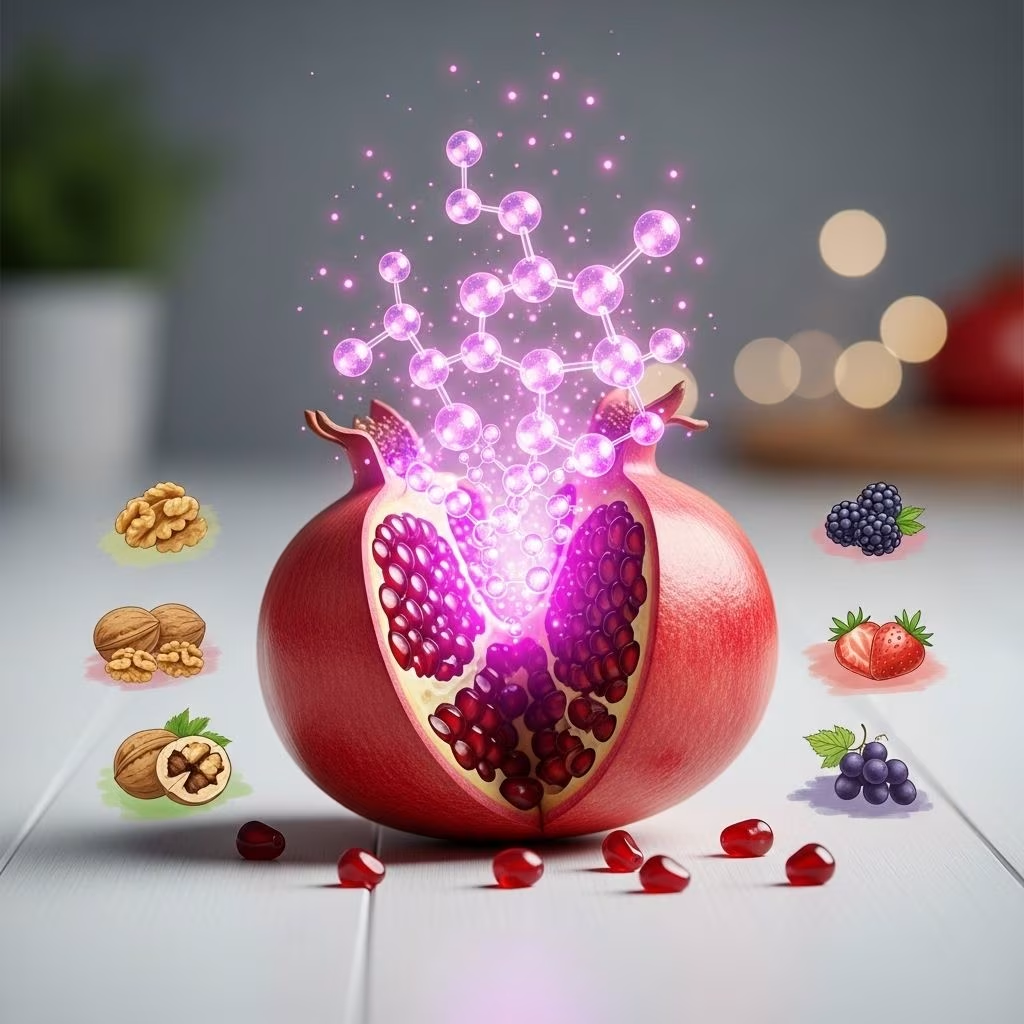
Urolithin A (UA) is a bioactive compound produced in the body by gut bacteria after consuming foods rich in ellagitannins, such as pomegranates, berries, and nuts. Over the last decade, scientists have revealed its remarkable effects on muscle strength, mitochondrial health, inflammation, and age-related decline. This comprehensive guide explores what Urolithin A is, how it works, its health benefits, best uses, potential side effects, and the unique aspects of its taste.
Introduction to Urolithin A
Urolithin A is a naturally occurring postbiotic, a compound generated by your gut microbiome during the breakdown of ellagitannin-containing polyphenols. This sets it apart from directly consumed vitamins or minerals: UA’s potential health effects depend not only on diet but also on the unique microbial composition of an individual’s digestive system. As a result, not everyone produces UA efficiently—prompting interest in direct supplementation.
How Urolithin A is Produced
Ellagitannins and ellagic acid, present in foods like pomegranate, strawberries, raspberries, walnuts, and pecans, are the precursors to Urolithin A. Upon ingestion, the following process occurs:
- Ellagitannins and ellagic acid reach the colon largely intact.
- Specific beneficial gut bacteria metabolize them, yielding various urolithins—primarily Urolithin A.
- This conversion efficiency varies among individuals depending on their gut health, age, and dietary habits.
Because only a proportion of adults have gut microbes capable of converting ellagitannins to UA, supplementation has grown in popularity, making its benefits broadly accessible.
Key Health Benefits of Urolithin A
Extensive clinical and preclinical research demonstrates that Urolithin A may:
- Improve muscle strength and function, particularly in middle-aged and older adults.
- Support mitochondrial health, the energy generators in your cells, which declines with age.
- Reduce chronic inflammation throughout the body.
- Enhance gut barrier function and overall digestive health.
- Provide antioxidant protection, defending against cellular stress.
- Possibly extend lifespan and delay age-related decline (demonstrated mainly in animal studies so far).
Muscle and Mitochondrial Health
Muscle health and function gradually diminish with aging due to reduced mitochondrial activity, decreased muscle mass, and increased oxidative stress. Urolithin A shows promise in reversing or slowing aspects of this decline:
- Studies in middle-aged adults (ages 40–65) found that supplementation with 500 mg to 1000 mg of UA increased muscle strength by up to 12% over four months compared to placebo.
- Exercise studies demonstrate that UA improves endurance and delays the onset of muscle fatigue, possibly by enhancing mitochondrial biogenesis—the creation of new mitochondria within muscle cells.
- UA upregulates the body’s process of mitophagy, in which dysfunctional mitochondria are selectively removed, allowing for healthier cellular energy production.
This aspect is of particular interest for athletes, the aging population, and those with diminished mobility due to chronic disease or inactivity.
Anti-Inflammatory Properties
Chronic inflammation is a common thread in many aging-related diseases, including metabolic disorders, neurodegeneration, and cardiovascular issues. Evidence suggests Urolithin A helps in:
- Reducing key inflammatory markers such as IL-1β, CRP, INF-γ, and TNF-α, especially in middle-aged adults.
- Inhibiting inflammatory signaling pathways like the NF-κB pathway, thereby modulating immune system response.
- Lowering inflammation not only in muscles but also in the gut, heart, and brain.
These anti-inflammatory effects play a crucial role in enhancing recovery after exercise, reducing muscle and joint pain, and potentially preventing chronic inflammatory diseases.
Gut Health and Barrier Function
Beyond muscle and inflammation, UA has been shown to increase integrity of the intestinal lining and support overall digestive health:
- Reduces gut permeability, often referred to as “leaky gut,” common in inflammatory bowel diseases (IBD) and other digestive disorders.
- Helps cells lining the gut maintain tight connections, crucial for a healthy barrier against toxins and pathogens.
- Supports a more balanced gut microbiome, which itself reinforces healthful UA production from food sources.
This makes UA a potential adjunctive therapy for gut health, especially for those at risk of IBD, colitis, and related conditions.
Cognitive Function, Aging, and Longevity
Although human trials are still early, animal studies highlight further promise of UA in neurological and lifespan domains:
- Animal trials have shown that UA supplementation may delay age-related cognitive decline by improving mitochondrial function in neurons.
- In some preclinical models, lifespan increased by up to 18% following UA supplementation, though these results need confirmation in humans.
- UA may help protect the brain from neurodegeneration and support overall healthy aging via its antioxidant and anti-inflammatory actions.
Uses and Supplementation
Who should consider using Urolithin A?
- Individuals over age 40 aiming to maintain muscle mass, strength, and mobility
- Athletes seeking improved endurance and recovery
- Older adults or those with low activity levels, at risk of muscle atrophy
- Individuals experiencing gut problems or chronic, low-grade inflammation
- People interested in healthy aging and longevity strategies
UA can be obtained via:
- Diet: Consuming foods rich in ellagitannins (see table below), with supplementation for those lacking necessary gut bacteria.
- Supplements: Direct UA supplements, usually in capsule or powder form, are the most reliable route for consistent dosing.
| Food | Approx. Ellagitannins (mg/100g) |
|---|---|
| Pomegranate | 1,500–2,500 |
| Raspberries | 300–700 |
| Strawberries | 100–700 |
| Walnuts | 40–70 |
| Pecans | 30–45 |
Note: Gut microbiota composition strongly affects how much UA is derived from diet alone.
Recommended Dosage and Safety
Most human studies use doses of 500 mg or 1000 mg per day—either dose was shown to be well-tolerated when taken for two to four months. Higher doses, as used in some clinical research, did not show severe adverse effects, though more data are required on long-term safety.
- Start low (e.g., 250–500 mg/day) and adjust as needed, especially for those new to postbiotic supplements.
- Consult a healthcare provider if you have underlying medical conditions or take other medicines.
Possible Side Effects
UA is generally recognized as safe and well-tolerated. However, some individuals may experience mild side effects:
- Muscle aches or soreness—most common in early supplementation trials.
- Gastrointestinal symptoms, such as mild bloating or discomfort.
- Allergic reactions are rare; discontinue use if symptoms occur.
No serious or life-threatening adverse effects have been reported in published studies to date. Still, as with any supplement, quality and dosing matter—buy from reputable sources.
What Does Urolithin A Taste Like?
Pure UA itself is rarely consumed in isolation, as it is primarily available as an encapsulated supplement. If tasted directly, most users and capsule manufacturers report its taste as:
- Mildly bitter and somewhat earthy
- Bland and nondescript, without significant flavor intensity
- Far milder than its precursor foods, such as tart pomegranate or raspberries
In summary: Urolithin A is not added to foods for its taste—the benefits are physiological, not culinary.
Urolithin A vs Other Postbiotics
UA is part of a family of gut-derived metabolites called postbiotics. While others (such as butyrate, propionate, and acetate) play important roles in gut and metabolic health, UA stands out for its:
- Unique impact on mitochondrial function
- Documented ability to enhance muscle performance
- Broader anti-inflammatory and antioxidant activities
No other currently known postbiotic is as closely linked to improved muscle aging and endurance.
Frequently Asked Questions (FAQs)
Q: Who naturally produces Urolithin A?
A: Only individuals with the right gut bacteria can convert ellagitannins from foods such as pomegranates and nuts into Urolithin A. Research estimates about 40-60% of adults possess sufficient microbiota for this conversion.
Q: Can Urolithin A be obtained from food alone?
A: While certain foods are rich in Urolithin A precursors, individual gut bacteria are essential for conversion. Direct supplementation of UA bypasses this variability, ensuring consistent health benefits regardless of microbiome composition.
Q: Is Urolithin A suitable for vegetarians and vegans?
A: Yes. Urolithin A supplements themselves are typically plant-derived and compatible with vegetarian and vegan diets, provided capsules are not gelatin-based.
Q: Are there long-term studies confirming the lifespan benefits of Urolithin A?
A: Lifespan extension has been demonstrated in animal studies, but long-term randomized controlled trials in humans are needed to confirm these effects.
Q: Does Urolithin A interact with medications?
A: UA appears not to strongly interfere with common medications, but always consult your healthcare provider before introducing new supplements, especially if you take anticoagulants, immunosuppressants, or drugs that influence the gut or liver.
Q: What is the best time to take Urolithin A supplements?
A: Most trials did not specify an optimal timing, but consistent daily supplementation—preferably with food for improved absorption—is recommended.
References
- Urolithin A Side Effects, Benefits, and Dosage – NAD.com
- Pharmacological Effects of Urolithin A and Its Role in Muscle Health – PubMed Central
- Tiny Health – Urolithin A Benefits And The Role Of Your Gut Microbiome
- Wellness Hub – Urolithin A: Benefits For Health and Aging | iHerb
References
- https://www.nad.com/news/urolithin-a-side-effects-benefits-and-dosage
- https://pmc.ncbi.nlm.nih.gov/articles/PMC10609777/
- https://www.tinyhealth.com/blog/urolithin-a-benefits-and-the-role-of-your-gut-microbiome
- https://www.iherb.com/blog/urolithin-a-benefits/2011
- https://www.cancer.gov/publications/dictionaries/cancer-drug/def/urolithin-a-supplement
- https://www.drkarafitzgerald.com/2023/04/10/urolithin-a-the-game-changing-nutrient-for-healthy-aging/
- https://www.alzdiscovery.org/uploads/cognitive_vitality_media/Urolithin_A_UPDATE_(supplement).pdf
- https://alz-journals.onlinelibrary.wiley.com/doi/10.1002/alz.13847


