


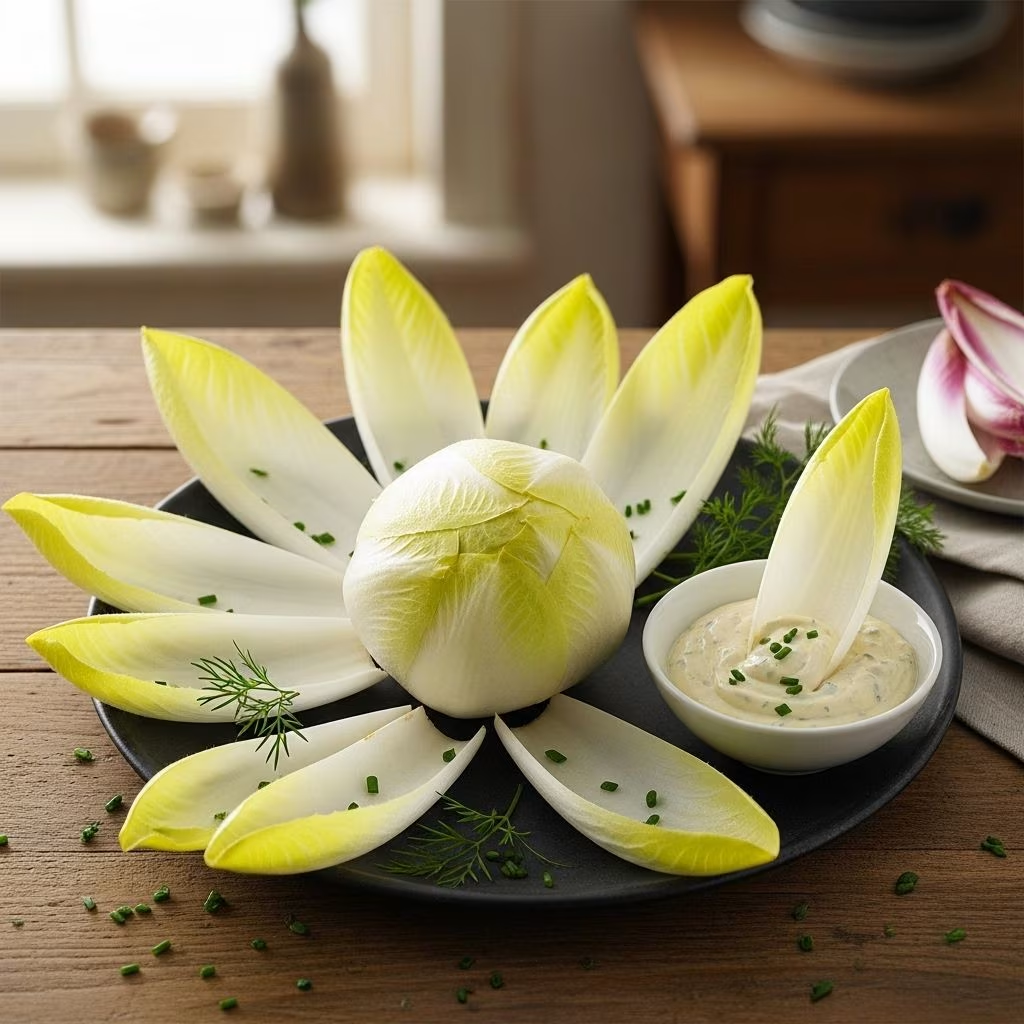
Witloof—more widely known as Belgian endive or white leaf chicory—is a crisp, pale, elongated vegetable highly prized for its unique flavor profile and versatility in the kitchen. Celebrated in European cuisine and increasingly valued worldwide, witloof combines delicate bitterness with exceptional nutritional value, making it a staple worth understanding in depth.
What Is Witloof?
Witloof (pronounced wit-loof), literally meaning “white leaf” in Dutch, is the common European name for Belgian endive, a tightly packed head of pale, elongated leaves bred from the chicory plant (Cichorium intybus). It is sometimes referred to as chicon in French-speaking regions and is also known as witlof in Australia and New Zealand.
- Botanical family: A member of the chicory genus (Cichorium intybus), not a true endive.
- Other names: Belgian endive, white leaf chicory, chicon.
- Main culinary feature: Compact heads of smooth, creamy leaves with a crisp, slightly bitter, and nutty taste.
- Unique cultivation: Grown initially for its root, then forced to sprout in complete darkness to preserve the pale color and delicate flavor.
Origins and History
The story of witloof begins in Belgium in the mid-19th century. A chance discovery by Jan Lammers, who stored chicory roots in a dark cellar, led to the cultivation of this delicacy now known as Belgian endive. Its popularity grew rapidly, becoming an iconic vegetable in Belgium and neighboring countries.
- Origin: 1850s, Brussels region, Belgium.
- Name: “Witloof” means “white leaf” in Dutch, referencing its pale appearance.
- Status: Considered “white gold” in Belgium due to its culinary and cultural significance; included in Belgium’s Inventory of Intangible Cultural Heritage since 2021.
The cultivation process is unique: chicory roots are grown outdoors, harvested, and then forced to regrow in dark, cool environments. This prevents photosynthesis and thus chlorophyll production, ensuring the leaves remain white and mild in flavor.
Appearance, Texture, and Taste
Witloof is visually distinctive and immediately recognizable by:
- Shape: Elongated, torpedo-shaped head, tightly packed, usually 10–16 cm long.
- Color: Creamy white leaves with pale yellow or light green tips—dark green indicates overexposure to light and intensifies bitterness.
- Texture: Firm, crisp, and juicy when fresh, with a satisfying snap when bitten into.
- Taste: Characterized by a delicate bitterness and subtle nutty notes. The inner core and greener tips are typically more bitter, while the paler heart is milder and slightly sweet.
When cooked, the bitterness mellows and develops a nutty, almost caramelized flavor, making witloof a favorite for both raw and cooked dishes.
Table: Quick Comparison—Raw vs. Cooked Witloof Taste
| Preparation | Flavor Profile | Texture |
|---|---|---|
| Raw | Delicate, crisp, mildly to moderately bitter, subtly nutty | Firm, juicy, crunchy |
| Cooked | Milder bitterness, nutty, slightly sweet, sometimes caramelized | Softer, tender, sometimes melting |
Nutritional Benefits of Witloof
Witloof deserves recognition not just for its flavor and culinary versatility, but also for its impressive nutritional profile. It is nutrient-dense while being very low in calories and sodium.
- Low in Calories and Fat: Ideal for calorie-controlled diets (approx. 11 kcal per 100 g).
- Rich in Fiber: A good source of dietary fiber, supporting digestive health.
- Vitamins: Contains vitamin E (antioxidant), folate (vital for cell function and pregnancy), and vitamin K.
- Minerals: Features potassium, calcium, and magnesium.
- Antioxidants: Provides plant compounds that protect the body against cell damage and support immune function.
Nutritional Facts (per 50g serving, raw)
| Nutrient | Per 50g Serve | Per 100g |
|---|---|---|
| Energy | 28 kJ | 57 kJ |
| Protein | 0.4 g | 0.8 g |
| Fat (Total) | 0.1 g | 0.1 g |
| Carbohydrate | 0.2 g | 0.5 g |
| Dietary Fiber | 2 g | 4 g |
| Sodium | 4 mg | 7 mg |
| Folate | 26 µg (13% RDI) | 52 µg |
| Vitamin E | 1.15 mg (11% RDI) | 2.3 mg |
Key Health Benefits
- Digestive support: High fiber content encourages regularity and gut health.
- Antioxidant action: Vitamin E and other plant compounds help fight oxidative stress.
- Heart health: Potassium and low sodium support healthy blood pressure levels.
- Bone health: Vitamin K aids in bone formation and integrity.
- For expectant mothers: Folate is crucial for fetal development.
Culinary Uses and Cooking Methods
Witloof has an esteemed place in European kitchens, particularly in Belgium, France, and the Netherlands. Chefs value its ability to shine both raw and cooked, adapting easily to various preparations.
Raw Uses
- Salads: Thinly sliced or separated into leaves for salads with apples, walnuts, citrus, blue cheese, or vinaigrette.
- Appetizer Boats: Individual leaves filled with cheese, smoked salmon, or spreads.
- Crisp garnish: Adds texture and subtle bitterness to mixed greens.
Cooked Uses
- Braised or baked: Often cooked in butter, baked with cheese sauces or cream (“endives au gratin,” “endive au jambon”).
- Roasted or grilled: Caramelizes and mellows the bitterness, bringing out sweetness.
- Stuffed: Leaves or whole heads filled with savory mixtures such as minced chicken, seafood, or mushrooms.
- In pies, tarts, or gratins: Adds complexity and depth of flavor to egg-based or vegetable bakes.
In Belgium, witloof is a highlight ingredient in the classic endive au jambon: steamed endive wrapped in ham, smothered in cheese sauce, then baked until golden.
Other Notable Applications
- Coffee Substitute: The root of the chicory plant (from which witloof is forced) can be roasted and used as a caffeine-free coffee substitute or coffee extender—a tradition in several European countries.
- Herbal teas and infusions: Some artisanal producers dry witloof leaves for tea blends.
How to Select and Store Witloof
Selecting high-quality witloof ensures the best flavor and texture in your culinary creations:
- Look for: Firm, compact heads with creamy white leaves and only the palest yellow or green tips.
- Surface: Avoid heads with wilted, browned outer leaves or excessive green exposure.
- Size: Smaller heads tend to be more delicate and less bitter.
For storage:
- Wrap: Store unwashed in a paper bag in the vegetable drawer of the refrigerator.
- Timing: Use within 3–5 days for best quality. Prolonged exposure to light increases bitterness and causes greening.
Preparation Tips
- Remove and discard any loose, damaged, or discolored outer leaves.
- Trim the stalk end just before using—do not cut too far up, as this can cause leaves to separate.
- For milder flavor, cut a wedge from the bottom to remove the more bitter central core.
- Wash gently under cool water and pat dry.
- If serving raw, keep chilled until ready to serve for maximum crunch.
- To prevent browning, rub cut surfaces lightly with lemon juice.
Variations and Related Vegetables
Witloof is part of the wider chicory family. Related vegetables include:
- Radicchio: A red-leafed variety of witloof, adds vibrant color and bitterness to salads.
- Curl-leaf endive (frisée): Has curly green leaves and a milder flavor.
- Escarole: Broad, flat-leaf endive, less bitter.
- Chicory roots: Used as a coffee substitute or extender.
Names such as “endive” and “chicory” are often used interchangeably or confusingly depending on country and region.
Frequently Asked Questions (FAQs)
Q: Is witloof the same as Belgian endive?
A: Yes. Witloof, Belgian endive, chicon, and white leaf chicory all refer to the same vegetable—though “endive” can mean something different in other countries.
Q: What makes witloof bitter, and how can it be mellowed during preparation?
A: The naturally occurring compounds in chicory contribute to witloof’s bitterness. Cooking methods such as braising or roasting reduce bitterness and bring out nuttier, richer notes. You can also remove the heart/core for a milder taste.
Q: Is witloof easy to digest?
A: Witloof is high in fiber and generally easy on the digestive system for most people. However, the bitterness may be strong for some; cooking typically makes it easier to digest.
Q: Can witloof be eaten raw?
A: Absolutely! It is often enjoyed raw in salads and as a crunchy edible “scoop” for dips, cheeses, and spreads.
Q: Are there seasonal considerations in availability?
A: Witloof is generally available from late Autumn to Spring (May to October in the southern hemisphere), as it is a key winter vegetable in Europe. Year-round supply is possible in some markets.
Q: How does witloof differ from other types of chicory or endive?
A: Witloof is a specific, forced-grown type of chicory with pale, densely packed leaves. Radicchio is a red-leafed variety; frisée and escarole are different species with curly and broad leaves, respectively.
Conclusion
Witloof, or Belgian endive, stands out as a vegetable of both tradition and modern culinary value. Its distinctive pale appearance, crisp texture, and unique bitter-nutty flavor have made it a staple of European gastronomy and a gourmet delicacy around the world. Witloof’s combination of low calories, high fiber, and essential vitamins, along with its adaptability in a wide range of recipes—from fresh salads to classic gratins—ensure its ongoing place at the table for health-conscious eaters and adventurous cooks alike.
References
- https://dictionary.langeek.co/en/word/205659?entry=witloof
- https://en.wikipedia.org/wiki/Belgian_endive
- https://www.vegetables.co.nz/vegetable-a-z/vegetables-a-z/witloof
- https://www.belgiansmaak.com/belgian-endive-witloof/
- https://americanfoodieabroad.wordpress.com/2015/02/17/endive-chicory-or-wilof/
- https://www.mofga.org/resources/vegetables/witlof-chicory/
- https://test.gardenology.org/wiki/Witloof
- https://www.soscuisine.com/blog/belgian-endive-a-vegetable-grown-in-the-shade/


