


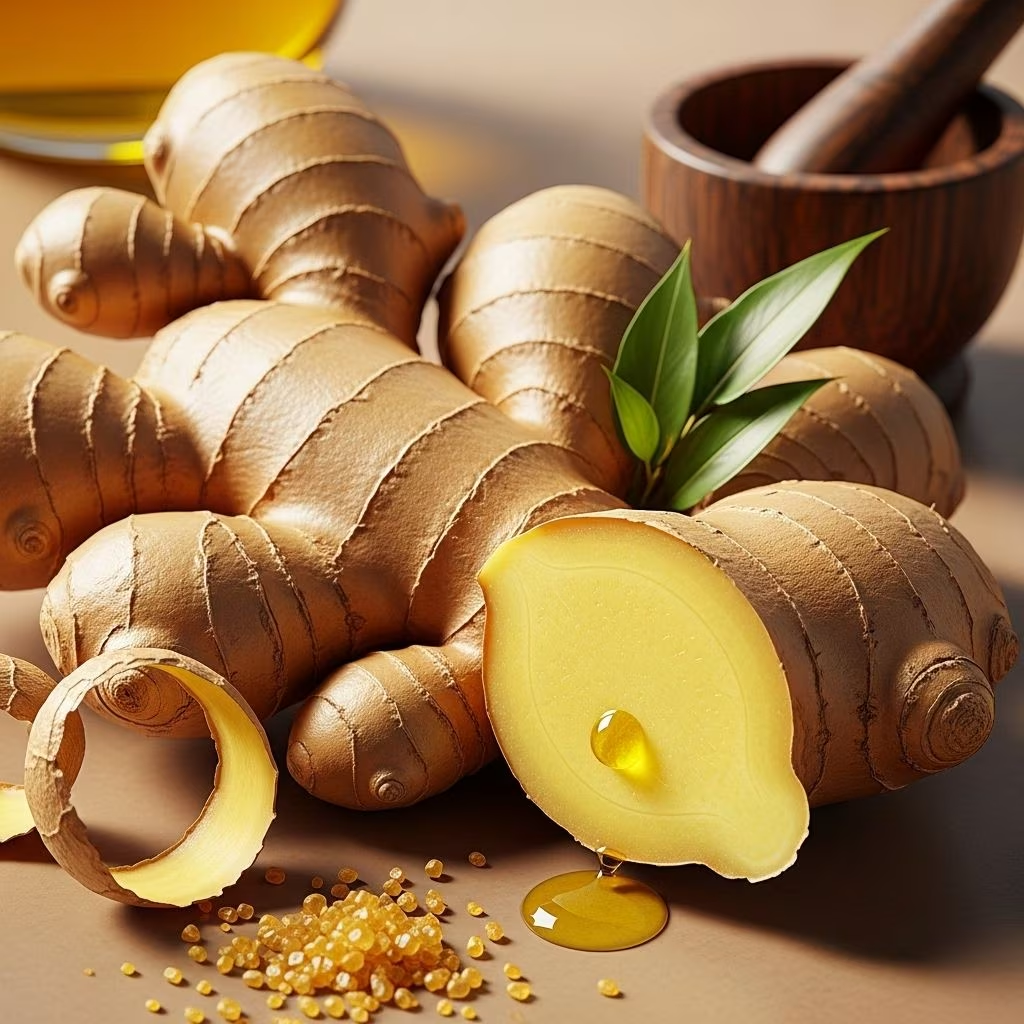
Zingiberene is a natural organic compound that serves as the principal flavoring agent in ginger oil, making it central to the characteristic taste and aroma of Zingiber officinale (ginger). Beyond its culinary significance, zingiberene is garnering scientific interest for its medicinal properties, versatility in practical uses, and sensory contributions to numerous natural products. This article provides a comprehensive exploration of zingiberene’s chemistry, sources, extraction, health attributes, uses, and sensory qualities.
Introduction to Zingiberene
Zingiberene is an organic molecule classified as a monocyclic sesquiterpene. It constitutes up to 30% of the essential oil extracted from ginger rhizomes, lending the spice its unmistakable, pungent aroma and flavor. As the dominant component of ginger oil, zingiberene not only imparts its sensory qualities to ginger but is also found, though less abundantly, in other plants.
- Chemical Formula: C15H24
- Molar Mass: 204.357 g/mol
- Other Names: α-zingiberene, (-)-zingiberene
- Appearance: Colorless to pale yellow liquid
- Key Role: Distinct aroma and spicy taste in ginger
The compound’s significance extends beyond flavor, as research continues to highlight its potential functional and medicinal roles.
Chemical Properties of Zingiberene
Zingiberene belongs to the sesquiterpenoid class—terpenes comprising three consecutive isoprene units. The molecule features a six-membered carbon ring (cyclohexadiene) attached to a branched hydrocarbon tail, with two stereocenters, leading to different enantiomers. In nature, (-)-zingiberene is the predominant form.
- Structural Classification: Monocyclic sesquiterpene
- Density: 0.8713 g/cm3 (at 20–25°C)
- Boiling Point: 270.7°C (at 760 mmHg); 134–135°C (at 15 mmHg)
- Solubility: Immiscible in water; miscible with most organic solvents (e.g., hydrocarbons)
- Odor: Characteristic ginger-like
Note: The structure enables interactions with olfactory and taste receptors, accounting for zingiberene’s potent aroma.
Chirality and Stereochemistry
Zingiberene is chiral, existing in enantiomeric forms ((+)- and (–)-). Only certain forms are naturally prevalent and responsible for the sensory profiles in ginger. Stereochemistry also influences biological activity.
Biosynthesis Pathway Overview
- Precursor: Farnesyl pyrophosphate (FPP), a universal precursor of sesquiterpenes
- Key Steps:
- FPP undergoes rearrangement and ring closure to yield zingiberene
- Catalyzed by the enzyme zingiberene synthase
- Involves hydride shifts and proton removals establishing the monocyclic ring
The biosynthetic pathway is integral in ginger plants, linking zingiberene to their defense and ecological interactions.
Natural Sources and Biosynthesis
While most abundant in ginger (Zingiber officinale), zingiberene is also detected in:
- Chaerophyllum azoricum (Azores chervil)
- Helichrysum odoratissimum (Everlasting)
- Feijoa sellowiana (Pineapple guava)
- Certain species of Curcuma
However, these sources contain much lower concentrations than ginger, where zingiberene can be responsible for up to 30% of the essential oil content extracted from the rhizome.
Chemotaxonomic Significance
The high zingiberene content is a chemotaxonomic marker for ginger varieties prized for pungency and aroma. Other constituents in the oil include gingerol and sequiphellandrene, with zingiberene being the primary contributor to the classic ginger sensory experience.
Extraction and Availability
Extraction Process:
- Zingiberene is typically obtained via steam distillation of ginger rhizomes, concentrating volatile oils.
- It can be further purified by fractional distillation or chromatography, but its extraction is favored over laboratory synthesis due to complexity and cost.
- Industrial and laboratory-grade zingiberene is available from chemical suppliers and used for research, flavor formulation, and therapeutic study.
In practice, direct isolation from plant material remains the most practical method, as chemical synthesis is laborious.
Health Benefits of Zingiberene
Current research reveals several promising biological properties of zingiberene, though most findings are based on in vitro (test tube) or preliminary animal studies. Human clinical evidence is still emerging.
- Neuroprotective Effects: Some studies indicate zingiberene may help protect brain cells and reduce oxidative stress, potentially supporting cognitive health.
- Anti-tumoral Activity: Zingiberene displays anti-cancer properties in laboratory studies, showing the ability to inhibit proliferation and induce apoptosis (programmed cell death) in certain cancer cell lines.
- Anti-inflammatory Properties: Its presence in ginger oil underpins many of ginger’s traditional uses in soothing inflammation and pain.
- Antimicrobial Activity: Zingiberene, as part of essential oil compositions, contributes to antibacterial and antifungal activities, offering natural preservation or therapeutic functions.
- Other Potential Effects: Animal and preliminary cell studies suggest antioxidant and possible cholesterol-lowering effects, though further validation is needed.
Summary Table: Reported Bioactivities of Zingiberene
| Bioactivity | Details/Notes | Evidence Level |
|---|---|---|
| Neuroprotective | Protects nerve cells from oxidative damage | In vitro, animal studies |
| Anti-tumoral | Inhibits cancer cell growth, promotes apoptosis | Cell studies, early preclinical reports |
| Anti-inflammatory | Reduces markers of inflammation | Cell studies, inferred from ginger effects |
| Antimicrobial | Active against bacteria and fungi in oils | Laboratory assays |
| Antioxidant | Scavenges free radicals | Lab-based studies |
Note: Human studies are limited, and most putative benefits attributed to zingiberene are based on its presence in ginger extract or essential oil, which contains other bioactive compounds as well.
Applications and Uses
The distinctive properties of zingiberene allow for a diverse range of applications:
- Flavor and Fragrance Industry: As a major aromatic constituent, zingiberene is utilized in the formulation of flavorings and perfumes, either directly (as part of ginger oil) or synthesized for its spicy notes.
- Food Industry: Ginger oil, high in zingiberene, is added to baked goods, confections, beverages, and savory foods, imparting the spicy-warm, lightly peppery flavor associated with ginger.
- Medicinal Formulations: As an active component in ginger, zingiberene figures into traditional medicine for digestive support, anti-nausea, inflammatory relief, and more, although always as part of a complex mixture.
- Natural Therapies and Supplements: Some herbal preparations and supplements may emphasize zingiberene’s proposed benefits, bundled with ginger extract to harness its synergy.
- Research and Biochemistry: Employed in analytical, pharmacological, or synthetic studies exploring sesquiterpene biosynthesis, plant defense, and enzyme catalysis.
Taste and Sensory Profile
Zingiberene is widely credited as the one compound most crucial to the distinctive aroma and taste of ginger. It imparts a spicy, warm, peppery, and slightly sweet flavor profile, with a pungency that is both aromatic and lingering.
- Aroma: Rich, ginger-like, earthy, and fresh
- Taste: Spicy, woody, and subtly sweet
- Persistence: Leaves a warming sensation on the palate that endures longer than many other essential oil volatiles
- Contribution: While not the only molecule creating ginger’s taste, zingiberene is the most abundant and characteristic among volatile compounds. Others, such as gingerol, contribute pungency, but zingiberene delivers the signature aroma and flavor balance.
Comparison Table: Ginger’s Main Flavor Compounds
| Compound | Main Contribution | Sensory Notes |
|---|---|---|
| Zingiberene | Dominant aroma, moderate flavor | Spicy, woody, earthy, sweet |
| Gingerol | Pungency, heat | Hot, biting |
| Sequiphellandrene | Minor aroma, supporting note | Spicy, slightly earthy |
Zingiberene’s balance of spicy, warm, and aromatic tones explains why it is so prized in culinary applications, both for taste and for scent enrichment.
Handling, Safety, and Storage
Zingiberene is generally considered safe, especially at concentrations naturally present in food. However, as with all essential oil components, handling pure zingiberene requires standard precautions:
- Storage: Keep in tightly sealed, airtight containers away from light, air, and heat to prevent oxidation and degradation.
- Safety: No specific toxicity issues are reported; routine care should be taken to avoid ingestion or inhalation of high concentrations in pure form. Always dilute when applying in formulations or research.
- Disposal: No special requirements; can be incinerated or diluted with water.
As with all volatile oils, consult Safety Data Sheets and professional guidelines for industrial use.
Frequently Asked Questions (FAQs)
Q: Is zingiberene safe for human consumption?
A: Yes, zingiberene is safe as a natural flavor compound in food, particularly in the amounts found in ginger and its oils. High-purity or concentrated forms should be handled with standard laboratory precautions.
Q: Can zingiberene be synthesized in a laboratory setting?
A: While possible, the laboratory synthesis of zingiberene is complex, and extraction from ginger oil is generally preferred due to cost and efficiency.
Q: What makes zingiberene different from gingerol?
A: Zingiberene is a volatile aroma compound giving ginger its characteristic fragrance and part of its mild spice, whereas gingerol is less volatile and is mainly responsible for ginger’s sharp heat.
Q: What are zingiberene’s main uses beyond the food industry?
A: Key uses include herbal medicine formulation, perfume manufacturing, aromatherapy, and as a natural antimicrobial in a range of products.
Q: Can zingiberene be used as a medicine?
A: While early research highlights neuroprotective and anti-cancer properties, no zingiberene-based drugs are currently approved. Its primary medicinal value is as an active component of whole ginger extracts.
Conclusion
Zingiberene is much more than just a component of ginger oil. It defines ginger’s iconic flavor and scent, supports many of its health benefits, and is finding increasing relevance in natural medicine, food, and fragrance technology. Ongoing research into its biological actions suggests further potential in neuroprotection, cancer research, and antimicrobial applications. For now, its enduring value lies in elevating the sensory experience of one of the world’s most treasured spices.
References
- https://www.sciencemadness.org/smwiki/index.php/Zingiberene
- https://en.wikipedia.org/wiki/Zingiberene
- https://www.glpbio.com/zingiberene.html
- https://pubchem.ncbi.nlm.nih.gov/compound/alpha-Zingiberene
- https://www.hmdb.ca/metabolites/HMDB36164
- https://pubchem.ncbi.nlm.nih.gov/compound/Zingiberene
- https://taylorandfrancis.com/knowledge/Medicine_and_healthcare/Pharmaceutical_medicine/Zingiberene/
- https://www.chm.bris.ac.uk/motm/zingiberene/zingiberenejs.htm


